Best before is a quality date, not a safety deadline — food is usually still safe to eat after it passes. Yet according to WRAP, UK households throw away around 6.4 million tonnes of food every year — roughly 4.5 million tonnes of it perfectly edible — much of it binned simply because the best before date has passed. A best before app tackles exactly this, reminding you to use food while it is still good rather than tossing it on the date. So does an expired best before date actually mean the food has gone off?
Usually not. Fango works as a food expiry reminder app that tracks expiry dates so nothing gets forgotten — but understanding what those date labels actually mean is just as important. That knowledge alone can save you hundreds of pounds a year.
- “Best before” = quality label only — food is often safe to eat after the date
- “Use by” = safety deadline — never eat after this date, no exceptions
- Most foods: check with your senses (look, smell) before discarding
- Dry goods and frozen food can last months or years past best before
What does “best before” mean?
“Best before” is a minimum durability date — it tells you until when the manufacturer guarantees the product will be at its best quality: taste, texture, smell and appearance, when stored correctly. The label is governed by EU Regulation 1169/2011 on food information to consumers, which applies uniformly across all EU and EEA countries.
If you are choosing between apps, our guide to picking an expiry date tracker lists the features that decide whether you are still using it a month later.
The key thing to understand: best before is a quality guarantee — not a safety deadline. When the date passes, the product does not automatically become unsafe. It may lose some of its peak quality — biscuits go soft, coffee loses aroma, yoghurt may taste slightly more sour — but the food can still be perfectly safe to eat.
Manufacturers also tend to set best before dates conservatively, building in a safety margin. The product is often at its best well before the date — and remains good long after it.
Best before vs use by — a critical difference
In most countries you’ll encounter two types of date labels on food. According to the UK Food Standards Agency, the difference is fundamental. For a full comparison, see: best before vs use by — complete guide. US shoppers may also find best buy date vs expiration date useful.
Many foods keep well for days or weeks after the date. Use your senses: look and smell.
Must not be eaten after this date — you cannot judge safety by sight or smell. Discard it.
“Use by” applies only to microbiologically perishable foods. In these products, pathogenic bacteria — such as Listeria or Salmonella — can multiply to dangerous levels with no visible or olfactory signs. Eating food past its use-by date is always a risk, even if it looks and smells completely normal.
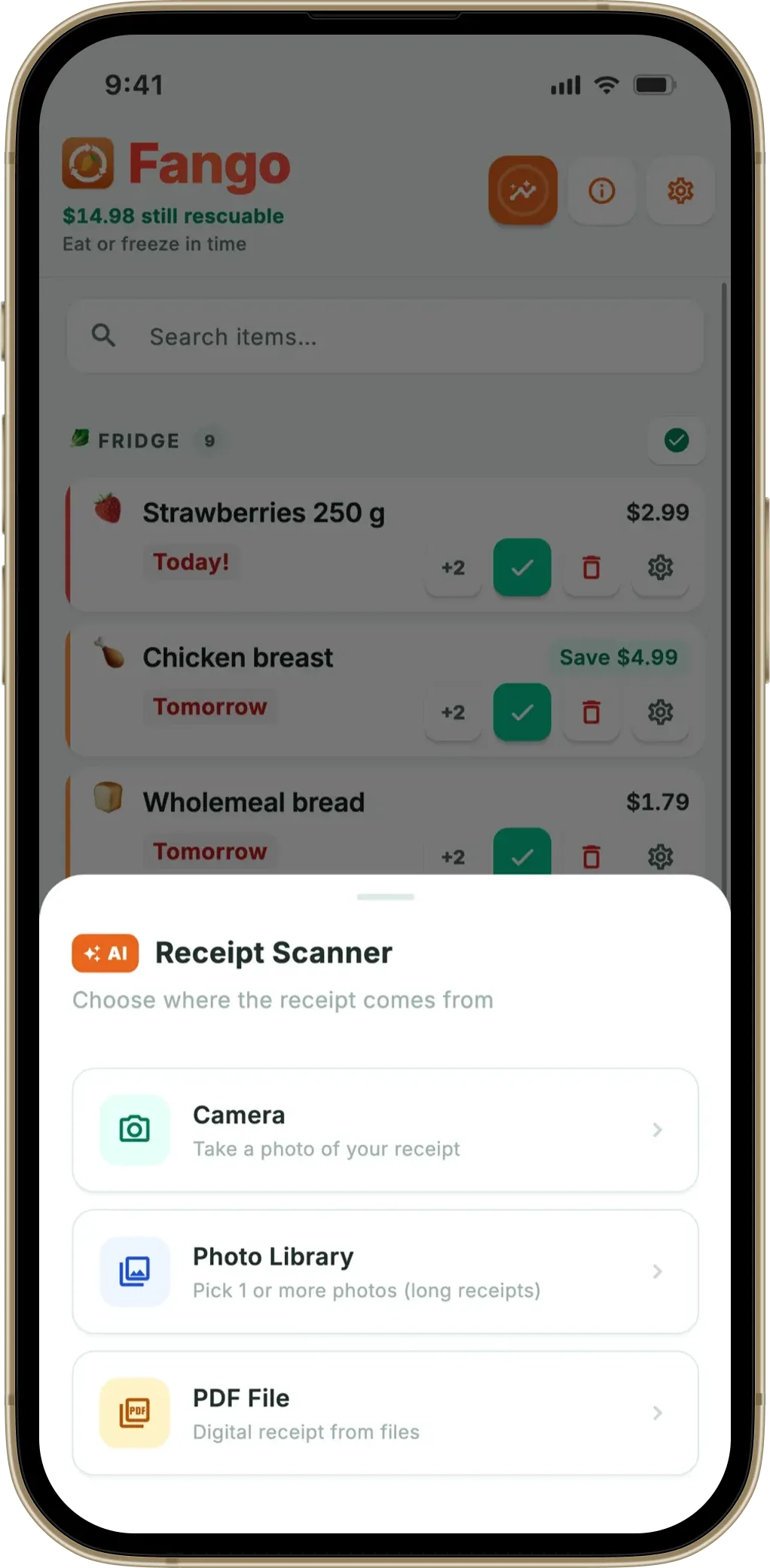
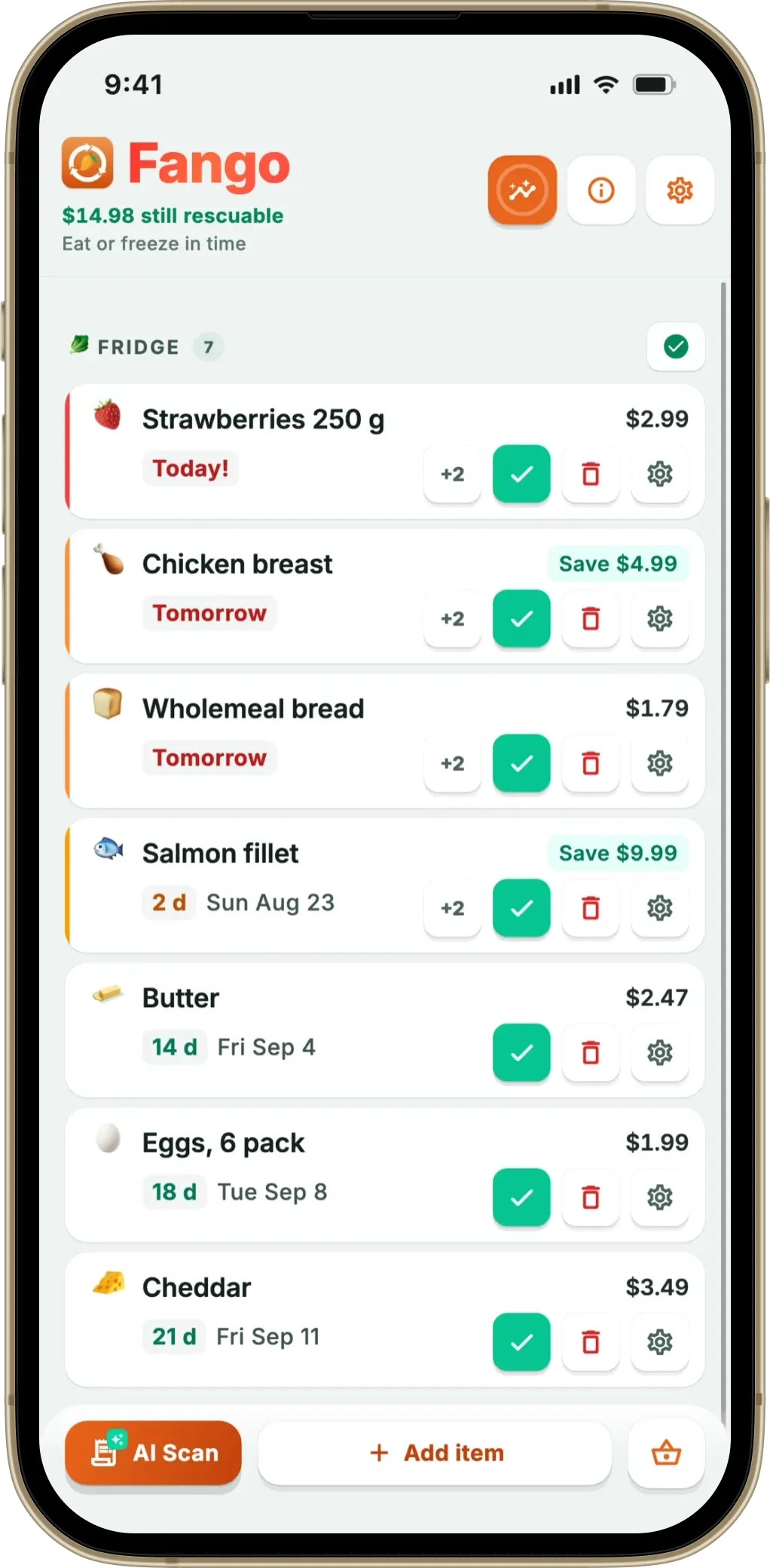
Scan your receipt — AI identifies the products and adds them to your fridge automatically. Get a push notification 1–14 days ahead. No sign-up, fridge data stays on your device by default.
Download on the App Store Get it on Google PlayFree for a month · No sign-up · iOS and Android
Which foods can you eat after the best before date?
The following foods are generally safe to eat days, weeks or even months after their best before date — provided they have been stored correctly and the packaging is undamaged:
These are guidelines, not guarantees. How food was stored makes a significant difference: a broken cold chain or an open package shortens shelf life considerably. When in doubt, trust your senses — covered in the next section.
Which foods must not be eaten after use by?
These products must always be discarded once their use-by date has passed — even if they look and smell completely normal:
- Raw meat (chicken, beef, pork) and mince
- Fresh fish and shellfish
- Cold-smoked salmon and other cold-smoked products
- Unpasteurised milk and cream
- Cheese made from unpasteurised milk
- Ready-to-eat meat products not intended to be reheated (e.g. pâté, carpaccio)
In these products, bacteria can multiply to life-threatening levels without any visible signs of spoilage. That’s why the use-by date is absolute — not a judgment call.
How to tell if best-before food is still good
When a best before date has passed, use a three-step sense check before eating:
-
1
Look — can you see any mould, unusual discolouration or liquid? If yes, discard.
-
2
Smell — does it smell normal? A sour, rancid or strange odour signals spoilage. Milk and meat are easy to judge this way.
-
3
Texture — slime, stickiness, curdling or a separated layer. Any of these means discard.
The rule of thumb: if any one of your senses raises a doubt, throw it away. But an expired best before date alone is never enough reason to bin food — especially dry goods or anything frozen.
Date label confusion drives unnecessary food waste
According to NRDC research, 73% of consumers associate date labels on packaging with food safety rather than quality alone. This widespread misunderstanding causes enormous amounts of perfectly good food to be thrown away every single day.
WRAP estimates that UK households waste food worth around £17 billion every year — approximately £1,000 for a family of four. Globally, around a fifth of the food available to consumers is wasted (UNEP). A significant share of this could be avoided simply by understanding what date labels mean.
Two things help the most: understanding date labels correctly — which this article covers — and actively tracking what needs using soon in your fridge. Fango does the second part automatically: scan your receipt when you get home from shopping, and the app reminds you in time.
Fango sorts everything by reminder date and colour-codes the urgent items in red. The home screen widget shows what to use next without opening the app.
Download on the App Store Get it on Google PlayFree for a month · No sign-up · iOS and Android
Frequently Asked Questions
What does best before mean?
Best before is a minimum durability date — it guarantees the product will be at its best quality (taste, texture, smell) until that date when stored correctly. It is a quality indicator, not a safety deadline. Food is often perfectly safe to eat after the best before date has passed.
What is the difference between best before and use by?
Best before indicates quality — food can still be safe to eat after this date and you can use your senses to judge. Use by is a safety deadline that applies to microbiologically perishable foods such as raw meat, fresh fish and unpasteurised milk. Food must never be eaten after a use-by date, even if it appears and smells normal.
Can you eat food after the best before date?
Yes — most best-before foods are safe to eat after the date if stored correctly and the packaging is undamaged. Hard cheese typically lasts several weeks to months after, dry pasta and rice 1–2 years, tinned food often years. Check with your senses: look for mould and smell for off odours — these can reveal spoilage, but they cannot confirm that food is safe. Note: foods carrying a use-by date (raw meat, fresh fish, most fresh milk) must be discarded after the date.
Which foods must not be eaten after their date label?
Foods with a use-by date must never be eaten after that date. These include raw meat and mince, fresh fish, cold-smoked salmon, unpasteurised milk and cream, and ready-to-eat meat products such as pâté. Bacteria in these foods can multiply to dangerous levels with no visible signs of spoilage.
How can I tell if food is still safe after the best before date?
Use a three-step sense check: (1) Look — check for mould, unusual discolouration or liquid; (2) Smell — a sour, rancid or strange odour signals spoilage; (3) Taste — a small amount will confirm whether the flavour is normal. If any sense raises doubt, discard the food. An expired best before date alone is not a reason to throw food away.
Is it illegal to sell food past its best before date?
No. In the UK and EU it is legal to sell food after its best before date, provided it is still safe and of acceptable quality — many shops sell it at a discount. Selling food after its use-by date, however, is illegal. Best before relates to quality; use by relates to safety.
Can eating food past its best before date make you sick?
Rarely. Best-before foods relate to quality, not safety, so eating them a little past the date seldom causes illness if they were stored correctly and show no signs of spoilage. The real risk is with use-by foods such as raw meat, fish and unpasteurised dairy, which can cause food poisoning after their date even when they look and smell fine.
- UK Food Standards Agency: Best before and use-by dates
- EU Regulation 1169/2011 on the provision of food information to consumers
- WRAP: Household Food Waste in the UK — 6.4 million tonnes per year
- NRDC: The Dating Game — How Confusing Food Date Labels Lead to Food Waste
- UNEP: Food Waste Index Report 2024