Yes — most cheeses can be frozen, but the result varies significantly by type. Hard cheeses like cheddar, gouda, and parmesan freeze well and are perfectly usable after thawing, especially in cooking. Soft and fresh cheeses like brie, cream cheese, and ricotta lose their texture when frozen and are best avoided. Not sure how long your cheese lasts in the fridge first? See: how long does cheese last? For general freezer rules covering all foods, read the complete guide to freezing food. Fango helps you track cheese expiry dates so you always know what needs to be used soon — and when freezing is worth it.
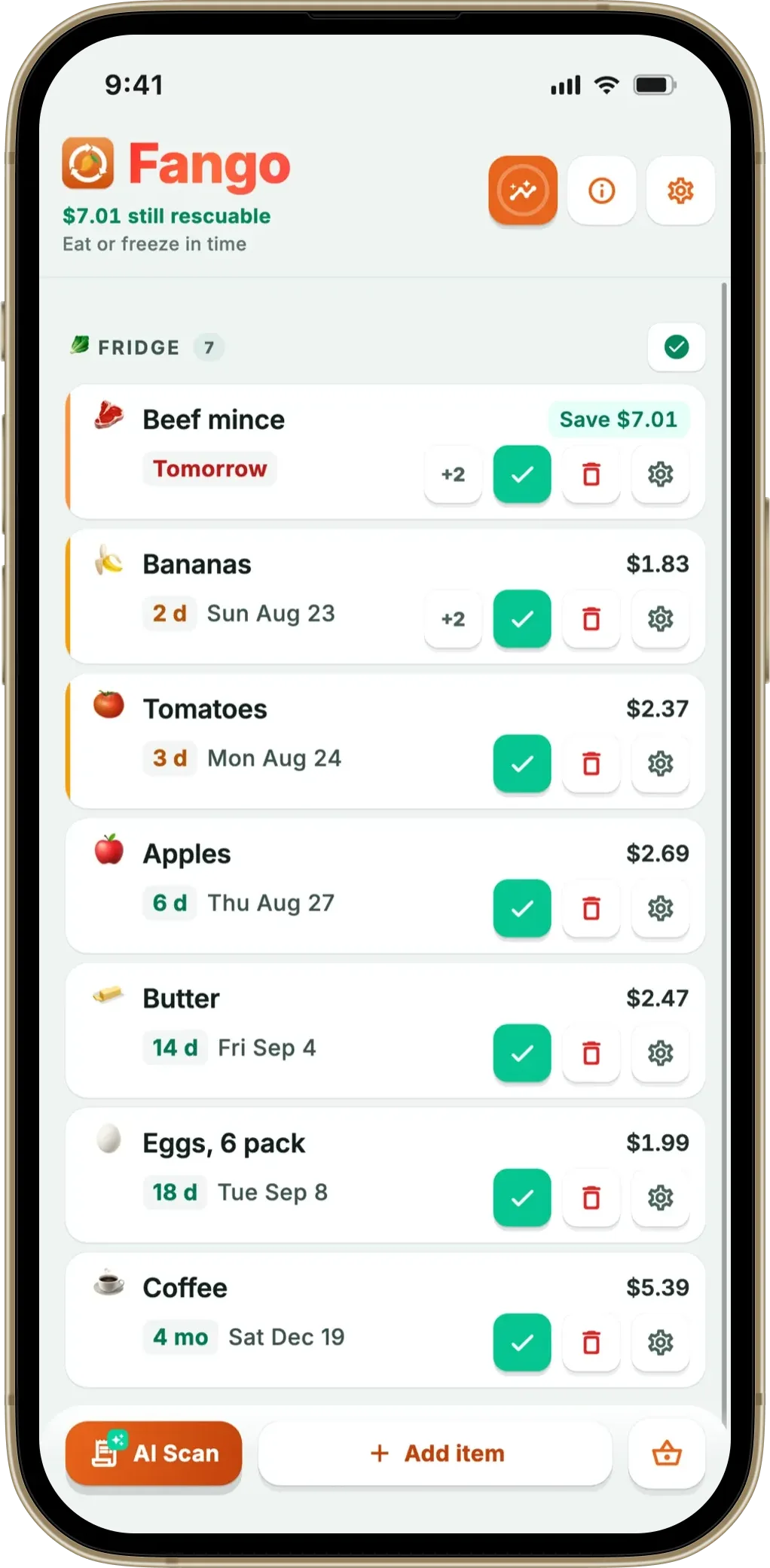
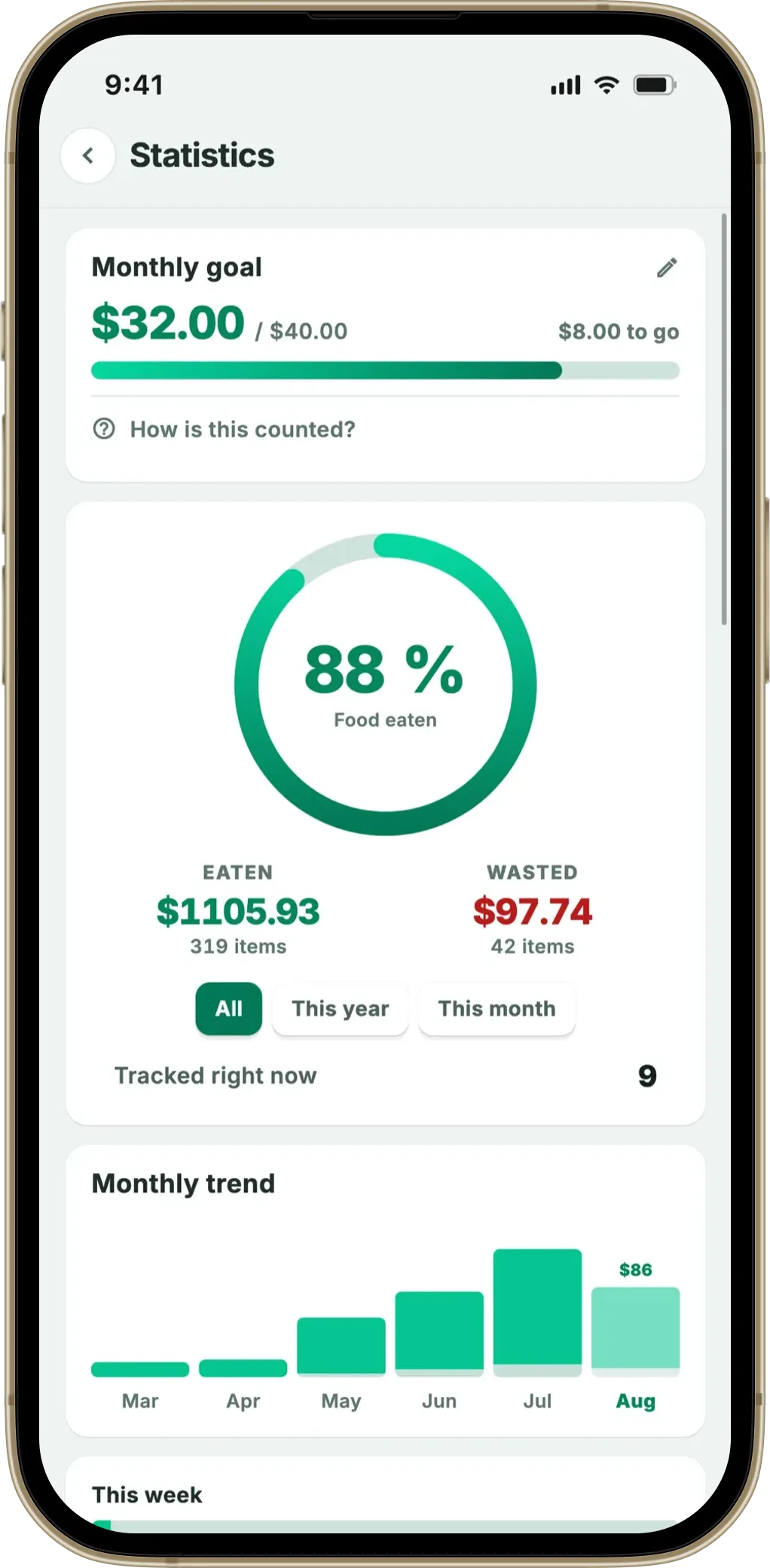
Fango tracks your cheese reminder dates and sends a push notification a few days in time — giving you time to freeze it rather than waste it. Scan your grocery receipt and it adds products automatically. No sign-up, fridge data stays on your device by default.
Download on the App Store Get it on Google PlayFree for a month · No sign-up · iOS and Android
Here is a complete guide to which cheeses freeze, how to do it properly, and what to expect after thawing.
- Hard cheeses (cheddar, gouda, parmesan) — freeze well, become slightly more crumbly
- Semi-hard cheeses (edam, emmental, havarti) — freeze reasonably well
- Soft cheeses (brie, camembert, cream cheese) — do not freeze well; texture becomes grainy
- Fresh cheeses (ricotta, cottage cheese, fresh mozzarella) — avoid freezing; become watery
Which Cheeses Can You Freeze?
Why Does Freezing Change Cheese Texture?
When cheese freezes, the water it contains forms ice crystals. These crystals expand and physically break down the protein and fat structure of the cheese. When it thaws, the water is released — and the structure doesn’t fully recover.
This is exactly the kind of date an expiry date tracker app reminds you about before it passes.
In hard cheeses, this effect is mild: the cheese becomes slightly more crumbly but the flavour is largely preserved. In soft cheeses with high water content — brie, cream cheese, ricotta — the effect is dramatic: the texture becomes grainy, watery, or completely separated. The higher the water content, the worse the freeze-thaw result.
This is why previously frozen hard cheese works well in cooking (gratins, sauces, toasted sandwiches) but is less ideal eaten raw on a cheeseboard.
How to Freeze Cheese Properly
-
1
Cut into portions before freezing. Freeze in the amount you’ll actually use. Thawing and refreezing cheese degrades texture further — portion it so you only defrost what you need.
-
2
Wrap tightly to prevent freezer burn. Wrap each portion in baking paper or cling film first, then place in a zip-lock freezer bag and squeeze out all the air. Exposed cheese develops freezer burn — dry, white spots that affect flavour.
-
3
Grate hard cheese before freezing. Grated parmesan, cheddar, or gruyère freezes especially well and can be used directly from frozen in cooking — no thawing needed. Spread it loosely on a tray to freeze, then transfer to a bag so it doesn’t clump.
-
4
Label with the date. Write the cheese type and freeze date on the bag. Hard cheeses keep quality for up to 3–6 months frozen.
-
5
Thaw slowly in the fridge. Move frozen cheese to the fridge the night before you need it. Slow thawing reduces moisture loss compared to thawing at room temperature. Once thawed, use within 3–4 days.
How Long Can You Freeze Cheese?
Best Uses for Previously Frozen Cheese
Previously frozen hard cheese is slightly more crumbly than fresh — which actually makes it ideal for many cooked applications where texture matters less than flavour:
- Gratins and bakes — cheddar, gruyère, emmental melt beautifully
- Pizza — block mozzarella works well once frozen; grate directly onto the pizza
- Pasta dishes — parmesan and grana padano can be grated from frozen into sauce
- Toasted sandwiches and quesadillas — any melting cheese works fine
- Soups — parmesan rind can be added to soups directly from frozen
For eating raw — on a cheeseboard, in a salad, or sliced — fresh unfrozen cheese is noticeably better. Use frozen cheese for cooking and keep the fresh block for raw eating.
Fango tracks your cheese reminder dates and sends a push notification a few days in time — giving you time to freeze it rather than waste it. Scan your grocery receipt and it adds products automatically. No sign-up, fridge data stays on your device by default.
Download on the App Store Get it on Google PlayFree for a month · No sign-up · iOS and Android
How to Tell If Cheese Has Gone Bad
Freezing pauses the clock, but cheese still spoils once thawed — and hard and soft cheeses spoil differently. On hard cheese, a small spot of surface mould can usually be cut away (about 2.5 cm around and below the spot) and the rest is fine; on soft, fresh, or shredded cheese, mould means the whole block goes, because the spores spread invisibly through the higher moisture. Trust an ammonia-like smell, a slimy surface, or off colours over the printed date.
That date is the same quality-versus-safety question that applies to most foods — usually a best-before date about peak quality rather than a hard cutoff. The practical move is to freeze cheese while it is still in good condition rather than as a last resort. Butter, with far less water, is even more forgiving in the freezer — see can you freeze butter for how the two compare.
Related reading: Can You Freeze Avocado.
Frequently Asked Questions
Can you freeze cheese?
Yes — most hard cheeses freeze well: cheddar, gouda, parmesan, emmental, edam, gruyère. Soft cheeses like brie, camembert, cream cheese, ricotta, and fresh mozzarella do not freeze well — the texture becomes grainy or watery after thawing.
Does freezing cheese change the texture?
Yes. Hard cheeses become slightly more crumbly — barely noticeable when melted in cooking, more obvious when eaten raw. Soft cheeses lose their creamy texture entirely and are not worth freezing.
How long can you freeze cheese?
Hard cheeses keep well for up to 6 months frozen. Best quality is within 3 months. Always label with the freeze date.
Can you freeze shredded cheese?
Yes — shredded hard cheese freezes especially well. Freeze in a zip-lock bag with the air squeezed out and use directly from frozen in cooking without thawing.
Can you freeze mozzarella?
Low-moisture block mozzarella (for pizza) freezes adequately and works well melted. Fresh mozzarella (water-packed) does not freeze well — it becomes watery and loses its smooth texture.
Can you refreeze cheese?
It is safe if the cheese was thawed in the fridge, but each freeze-thaw cycle makes hard cheese drier and more crumbly and pushes soft cheese further toward grainy. Refreezing is fine for cheese you will cook with; avoid it for anything you want to eat raw. Grating or portioning before the first freeze means you only thaw what you need and never have to refreeze.