Raw chicken lasts just 1–2 days in the fridge — far shorter than cooked chicken (3–4 days). That’s the guidance from the UK Food Standards Agency — and it’s shorter than most people assume. Raw chicken is one of the highest-risk foods in the household kitchen because it commonly carries Campylobacter, the UK’s most common cause of food poisoning, which has no visible signs on the meat itself.
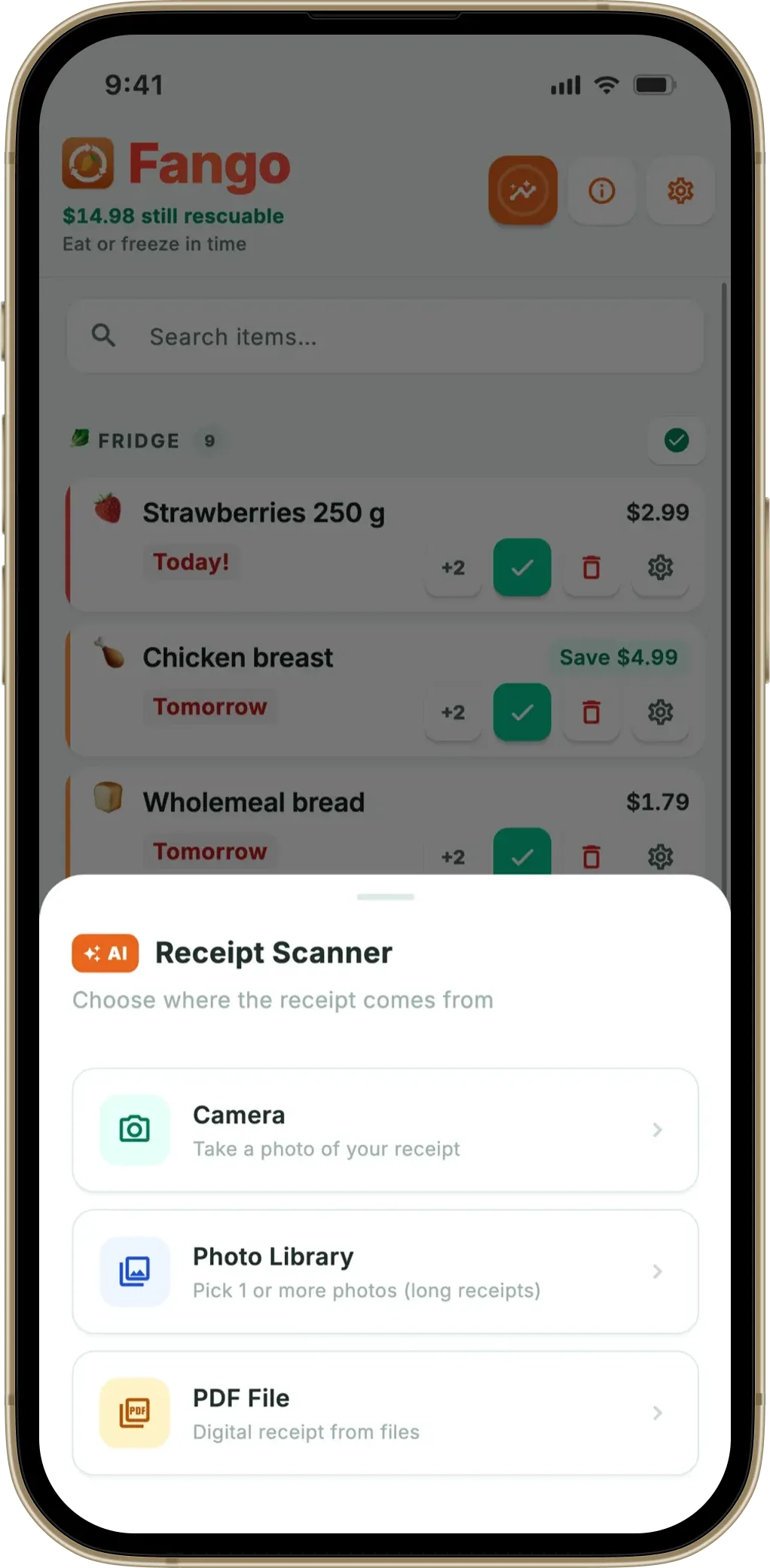
If you’re not cooking it today or tomorrow, the answer is simple: freeze it. Fango lets you log chicken when you buy it and set a 1-day expiry reminder — so you know exactly when it needs to be cooked or moved to the freezer, without having to remember the date you bought it.
- 1–2 days — maximum safe fridge storage for raw chicken
- Bottom shelf only — prevents juices dripping onto other food
- Never wash raw chicken — spreads bacteria; cooking kills it
- Up to 9 months — how long raw chicken pieces last in the freezer
1–2 Days: Why the Window Is So Short
Unlike beef or pork, raw chicken deteriorates quickly even at fridge temperatures. The main concern is Campylobacter — a bacterium present on a significant proportion of raw chickens that multiplies rapidly. It causes severe stomach cramps, diarrhoea, and vomiting, typically beginning 2–5 days after eating contaminated food.
If keeping track of dates like these by hand is the part that never sticks, an expiry date tracker app can do it from your grocery receipt.
Crucially, Campylobacter produces no visible or olfactory warning signs at safe levels. Chicken that looks and smells perfectly fine can still be unsafe after the 2-day window. The use-by date on the packaging is the authoritative guide — follow it, and when in doubt, freeze rather than wait.
Raw Chicken Storage Times
How to Store Raw Chicken Safely in the Fridge
Where and how you store raw chicken matters as much as how long. Improper storage spreads bacteria to other foods even before the chicken spoils.
-
1
Always store on the bottom shelf. Raw chicken juices drip downward. If stored above other food — especially ready-to-eat items like salad, cooked meats, or dairy — those juices contaminate everything below. The bottom shelf eliminates this risk.
-
2
Keep in original packaging or a sealed container. Supermarket packaging is designed to contain juices. If the packaging is damaged or leaking, transfer to a sealed container or plate and cover tightly with cling film.
-
3
Don’t place next to raw beef or pork. While all raw meat carries bacteria, cross-contamination between different raw meats can introduce new strains. Keep raw chicken separate, ideally in its own container.
-
4
Log it when you buy it. The 1–2 day window passes quickly. Add raw chicken to Fango on the day of purchase and set a reminder for the next day — so you never forget it’s there until it’s too late.
Add raw chicken to Fango on the day of purchase. Get a push notification the next day before the 2-day window closes. No sign-up, fridge data stays on your device by default.
Download on the App Store Get it on Google PlayFree for a month · No sign-up · iOS and Android
Never Wash Raw Chicken
This is one of the most important food safety rules in the UK kitchen — and one of the most widely ignored. The UK Food Standards Agency explicitly advises never to wash raw chicken.
Here’s why: washing raw chicken under a tap creates tiny water droplets that spread Campylobacter bacteria onto your sink, worktop, hands, utensils, and nearby food. Research has measured these droplets travelling up to around 80cm (32 inches) in every direction. This is called splash contamination, and it is a direct cause of food poisoning.
Washing does not make chicken safer. Thorough cooking to a core temperature of 70°C for 2 minutes (or 75°C instantly) kills Campylobacter and all other harmful bacteria. Washing achieves nothing except spreading the bacteria further.
- Never wash raw chicken — it spreads bacteria, it does not remove it
- Wash hands thoroughly with soap after touching raw chicken
- Clean and disinfect any surface, board, or utensil that contacted raw chicken before using it for other food
- Never use the same board for raw chicken and ready-to-eat food without washing it first
How to Tell if Raw Chicken Has Gone Bad
Follow the use-by date first — but these are clear signs that raw chicken is no longer safe to eat:
-
1
Smell — Fresh raw chicken has a very faint or neutral smell. A sour, sharp, or ammonia-like odour is a definite sign of spoilage. Discard immediately and do not taste-test.
-
2
Texture — Fresh raw chicken feels slightly moist but not slippery. A slimy or sticky surface — even after patting dry with kitchen paper — means bacterial breakdown has begun. Throw it away.
-
3
Colour — Healthy raw chicken is pale pink. Grey, green, or yellow patches, or a generally dull and discoloured appearance, indicate spoilage. Do not cook discoloured chicken.
- Never cook chicken that smells off or feels slimy — heat does not fix spoiled meat
- Do not taste raw chicken to check if it’s safe
- Discard chicken that is past its use-by date even if it looks and smells fine
- If frozen chicken has been in the freezer past 9 months, quality may have declined — still safe, but texture and flavour may suffer
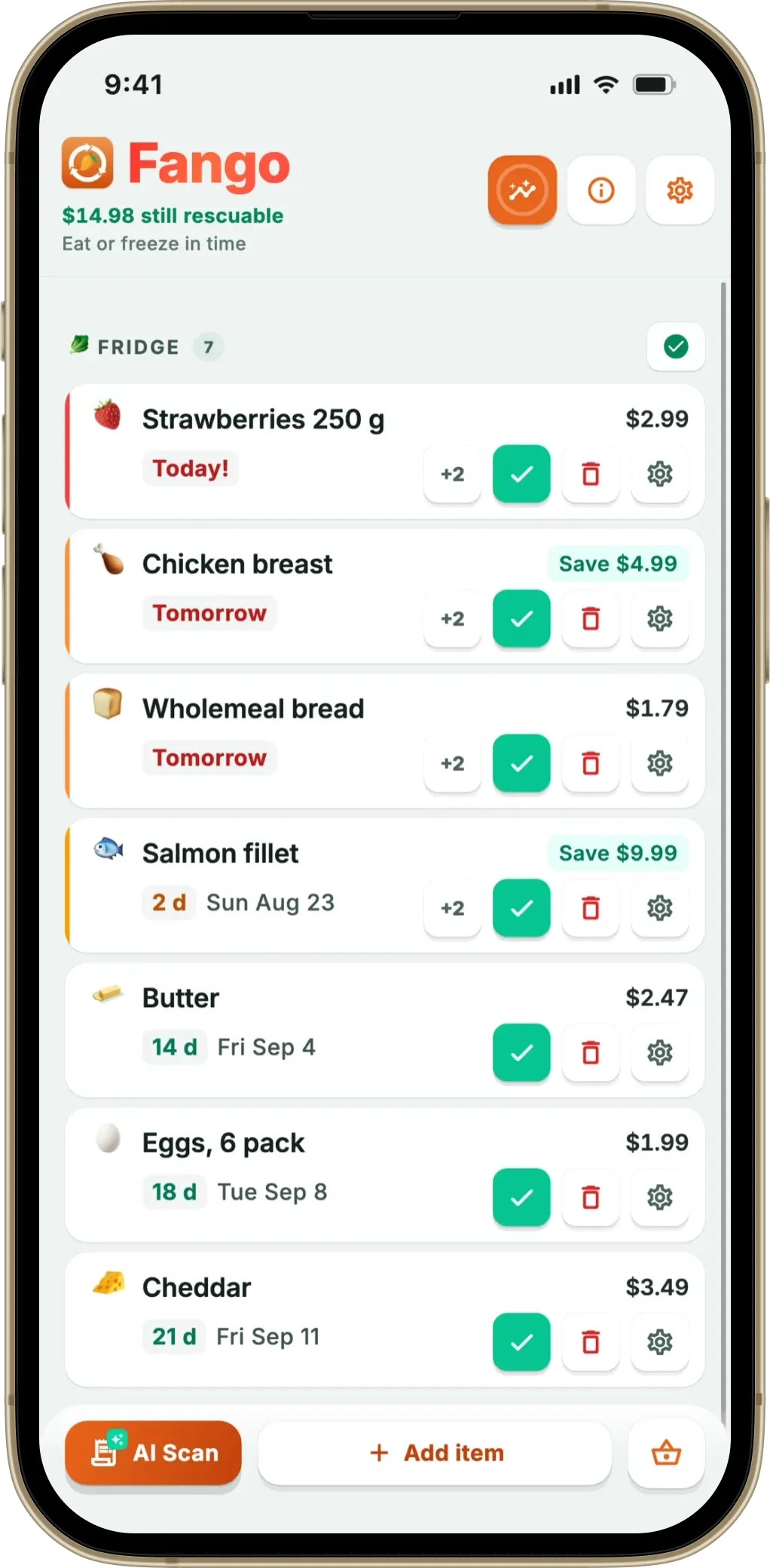
Fango sorts everything by reminder date and colour-codes the urgent items in red. The home screen widget shows what to use next without opening the app.
Download on the App Store Get it on Google PlayFree for a month · No sign-up · iOS and Android
How Long Does Chicken Last in the Freezer?
Freezing is by far the best way to extend raw chicken’s shelf life beyond the 1–2 day fridge window — and it’s simple to do correctly. If you’ve already cooked the chicken, see the dedicated guide on freezing cooked chicken — the rules differ slightly. For storage times across every food group, see how long does food last in the fridge.
-
1
Freeze before the use-by date. Freezing is only effective if you freeze while the chicken is still safe. Never freeze chicken that is already past its use-by date.
-
2
Freeze in portions. Individual breast or thigh portions frozen separately are far more practical than a whole pack frozen together. You only thaw what you need.
-
3
Wrap tightly to prevent freezer burn. Wrap each portion in cling film, then place in a freezer bag and remove as much air as possible. Label with the date frozen.
-
4
Thaw in the fridge — never on the counter. Move frozen chicken to the bottom shelf of the fridge the evening before you need it. A large piece or whole chicken may need 24 hours. Never thaw on a worktop — the outside reaches unsafe temperatures while the inside is still frozen.
-
5
Cook within 24 hours of thawing. Once thawed, treat it like fresh chicken — cook within 1 day and do not refreeze.
Related reading: How Long Do Sausages Last in the Fridge.
Frequently Asked Questions
How long does raw chicken last in the fridge?
1–2 days at 0–5°C. Cook or freeze raw chicken within 2 days of purchase. Always follow the use-by date on the packaging.
How long does chicken last in the freezer?
Raw chicken pieces last up to 9 months in the freezer; a whole raw chicken up to 12 months. Best quality is within the first 3 months.
Can you cook chicken that has been in the fridge for 3 days?
No. Raw chicken should be cooked or frozen within 1–2 days of purchase. After 3 days it is no longer safe, even if it looks and smells fine.
Should you wash raw chicken?
Never. The UK Food Standards Agency advises strongly against it. Washing spreads Campylobacter bacteria across your kitchen. Cooking to a core temperature of 70°C for 2 minutes (or 75°C instantly) is the only reliable way to kill it.
Where should raw chicken be stored in the fridge?
Always on the bottom shelf, in sealed packaging or a covered container, to prevent juices from contaminating other food.
How do you know if raw chicken has gone bad?
Sour or ammonia-like smell, slimy or sticky texture, or grey/green discolouration are all signs it has spoiled. Discard it — do not cook it.
Can you eat raw chicken after the use-by date?
No. Raw chicken carries a use-by date, which is a strict safety deadline — never cook or eat raw chicken past it, even if it looks and smells fine. If you won’t use it in time, freeze it before the use-by date instead.
The safest habit with raw chicken: add it to Fango when you unpack your shopping and set a same-day or next-day reminder. You’ll use it or freeze it in time, every time.