Freezing is the single most effective way to rescue food that would otherwise end up in the bin. According to WRAP, UK households throw away around 6.4 million tonnes of food every year — a substantial share of it perfectly freezable. Fango reminds you when fridge items are approaching their expiry date, but knowing what to freeze — and how to do it properly — is what turns that reminder into action.
Scan your grocery receipt — AI adds the products automatically. You get a push reminder 1–14 days ahead. Freeze on time, waste nothing.
Download on the App Store Get it on Google PlayFree for a month · No sign-up · iOS and Android
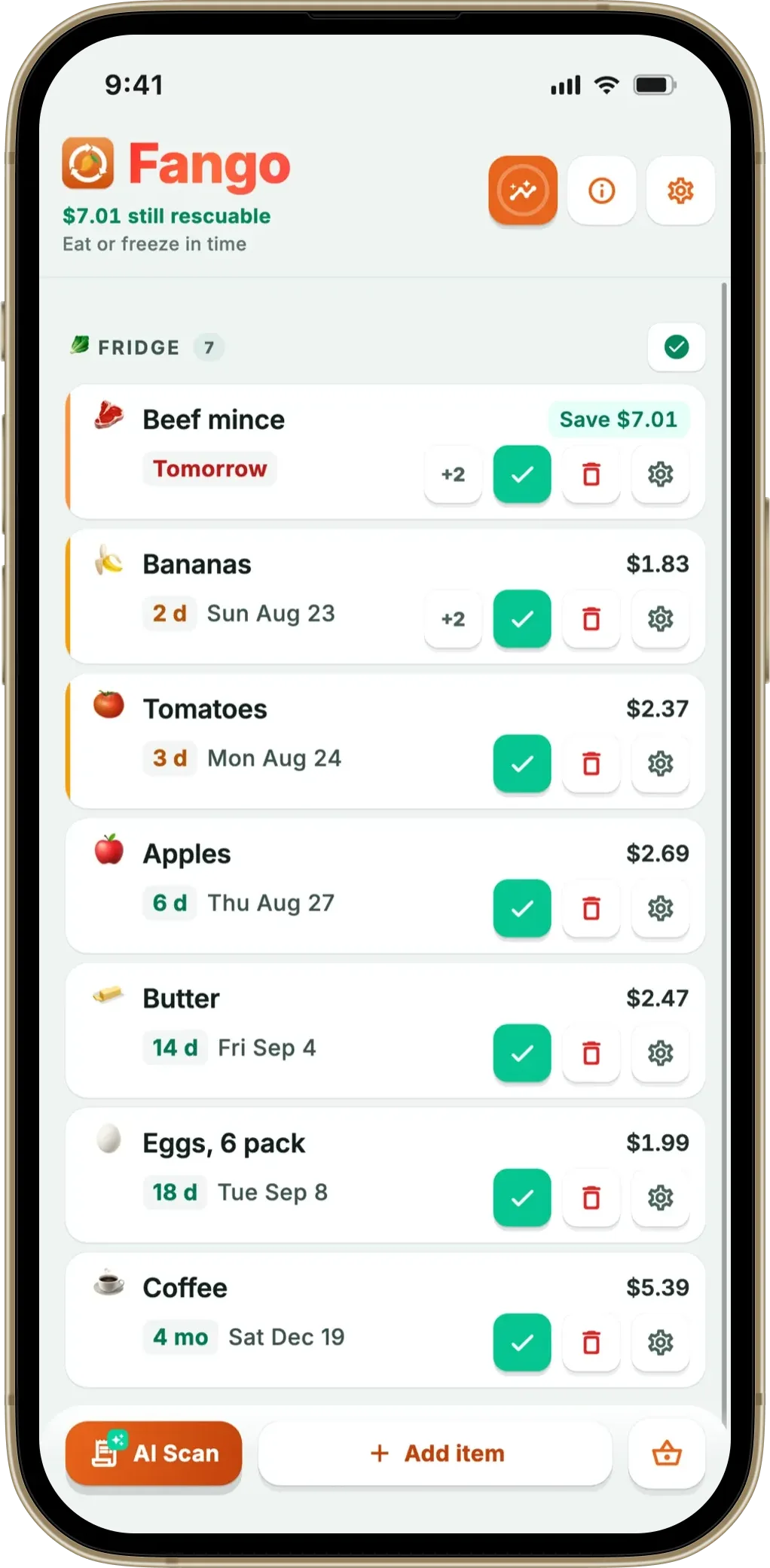
Food frozen correctly stays safe and high quality for months, sometimes over a year. Food frozen incorrectly loses texture and flavour, or in worst cases creates a health risk. This guide covers everything: what can and cannot be frozen, the right technique, and precise storage times.
- Freezer at −18°C minimum — bacterial growth effectively stops at this temperature
- Cool food before freezing — hot food warms the freezer and risks thawing other items
- Always label with date and contents — unlabelled packages cause freezer waste
- Defrost in the fridge — never thaw meat or fish on the counter
Freezer temperature — why it matters
Your freezer must be set to at least −18°C (0°F). According to the UK Food Standards Agency, at this temperature bacterial growth is effectively halted — bacteria don’t die, they become dormant. The colder your freezer, the better quality is preserved over time: −20°C or −22°C is ideal for long-term storage.
The feature that matters most in any of these apps is the reminder — see what a good expiry date tracker app does differently.
Do not overfill the freezer. Air needs to circulate evenly so every area stays consistently cold. An overloaded freezer creates warm pockets near the edges where food quality degrades faster.
What can you freeze?
The majority of everyday foods freeze well when handled correctly. Here are the most common household items. For specific guides on individual foods: cooked chicken · eggs · cheese · butter · milk. Staples like bread and tofu also freeze well to extend their fridge life. Freezing is the single best move when something is near its date — see what to do when food is about to expire for the full set of options.
What should you not freeze?
Some foods don’t survive freezing. Their texture, structure or safety is compromised to the point where the result is unpleasant — or in some cases risky:
- Whole eggs in shell — the shell cracks from pressure as liquid expands
- Salad leaves and fresh spinach — turn into a watery, limp mass
- Cucumber, celery and other high-water vegetables — structure completely breaks down
- Mayonnaise and mustard — separate and become grainy
- Soured cream and yoghurt — texture breaks down and becomes watery
- Soft cheeses (ricotta, cottage cheese) — become watery and granular
- Raw potatoes — turn grey and floury (cooked potatoes are fine)
- Carbonated drinks — expand and can split or burst the container
- Cream-based sauces — can split and separate when reheated
How to freeze food properly — 7 steps
-
1
Cool it first. Never put hot food straight into the freezer. Let it cool at room temperature for about an hour, then refrigerate until completely cold. Hot food raises the freezer temperature and risks partially thawing neighbouring items.
-
2
Freeze fresh. The fresher the food when frozen, the better the quality after thawing. Freeze meat on the day of purchase or the next day at the latest — don’t wait until it’s close to its use-by date.
-
3
Use airtight packaging. Air is the enemy of frozen food — it causes freezer burn (grey, dried-out patches). Use freezer bags (squeeze out all air before sealing), airtight containers, or vacuum bags.
-
4
Freeze in portions. Divide food into single or double servings before freezing. This way you only defrost what you need, rather than thawing a whole batch and risking waste.
-
5
Always label. Write the contents and the freezing date on every package. Three months from now you won’t be able to tell mince from braising steak, or remember when it went in.
-
6
Freeze berries individually first. Spread berries in a single layer on a tray or baking sheet and freeze for a few hours. Transfer to a bag once solid. This prevents them clumping together, so you can pour out exactly the amount you need.
-
7
Blanch vegetables before freezing. Boil vegetables for 1–3 minutes, plunge into cold water, dry well, then freeze. Blanching deactivates the enzymes that otherwise degrade colour, texture and flavour during frozen storage.
How long does frozen food last?
Freezing doesn’t stop quality from declining — it dramatically slows it. The times below are based on UK Food Standards Agency guidance, assuming airtight packaging and a freezer at −18°C or below:
| Food | Frozen storage time | Note |
|---|---|---|
| Beef and pork steaks / joints | 6–12 months | Freeze fresh, wrap tightly |
| Mince (raw) | 3–4 months | Freeze on day of purchase |
| Chicken (whole, raw) | 9–12 months | Portions: 6–9 months |
| Cooked meat | 2–3 months | Freeze quickly after cooking |
| Lean fish (cod, haddock) | 6 months | Oily fish (salmon, mackerel): 2–3 months |
| Prawns | 3–6 months | Dry well before freezing |
| Soups, stews and sauces | 2–3 months | Leave expansion room in containers |
| Berries and fruit | 10–12 months | Freeze individually first |
| Vegetables (blanched) | 8–12 months | Unblanched: 1–3 months only |
| Bread and baked goods | 1–3 months | Slice before freezing |
| Hard cheese (grated) | 6 months | Texture becomes slightly crumbly |
| Milk and cream | up to 3 months | May separate — shake after thawing |
← scroll →
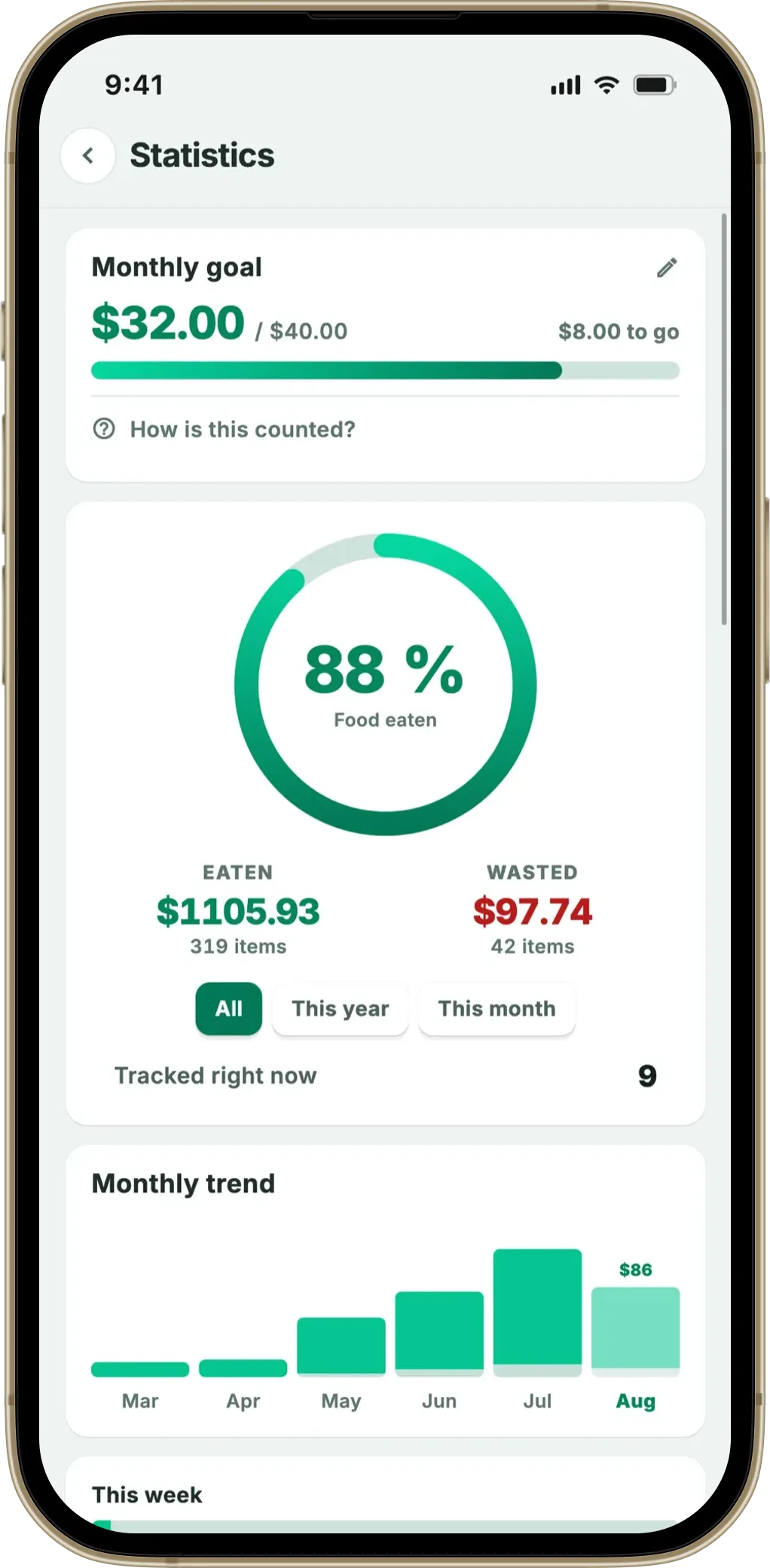
Scan your grocery receipt — AI adds the products automatically. You get a push reminder 1–14 days ahead. Freeze on time, waste nothing.
Download on the App Store Get it on Google PlayFree for a month · No sign-up · iOS and Android
How to defrost food safely
Defrosting is as important as freezing itself. The wrong method significantly increases the risk of bacterial growth.
Safest method: fridge overnight
Transfer the frozen item from the freezer to the fridge the evening before. Meat and fish take 6–24 hours depending on size. This is the safest method because the food stays at or below 5°C throughout — the temperature at which bacterial growth is slow.
Faster method: cold water bath
Place the frozen food in a sealed bag and submerge it in cold water. Change the water every 30 minutes. A smaller portion defrosts in about an hour. Cook immediately after defrosting this way.
Microwave defrost
The microwave defrost setting works well if you’re cooking the food straight away. Don’t leave microwave-defrosted meat sitting — it’s already partially warmed and enters the bacterial growth zone.
What not to do
- Never defrost meat or fish on the kitchen counter at room temperature — bacteria multiply rapidly above 5°C
- Never refreeze raw meat or fish after thawing — cook it first
- Never defrost in hot water — the outside warms while the inside stays frozen
Freezing and food waste — the combination that works
UNEP estimates that around a fifth of the food available to consumers globally is wasted every year — a problem worth around £17 billion annually in UK households alone, according to WRAP. The most effective home strategy combines two things: actively tracking what’s about to expire, and freezing it before it goes off.
Fango handles the first part automatically — scan your receipt and you get a push notification before anything in your fridge expires. When the reminder arrives, you know immediately: use it now, or freeze it. That single decision, made on time, is what stops food ending up in the bin.
Frequently Asked Questions
What temperature should a freezer be set to?
Your freezer should be set to at least −18°C (0°F). At this temperature, bacterial growth is effectively halted and food stays safe for months. Colder is better: −20°C or −22°C extends quality even further for long-term storage.
Can you refreeze food after defrosting?
Raw meat, fish or poultry should never be refrozen after thawing. The exception: if raw meat is defrosted in the fridge and then cooked, you can refreeze it once cooked. Cooked foods (soups, stews) can be refrozen as long as they were defrosted in the fridge and not left at room temperature.
Why must food be cooled before freezing?
Putting hot food straight into the freezer raises the temperature inside, which can partially thaw neighbouring items — creating conditions for bacterial growth. Let food cool at room temperature for about an hour, then refrigerate until completely cold before transferring to the freezer.
How long does frozen food last?
It varies by product. Raw beef or pork steaks last 6–12 months, mince 3–4 months, chicken 9–12 months, fish 3–6 months, and berries up to 12 months. Soups and stews keep well for 2–3 months. Packaging must be airtight and the freezer at least −18°C.
What is the safest way to defrost food?
The safest method is to transfer food from the freezer to the fridge overnight. Meat and fish take 6–24 hours depending on size. For faster defrosting, submerge the sealed bag in cold water, changing the water every 30 minutes. You can also use the microwave defrost function if you cook the food immediately afterwards. Never defrost meat or fish on the kitchen counter at room temperature.