Most of us load the fridge without much thought about where things go — and it costs us. According to WRAP, UK households waste around £17 billion worth of food every year — roughly £1,000 for a family of four. A big share of that happens because food spoils in the fridge before anyone gets around to eating it.
Scan your grocery receipt — AI identifies your products and adds them with their expiry dates automatically. Get a push reminder 1–14 days ahead. No sign-up, fridge data stays on your device by default.
Download on the App Store Get it on Google PlayFree for a month · No sign-up · iOS and Android
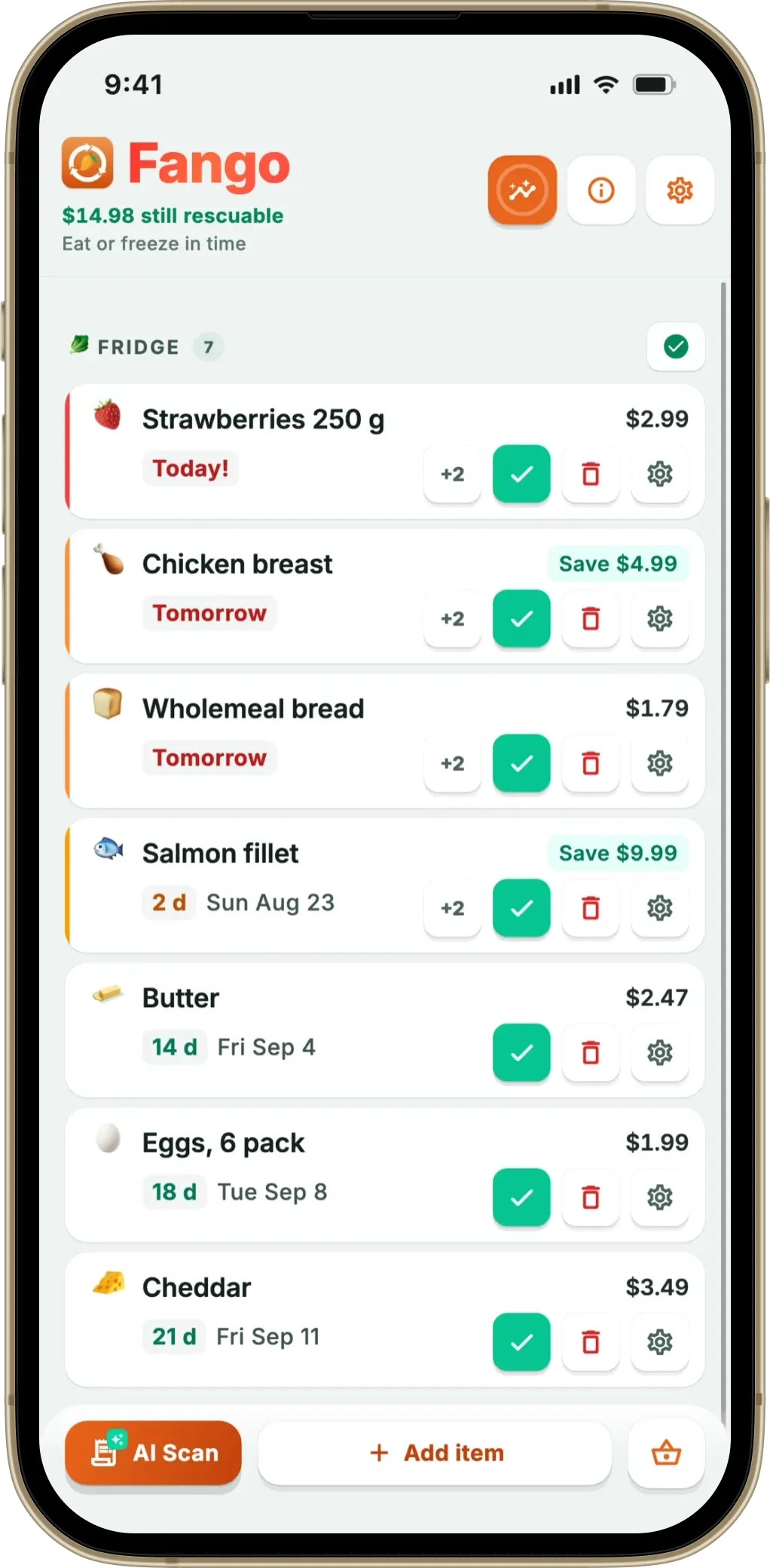
Fridges can vary by as much as 4–5°C between different zones — and that gap determines whether chicken lasts two days or five. The Fango app helps you track what’s in your fridge and when it expires, but getting the layout right is the first step. For a wider look at temperature zones across fridge, freezer and pantry, see our guide to food storage apps. A simple habit that pairs well with good layout is keeping an eat-me-first shelf for whatever needs using up soon, and if things still spoil quickly, see why food goes off so fast in the fridge.
- 0–5°C — recommended fridge temperature (UK Food Standards Agency)
- Raw meat and fish on the bottom shelf — coldest spot, slowest bacterial growth
- The door is the warmest zone — no dairy or meat; use it for condiments and drinks
- Oldest food at the front — put new items behind what’s already there
Why fridge organisation matters
A fridge is not a uniform temperature throughout. Bottom shelves can sit close to 1–2°C while the door often reaches 8–10°C — already above the safe zone. That difference determines whether your food stays safe for two days or five. For broader storage rules covering all food types, see: food storage tips — 9 practical rules.
A fridge tracker app handles this for every item at once — here is what separates a good one from a spreadsheet.
The UK Food Standards Agency recommends keeping your fridge at 0–5°C. Bacteria multiply fastest in what’s called the danger zone, which starts at around 8°C. Everything that spoils quickly belongs in the coldest part.
Fridge zones — what goes where?
Think of your fridge as four zones from top to bottom. Each zone suits a different type of food.
Upper shelf — most consistent temperature
The top shelf tends to be the most stable temperature-wise, around 4–5°C. It suits foods that need to stay cool but don’t need the very coldest spot.
Lower shelves — the coldest zone
The bottom shelves are the coldest part of your fridge — exactly where the most perishable foods belong.
Note on eggs: Keep eggs in their original carton on a shelf — not in the door’s egg rack, which is the warmest part of the fridge. Once refrigerated, keep them cold: moving eggs in and out of the fridge can cause condensation that speeds up spoilage.
Salad and vegetable drawers — higher humidity
The crisper drawers hold more moisture than the rest of the fridge. They’re designed for fruit and veg, but keep the two apart: fruit releases ethylene gas that speeds up ripening and can cause vegetables to spoil faster. Some produce, like avocados, only ripen at room temperature — move them to the fridge once they’re ready to slow things down.
The door — warmest zone
The door warms up every time you open the fridge. Dairy and raw meat don’t belong here — only items that tolerate temperature fluctuations.
7 practical tips for organising your fridge
-
1
Oldest at the front, newest at the back. Always move older items to the front when you unpack shopping. You’ll naturally reach for what expires soonest instead of eating the fresh stuff first.
-
2
Keep raw meat sealed and separate. Juices from raw meat can drip onto other foods and cause cross-contamination. Use a sealed container or zip-lock bag, and always store it on the lowest shelf.
-
3
Don’t overcrowd the fridge. A packed fridge can’t circulate cold air properly, so the temperature rises unevenly. Leave some space between items on each shelf.
-
4
Cover or seal everything. Open containers let moisture and odours spread. Use lids, cling film or airtight containers for anything that’s been opened.
-
5
Let hot food cool before refrigerating. Putting hot food straight in the fridge raises the temperature inside and can affect nearby items. Cool it at room temperature for no more than an hour first.
-
6
Check the temperature regularly. The built-in thermometer isn’t always accurate. A small fridge thermometer costs very little and tells you whether you’re actually hitting 0–5°C.
-
7
Clean it once a month. Empty the fridge, wipe the shelves and check all expiry dates. A monthly clear-out stops forgotten items turning mouldy unnoticed at the back.
How to tell if food has gone off
Expiry dates are a useful guide, but your senses tell you more. Check these three things before eating anything you’re unsure about:
-
1
Look — Any visible mould, sliminess or colour change? Meat shouldn’t be grey or greenish. Salad leaves shouldn’t be weeping liquid.
-
2
Smell — Sour, rotten or otherwise wrong? Meat, fish and dairy all give clear warning signs when they’ve gone off.
-
3
Texture — Slime, stickiness or curdling is a clear sign. When in doubt, throw it out — food poisoning isn’t worth the risk.
- Visible mould — don’t cut it off and eat the rest; mould grows into the food too
- Slimy or sticky surface on meat or fish
- Sour smell in milk or yogurt — even if the date hasn’t passed
- Colour change in raw meat (grey or greenish)
- Bubbles or gas in a sealed package — bacteria have been producing gas inside
Scan your grocery receipt — AI identifies your products and adds them with their expiry dates automatically. Get a push reminder 1–14 days ahead. No sign-up, fridge data stays on your device by default.
Download on the App Store Get it on Google PlayFree for a month · No sign-up · iOS and Android
What doesn’t belong in the fridge?
Some foods keep better at room temperature — and a few actually spoil faster in the cold.
How Fango helps with fridge management
Getting the layout right is the first step — but it’s easy to lose track of what’s in your fridge and when things expire. Fango solves this: scan your grocery receipt and the AI automatically identifies what you bought and adds each item with its expiry date.
When something is getting close to expiring, you get a push notification 1–14 days in advance. You always know what to eat next — before it goes to waste.
Frequently Asked Questions
What is the correct fridge temperature?
The UK Food Standards Agency recommends keeping your fridge at 0–5°C. The ideal is around 4°C — cold enough to slow bacterial growth without freezing food.
Where should raw meat be stored in the fridge?
Raw meat and fish should always go on the lowest shelf, where the fridge is coldest. Store them in a sealed container or bag to prevent juices from dripping onto other foods and causing cross-contamination.
Should eggs be kept in the fridge?
In the UK and EU, eggs are sold unrefrigerated but keeping them in the fridge extends their shelf life to around 3–5 weeks. Store them in their original carton on a shelf, not in the fridge door — the door is the warmest part of the fridge.
How often should I clean my fridge?
A thorough clean — emptying, wiping shelves and checking dates — is recommended once a month. A quick check for anything mouldy or expired is worth doing every week.
How do I know if food has gone off?
Check with three senses: 1) Look — any mould, sliminess or colour change? 2) Smell — sour, rotten or unusual odour? 3) Texture — slime, stickiness or an unusual feel? If anything seems wrong, do not eat it.