Press Kit
For journalists & editors
Everything you need to write about Fango — brand assets, screenshots, quick facts, app store links and a direct contact. Available for guest articles, interviews and quick quotes.
By the numbers
Worth of food and drink thrown away by UK households every year — the vast majority of it edible at the point of disposal.
Average annual cost of food thrown away by a UK family of four — money that ends up in the bin rather than on the plate.
Share of food produced globally that is lost or wasted along the supply chain — a substantial portion of it in private households rather than restaurants or retail.
Quick facts
| Type | Mobile app for tracking food expiry & reducing household food waste |
|---|---|
| Platforms | iOS (App Store) & Android (Google Play) |
| Languages | English, Finnish, Swedish, Norwegian, Danish, Dutch, German |
| Receipt formats | Paper receipts, e-receipts and delivery PDFs. Best-tested in Nordic and English-speaking markets so far; international support is in active development based on real-world usage. |
| Pricing | Free version + optional Fango Pro subscription with a 14-day free trial. Local pricing varies by country and platform — see App Store / Google Play for current prices in your region. |
| Account required | No. Fridge data stays on device. |
| Website | fango.fi |
| Contact | support@fango.fi |
About Fango
Households throw away a striking share of the food they buy — often things they meant to eat but forgot were sitting in the fridge. Fango is built around a simple idea: by the time the shopping is on the kitchen counter, you already have a complete list of what just came home — the receipt. One photo, and the app does the typing.
The defining feature is AI receipt scanning. Open the camera in Fango, point it at the receipt (or pick a photo or PDF from elsewhere), and within seconds the app extracts every grocery item with its price, recognises typical shelf life for that kind of food, and drops the items into a fridge view with expiry-date reminders attached. No manual entry, no barcode hunting, no per-item data entry chores.
The second defining decision is privacy. Your fridge inventory — what you bought, when it expires, how much you spent, what you ate vs threw away — never leaves your phone. There is no user account, no sign-up, no cloud sync of personal data, no ads and no behavioural tracking. The only time content leaves the device is during an active scan, when the receipt image (or extracted PDF text) is sent transiently to a third-party AI service for product recognition and then discarded. The recognised items come back; the receipt does not stay anywhere.
From there, Fango fits into existing kitchen habits rather than adding new ones. A home screen widget shows what is about to expire today or tomorrow at a glance. Reminders go out in the days leading up to expiry — on the expiry day plus a few days before by default, configurable per item for Pro users. A statistics view tracks items rescued versus wasted, and money saved for users who add prices, making the reduction effort visible. And the interface is available in seven languages from day one — English, Finnish, Swedish, Norwegian, Danish, Dutch and German — with notifications and widget content all localised.
Fango launched on iOS first and is now also available on Google Play. The free version covers most household needs; an optional Fango Pro subscription with a 14-day free trial unlocks unlimited items and AI receipt scanning. Receipt-format coverage is strongest in Nordic and English-speaking markets today; international support is being expanded as more users in different regions try the app.
How Fango differs from existing food-waste & pantry apps
| Fango | Typical pantry / food-waste app | |
|---|---|---|
| Add items to inventory | One photo of receipt → AI extracts items + expiry dates automatically | Manual entry or barcode scan |
| Receipt formats supported | Paper receipts, e-receipts, multi-page delivery PDFs — strongest in Nordic and English-speaking markets, expanding | Usually US/UK barcode only, or none |
| Languages | 7 (EN, FI, SV, NO, DA, NL, DE) | Usually 1–2 |
| Account required | No sign-up. Fridge data stays on device | Most require account & cloud sync |
| Home screen widget | Shows what expires today / tomorrow, two sizes per platform | Often missing |
| Ads / tracking | None | Varies |
Features in detail
1 AI receipt scanning
Point the in-app camera at a paper receipt, share a photo from anywhere, or open an emailed PDF — Fango extracts every grocery line item with its price, recognises typical shelf life, and presents a review screen before anything is saved. The user can fix names, prices, quantities and expiry dates in one place, then add everything to the fridge with a single tap. Multi-page PDFs from online grocery deliveries are handled too. Non-food lines (loyalty points, store fees, deposit refunds) are filtered out automatically.
2 Manual entry, on a friendly calendar
Receipts are the fast path, but not everything comes from a receipt — a homegrown courgette, a doggy bag from a restaurant, a gift jar of jam. Tapping "Add item" opens a quick sheet with name, quantity, price (optional), and a one-tap calendar for the expiry date. Common items are remembered between sessions, so typing "m" brings up "Milk" immediately.
3 Smart expiry notifications
By default Fango sends reminders on the expiry day and 1, 2 and 3 days before. Pro users can extend the schedule out to 5, 7 or 14 days and set per-item overrides — milk a day before, frozen chicken a week before. The wording adapts to context: for milk and juices it says "drink before tomorrow", for freezable items it suggests "eat or freeze today". When several items expire on the same day, they bundle into a single summary notification rather than stacking up as separate alerts.
4 Home screen widget (iOS & Android)
The widget is where most users check the app every day. At a glance it shows how many items expire today or tomorrow, with a colour-coded urgency band — green when everything is comfortably fresh, amber when something needs attention soon, red when an item expires today. It comes in two sizes on both platforms and updates automatically as receipts are scanned or items marked eaten — no manual refresh needed.
5 Urgency-sorted fridge view
The home screen is intentionally simple: one list of everything currently being tracked, sorted so the most urgent items rise to the top. Items expiring today are highlighted in red, items expiring tomorrow in amber, comfortably-fresh items in muted tones. Each item gets a food-appropriate emoji automatically, and the most urgent cards display motivational chips — "Save €5 — eat or freeze" for an expensive freezable item, "Eat today" for a final-day reminder — so the next action is always obvious. Items past expiry move to a separate "Expired" section above the main list, and after a couple of days drop into a collapsed archive.
6 Statistics & savings tracking
Every time an item is marked "eaten" rather than "wasted", Fango counts it. The statistics view shows items rescued versus lost and, for users who add prices, an estimated money saved figure based on the receipts. The point is to make the effort visible — most households dramatically underestimate how much food they actually waste, and watching the rescued count rise is what turns the habit into something that sticks.
7 Local-first data, by design
Every piece of personal data — items, quantities, prices, expiry dates, statistics, notification preferences, settings — is stored on the device only. There is no Fango server storing any of it. The widget reads from a shared local container on the same device; no syncing across devices, no analytics, no advertising identifiers collected. The only network traffic comes from an active receipt scan and the optional in-app "Report a problem" form, both anonymous and described in detail in the privacy policy.
8 Multilingual from day one
Fango ships in seven languages — English, Finnish, Swedish, Norwegian, Danish, Dutch and German — with notifications, widget text, statistics labels and onboarding all localised natively (not machine-translated boilerplate). Currency and date format follow the device locale by default, with a manual override in settings for travellers or expats.
9 Free version & Fango Pro
The free version is designed for the basic household-fridge use case: up to 20 items at a time, 5 AI receipt scans to try the scanning side, and the core reminders, widget and statistics. Fango Pro lifts the limits — unlimited items, AI receipt scanning — and unlocks the extras most engaged users want: per-item notification day & time customisation, item prices and quantities, item-memory autocomplete, batch edits, and weekly/monthly/yearly statistics breakdowns. Pro comes with a 14-day free trial. Local pricing varies by country and platform, so see App Store or Google Play for the rate in a particular region.
Screenshots
English UI. High-resolution PNG, App Store 6.5" aspect (1284×2778). Click any image to open full size — free to use in editorial coverage of Fango.
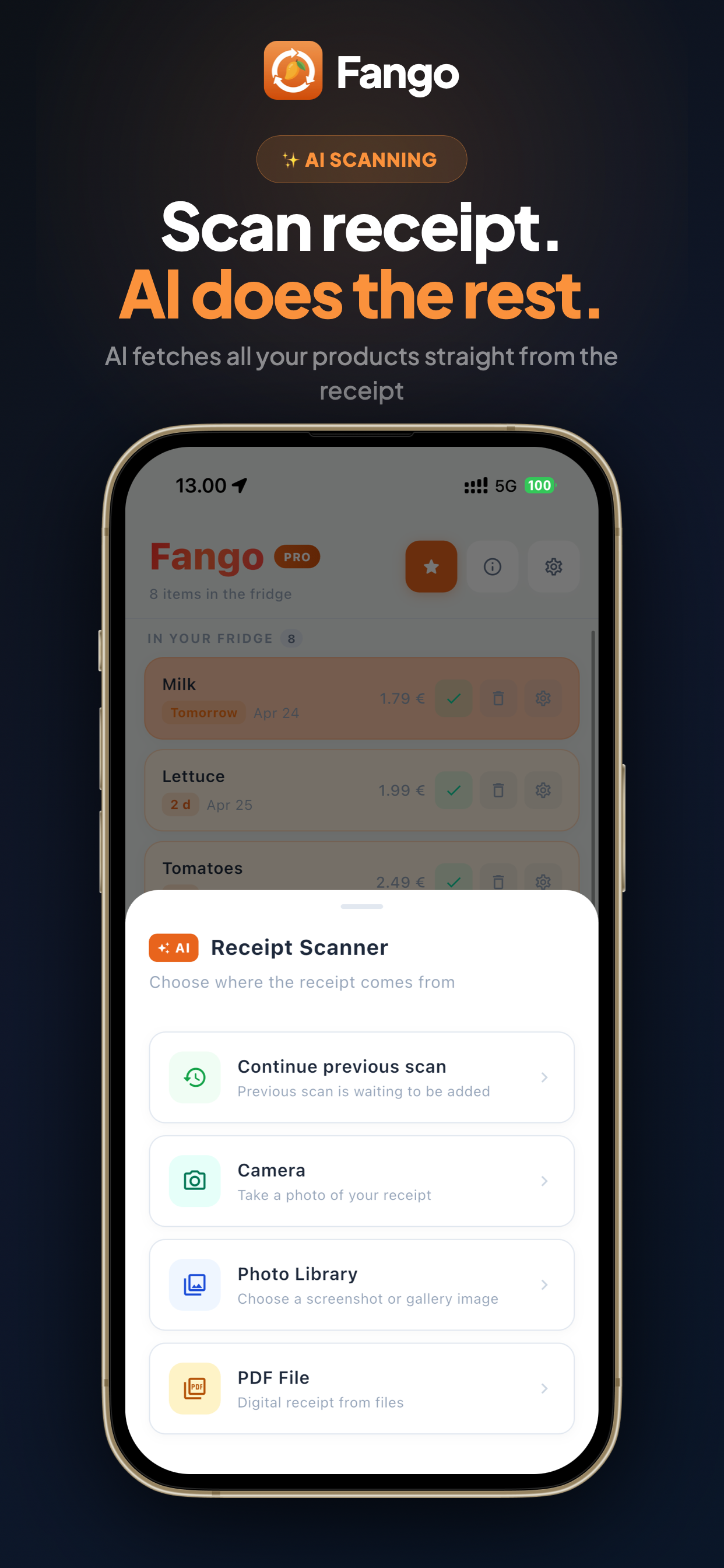
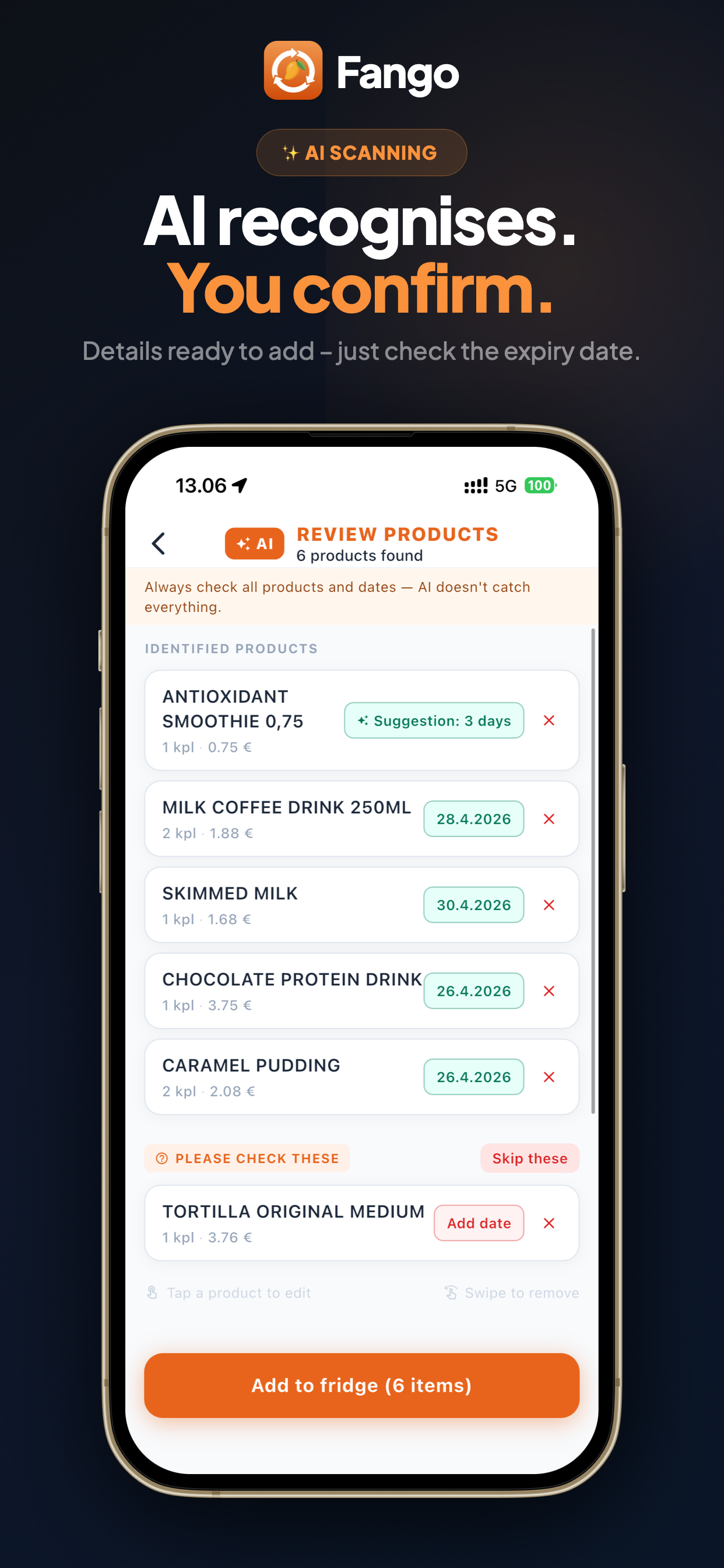
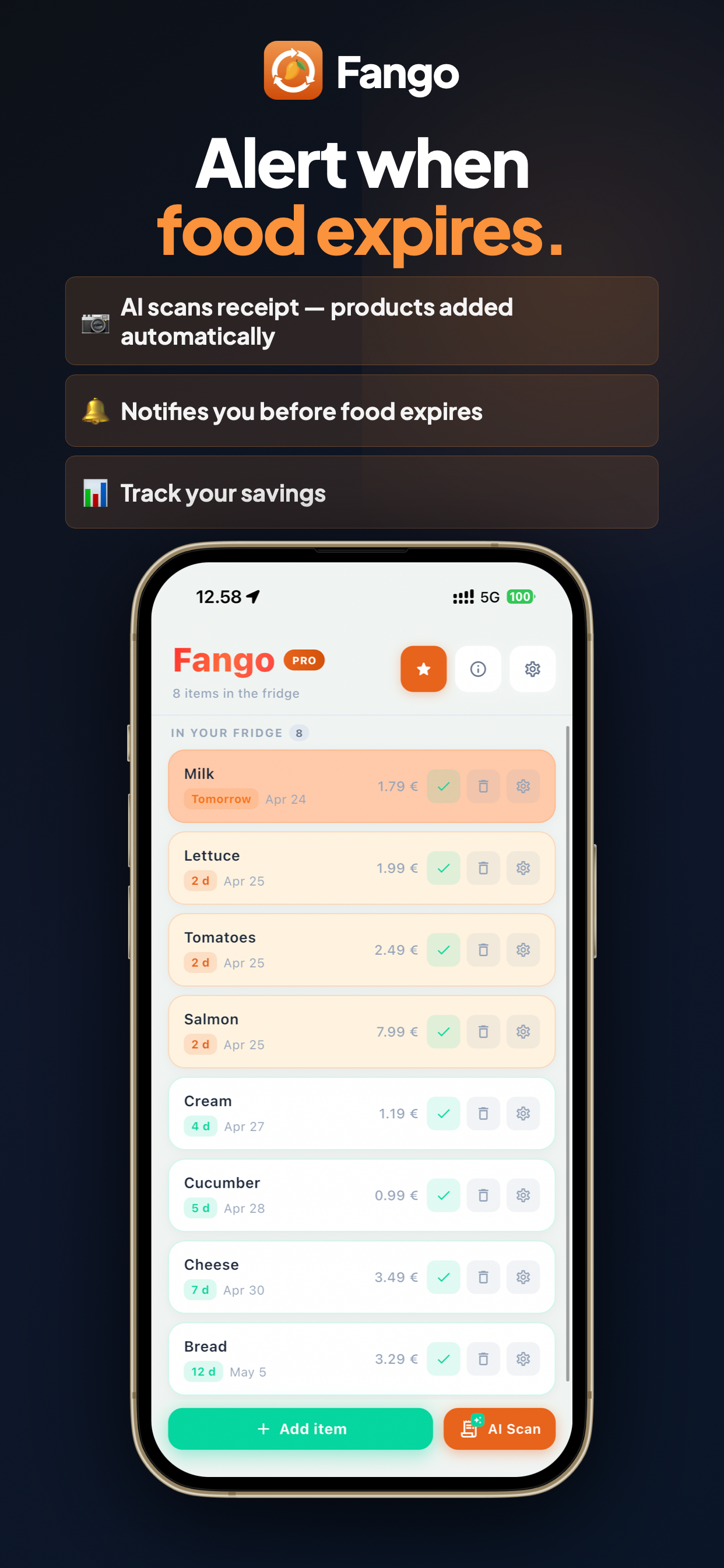
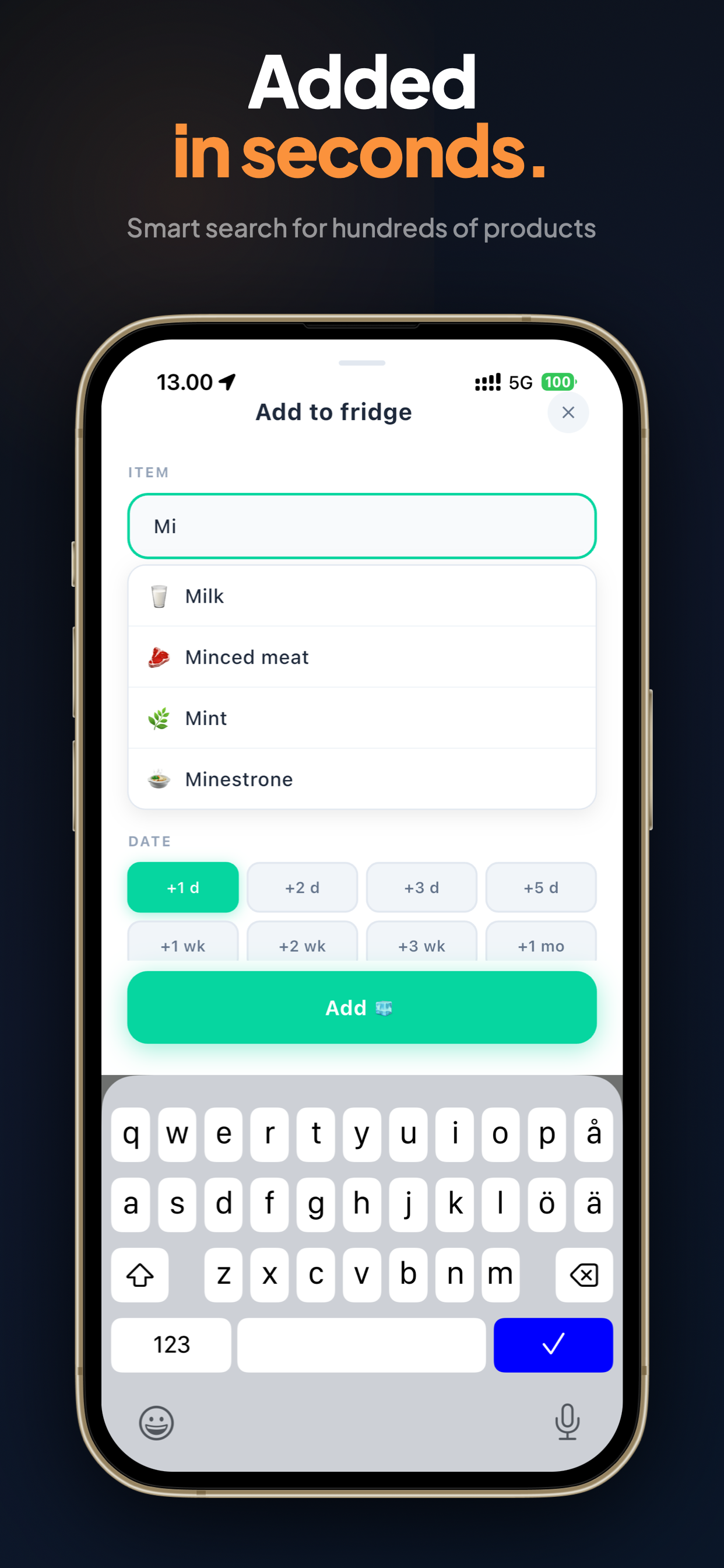
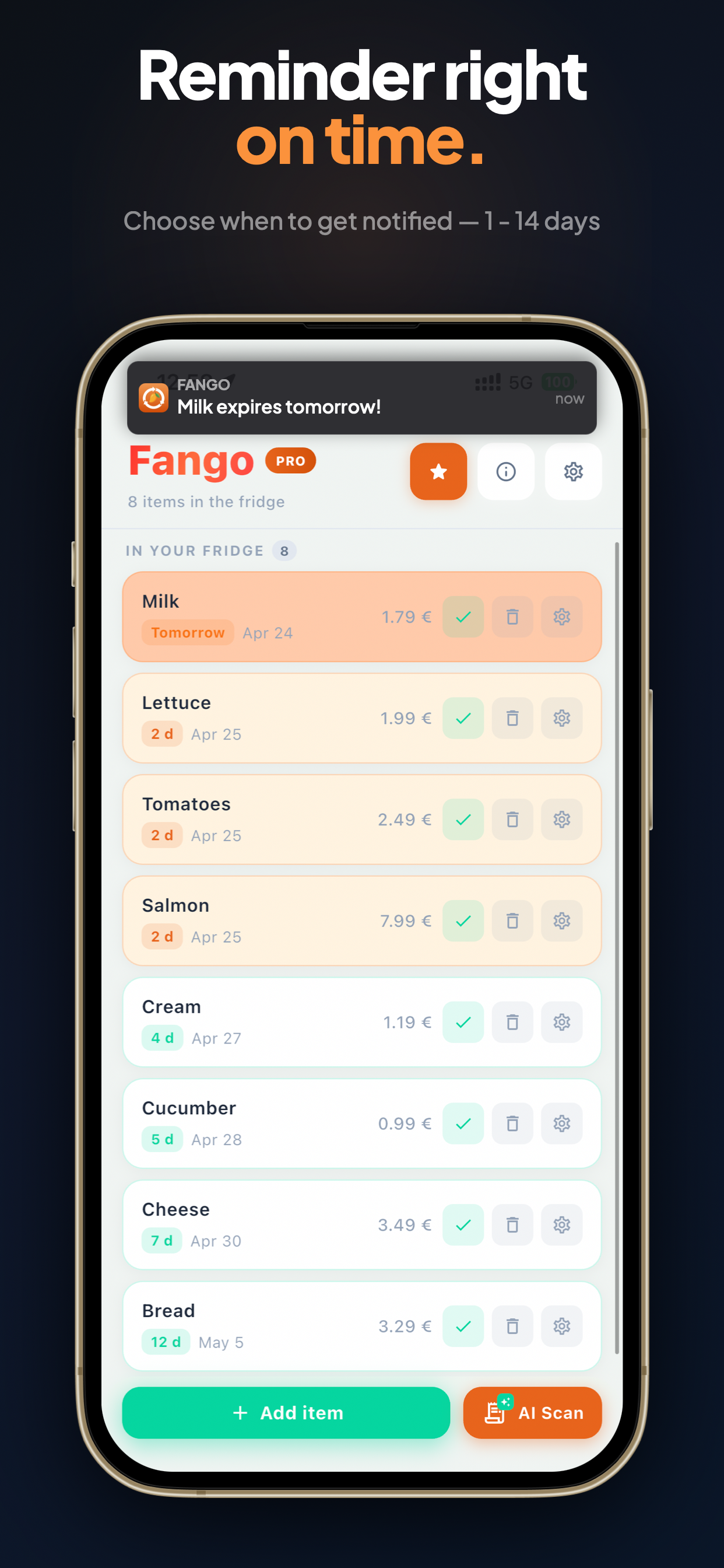
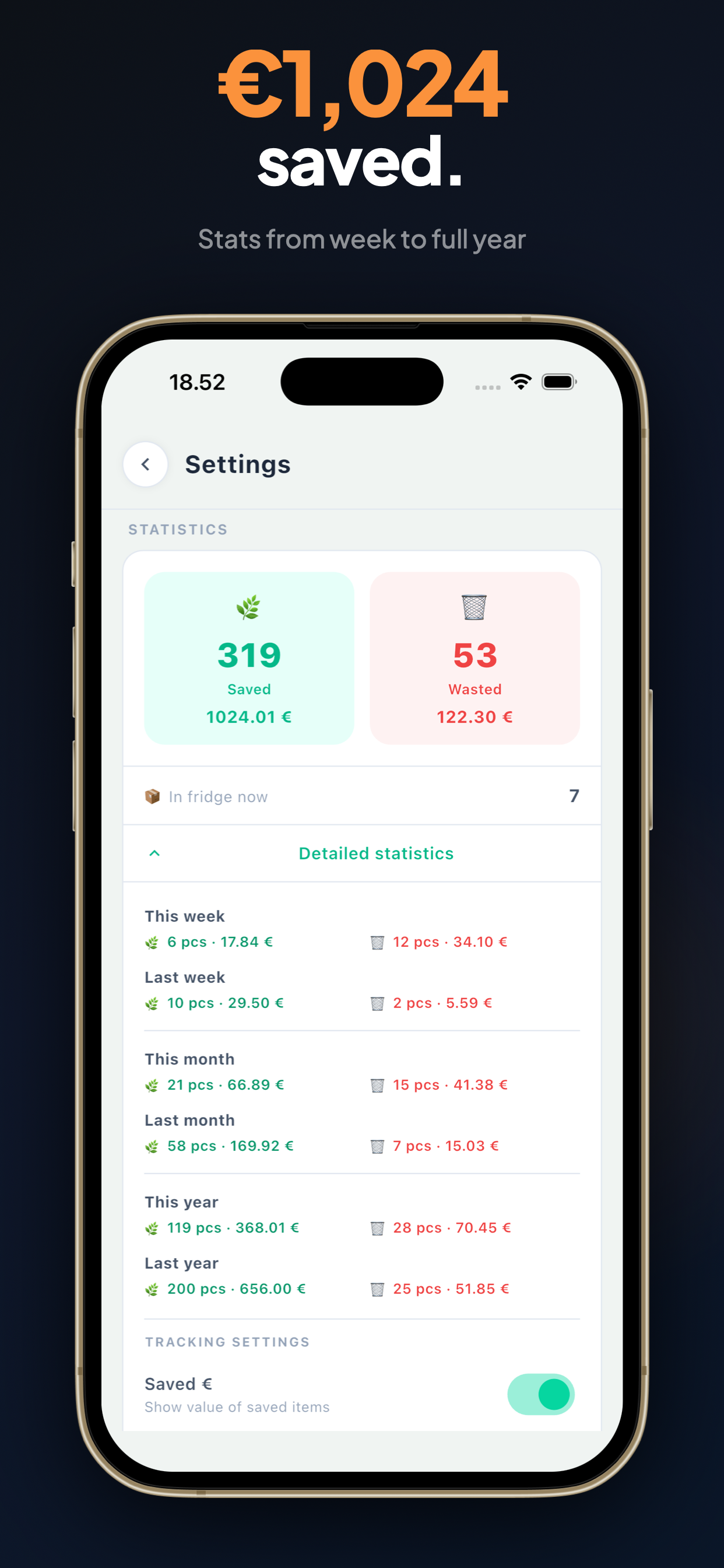
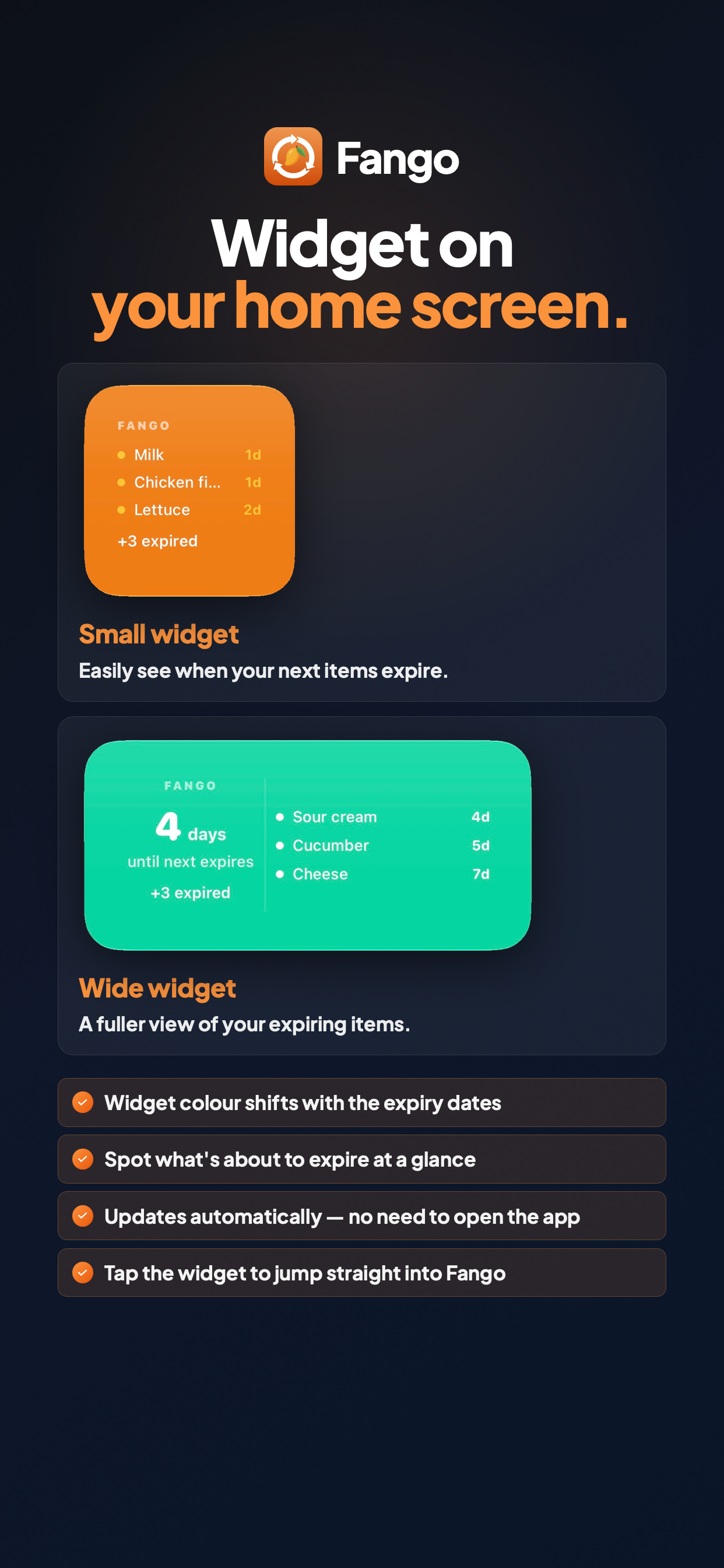
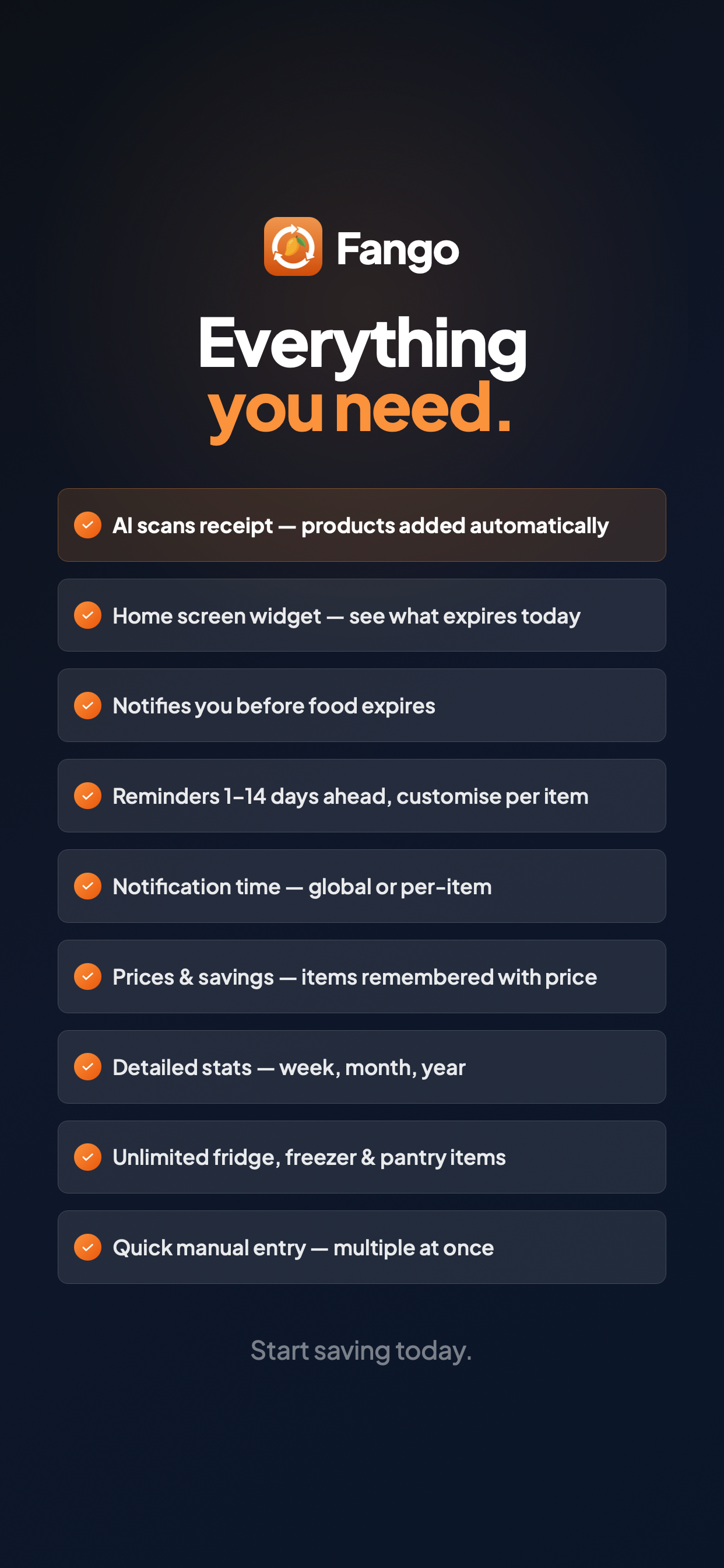
Feature graphic (Google Play header — 1024×500):
Brand assets
All assets are free to use in editorial coverage of Fango. Please link to fango.fi where possible. Each link opens the full-resolution file in a new tab — right-click → Save image (or use a browser's Save As) to download.
All eight individual marketing screenshots (slides 1–8) are linked directly from the screenshots grid above — click any image to open it at full resolution.
Privacy
Fridge inventory data stays on the device — no cloud sync, no user accounts, no ads, no behavioural tracking. The receipt image (or extracted PDF text) is sent transiently to a third-party AI service during a scan for product recognition, then discarded. An anonymous IP-based rate limit prevents abuse of the AI service.
Full policy (including the exact third parties used): fango.fi/privacy-policy
Get the app
Available for
Guest articles, interviews, quick quotes and product questions. Replies typically arrive within 1–3 business days. The team is happy to provide additional screenshots, region-specific data points, or comment on food waste statistics and household behaviour.