According to research by the NRDC, 73% of consumers misunderstand food date labels — and the confusion is especially pronounced in the US, where there is no federal standard for how dates must be labelled. “Best buy date”, “best by”, “best before”, “use by”, “sell by”, and “expiration date” are all used by different manufacturers with no consistent meaning. The result: enormous amounts of perfectly safe food get thrown away. Fango is a food expiry reminder app that tracks your food’s expiry dates so you always know what needs to be eaten soon — and what’s still perfectly fine.
Here is a clear explanation of what each label actually means — and when the date really matters. In the UK, the labels are simpler — see: best before vs use by date. For a deeper look at what “best before” really signals, read best before date — what it means and can you eat food after it.
- Best buy date / best by — quality indicator; food is often safe to eat after this date
- Expiration date — usually a safety deadline for perishables; do not ignore for meat, dairy, and infant formula
- No federal standard — in the US, manufacturers choose their own date label wording; meaning varies by product
- 73% of consumers confuse date labels, causing billions of dollars of avoidable food waste
What Is a Best Buy Date?
A best buy date — also written as “best by date” or “best if used by” — is a quality indicator. It tells you the date until which the manufacturer guarantees the product will be at its best: optimal taste, texture, aroma, and nutritional value. This is the same quality signal explained in our best before app guide — useful to track, but not a safety cutoff.
If you are choosing between apps, our guide to picking an expiry date tracker lists the features that decide whether you are still using it a month later.
Crucially, it is not a safety deadline. Food does not automatically become unsafe on or after a best buy date. For most shelf-stable products — canned goods, dry pasta, rice, crackers, cereals, frozen food — the food may remain safe and edible for weeks, months, or even years past the best buy date. What changes is quality, not safety.
What Is an Expiration Date?
This is where labelling gets confusing. “Expiration date” or “expires on” is used inconsistently across products and manufacturers:
- On perishable foods (raw meat, fish, deli items, soft cheese, ready meals) — expiration date is typically a safety deadline. Do not eat food past this date, even if it looks and smells fine. Harmful bacteria can be present at dangerous levels without any visible or olfactory sign.
- On dairy products (milk, yoghurt) — expiration date is often used as a safety-oriented deadline, though some manufacturers use it as a quality indicator. When in doubt, treat it as a safety date.
- On shelf-stable foods (canned food, dry goods, condiments) — “expiration date” often functions just like a best buy date: a quality guideline rather than a safety deadline.
- On infant formula — the only product where US federal law requires a date label. This is a genuine safety deadline and must be followed strictly.
Food is at peak quality before this date. After the date, it is often still safe — taste or texture may have declined slightly, but there is no safety risk for most foods.
For perishables, do not eat past this date — even if the food appears and smells normal. Dangerous bacteria can be present without any visible sign.
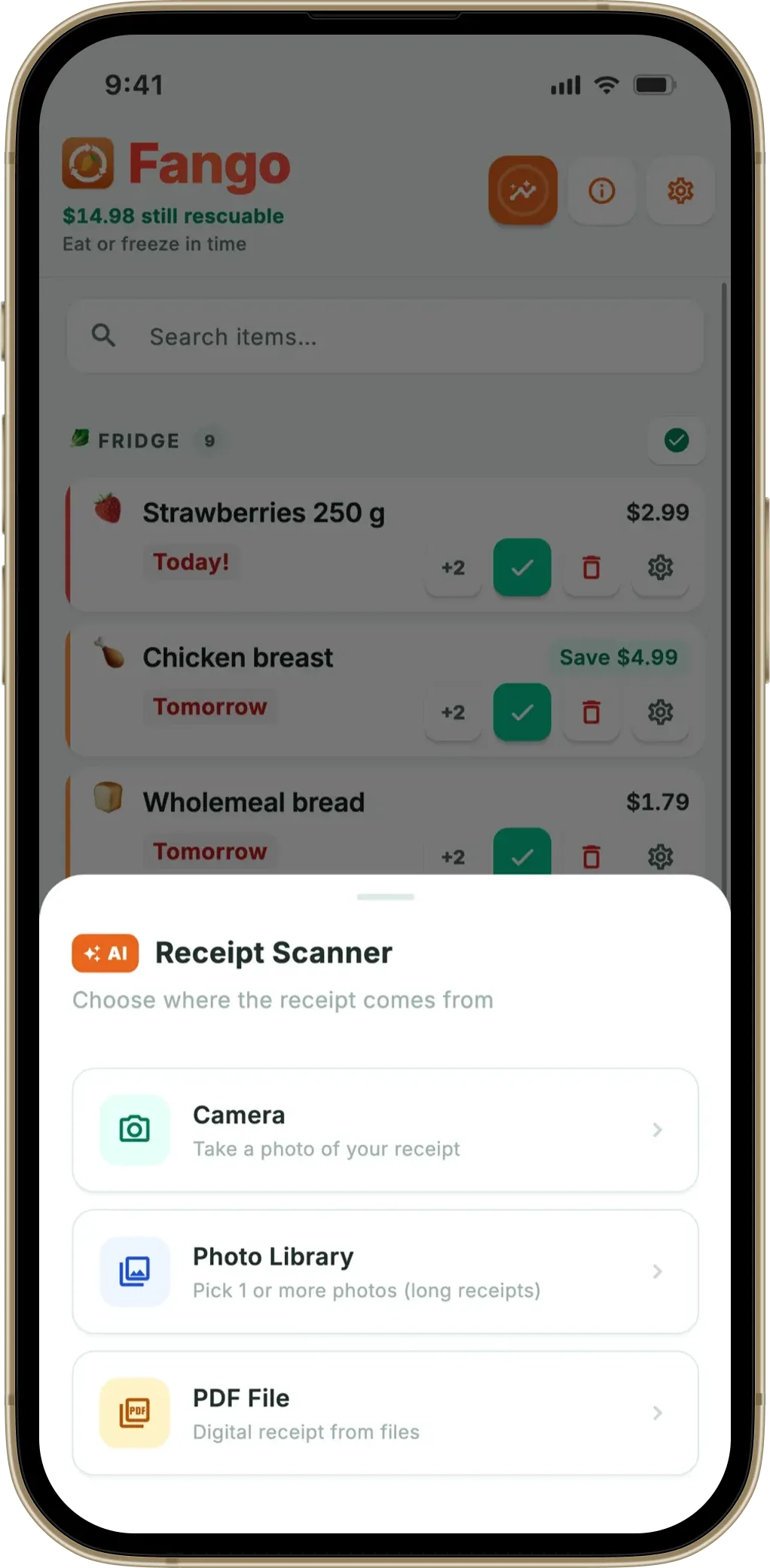
Fango lets you scan your grocery receipt — AI reads the products and adds them with reminder dates automatically. You get a push notification 1–14 days ahead. No sign-up, fridge data stays on your device by default.
Download on the App Store Get it on Google PlayFree for a month · No sign-up · iOS and Android
Why Is US Food Labelling So Confusing?
Unlike the UK and EU, where food date labelling is regulated and standardised, the US has no federal requirement for date labels on most food — with the single exception of infant formula. Manufacturers choose their own wording, which is why you see “best by”, “best before”, “best if used by”, “use by”, “sell by”, and “expiration date” all used across different brands, sometimes on the same category of product.
The NRDC study found this inconsistency to be a primary driver of food waste: consumers who cannot distinguish a quality date from a safety deadline default to throwing food away at any date label, regardless of whether it is actually unsafe. The result is millions of tonnes of food wasted annually that would have been perfectly safe to eat.
What About “Sell By” Date?
“Sell by” is a stock-management instruction intended for retailers — it tells store staff when to rotate or remove a product from shelves. It has no legal meaning for consumers and is not a quality or safety date for the buyer.
Ignore it entirely. The only dates that matter to you as a consumer are best by / best before (quality) and use by / expiration date on perishables (safety).
Which Foods Can You Safely Eat Past the Date?
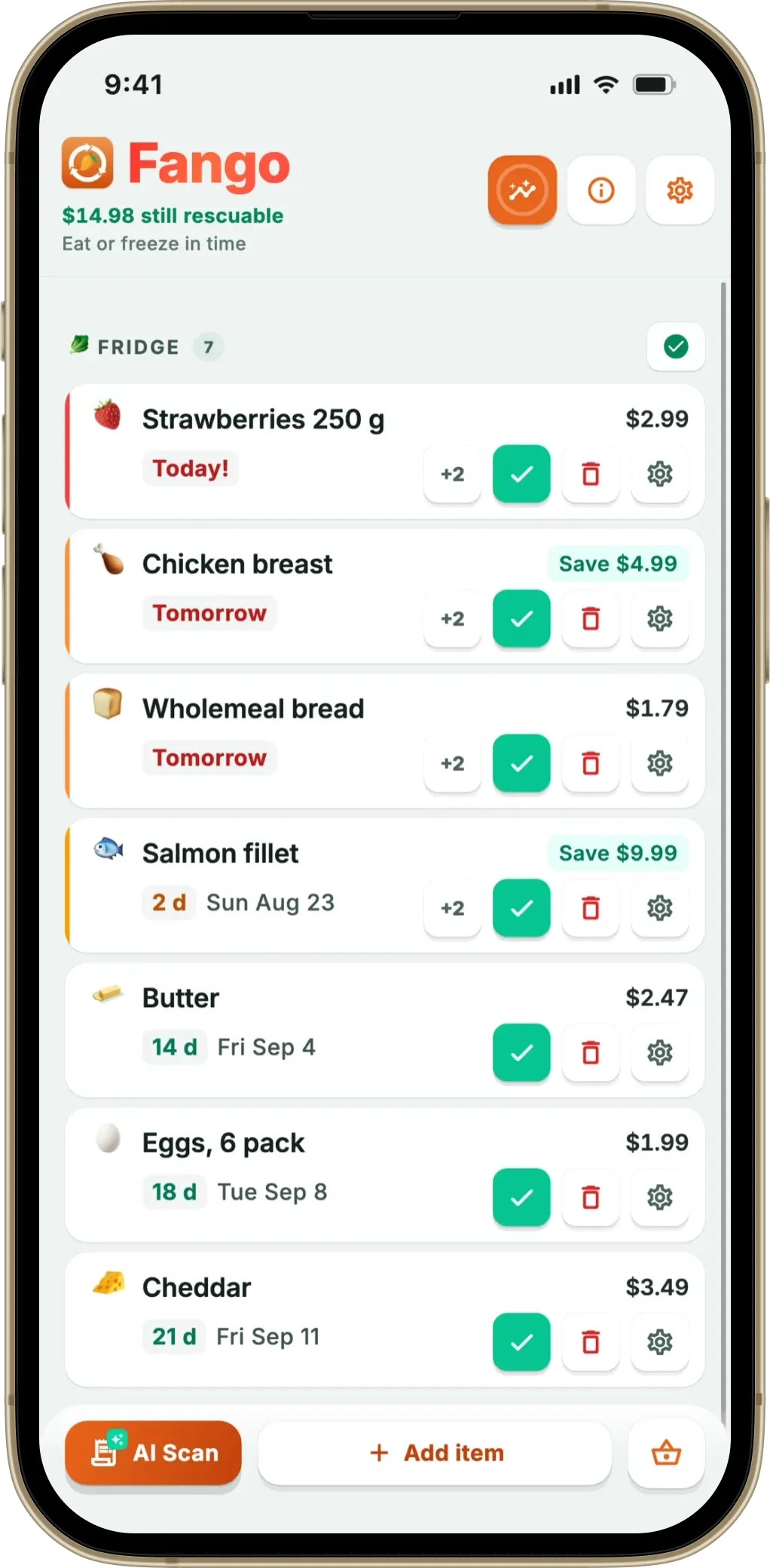
Fango sorts everything by reminder date and colour-codes the urgent items in red. The home screen widget shows what to use next without opening the app.
Download on the App Store Get it on Google PlayFree for a month · No sign-up · iOS and Android
Which Foods Have a Hard Expiration Date You Must Follow?
- Raw meat and poultry — do not eat past the expiration or use-by date; bacteria including Salmonella and Campylobacter can reach dangerous levels without visible signs
- Raw fish and seafood — same rule; spoilage can be rapid and bacteria are not always detectable by smell
- Ready-to-eat deli items and smoked fish — Listeria risk; follow the date strictly
- Infant formula — the one product with a federally mandated date in the US; never use past expiration
- Prescription medication — expiration dates indicate reduced efficacy and in some cases safety concerns; follow strictly
A Practical Rule of Thumb
When you see any date label on food, ask one question: is this a perishable food that requires refrigeration?
If yes (raw meat, fish, ready meals, soft dairy): treat the date as a safety deadline regardless of whether it says “best by” or “expiration date”. When in doubt, do not eat it.
If no (dry goods, canned food, frozen food, hard cheese, eggs): the date is almost certainly a quality indicator. Use your senses — look, smell, taste — and use your judgement. Most of these foods are safe to eat for a significant period past the date.
Once you know what’s in your fridge and when it expires, Fango helps you act on it: scan your grocery receipt after shopping and get push notifications before anything is about to expire — so nothing gets forgotten.
Frequently Asked Questions
What does best buy date mean?
Best buy date (also “best by date”) is a quality indicator — the manufacturer’s guarantee that food will be at peak quality until that date. Food is often still safe to eat after a best buy date. It is not a safety deadline.
What is the difference between best buy date and expiration date?
Best buy date is always a quality indicator. Expiration date varies: on perishables like raw meat and dairy, it functions as a safety deadline; on shelf-stable foods, it often acts like a best buy date. There is no federal standard in the US, so the meaning depends on the product type.
Can you eat food after the best buy date?
Usually yes. Dry goods, canned food, eggs, frozen food, and hard cheese are typically safe for weeks or months past the best buy date. Use your eyes and nose, not your tongue — an off smell, mould or a changed texture means throw it out.
Is there a federal standard for food date labels in the US?
No — except for infant formula, the US FDA does not require standardised date labelling. Manufacturers use their own wording, which is why “best by”, “best before”, “use by”, “sell by”, and “expiration date” are all used inconsistently across different brands.
What foods have a true expiration date that is a safety deadline?
Infant formula, raw meat and poultry, raw fish, ready-to-eat deli items, smoked fish, and some soft dairy products. These carry genuine microbial risk past their date and should not be eaten after the stated deadline.