According to research by the NRDC, 73% of consumers confuse food date labels — and that confusion is one of the biggest drivers of avoidable food waste. In the UK alone, WRAP estimates that households throw away £17 billion worth of food every year, much of it perfectly safe to eat. Understanding the difference between best before and use by is one of the simplest ways to waste less. Related: what does best before mean? | best buy date vs expiration date (US) | using an app for out-of-date food. Fango works as a food expiry reminder app that tracks both types of dates so you always know what needs to be eaten soon — and what can wait.
- Best before — quality date. You can eat the food after this date; it may just be slightly less good
- Use by — safety deadline. You must not eat the food after this date, even if it looks and smells fine
- Display until / sell by — stock instruction for retailers. Irrelevant to consumers
- 73% of people confuse the two, causing billions of pounds of avoidable waste
The Clear Difference: Quality vs Safety
Food is at its best quality before this date. After the date, it is often still safe to eat — it may have slightly lower quality in taste, texture or nutrition, but it is not dangerous.
Do not eat after this date — even if the food looks and smells normal. Harmful bacteria can grow to dangerous levels without producing any visible or olfactory warning signs.
Best Before in Detail
Best before dates are legally required on most packaged foods in the UK under EU Regulation 1169/2011 (retained in UK law post-Brexit). They indicate the date until which the manufacturer guarantees the food will be at peak quality.
The feature that matters most in any of these apps is the reminder — see what a good expiry date tracker app does differently.
After the best before date, the food is not automatically unsafe. What changes is quality — the crisps may be slightly softer, the biscuits less crunchy, the frozen peas less vibrant. For many shelf-stable products, the best before date is a conservative estimate, and the food remains safe for weeks or months past it.
Notable exceptions where best before matters more:
- Eggs — UK Food Standards Agency advises that vulnerable groups (pregnant women, young children, the elderly, immunocompromised) follow the best before date strictly
- Baby food — follow best before strictly
- Infant formula — do not use past best before date
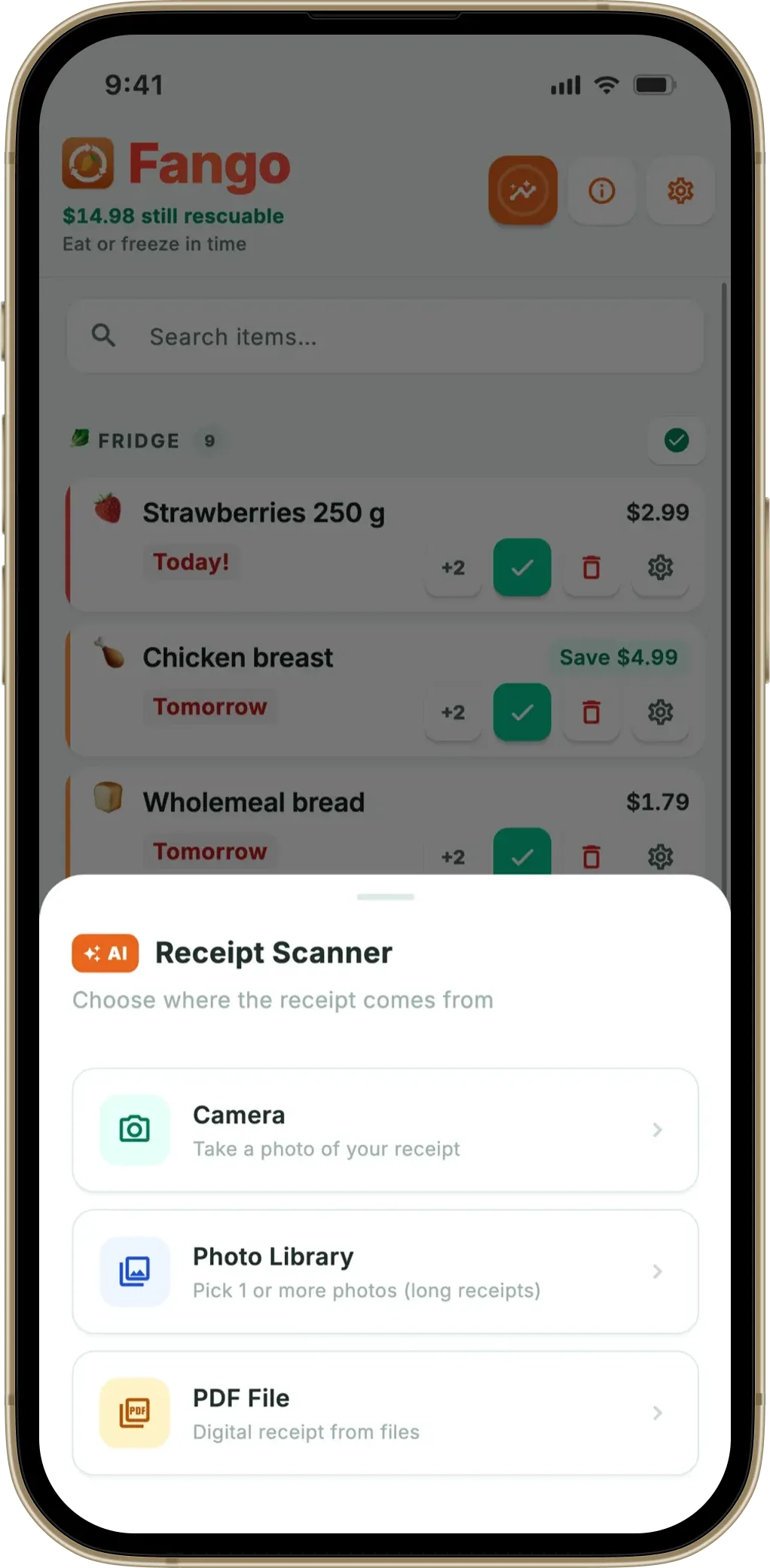
Scan your grocery receipt — Fango adds products with their reminder dates automatically and sends push notifications in time. Know what needs eating today vs what can wait. No sign-up, fridge data stays on your device by default.
Download on the App Store Get it on Google PlayFree for a month · No sign-up · iOS and Android
Use By in Detail
Use-by dates appear on foods where microbial safety is a genuine concern: raw and cooked meat, fish, seafood, ready-to-eat deli items, smoked products, and some soft dairy foods. The UK Food Standards Agency is unambiguous: do not eat food past its use-by date.
The critical point is that dangerous levels of bacteria can be present without any visible or olfactory sign. Raw chicken that smells fine can still carry Campylobacter in unsafe quantities past its use-by date. Smoked salmon that looks normal can contain Listeria at dangerous levels. This is why the use-by date exists — because your senses cannot reliably detect the problem.
- Never eat food past its use-by date — regardless of how it looks or smells
- Cooking past its use-by date does not always make food safe
- Freezing before the use-by date is fine — freeze on the day of purchase if needed
- Once thawed, the use-by date guidance applies again — eat promptly
What About “Display Until” and “Sell By”?
These are stock-management instructions intended for retail staff — they indicate when a product should be removed from shelves or rotated. They have no legal meaning for consumers and are not quality or safety dates.
Ignore them entirely. The only dates that matter are best before (quality) and use by (safety).
Which Foods Have Which Date Type?
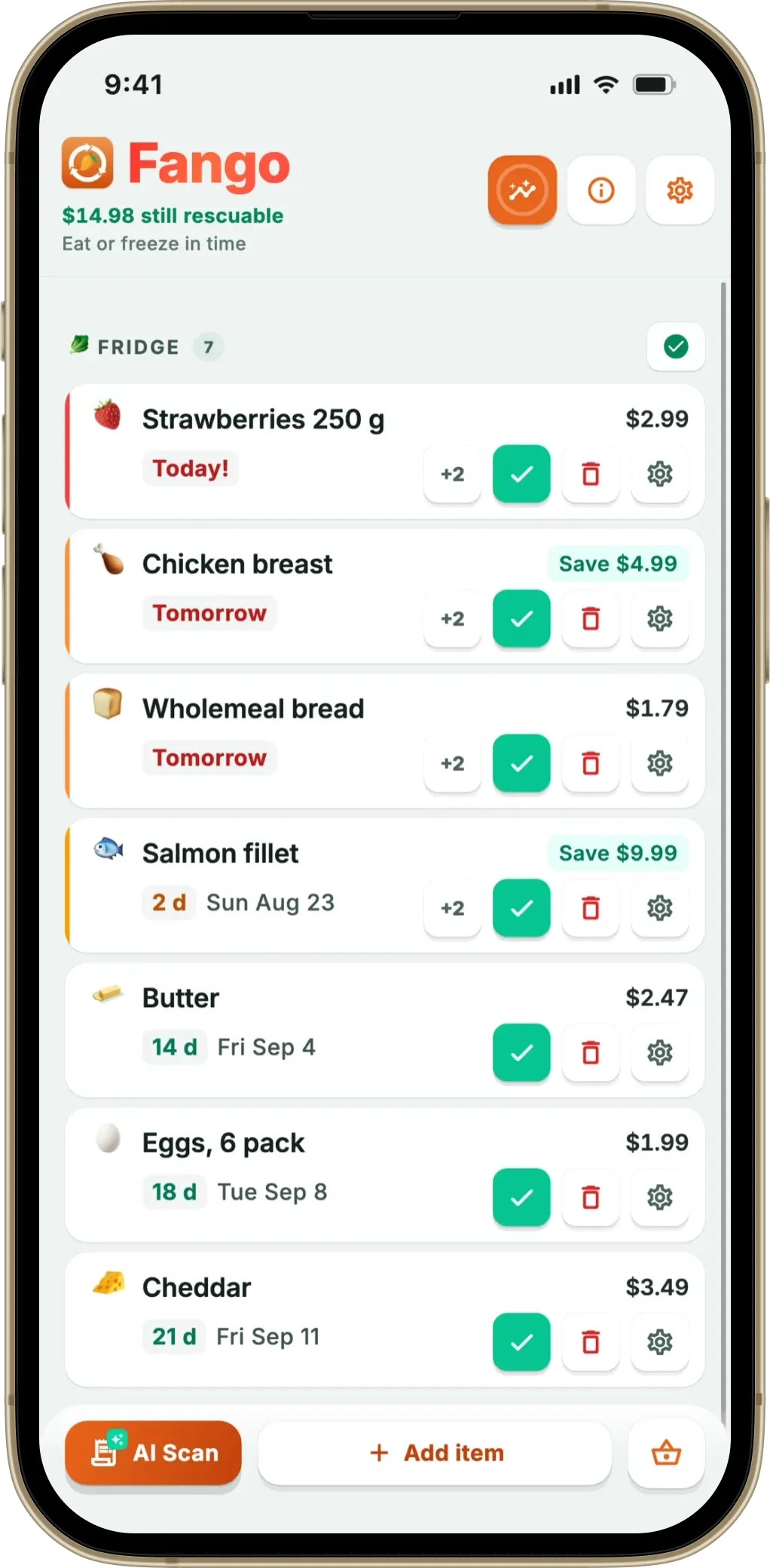
Fango sorts everything by reminder date and colour-codes the urgent items in red. The home screen widget shows what to use next without opening the app.
Download on the App Store Get it on Google PlayFree for a month · No sign-up · iOS and Android
The Waste Connection: Why It Matters
Confusing best before with use by is a leading cause of avoidable food waste. When consumers treat a best before date as a safety deadline, they throw away perfectly edible food. WRAP research shows that UK households waste 6.4 million tonnes of food per year, with date label confusion directly contributing to the problem.
On the other hand, ignoring a use-by date because food “looks fine” can cause serious food poisoning. The distinction matters in both directions: don’t waste safe food, and don’t eat unsafe food.
Frequently Asked Questions
What is the difference between best before and use by?
Best before = quality date. You can eat the food after the date — quality may have declined but it is usually still safe. Use by = safety deadline. Do not eat food after the use-by date, even if it appears and smells fine.
Can I eat food one day after its use-by date?
No. The UK Food Standards Agency advises never to eat food past its use-by date. Harmful bacteria can reach dangerous levels without any visible sign, even one day past the date.
Can I eat food after its best before date?
Generally yes — best before is a quality indicator, not a safety deadline. Dry goods, tinned food, and hard cheeses are often safe for weeks or months past their best before date. Use your senses and common sense.
Does freezing before the use-by date extend the deadline?
Yes. Freezing before the use-by date is safe and effective. Once thawed, treat the food as fresh and eat it within the recommended timeframe — do not refreeze it or store it past its original use-by date.
What does “display until” mean?
It is a stock control instruction for supermarket staff — not a safety or quality date for consumers. Pay attention only to best before and use by.
Once you know the difference, Fango helps you act on it: scan your receipt after shopping and get push notifications when products are approaching their use-by or best-before dates. Nothing gets forgotten at the back of the fridge.