Bread is one of the most wasted foods in UK households — WRAP estimates it accounts for around 20 million slices thrown away every day. Most of that waste happens because people don’t know how long bread actually lasts — or how to store it properly. Store-bought bread lasts 5–7 days at room temperature. Homemade bread lasts 2–4 days. And freezing can extend the shelf life to 3 months with almost no loss in quality. Fango tracks your groceries and sends reminders in time — including that loaf you bought on Monday.
- Store-bought bread — 5–7 days at room temperature (preservatives help)
- Homemade bread — 2–4 days; no preservatives means faster mould
- Sourdough — 4–5 days; natural acidity slows mould growth
- Fridge — prevents mould but bread goes stale much faster; only use as last resort
- Freezer — up to 3 months; best option if you won’t finish within 3 days
Bread Shelf Life by Type and Storage
How Long Does Bread Last at Room Temperature?
The main factors that determine how long bread lasts at room temperature are preservatives, moisture content, and whether the packaging is sealed.
This is exactly the kind of date an expiry date tracker app reminds you about before it passes.
- Store-bought sliced bread — 5–7 days. Commercial loaves contain calcium propionate or other preservatives that inhibit mould. The best-before date is a reliable guide.
- Homemade bread — 2–4 days. Without preservatives, mould grows quickly — especially in warm or humid kitchens. A bread box extends this by a day or two.
- Sourdough — 4–5 days. The lactic and acetic acids produced during fermentation slow mould growth naturally. Sourdough is one of the longest-lasting breads at room temperature.
- Baguette and crusty loaves — best within 1 day (the crust goes soft quickly), though they remain safe for 2–3 days. Day-old baguette is perfect for bruschetta or garlic bread.
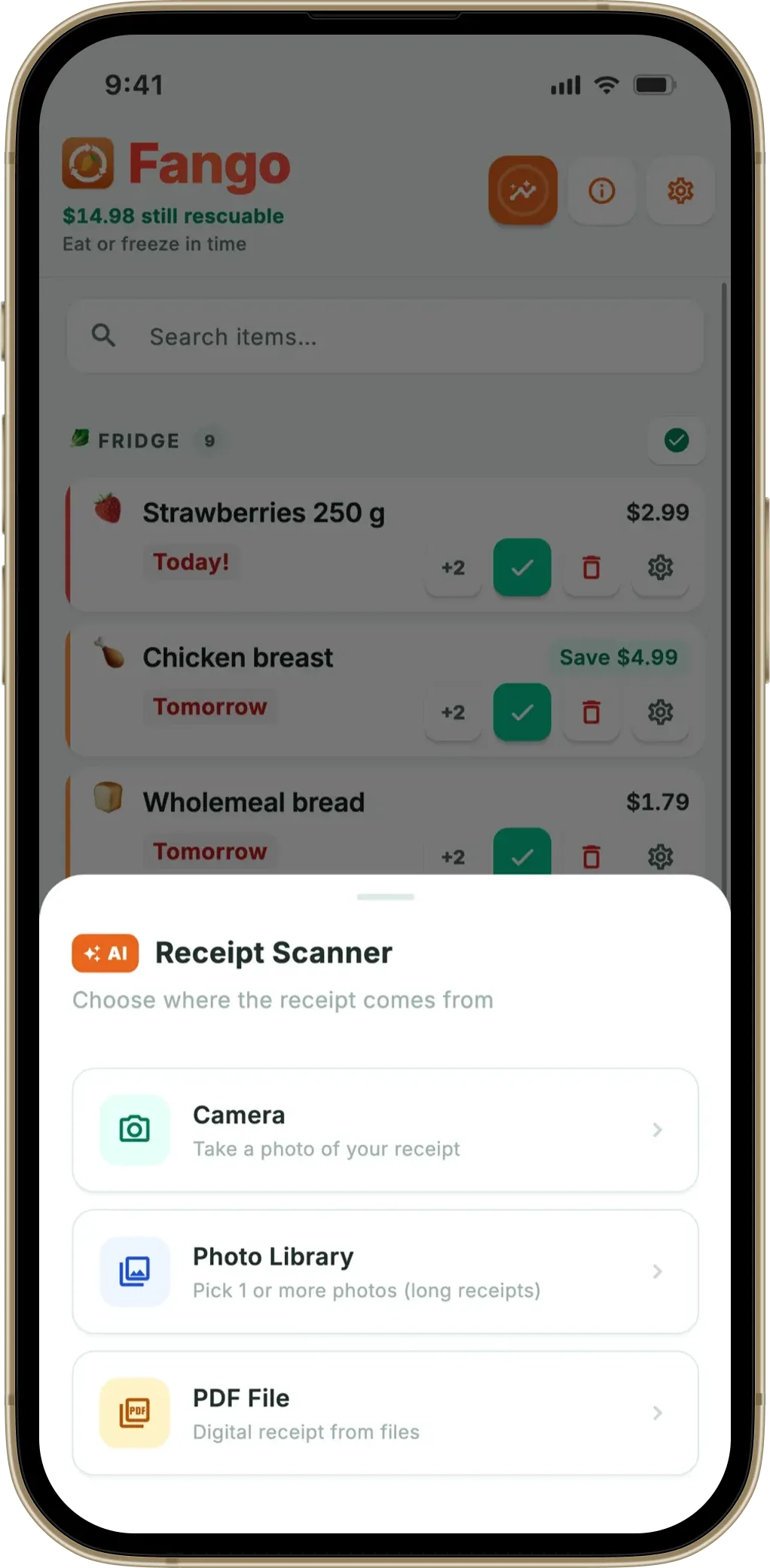
Fango tracks reminder dates for everything in your fridge and cupboards — and sends a push notification in time. Scan your grocery receipt and AI adds products automatically. No sign-up, fridge data stays on your device by default.
Download on the App Store Get it on Google PlayFree for a month · No sign-up · iOS and Android
Does the Fridge Make Bread Last Longer?
The fridge prevents mould — yes. But it significantly accelerates staling. Cold temperatures speed up a process called starch retrogradation: starch molecules in bread recrystallise in the cold, making the bread firm, dry, and tasteless much faster than at room temperature.
Bread goes stale several times faster in the fridge than at room temperature. A loaf that would stay pleasant for 5 days on the counter might be stale and unappetising within 24–36 hours in the fridge.
When to use the fridge: only if your kitchen is very warm and humid, or you’re trying to squeeze a day or two of mould-free time out of bread that’s almost past its date. Otherwise, keep bread at room temperature or freeze it.
How to Freeze Bread
Freezing is the best way to extend bread’s life — and unlike refrigerating, it doesn’t make bread stale. Bread can be frozen for up to 3 months with almost no change in quality. See the complete how to freeze food guide for tips on wrapping, labelling, and defrosting all types of food. For broader pantry and fridge organisation, our food storage tips — 9 ways to keep food fresh longer covers the basics, and how long does food last in the fridge lists storage times for every food group.
-
1
Slice before freezing. A whole frozen loaf is difficult to portion. Slice it first and freeze individual slices — this way you only take out what you need each time.
-
2
Wrap tightly to prevent freezer burn. Place the slices in a zip-lock bag or wrap in cling film before putting in a freezer bag. Squeeze out as much air as possible before sealing.
-
3
Freeze early — not at the last minute. Freeze bread on day 1 or 2, while it’s still fresh. Don’t wait until it’s starting to go stale; frozen stale bread tastes the same as fresh stale bread.
-
4
Toast directly from frozen. Slices can go straight into the toaster from the freezer — no thawing needed. For a whole slice or roll, leave at room temperature for 30–60 minutes or warm briefly in the oven at 160°C.
-
5
Label with the date. Bread is best within 3 months. After that it’s still safe but flavour and texture begin to decline.
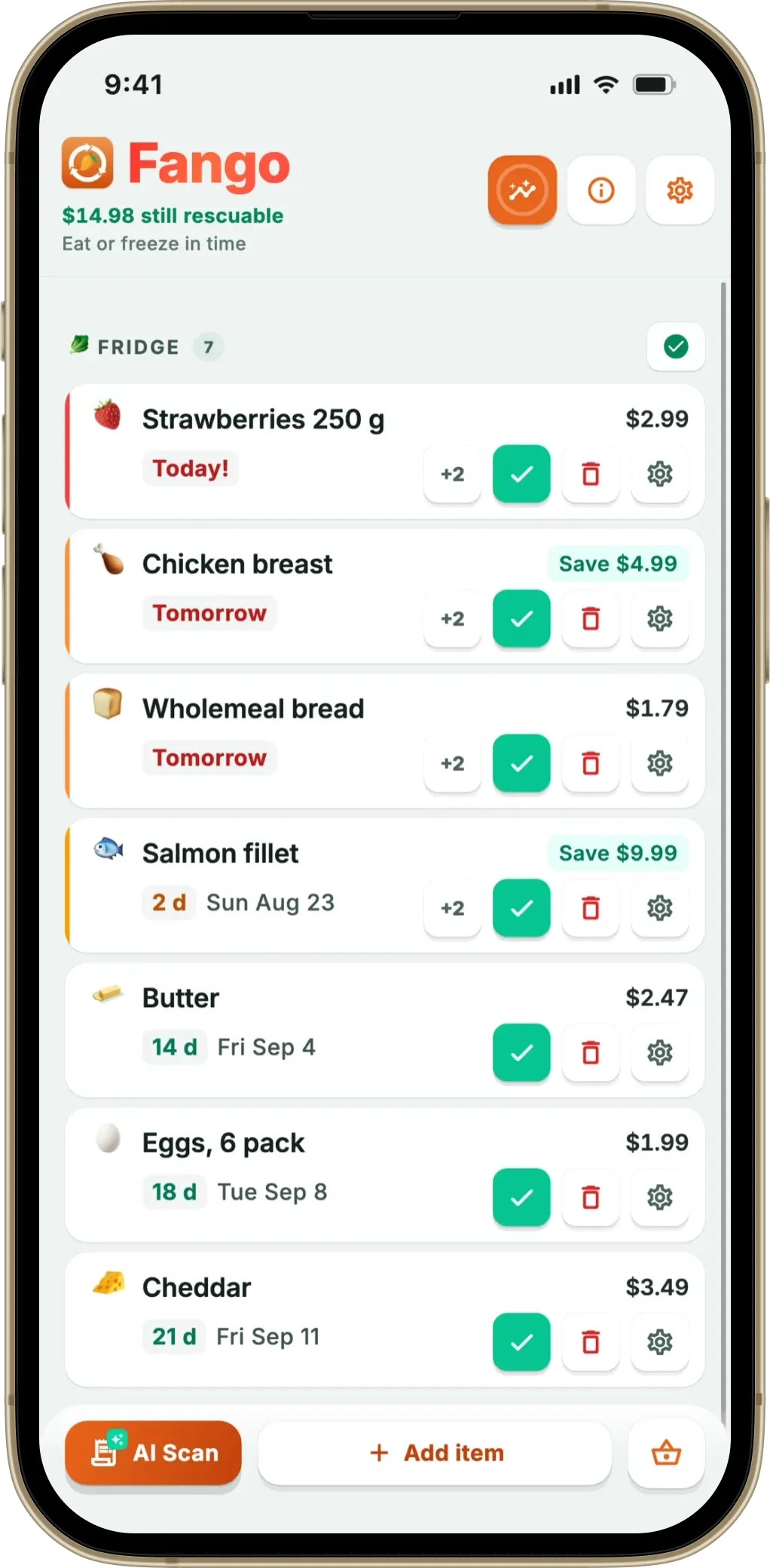
Fango sorts everything by reminder date and colour-codes the urgent items in red. The home screen widget shows what to use next without opening the app.
Download on the App Store Get it on Google PlayFree for a month · No sign-up · iOS and Android
How to Tell If Bread Has Gone Bad
The main sign that bread has spoiled is mould. Stale bread, by contrast, is dry and unpleasant but not harmful.
- Any visible mould — green, white, blue, or black spots — means discard the entire loaf. Mould spores travel invisibly through soft, porous bread. Cutting away the mouldy part is not safe.
- Sour or off smell that isn’t characteristic of the bread type (sourdough naturally smells sour — fresh mould smells musty or chemically sharp).
- Unusually slimy texture on cut surfaces, which indicates bacterial or mould growth inside the loaf.
Stale bread is not dangerous. Dry, hard, or crumbly bread that has lost its texture is fine to use for toast, breadcrumbs, bread pudding, or croutons. It is only a quality issue, not a safety issue.
How to Keep Bread Fresh for Longer
-
1
Use a bread box. A bread box keeps bread at the right humidity — enough to prevent drying out, not so much that moisture traps and breeds mould. Widely considered the best room-temperature storage method.
-
2
Store in a paper bag, not plastic. Plastic bags trap moisture and accelerate mould. A paper bag allows gentle airflow and is better for crusty breads. For sliced loaves, the original resealable packaging is usually fine.
-
3
Keep away from heat and sunlight. Warmth and humidity are mould’s best friends. Avoid storing bread near the oven, dishwasher, or in direct sunlight.
-
4
Freeze what you won’t eat in 3 days. The single most effective thing you can do: freeze half the loaf on day one and take out slices as needed.
Frequently Asked Questions
How long does bread last at room temperature?
Store-bought bread: 5–7 days. Homemade bread: 2–4 days. Sourdough: 4–5 days. Follow the best-before date on the packaging as a guide.
Does bread last longer in the fridge?
It lasts longer without mould (1–2 weeks), but it goes stale much faster. Freezing is almost always a better option than refrigerating for bread.
Can you freeze bread?
Yes — slice before freezing and it keeps for up to 3 months. Toast slices directly from frozen, no thawing required.
Is mouldy bread safe to eat if you cut off the mouldy part?
No — soft breads have a porous texture that allows mould spores to spread throughout the loaf even when you can only see a small spot. Discard the entire loaf.
What is the best way to store bread?
A bread box at room temperature for short-term (up to 5–7 days). The freezer for anything beyond 3 days — slice before freezing and toast directly from frozen.