Food is one of the biggest expenses in any household budget. According to WRAP, UK households spend a significant share of their income on food every month — and on top of that, throw away around £17 billion worth of food each year, roughly £1,000 for a family of four without realising it. In the US, the USDA estimates the equivalent figure is around $1,600 per family of four annually. One of the simplest ways to claw that back is to stop binning food you already paid for — scanning what you buy with a grocery receipt scanner turns the receipt itself into a use-it-up list.
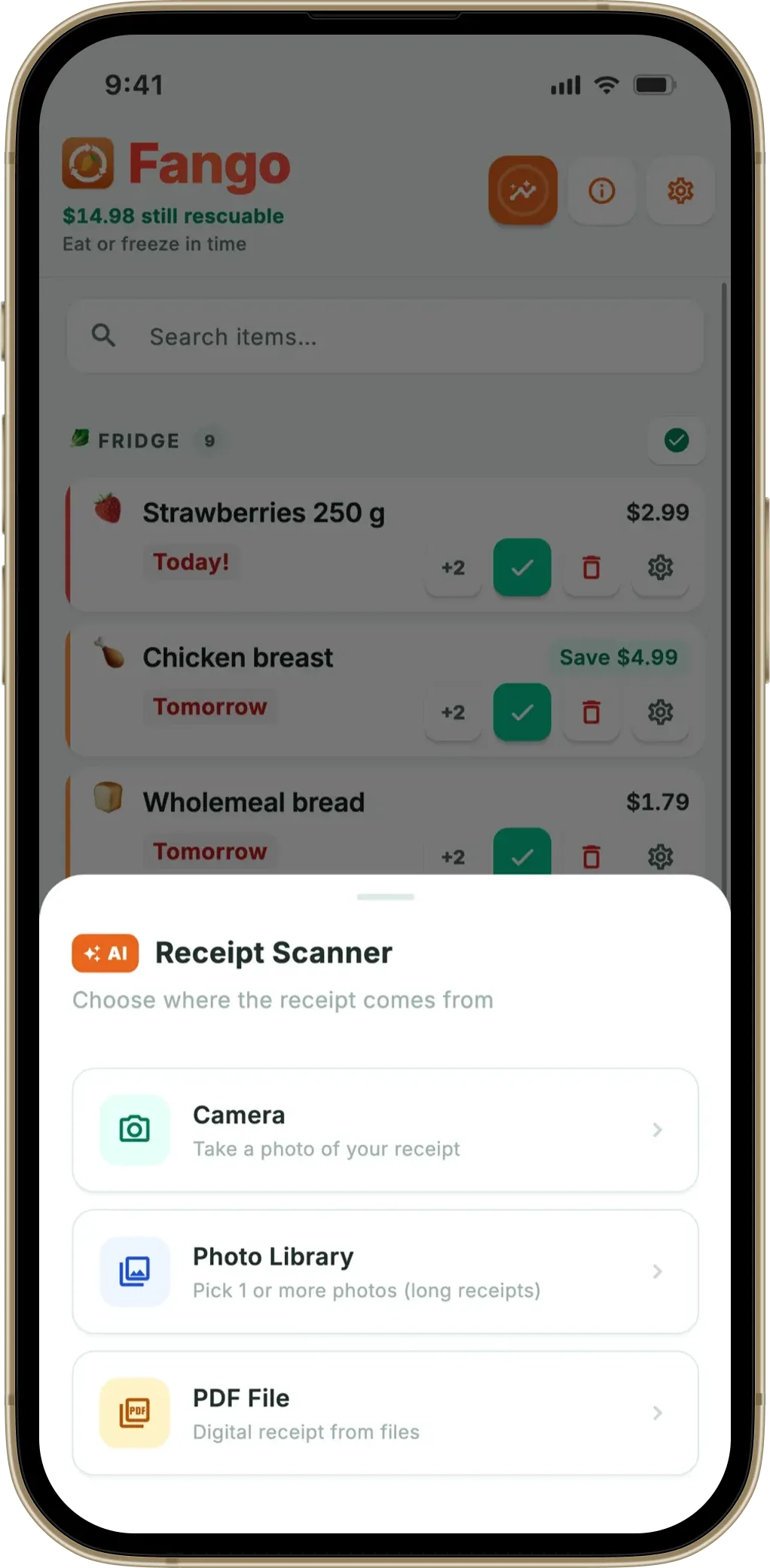
Scan your grocery receipt with your phone camera — AI identifies your products and adds them to your digital fridge automatically. You get a push notification 1–14 days ahead. No sign-up. Fridge data stays on your device by default.
Download on the App Store Get it on Google PlayFree for a month · No sign-up · iOS and Android
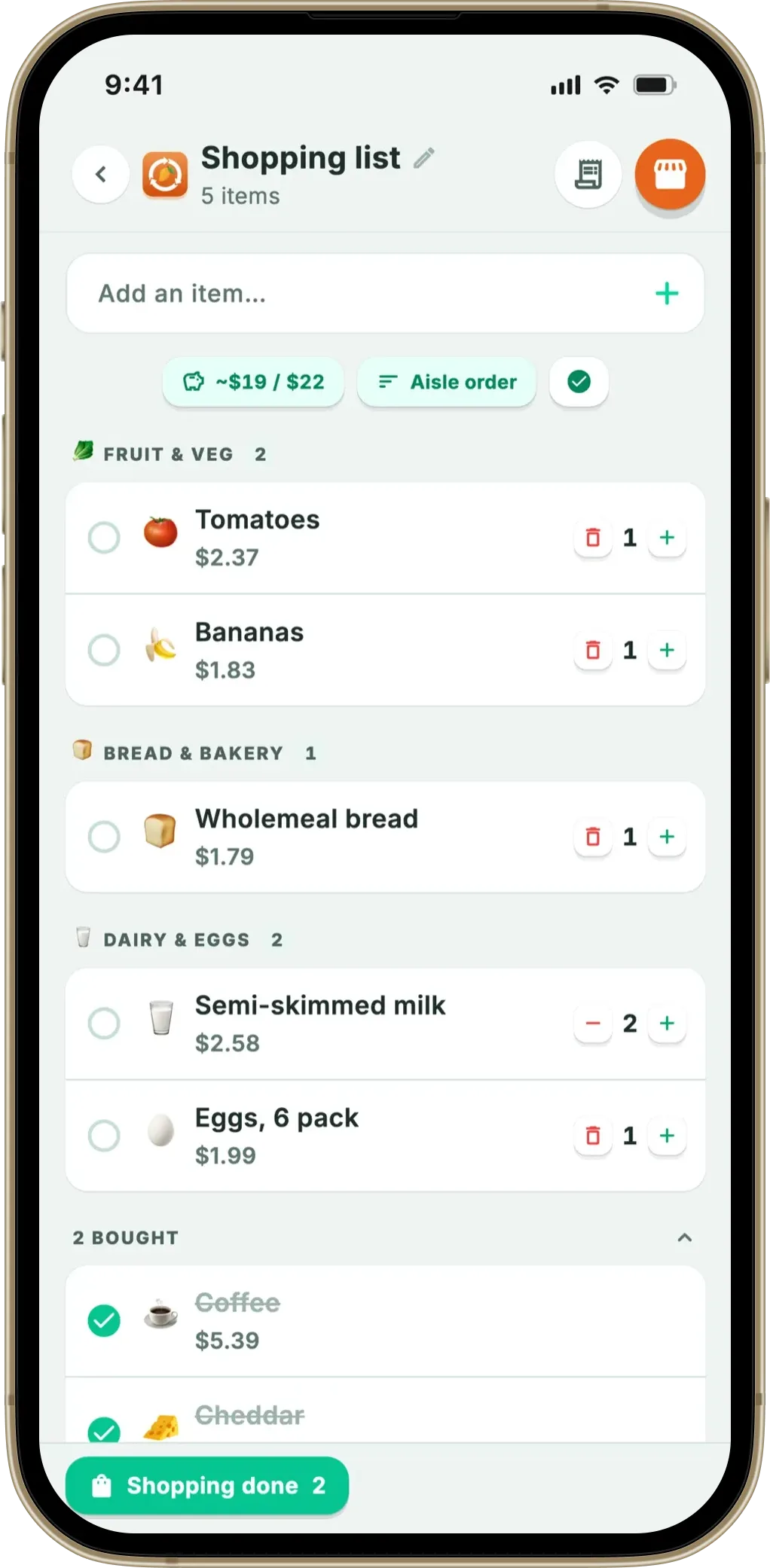
Food prices rose sharply in 2022–2023 and those increases have largely stayed. That makes managing your grocery budget more important than ever. The good news: you can cut spending significantly without eating worse — through smarter shopping habits and tools like the Fango app, which automatically tracks your groceries and reminds you in time.
- A UK household wastes ~£1,000/year in food — halving this alone saves £500 with no lifestyle change
- Shopping with a list + store-brand products are the biggest immediate wins — up to £100/month saved
- Buy discounted items and freeze them — saves 30–50% on meat and fish
- Track expiry dates automatically — Fango stops food waste without any daily effort
Where is the biggest saving potential?
Grocery savings come from two directions: buying smarter and wasting less. These two approaches reinforce each other — and combined, the potential is significant.
If you are choosing between apps, our guide to picking an expiry date tracker lists the features that decide whether you are still using it a month later.
The food waste figure is particularly striking because it represents money already spent, then thrown away. WRAP estimates the average UK household wastes around £1,000 worth of food a year for a family of four (about £250 per person). Halving that waste alone would save a typical family £500 annually — without changing a single shopping habit. The most practical tool for this is tracking expiry dates before things get forgotten — which Fango does automatically.
8 tips to cut your grocery bill
-
1
Always shop with a list — check what you have first big impact
Shopping without a list is the most expensive way to buy food. Impulse buys, duplicates and “just in case” items add up to tens of pounds or dollars a week. Before every grocery run, check your fridge, freezer and cupboards — then write down only what you actually need. Phone or paper doesn’t matter: what matters is doing it every time.
-
2
Choose store-brand products save 20–40%
Supermarket own-brand products typically cost 20–40% less than named brands. In most categories — milk, yoghurt, pasta, tinned goods, frozen vegetables — quality is comparable. Switching to own-brand products even partially can save a family of four £50–100 a month without any noticeable difference in the food on the table.
-
3
Use reduced-to-clear items — and freeze them save 30–50%
Supermarkets discount products approaching their use-by date by 30–50%. Meat, fish and bread are the most common. The trick is simple: buy the discounted item and freeze it immediately when you get home. In the freezer, meat keeps for months — you get the discount price with no food waste risk.
-
4
Rough-plan your meals for the week significant
Meal planning doesn’t mean a rigid minute-by-minute schedule. It’s enough to know roughly what protein and vegetables you’ll cook each day. This means you buy exactly what you need — and the shopping list stops growing with things you’re not sure about. Even a loose weekly plan cuts impulse purchases dramatically.
-
5
Buy in season save 30–60%
Out-of-season tomatoes, strawberries or courgettes can cost several times more than the same produce bought in season. Fruit and vegetables are cheapest at their freshest. In summer, berries and salads; in autumn, root vegetables and squash — these are both the cheapest and best options. Stock up during peak season and freeze: summer berries keep well for months in the freezer.
-
6
Stop food waste — track expiry dates save £250/person/year
Food waste is the hidden saving that every household is leaving on the table. When food expires unnoticed at the back of the fridge, you pay for it twice: once at the shop and once when you throw it away. Fango solves this automatically: scan your grocery receipt with your phone camera, AI adds the products to your digital fridge, and you get a push notification in time. Nothing to remember yourself.
-
7
Cook leftovers intentionally — not accidentally replaces meal costs
Leftovers are one of the cheapest lunches you can have. When you cook dinner, make more than you need — tomorrow’s lunch is already ready. This cuts restaurant meals and supermarket meal-deal spending significantly. One replaced lunch out per week saves £10–15 — £40–60 a month, over £500 a year.
-
8
Compare unit prices — not pack sizes varies
A bigger pack isn’t always cheaper — and the smallest isn’t always the worst value. The only reliable comparison is the unit price (price per kg or per litre), which supermarkets are required to display on shelf labels. Always compare unit prices, not the total cost of different pack sizes. For cheese, bread, and many staples, the difference between sizes can be surprisingly large.
Automatic reminders in time
Tip six — cutting food waste — is arguably the most impactful of the eight, because it works every week, after every shop. The problem is practicality: checking expiry dates manually is tedious, and in a busy household things simply get forgotten at the back of the fridge.
Scan your grocery receipt with your phone camera — AI identifies your products and adds them to your digital fridge automatically. You get a push notification 1–14 days ahead. No sign-up. Fridge data stays on your device by default.
Download on the App Store Get it on Google PlayFree for a month · No sign-up · iOS and Android
How much can you realistically save?
A realistic example for a family of four that applies even some of these tips:
- Store-brand products for part of the shop: around £50/month saved
- Meal planning and a shopping list: fewer impulse buys, ~£30/month
- Halving food waste: ~£33/month (~£400/year)
- One lunch from leftovers per week instead of eating out: ~£40/month
Total: around £150 a month — over £1,800 a year. Without eating worse or buying less food.
Want the shopping list side in detail? How to make a grocery list that actually saves money covers the four places a bill leaks, and how to grocery shop once a week deals with making one big shop last seven days. Want to go deeper on reducing food waste specifically? Read our guide on how to reduce food waste at home — 7 practical tips. Curious how a food waste app fits into the picture — and how much families actually lose to spoilage each year? See food waste statistics — facts, costs and impact.
Frequently Asked Questions
How much can I realistically save on groceries per year?
A family of four applying even a handful of practical tips can save around £1,800 per year: switching to store-brand products saves around £50–100/month, meal planning and a shopping list saves ~£30/month, halving food waste saves ~£33/month (about £400/year), and replacing one lunch out per week with leftovers saves ~£40/month. The food waste saving alone is significant — UK households throw away £17 billion of food per year, around £1,000 for a family of four according to WRAP.
What is the biggest hidden cost in grocery spending?
Food waste is the biggest hidden cost. According to WRAP, UK households throw away around £17 billion worth of perfectly edible food every year — roughly £1,000 for a family of four (about £250 per person). Using an app like Fango to track reminder dates automatically is the most practical single fix.
Are store-brand products as good as named brands?
In most categories, yes — supermarket own-brand products are comparable in quality to named brands. Milk, yoghurt, pasta, tinned goods and frozen vegetables are the clearest examples. Store-brand products typically cost 20–40% less. The main exceptions are personal preference items like specific snacks or recipes where the brand genuinely matters to you.
How does tracking expiry dates save money on groceries?
Tracking expiry dates prevents food from expiring unnoticed at the back of the fridge — which is how most food waste happens. Each item thrown away is money you already spent at the shop. Apps like Fango solve this automatically: scan your grocery receipt, and the app sends you a push notification in time, so you can use food in time instead of discarding it.