“Product expiration date app” is the kind of search where the intent is wider than the keyword. Some people are thinking about the back of the fridge. Others are thinking about half-used foundation, a bathroom cabinet of supplements, or a paracetamol packet from 2022. The categories share a problem — a printed date you can’t see and don’t remember — but they don’t share a workflow. Fango is built for food, where the volume is highest and where the cost of forgetting is most direct.
This guide walks through the three product categories where expiration tracking actually pays off, what each one really needs from an app, and where one tool can sensibly cover more than one category.
- Food — high volume, frequent waste, AI receipt scanning is the workflow
- Cosmetics — Period After Opening (PAO), manual reminders, monthly review
- Medicines — hard expiry dates, low volume, an annual cabinet audit usually beats an app
- Fango — food-first; non-food items can be added manually but won’t auto-scan
Where the Money and the Waste Actually Live
Of the three categories, food is by far the biggest. WRAP estimates the average UK household wastes £1,000 of edible food a year. Cosmetics are nowhere near that — a typical household replaces makeup based on use, not on the calendar. Medicines are even smaller in volume, and the right response there is a one-evening cabinet clear-out, not an app. For food specifically, a dedicated expiry date app earns its place — and it helps to know that most printed dates are a best-before date about quality, not a hard safety cutoff.
The point isn’t that the other two don’t matter. It’s that the time spent setting up a per-product reminder pays back fastest where the products are bought weekly and forgotten weekly. That’s the fridge, freezer and pantry.
Food — Where Receipt Scanning Earns Its Place
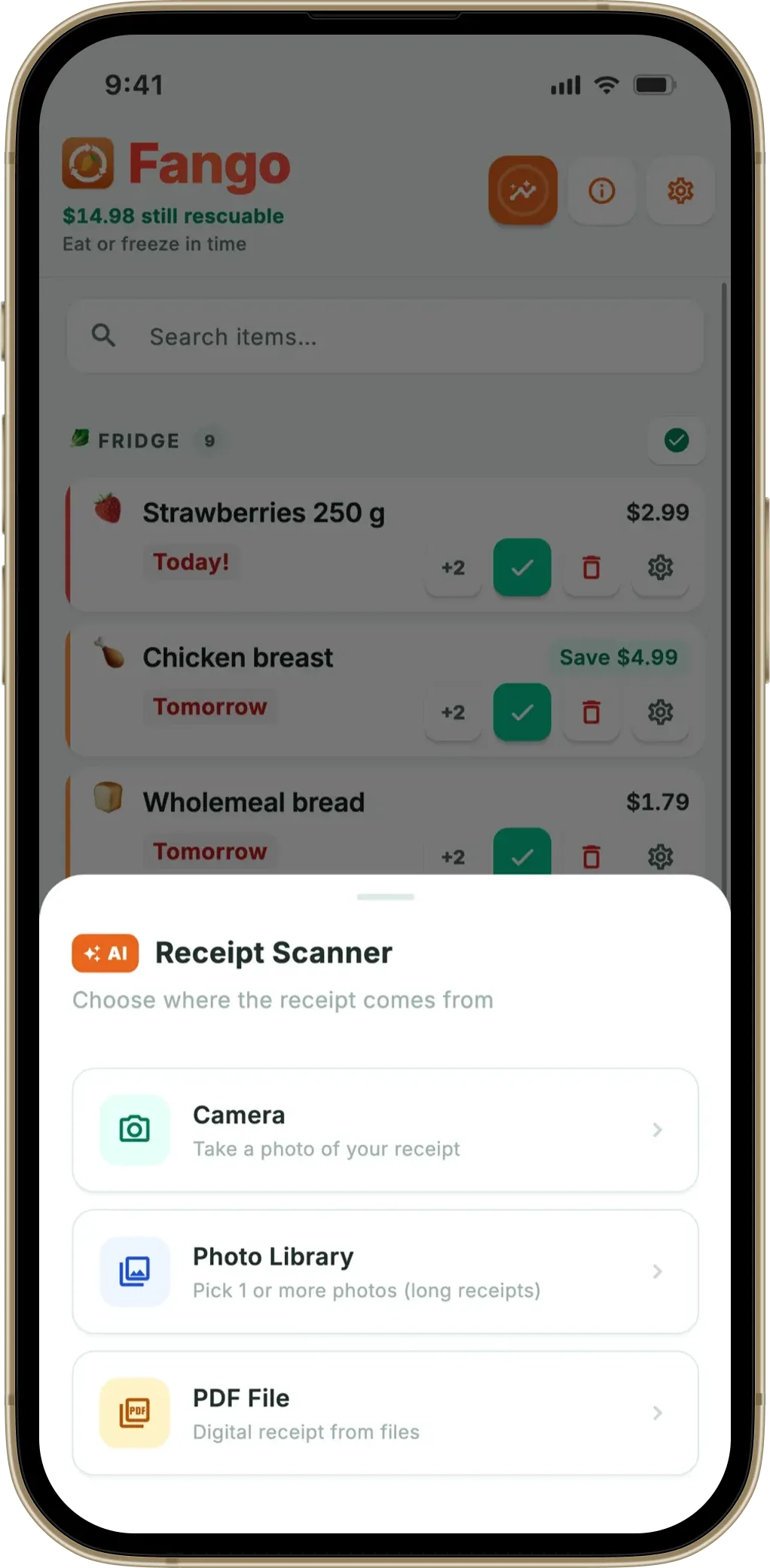
A weekly shop is 15–30 items, most of them with a meaningful expiry date in the next 2–14 days. Typing each item into an app is roughly the same time as not bothering — both end the same way. AI receipt scanning is the only workflow that scales past curiosity into a sustained habit: photograph the till receipt, the app reads it, every product appears with a default shelf life.
The dates Fango assigns aren’t pulled out of thin air. They’re category defaults based on UK Food Standards Agency guidance for a fridge held at 0–5°C, adjusted slightly for cooking state. You override anything individually — long-life milk gets bumped to 14 days, the duck breast you’ll cook tomorrow gets 1 day. For a deeper per-item breakdown, see how long does food last in the fridge.
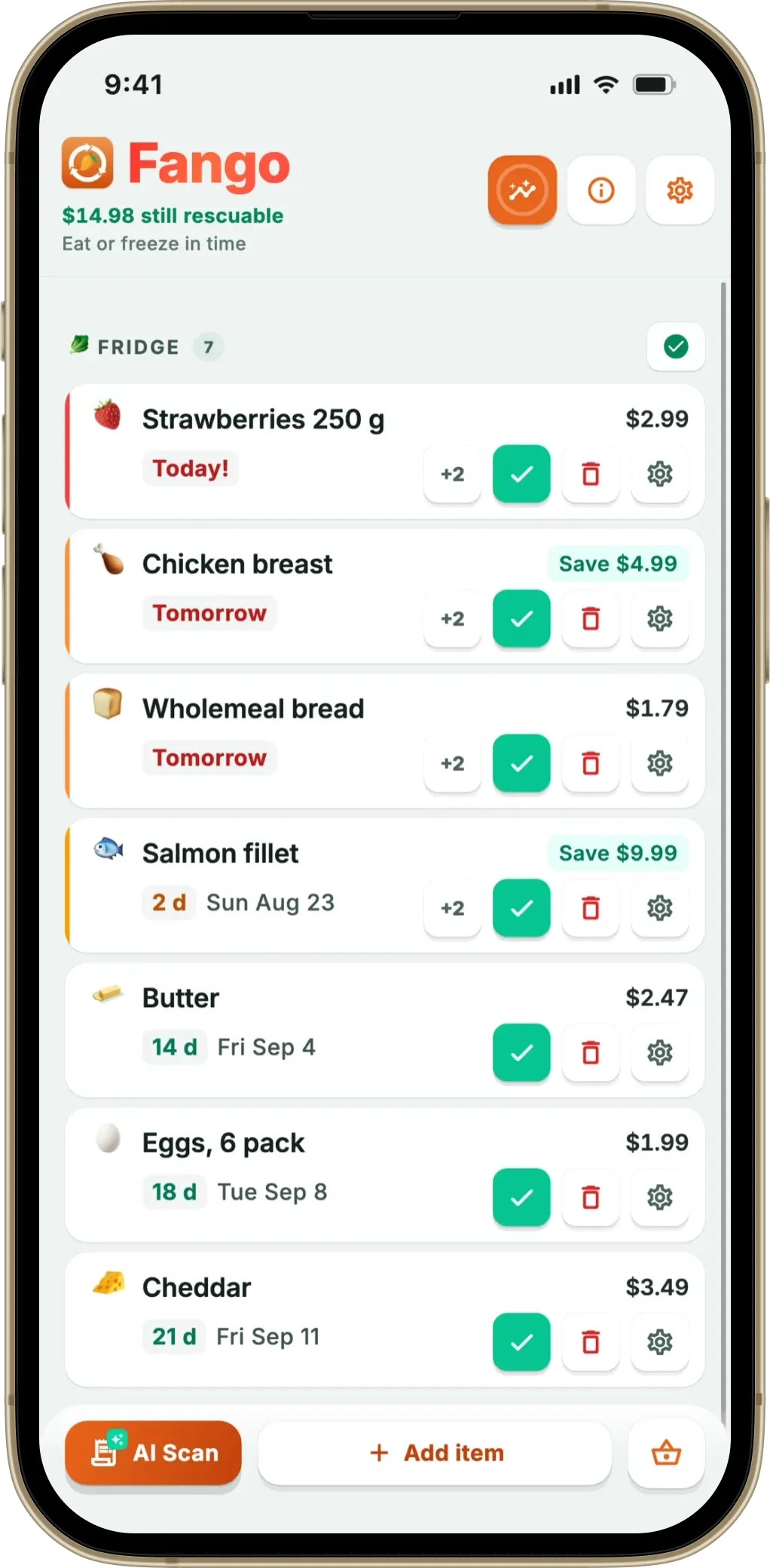
Fango scans grocery receipts with AI, assigns a sensible reminder date to each item, and reminds you in time. Cosmetics, supplements and one-off items can be added manually if you want everything in one list. Fridge data stays on your phone by default.
Download on the App Store Get it on Google PlayFree for a month · No sign-up · iOS and Android
Cosmetics — PAO Is the Number That Matters
Cosmetics don’t normally have a printed expiry date in the supermarket sense. Instead, EU and UK packaging shows a small open-jar symbol with a number like 6M or 12M — that’s the Period After Opening (PAO). EU Regulation 1223/2009 requires it for products with a shelf life above 30 months unopened.
The challenge is that the clock starts the day you open the product, which the packaging can’t print. Two practical options:
-
1
Write the open date on the product with a marker. Free, reliable, no app needed. Works for mascara (3M), foundation (6–12M), moisturiser (6–12M).
-
2
Manually add the item to an expiry app on the day you open it. Set the reminder for the PAO date. Useful if you open many products and lose track. In Fango, this means typing the product name and date manually — receipt scanning won’t pick up the PAO since it isn’t printed on the till receipt.
Volumes are low — most households buy 3–5 cosmetic items in a normal month, not 30. The marker on the bottle usually wins.
Medicines — One Evening, Once a Year
Medicine expiry dates are not advisory. NHS guidance recommends not using medicines past their stated expiry — the active ingredient may have degraded, and some medicines (eye drops, liquid antibiotics, insulin) can become unsafe. Dispose of expired medicines through a pharmacy take-back scheme, never down the sink or in the bin.
Tracking each medicine in an app rarely pays off. A typical bathroom cabinet contains paracetamol, ibuprofen, plasters, a tube of antiseptic and two leftover prescriptions from a year ago. Total: 10–15 items, most lasting 2–5 years. An annual or twice-yearly audit — pull everything out, bin or return what’s expired, replace what’s missing — is faster than maintaining a list.
If you do want medicines in the same expiry app as food, type them in manually with a long-lead reminder (30–60 days before expiry) so you have time to replace them.
Fango sorts everything by reminder date and colour-codes the urgent items in red. The home screen widget shows what to use next without opening the app.
Download on the App Store Get it on Google PlayFree for a month · No sign-up · iOS and Android
Supplements — Closer to Food Than Medicine
Vitamins and supplements sit awkwardly between the two. Most have a printed best-before date 1–3 years out from manufacture, and the consequence of using them slightly past it is usually mild — they lose potency, but rarely become harmful. If you take supplements daily this isn’t a problem; if you bought a bottle for a New Year’s resolution that lasted three weeks, the expiry will catch up before the bottle empties.
The right tool here depends on volume. One or two bottles: marker on the lid. Six-plus bottles cycled regularly: a manual entry in Fango or a dedicated supplement app makes sense.
Why One App That Does Everything Is Usually Worse
It sounds neat to have one app that covers food, cosmetics, medicines and household chemicals. In practice, the design pressures from each category pull in different directions:
- Food needs fast bulk input (receipt scan) and short reminder leads (1–7 days)
- Cosmetics need start-date input (PAO) and long reminder leads (3–12 months)
- Medicines need annual audits more than per-item reminders
- An app that tries to do all three usually does food badly — and food is where the spend is
Fango handles the first one well and the others adequately if you add them manually. If your bathroom cabinet is more chaotic than your fridge, the answer might be a dedicated cosmetics tracker plus a marker. The categories don’t have to share an app.
Frequently Asked Questions
Is there a free product expiration date app?
Yes — Fango is free to try for one month, so you can test the receipt-scan workflow on a few weekly shops. After the trial it’s from $2.99/month (or $22.99/year), with per-item notification timing.
Can I add household chemicals (cleaning products, etc.)?
You can type them in manually. Cleaning products generally have a 2-year shelf life after opening — long enough that an annual cabinet check usually beats a per-product reminder. Fango won’t extract these from a receipt; its scanning is tuned for grocery items.
What’s the difference between this and an expiry date tracker?
“Product expiration date app” implies cosmetics or medicines might be in scope; “expiry date tracker” usually means food specifically. In practice the apps overlap heavily — Fango fits both descriptions, with the strong opinion that food is where it pays off most.
Where do the default food dates come from?
The category defaults Fango assigns to scanned items are based on UK Food Standards Agency guidance for a fridge held at 0–5°C. You override anything manually. For per-item shelf life see how long does food last in the fridge.