According to WRAP, UK households throw away £17 billion worth of food every year — roughly £1,000 for a family of four. A large portion of that waste comes down to poor storage: food goes off before it gets eaten, or gets pushed to the back of the fridge and forgotten. Fango helps you track what you have and when it expires, but good storage habits mean you need those reminders far less often.
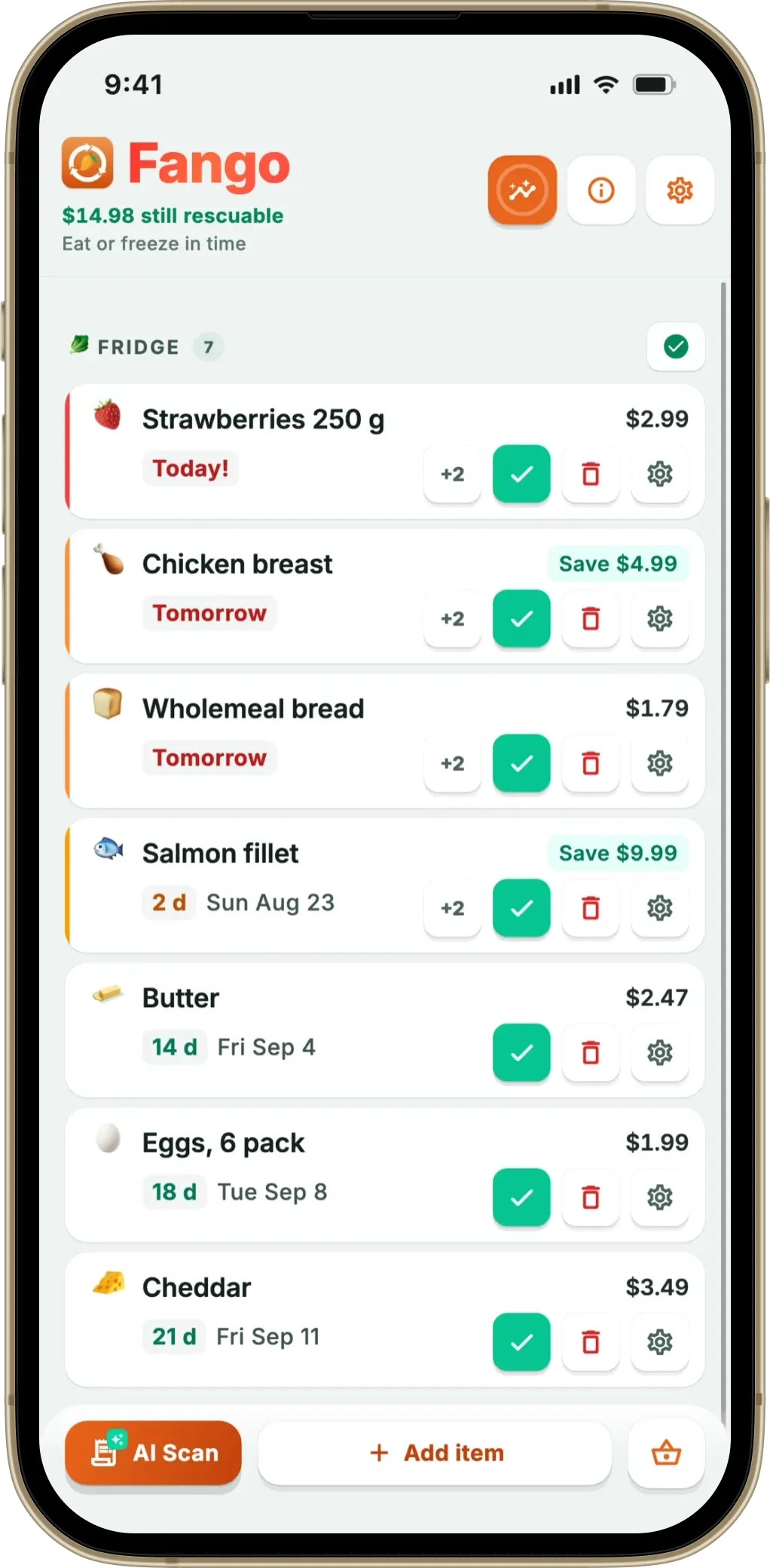
Fango lets you scan your grocery receipt — AI reads the products and adds them to your fridge with expiry dates automatically. You get a push notification 1–14 days ahead. No sign-up, fridge data stays on your device by default.
Download on the App Store Get it on Google PlayFree for a month · No sign-up · iOS and Android
These nine food storage tips are practical, evidence-based, and cost nothing to implement. Most take under a minute.
- Fridge at 0–5°C — most people’s fridges are too warm; check with a thermometer
- Don’t wash before storing — moisture speeds up mould; wash just before eating
- Airtight containers — cut oxidation and absorb odours; extend life significantly
- First in, first out — move older items to the front every time you unpack shopping
1. Keep Your Fridge at 0–5°C
The single most effective food storage tip is also the most overlooked: check your fridge temperature. The UK Food Standards Agency recommends 0–5°C. Below 5°C, bacterial growth slows dramatically. Above it, food deteriorates significantly faster.
A pantry inventory app turns this from a one-off check into a running list — our comparison covers what to look for.
Most people assume their fridge is set correctly. In practice, many run at 7–8°C or higher — especially if the door is opened frequently, or if the fridge is packed tightly without airflow. A basic fridge thermometer costs a few pounds and is one of the best investments you can make for reducing food waste.
2. Use the Right Zones in Your Fridge
Fridges are not the same temperature throughout. The coldest zone is usually the bottom shelf (cold air sinks). The warmest is the door. Using the right zone for each food type makes a measurable difference to how long it lasts — whether it’s raw meat, dairy, or plant proteins like tofu.
3. Don’t Wash Before Storing
It feels logical to wash fruit and vegetables as soon as you get home — but moisture is the enemy of freshness. Washing before storing adds water that encourages mould and speeds up decay, especially on soft berries, leafy greens, and mushrooms.
Wash everything just before you eat or cook it. For salad leaves that you want pre-washed, dry them thoroughly in a salad spinner and store in an airtight container lined with a paper towel to absorb any remaining moisture.
4. Use Airtight Containers
Open packets, bowls covered with cling film, or food left in the original packaging all let air in — which accelerates oxidation and allows food to absorb fridge odours. Airtight containers solve both problems.
Glass containers are especially good: they don’t absorb smells, are easy to clean, and you can see the contents at a glance. For half-used tins, transfer the contents to a container rather than covering the tin — metal can affect the taste of acidic foods like tomatoes.
5. Know What Doesn’t Belong in the Fridge
Cold temperatures can damage certain foods. Storing the wrong things in the fridge wastes space and actually shortens their useful life.
- Tomatoes — cold makes them mealy and bland; keep at room temperature, away from direct sunlight
- Potatoes — cold converts starch to sugar, creating an unpleasant sweet taste; store in a cool, dark, dry place
- Onions and garlic — need air circulation; a cool, dry cupboard is ideal
- Bananas — cold turns the skin black and halts ripening; keep at room temperature
- Bread — the fridge makes it go stale faster; store at room temperature or freeze
- Whole melons and pineapples — ripen best at room temperature; only refrigerate once cut
6. Freeze Before the Use-By Date
Freezing is the most effective way to extend the life of food that you won’t use in time. The key rule: freeze before the use-by date, not after. Most foods freeze well if prepared correctly. See the full guide: how to freeze food — complete guide.
-
1
Cool before freezing. Never put hot food directly into the freezer — it raises the temperature and can partially defrost neighbouring items. Cool to room temperature first, then freeze.
-
2
Portion before freezing. Freeze in portions you’ll actually use. Defrosting a large block only to refreeze half is wasteful and unsafe.
-
3
Label everything. Write the contents and date on every bag or container. Unlabelled items become mystery freezer items that never get eaten.
-
4
Remove air. Squeeze as much air as possible from freezer bags before sealing. Air causes freezer burn, which affects texture and taste.
-
5
Defrost safely. Defrost meat and fish in the fridge overnight, never on the kitchen counter at room temperature. Once defrosted, eat within 24 hours and do not refreeze.
7. First In, First Out
This is the method used by professional kitchens worldwide, and it works just as well at home. Every time you unpack shopping, move older items to the front of the fridge or cupboard and put new ones at the back. Older food gets eaten first.
It takes about 30 seconds per shop and is one of the most reliably effective food waste reduction habits. The reason most food gets thrown away is not that people forget to eat it entirely — it’s that something newer gets grabbed first while the older item quietly expires at the back.
8. Store Herbs and Salad Leaves Correctly
Fresh herbs and salad leaves are the items most commonly wasted because they deteriorate faster than people expect.
Fresh herbs with soft stems (basil, coriander, parsley): trim the stems, place in a glass with a small amount of water, cover loosely with a plastic bag, and keep at room temperature (or in the fridge for hardier herbs like coriander). Treat them like cut flowers. They can last up to two weeks this way versus two to three days in a bag in the fridge.
Salad leaves: store in an airtight container lined with a dry paper towel. The towel absorbs moisture and prevents sliminess. Replace it if it gets wet.
9. Track Expiry Dates Consistently
Even with perfect storage, food has a finite life. The difference between food getting eaten and food getting wasted often comes down to one thing: whether you know it’s there and when it expires.
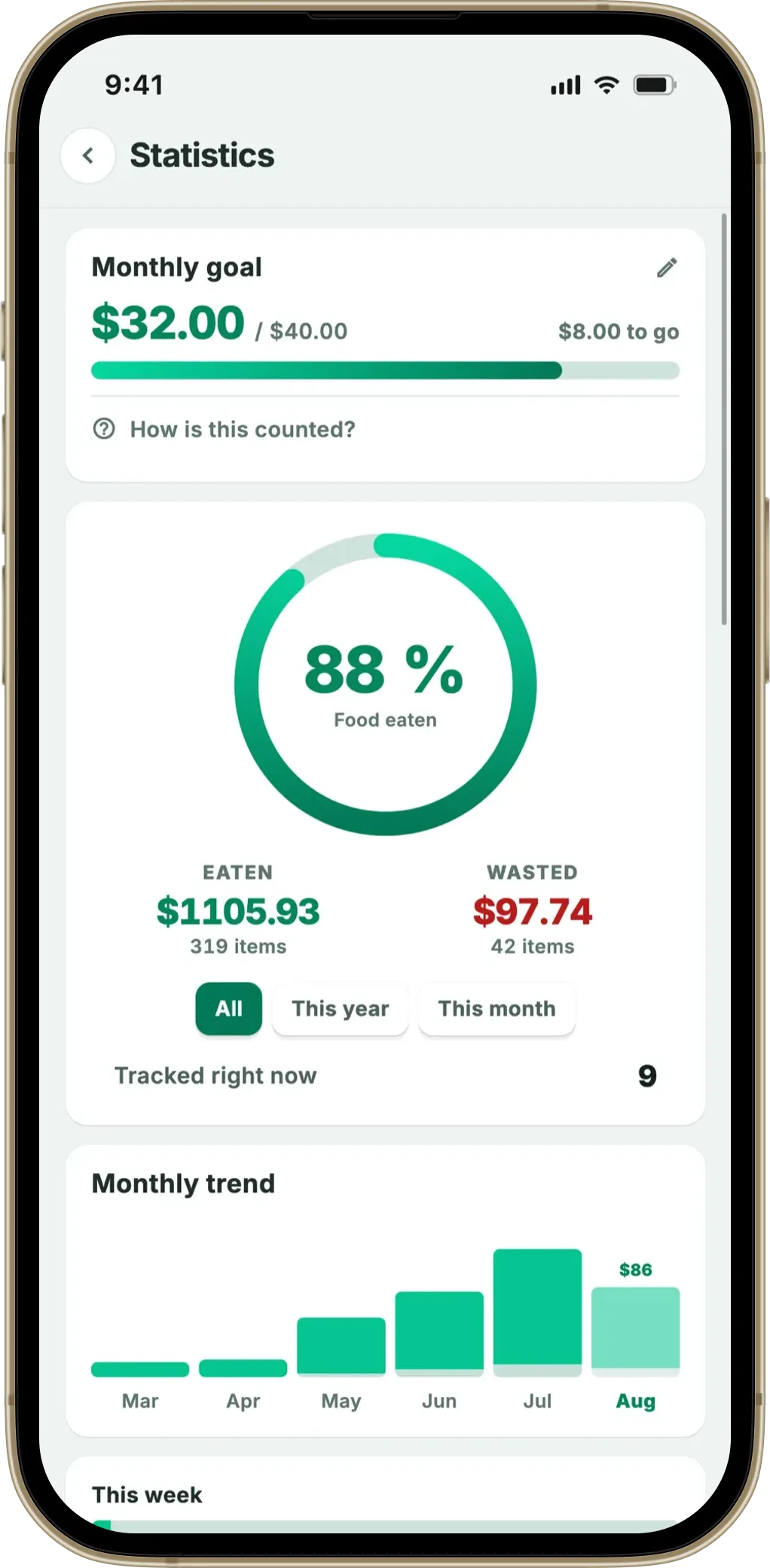
First in, first out helps. Fango makes it automatic: scan your grocery receipt after shopping, and the app adds every product with its expiry date. You get a push notification 1–14 days before anything is about to expire — enough time to plan a meal around it rather than finding it too late.
Fango lets you scan your grocery receipt — AI reads the products and adds them to your fridge with expiry dates automatically. You get a push notification 1–14 days ahead. No sign-up, fridge data stays on your device by default.
Download on the App Store Get it on Google PlayFree for a month · No sign-up · iOS and Android
How Long Do Common Fridge Foods Last?
These shelf-life guidelines are based on UK Food Standards Agency recommendations, assuming correct fridge temperature (0–5°C) and proper storage. For a full list covering dozens of foods, see: how long does food last in the fridge?
Frequently Asked Questions
What temperature should a fridge be?
The UK Food Standards Agency recommends 0–5°C. A practical target is 3–4°C. Use a fridge thermometer to check — many fridges run warmer than expected.
Should you wash fruit and vegetables before putting them in the fridge?
No. Washing before storing adds moisture, which speeds up mould and decay. Wash everything just before eating or cooking it.
How long do leftovers last in the fridge?
The UK Food Standards Agency’s general advice is to eat cooked leftovers within 2 days. Specific foods often last longer when stored properly — see how long does food last in the fridge for a full breakdown. Always refrigerate within 2 hours of cooking and store in an airtight container.
What foods should not be stored in the fridge?
Tomatoes, potatoes, onions, garlic, bananas, and whole melons are better kept at room temperature. Cold temperatures damage their texture and flavour.
How do I stop forgetting food before it expires?
Move older items to the front when you unpack shopping (first in, first out). For a more reliable system, a food storage app like Fango lets you scan your grocery receipt and sends a push notification before any item expires — so nothing gets forgotten at the back of the fridge. If you’re comparing options, see the best food storage app and, for cupboard staples, a dedicated pantry tracker app.