Raw eggs last 3–5 weeks in the fridge — and hard boiled eggs last up to 1 week. Those are the two numbers worth memorising. According to the UK Food Standards Agency, eggs should be stored at 0–5°C to stay within those windows. The best-before date on the box already assumes fridge storage.
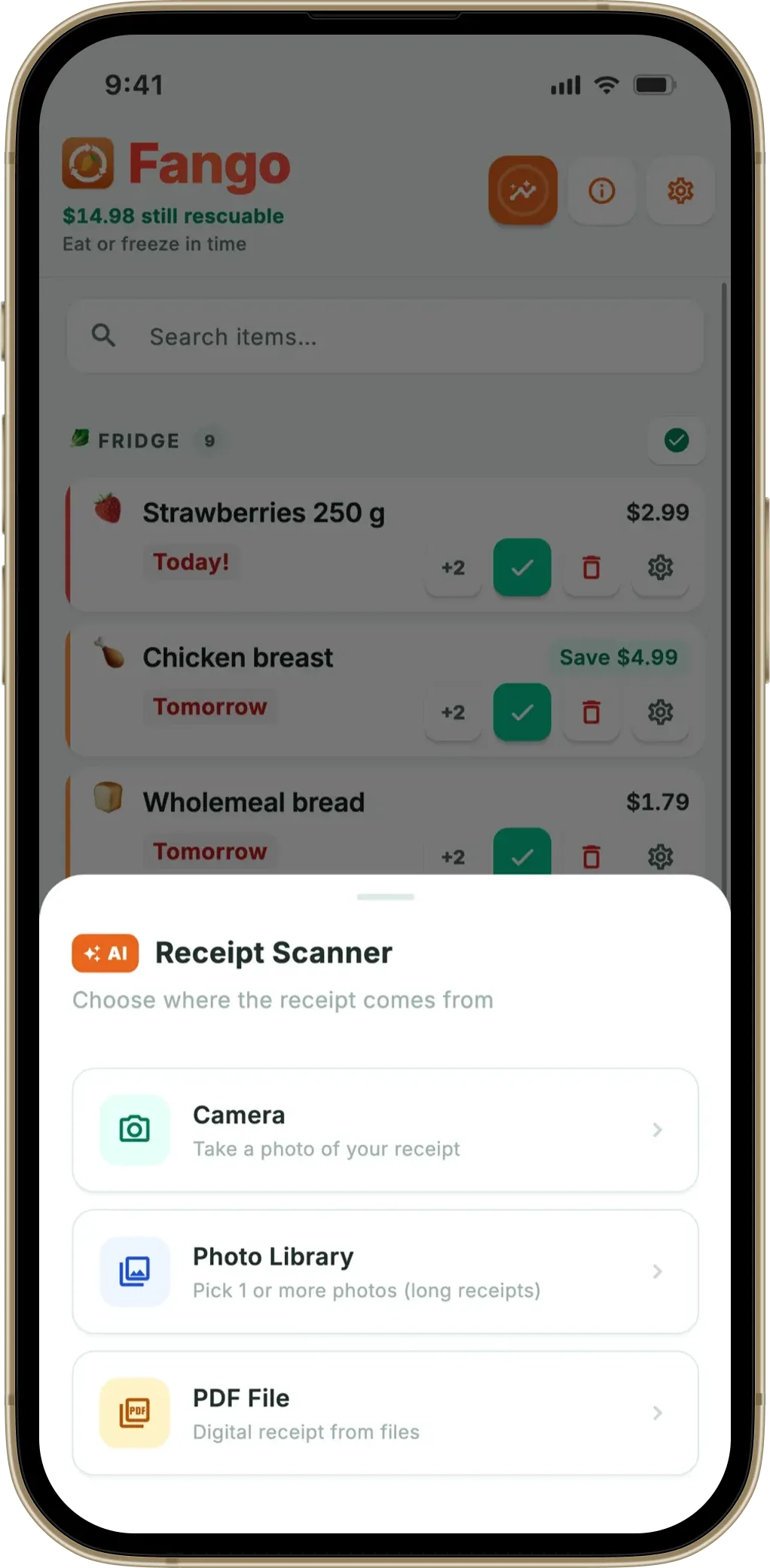
What most people forget is the boiled eggs they made on Sunday. They sit in the fridge, unlabelled, and by Wednesday it’s anyone’s guess. Fango works as a food expiry reminder app that lets you log boiled eggs with a 6-day reminder — so you always know what’s safe and what to use first.
- Raw eggs in shell: 3–5 weeks in the fridge
- Hard boiled (unpeeled): up to 1 week in the fridge
- Hard boiled (peeled): up to 5 days submerged in cold water
- Float test: sinks flat = fresh, floats = discard
How Long Do Raw Eggs Last in the Fridge?
Raw eggs in their shell last 3–5 weeks in the fridge from the date of purchase, provided you keep them at 0–5°C. The best-before date printed on Lion Code eggs is set at 28 days from laying — and assumes consistent fridge storage throughout. That date is about quality rather than safety, which is why eggs are usually fine for a while past it; our best-before date guide explains the difference.
For the household version of this problem — remembering the dates for everything you buy — see our guide to choosing an expiry date tracker.
A few things shorten this window:
- Temperature fluctuations — moving eggs in and out of the fridge repeatedly speeds up spoilage
- Cracked shell — bacteria enter through cracks; use cracked eggs the same day or discard
- Washed eggs — washing removes the natural protective cuticle, so refrigerate immediately and use within 2 weeks
In the UK, Lion Code eggs can also be kept at room temperature for up to 3 weeks — but the fridge always gives you more time and a lower Salmonella risk.
How Long Do Hard Boiled Eggs Last?
Boiling an egg removes its protective shell cuticle and exposes the interior to bacteria far more readily than a raw egg. That’s why hard boiled eggs have a much shorter shelf life than raw ones.
The key rule for hard boiled eggs: leave the shell on until you’re ready to eat. The shell slows moisture loss and acts as a barrier against odours and bacteria. Once peeled, keep them fully submerged in cold water in a sealed container and change the water daily.
Add a carton of eggs when you buy them and Fango reminds you before the best-before date. Works for hard boiled eggs too — set a 6-day reminder after cooking. No sign-up required.
Download on the App Store Get it on Google PlayFree for a month · No sign-up · iOS and Android
How to Store Eggs Properly
-
1
Keep eggs in the carton. The cardboard carton is designed to protect eggs and slow moisture loss. It also stops the eggs from absorbing strong smells from other fridge contents like onions or fish.
-
2
Store pointed end down. Keeping the pointed end down keeps the yolk centred and away from the air pocket at the wider end, which slows spoilage.
-
3
Don’t wash eggs before storing. Washing removes the bloom — the natural protective coating on the shell. If eggs are dirty, wipe clean just before use.
-
4
Label boiled eggs. Once boiled, hard boiled eggs look identical to raw ones once back in the fridge. Write a date on the shell with a marker, or use Fango to set a 6-day reminder when you boil a batch.
How to Tell if an Egg Has Gone Bad
The most reliable method doesn’t require cracking the egg at all. For a full breakdown of all four freshness tests, see: how to tell if eggs have gone bad.
The Float Test
Fill a bowl or glass with cold water and gently lower the egg in:
- Sinks and lies flat — very fresh, use freely
- Sinks but stands upright or tilts — older but still safe; use soon
- Floats — the air pocket has enlarged as the egg spoiled; discard immediately
The float test works because eggshells are porous — moisture escapes and air enters over time. A larger air pocket means more time has passed and the egg is more likely to be bad.
Crack and Check
If the float test is inconclusive, crack the egg onto a plate before using it:
-
1
Smell — A fresh egg has almost no smell. A bad egg smells strongly of sulphur (like rotten gas). If there’s any doubt, discard it — even faint off-smells mean the egg is no longer good.
-
2
Look — A fresh egg white is clear and slightly cloudy. Pink, greenish, or black discolouration in the white or yolk means bacterial contamination — throw it away immediately. A very flat, watery white simply means an older egg, not necessarily unsafe.
-
3
Yolk — A high, rounded yolk indicates freshness. A flat, broken, or discoloured yolk means the egg is old. Pale or greenish yolk colour means it’s spoiled.
- Never taste a raw egg to test it — harmful bacteria like Salmonella are odourless and tasteless
- A floating egg is old rather than automatically unsafe — crack it into a bowl and let the smell decide
- Pink or iridescent egg white indicates Pseudomonas bacteria — discard immediately
- Bloodspots in the yolk are harmless and safe to eat, but a greenish ring around a hard-boiled yolk means it was overcooked, not spoiled
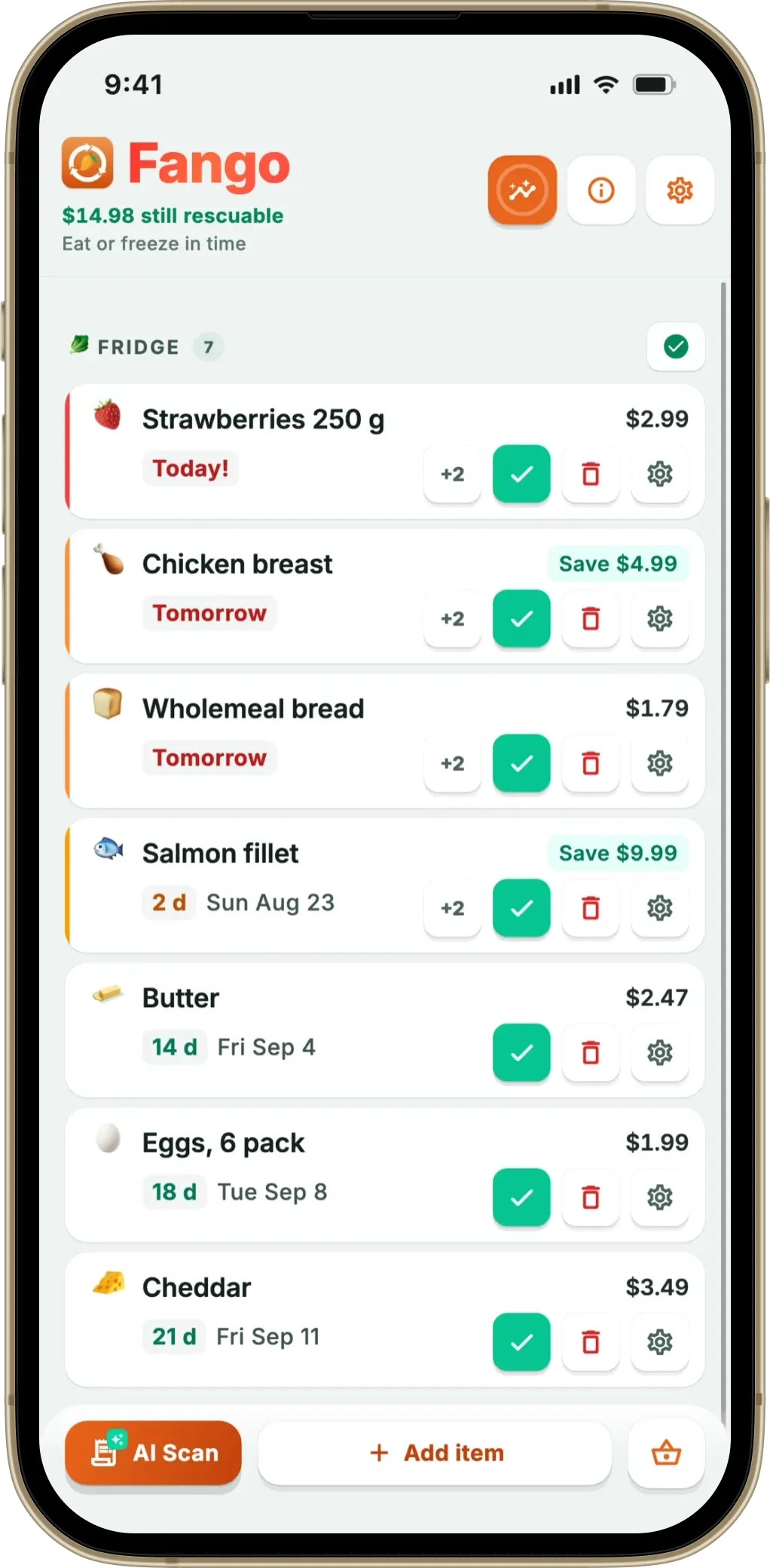
Fango sorts everything by reminder date and colour-codes the urgent items in red. The home screen widget shows what to use next without opening the app.
Download on the App Store Get it on Google PlayFree for a month · No sign-up · iOS and Android
Can You Freeze Eggs?
Never freeze eggs in the shell — the contents expand as they freeze and will crack the shell, allowing bacteria in. But you can freeze eggs successfully in other ways — see the full guide: can you freeze eggs? (raw, boiled, whites and yolks explained).
- Whole beaten eggs: whisk yolk and white together, pour into a sealed container or ice cube tray. Freeze up to 12 months. Label with the date and number of eggs.
- Egg whites only: freeze flat in a sealed bag or ice cube tray. Excellent for meringues or omelettes later. Up to 12 months.
- Egg yolks only: yolks become gelatinous when frozen unless you add a pinch of salt (for savoury use) or sugar (for sweet use). Up to 12 months.
- Hard boiled eggs: the whites become rubbery when frozen — not recommended. Freeze the yolks only if needed.
Thaw frozen eggs overnight in the fridge and use within 24 hours. Never refreeze thawed eggs.
Frequently Asked Questions
How long do eggs last in the fridge?
Raw eggs in their shell last 3–5 weeks in the fridge at 0–5°C. Check the best-before date on the carton — it assumes fridge storage throughout.
How long do hard boiled eggs last in the fridge?
Hard boiled eggs last up to 1 week in the fridge with the shell on. Peeled hard boiled eggs should be kept submerged in cold water (change daily) and eaten within 5 days.
How can you tell if an egg has gone bad?
Use the float test — place the egg in cold water. If it floats, discard it. If it sinks but stands upright, use it soon. If it sinks flat, it’s fresh. A sulphur smell or discoloured white after cracking also means the egg is bad.
Can eggs be left out of the fridge in the UK?
Yes — Lion Code eggs can be stored at room temperature for up to 3 weeks. But the fridge extends that to 3–5 weeks and reduces Salmonella risk. Once refrigerated, always keep them refrigerated.
How long are hard boiled eggs good for at room temperature?
No more than 2 hours. Refrigerate hard boiled eggs promptly after they have cooled.
Can you freeze raw eggs?
Not in the shell — they crack. Beat the eggs first and freeze in a sealed container for up to 12 months. Egg whites and yolks can also be frozen separately.
Can you eat eggs after the best-before date?
Often yes, if the eggs have been kept refrigerated and pass the float test — an egg that sinks is still good, while one that floats should be discarded. The best-before date is a quality guide, not a safety deadline. Cook eggs thoroughly when using them close to or past the date, as runny or raw preparations carry more risk.
The simplest way to stay on top of egg freshness is to log them in Fango when you buy a carton — raw eggs with a 3-week reminder, hard boiled with a 6-day one. You’ll always know what needs using first.