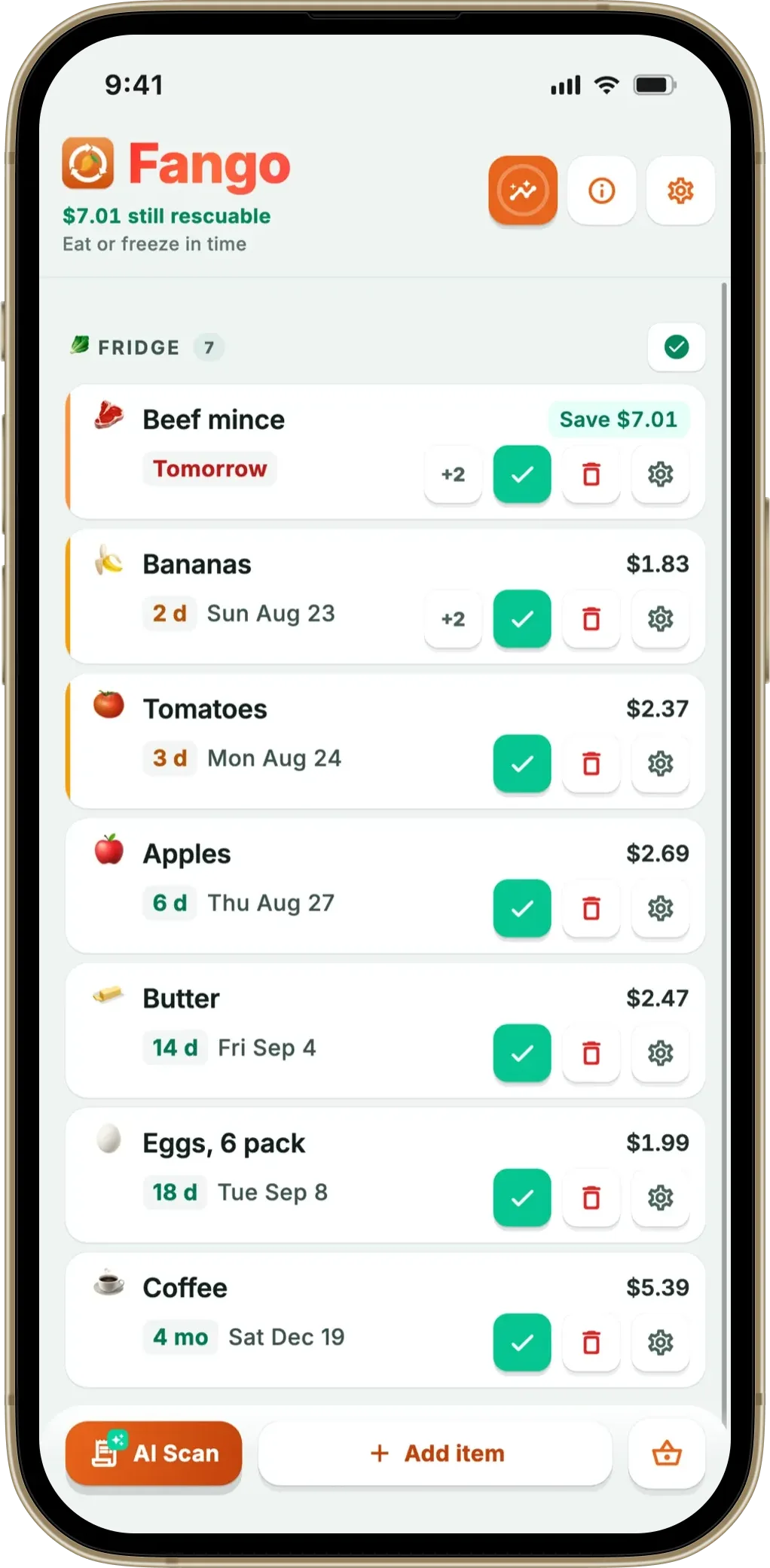
Yes — eggs can be frozen, but the method and result vary significantly depending on the form. Raw whole eggs freeze well once cracked out of the shell. Egg whites freeze excellently. Hard boiled eggs are the exception: the whites turn rubbery and watery after freezing and are best avoided. If you’re not freezing them, raw eggs last 3–5 weeks in the fridge. Fango tracks your egg expiry dates and sends a reminder before they run out — useful when you have eggs approaching their best-before date and need to decide whether to use or freeze them.
Fango adds your groceries with reminder dates when you scan your receipt — including eggs — and sends a push notification before they run out. No sign-up, fridge data stays on your device by default.
Download on the App Store Get it on Google PlayFree for a month · No sign-up · iOS and Android
- Raw whole eggs — freeze well out of the shell (beaten); up to 12 months
- Egg whites — freeze excellently, no quality loss; up to 12 months
- Egg yolks — freeze with salt or sugar added to prevent gelling; up to 12 months
- Hard boiled eggs — do not freeze; whites become rubbery and watery
Can You Freeze Eggs in the Shell?
No — never freeze whole eggs in the shell. As the liquid inside freezes it expands, cracking the shell and creating a food safety risk. Always crack eggs out of the shell before freezing.
If keeping track of dates like these by hand is the part that never sticks, an expiry date tracker app can do it from your grocery receipt.
Which Egg Types Freeze Well?
How to Freeze Raw Whole Eggs
-
1
Crack into a bowl and beat lightly. Mix the yolk and white together just enough to combine — don’t whip air in. This prevents the yolk from gelling during freezing.
-
2
Portion into an ice cube tray. One egg per cube makes thawing easy — you defrost exactly as many as you need. Once frozen solid, transfer the cubes to a zip-lock bag.
-
3
Label with date and quantity. Write the freeze date and number of eggs on the bag. Raw beaten eggs keep for up to 12 months.
-
4
Thaw in the fridge overnight. Move the cubes to the fridge the night before you need them. Use within 24 hours of thawing and cook thoroughly — do not use thawed raw egg in dishes that won’t be fully cooked.
How to Freeze Egg Whites
Egg whites are the easiest egg product to freeze and one of the best. They thaw with almost no quality loss and whip just as well as fresh whites — ideal for meringues, macarons, soufflés, and angel food cake.
-
1
Pour one white per ice cube slot. This makes portioning easy — most recipes call for a specific number of whites.
-
2
Freeze until solid, then transfer to a bag. Label with the date and number of whites. They keep for up to 12 months.
-
3
Thaw in the fridge. Thawed egg whites whip best at room temperature — leave them out for 30 minutes after thawing before whipping.
How to Freeze Egg Yolks
Raw egg yolks gel when frozen — they become thick, sticky, and almost impossible to use if frozen plain. The fix is simple: add a small amount of salt or sugar before freezing, which prevents the gelling.
- For savoury use (sauces, pasta, hollandaise): add a pinch of salt per 4 yolks, stir gently, then freeze
- For sweet use (custard, pastry cream, ice cream): add ½ teaspoon of sugar per 4 yolks, stir gently, then freeze
- Label the bag clearly with whether salt or sugar was added
- Yolks keep for up to 12 months frozen
Can You Freeze Hard Boiled Eggs?
Not the whole egg. Hard boiled egg whites become tough, rubbery, and release excess water after freezing — the texture is unpleasant for eating and cannot be improved by cooking. This happens because freezing disrupts the protein structure in the cooked white in a way that cannot be reversed.
Hard boiled yolks are the exception — they freeze reasonably well on their own. Remove the yolks from peeled boiled eggs, place on a tray, freeze until solid, then transfer to a bag. They keep for up to 3 months and work well crumbled into salads or devilled egg fillings after thawing.
How Long Can You Freeze Eggs?
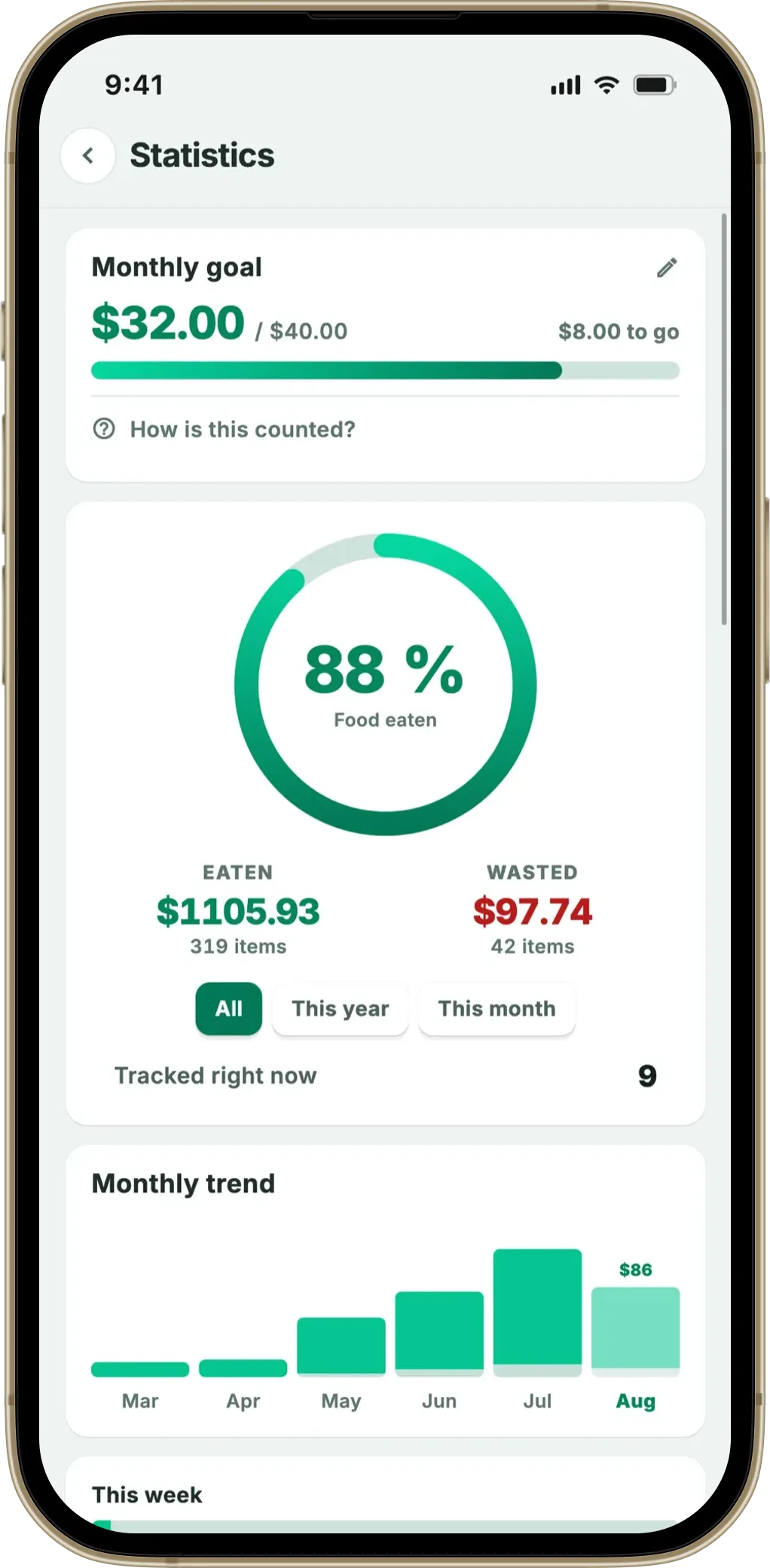
Fango adds your groceries with reminder dates when you scan your receipt — including eggs — and sends a push notification before they run out. No sign-up, fridge data stays on your device by default.
Download on the App Store Get it on Google PlayFree for a month · No sign-up · iOS and Android
Check Eggs Are Still Good Before You Freeze
Freezing preserves an egg in the state it is in — it cannot rescue one that has already turned. So check before you crack. The quickest test is the float test: place the egg in a glass of cold water. A fresh egg sinks and lies flat; one that stands on end is older but still fine; one that floats has built up enough internal gas to be past it and should be discarded. Back it up with your senses — a clear sulphur smell or any discolouration once cracked means bin it.
Most cartons carry a best-before date about quality rather than safety, which is why eggs are usually good for weeks beyond it; the full freshness test guide covers the edge cases. For the general rules that apply to freezing any food well — portioning, labelling, and avoiding freezer burn — see the complete guide to freezing food.
Related reading: Can You Freeze Sweet Potato.
Frequently Asked Questions
Can you freeze eggs?
Yes — raw eggs freeze well once cracked out of the shell and lightly beaten. Never freeze eggs in the shell. Egg whites freeze excellently. Hard boiled whole eggs do not freeze well — whites become rubbery. Not sure if your eggs are still good? See how to tell if eggs have gone bad.
Can you freeze hard boiled eggs?
Not recommended for whole hard boiled eggs — the whites become tough and watery. Hard boiled yolks on their own freeze reasonably well for up to 3 months.
Can you freeze egg whites?
Yes — egg whites freeze excellently with almost no quality loss. One white per ice cube slot, freeze solid, then transfer to a bag. They keep for up to 12 months and whip just as well as fresh after thawing.
Can you freeze egg yolks?
Yes, but add a pinch of salt (savoury) or ½ tsp sugar (sweet) per 4 yolks before freezing to prevent gelling. Label the bag with which additive you used. They keep for up to 12 months.
How long can you freeze eggs?
Raw beaten whole eggs, egg whites, and yolks (with salt or sugar) all keep for up to 12 months frozen. Cooked scrambled eggs and hard boiled yolks keep for up to 3 months.
Can you refreeze thawed eggs?
No — do not refreeze raw eggs once thawed. Cracked, beaten eggs are a higher-risk food than butter or hard cheese, and a second freeze-thaw cycle both degrades them and gives bacteria another window at fridge temperature. Thaw only what you will use within 24 hours, and cook thawed eggs thoroughly. Freezing in small portions (an ice-cube tray, one egg per cube) avoids ever needing to refreeze.