Avocados have a notoriously narrow window between not-yet-ripe and gone. Buy them on Monday and they’re like rocks; by Thursday they’re perfect; by Saturday they’re black and mushy. Fango helps by tracking your fresh produce with expiry dates and sending a push notification the day before anything needs using — so that avocado actually gets eaten at its peak rather than discovered too late.
How long an avocado lasts depends on where it is in its ripening process and whether it’s been cut. Here’s the full breakdown.
- Whole unripe avocado — 3–5 days at room temperature to ripen
- Ripe whole avocado — 1–2 days on the counter, or 3–4 days in the fridge
- Cut or halved avocado — 1–2 days in the fridge (with lemon juice and cling film)
- Frozen mashed avocado — up to 4–6 months
Avocado Shelf Life — Full Breakdown
Does Putting Avocado in the Fridge Slow Ripening?
Yes — the cold temperature of the fridge significantly slows the enzymatic activity that drives ripening. An unripe avocado should be left at room temperature to ripen; putting it in the fridge at this stage will slow ripening so much that it may never ripen properly, and the flesh can develop brown patches.
For the household version of this problem — remembering the dates for everything you buy — see our guide to choosing an expiry date tracker.
Once ripe (the skin has darkened, there’s slight give when pressed gently), move it to the fridge. The cold won’t stop ripening entirely, but it extends the window from 1–2 days to 3–4 days — giving you more flexibility about when to eat it.
How to Keep a Cut Avocado From Going Brown
Browning happens because avocado flesh contains enzymes that react with oxygen when the flesh is exposed to air — the same process that browns a sliced apple. You can’t stop it completely, but you can slow it significantly:
-
1
Apply lemon or lime juice. The citric acid slows oxidation. Brush or spritz the cut surface immediately after cutting. This is the single most effective step — even a small amount makes a noticeable difference.
-
2
Leave the pit in the unused half. The pit itself doesn’t prevent browning, but it covers part of the flesh, reducing the area exposed to air. Combined with cling film, this works well.
-
3
Press cling film directly onto the flesh. The goal is to eliminate air contact. Press the cling film flat onto the surface rather than wrapping the avocado loosely. No air gap means much slower browning.
-
4
Store face-down in a container. Place the cut avocado face-down in a small container or on a plate — the flesh presses against the surface, limiting air exposure. An airtight container is better still.
Even with all of these, some surface browning within 24 hours is normal. It’s usually only skin-deep — the brown layer can be scraped off to reveal fresh green flesh underneath. For broader advice on keeping produce and dairy fresh, see food storage tips.
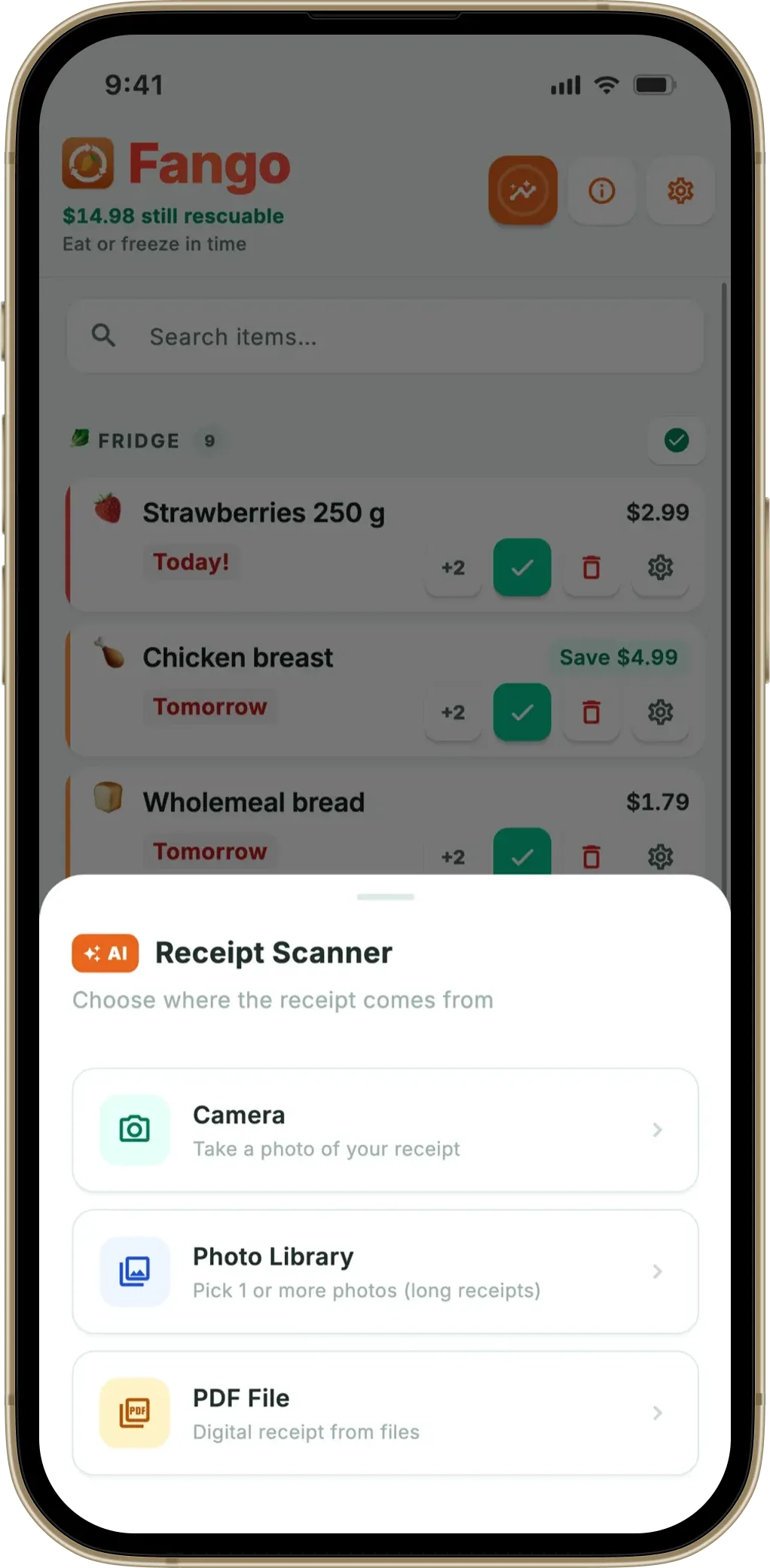
Fango tracks fresh produce and everything else in your fridge with reminder dates, and sends a push notification the day before anything needs using. Scan your grocery receipt and AI adds everything automatically. No sign-up, no cloud by default.
Download on the App Store Get it on Google PlayFree for a month · No sign-up · iOS and Android
Can You Freeze Avocado?
Yes, but with conditions. Whole or sliced avocado doesn’t freeze well — the cell structure breaks down and the flesh becomes very watery and mushy on thawing. It’s edible, but the texture is unpleasant for anything other than blending. See the full guide to freezing food for general freezer tips, or how long does food last in the fridge for storage times across every food group.
Mashed avocado freezes much better. Here’s how:
-
1
Mash ripe avocado with lemon juice. About 1 tablespoon of lemon juice per avocado — this prevents browning during freezing and thawing.
-
2
Portion into freezer bags. Flatten the bag to remove as much air as possible. Single-serve portions make it easy to thaw only what you need.
-
3
Label with the date and freeze for up to 4–6 months. Thaw overnight in the fridge or for 30 minutes in cold water. Use immediately after thawing — don’t refreeze.
Frozen mashed avocado is best for smoothies, guacamole, or toast — not for dishes where texture matters like salads or sushi.
How to Tell If an Avocado Has Gone Bad
-
1
Look — Sunken dark patches on the skin, or very dark (almost black) skin uniformly, suggest it has gone past ripe to overripe. Mould on the skin means discard. Stringy or brown flesh inside is overripe but often still edible — an off smell means bin it.
-
2
Feel — A very soft avocado that feels almost liquid inside when pressed has gone past the point of no return. Some give is normal for ripeness; mushy is different.
-
3
Smell — A ripe avocado smells mild and slightly nutty. A rancid or sour smell means the oils have oxidised and it should be discarded.
Surface browning on cut avocado is normal and not a sign of spoilage — scrape it off. Streaky brown flesh throughout is overripe but usually safe to eat. Stringy brown fibres or a rancid smell mean discard.
Related reading: Can You Freeze Avocado and How to Tell if an Avocado Is Bad.
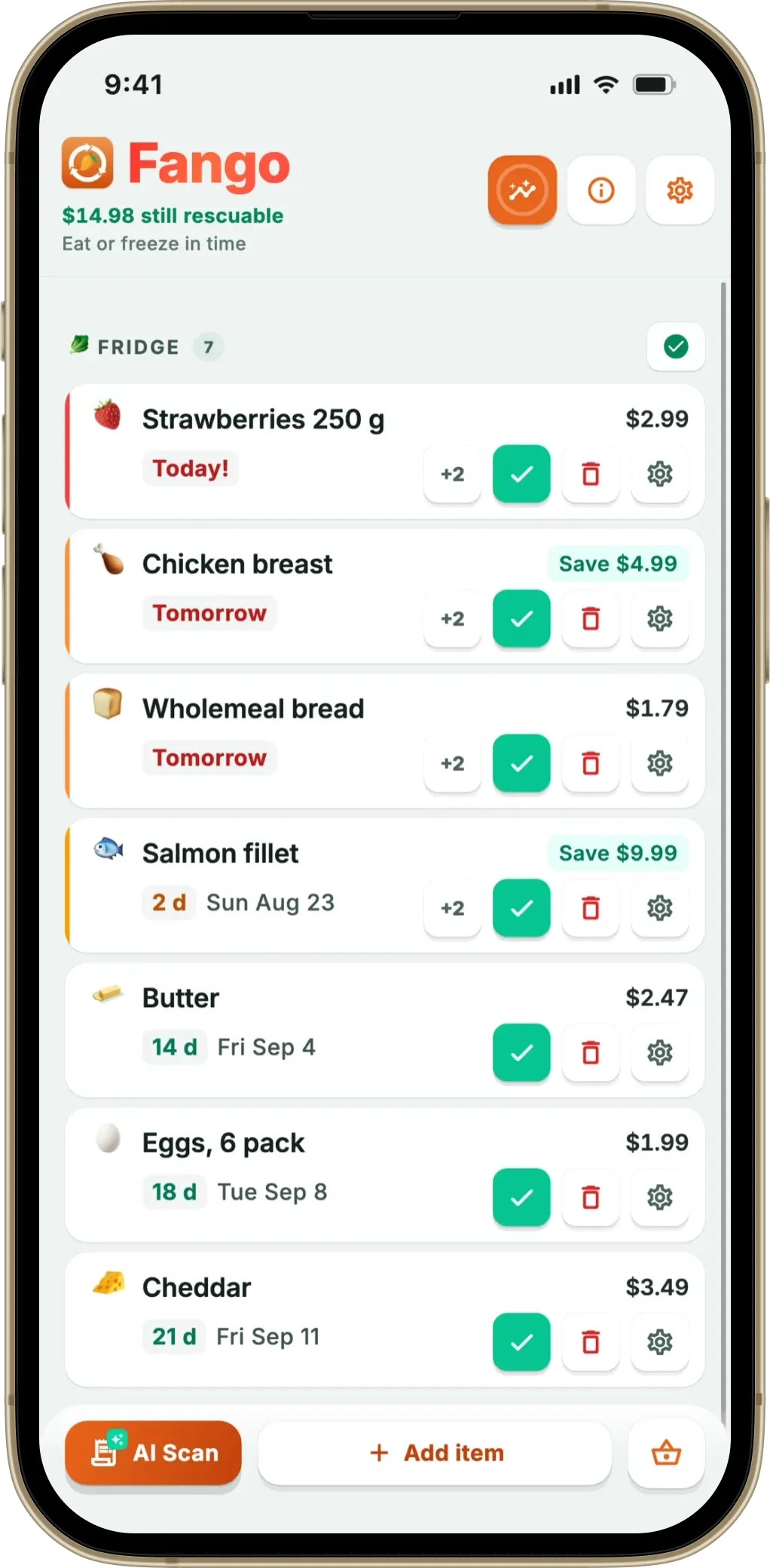
Fango sorts everything by reminder date and colour-codes the urgent items in red. The home screen widget shows what to use next without opening the app.
Download on the App Store Get it on Google PlayFree for a month · No sign-up · iOS and Android
Frequently Asked Questions
How do you know when an avocado is ripe?
A ripe avocado yields to gentle pressure when squeezed in the palm — not mushy, just slight give. The skin of a Hass avocado (the most common variety) darkens from green to near-black as it ripens. If there’s still give when you gently press around the stem end, it’s ripe. Remove the stem nub: green underneath means ripe, brown means overripe.
Should you put avocado in the fridge?
Only once ripe. An unripe avocado should stay at room temperature to ripen — the fridge will halt the process. Once ripe, the fridge extends its life from 1–2 days to 3–4 days. To speed ripening, put it in a paper bag with a banana — the ethylene gas from the banana accelerates ripening.
Can you eat a brown avocado?
Surface browning on cut avocado is safe to eat — just scrape off the brown layer. Brown streaks throughout the flesh indicate overripeness; it’s usually still safe but the flavour is affected. Black or very dark flesh with a rancid smell is spoiled and should be discarded.
How long does a whole avocado last?
An unripe, firm avocado lasts 3–5 days at room temperature while it ripens. Once fully ripe, it lasts 1–2 days on the counter before it starts to deteriorate. A ripe whole avocado placed in the fridge will last 3–4 days — the cold slows down the enzymes that cause it to soften further.
How long does a cut avocado last in the fridge?
A cut or halved avocado lasts 1–2 days in the fridge. To slow browning, brush the cut surface with lemon or lime juice, then press cling film directly onto the flesh (removing as much air as possible) before refrigerating. Keep the pit in the unused half — it reduces the surface area exposed to air.
How do you keep avocado from going brown?
Browning is caused by oxidation — avocado flesh reacts with oxygen when exposed to air. To slow it: apply lemon or lime juice (the acid slows oxidation), keep the pit in if only using half, press cling film directly onto the flesh with no air gap, or store in an airtight container. Even with these measures, some browning within 24 hours is normal.
Can you freeze avocado?
Yes — mashed avocado (with a squeeze of lemon juice to prevent browning) freezes well for up to about 3 months. Whole or sliced avocado doesn’t freeze as well — the texture becomes very soft and watery on thawing, making it suitable only for smoothies or guacamole, not for sliced use. Freeze in an airtight container or freezer bag with as little air as possible.
How do you ripen an avocado quickly?
Put the avocado in a paper bag with a banana or apple at room temperature — the ethylene gas they release speeds ripening to 1–2 days. Once it’s ripe, move it to the fridge to hold it at peak quality for 2–3 days before it over-ripens.