Ham is one of the most popular deli meats in UK households — and one of the most commonly wasted. WRAP estimates that meat and fish together make up a significant share of the £17 billion in food thrown away by UK households every year. For ham specifically, the shelf life varies more than most people realise: opened sliced deli ham lasts just 3–5 days, while an unopened vacuum-sealed pack or a whole cooked joint can last considerably longer. Fango tracks your meat expiry dates and reminds you before a pack gets forgotten at the back of the fridge.
Whether you bought a pack of sliced ham for sandwiches, cooked a gammon joint for the week, or have leftovers from a holiday ham, the rules are slightly different. This guide covers all the main types.
- Sliced deli ham (opened) — 3–5 days; use a sealed bag or airtight container
- Cooked ham leftovers — 3–5 days in an airtight container
- Whole cooked ham (sealed pack) — 5–7 days; follow use-by once opened
- Vacuum-sealed, unopened — follow the printed use-by date
- Frozen ham — 1–2 months; slice before freezing for easier portioning
Ham Shelf Life by Type
How Long Does Sliced Deli Ham Last?
Once you break the seal on a packet of sliced ham, the use-by date on the packaging no longer applies. Exposure to air accelerates bacterial growth — even in the fridge. Treat opened deli ham like other cooked meats such as cooked chicken: aim to finish it within 3–5 days, stored in an airtight container or zip-lock bag at 0–5°C.
For the household version of this problem — remembering the dates for everything you buy — see our guide to choosing an expiry date tracker.
If you bought a multi-pack and know you won’t finish it in 3–5 days, separate it into portions and freeze what you won’t use — see below for freezing instructions.
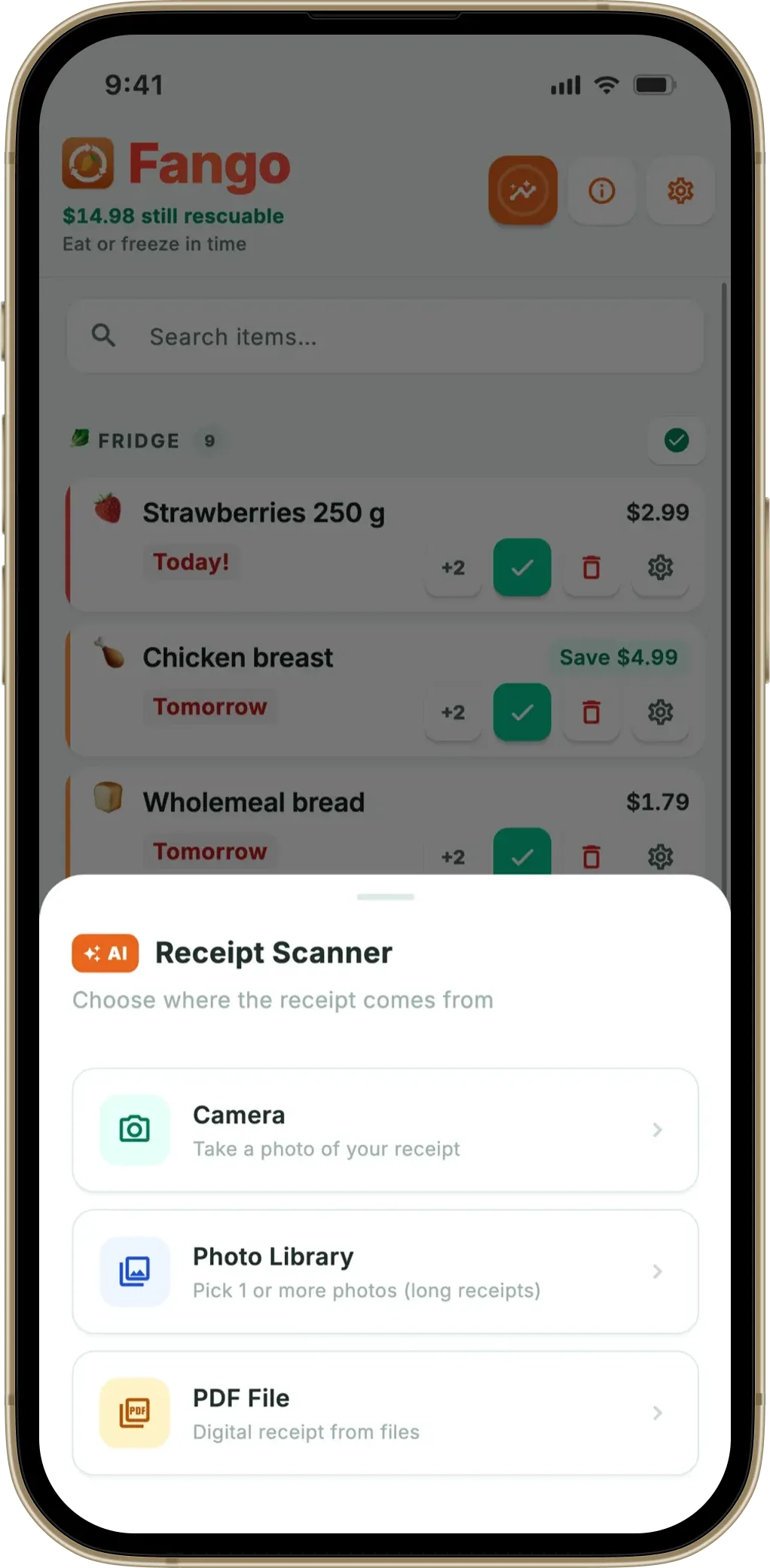
Fango tracks all your fridge items — including that pack of ham you opened on Monday — and sends a push notification in time. Scan your grocery receipt and AI adds the products automatically. No sign-up, fridge data stays on your device by default.
Download on the App Store Get it on Google PlayFree for a month · No sign-up · iOS and Android
How Long Does Cooked Ham Last (Leftovers and Joints)?
Leftover cooked ham — whether from a roasted gammon joint, a boiled ham, or a festive centrepiece — lasts 3–5 days in the fridge in an airtight container. Cooked meat in general follows the same rule: once cooked and cooled, refrigerate promptly and consume within that window. This is the same timeframe as rotisserie chicken leftovers.
A whole cooked ham that has not yet been cut — still in its original sealed plastic or vacuum packaging — typically lasts up to 5–7 days. Once you slice into it, the clock starts: treat every piece as opened and aim to use within 3–5 days.
How to Tell If Ham Has Gone Bad
The UK Food Standards Agency advises following use-by dates on meat carefully — ham is a cooked, processed product, but it can still harbour harmful bacteria when stored incorrectly or kept too long.
- Grey-green or greenish tint on the surface — fresh ham is pink to light salmon in colour. Any green or grey discolouration means discard immediately.
- Slimy or sticky texture that remains even after patting dry. A thin film can develop on cut surfaces naturally, but pronounced sliminess is a sign of bacterial growth.
- Sour, ammonia-like, or otherwise off smell — ham should smell mildly salty and savoury. A sharp, sour, or rancid odour means it has gone bad.
- Swollen or puffed-up packaging on an unopened pack — a sign of gas produced by bacteria inside. Do not open; discard.
Dry edges are not a sign of spoilage. Ham stored in the fridge can develop dry, slightly hardened edges — this is simply moisture loss, not spoilage. Trim the edges and eat the rest.
How to Freeze Ham
Ham freezes well and is one of the easiest meats to freeze. Frozen ham keeps its quality for 1–2 months — after that it remains safe but the texture can become slightly dry or rubbery. For a complete guide to freezing meat and other foods, see the how to freeze food guide.
-
1
Freeze in serving-size portions. Separate slices with baking paper so you can pull out exactly what you need without thawing the whole batch. Place in a zip-lock freezer bag and squeeze out as much air as possible.
-
2
Freeze whole cuts tightly wrapped. Wrap a gammon joint or whole ham in cling film first, then in foil, then place in a freezer bag. Multiple layers prevent freezer burn.
-
3
Label with the date. Ham is best within 1–2 months. Mark the bag with the date you froze it so you know when to prioritise it.
-
4
Thaw in the fridge overnight. Never thaw meat at room temperature. Transfer frozen ham to the fridge 8–12 hours before you need it. Thawed ham should be eaten within 3–5 days and not refrozen.
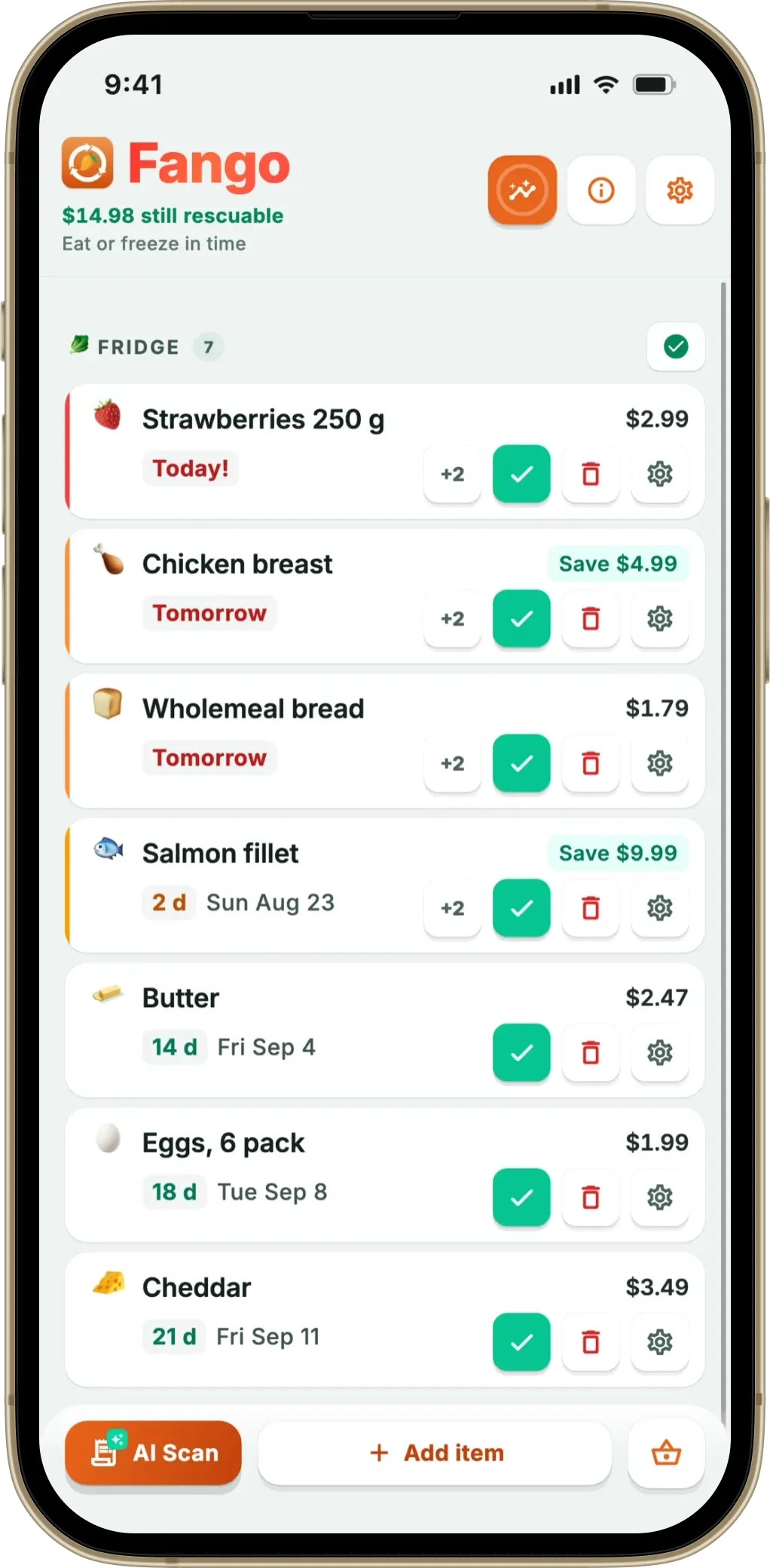
Fango sorts everything by reminder date and colour-codes the urgent items in red. The home screen widget shows what to use next without opening the app.
Download on the App Store Get it on Google PlayFree for a month · No sign-up · iOS and Android
How to Store Ham Properly in the Fridge
Proper storage extends ham’s fridge life and reduces the risk of cross-contamination with other foods.
-
1
Store at 0–5°C on a lower shelf. Keep ham and other cooked meats on the lower shelves of the fridge, below raw meat if present, to prevent drips contaminating cooked food. The UK Food Standards Agency recommends 0–5°C for all chilled meat.
-
2
Transfer to an airtight container. Once opened, resealable packaging rarely seals as well as the original. Transfer ham to a glass or plastic airtight container to slow drying and bacterial growth.
-
3
Use clean utensils. Always use clean tongs or a fork to remove ham slices — don’t handle it with your hands then put the pack back in the fridge.
For a complete overview of how to organise your fridge and keep food fresh longer, see our food storage tips guide.
Related reading: How Long Does Milk Last in the Fridge.
Frequently Asked Questions
How long does sliced deli ham last in the fridge after opening?
3–5 days in an airtight container or sealed bag at 0–5°C. The use-by date on the packet no longer applies once opened.
How long does cooked ham last in the fridge?
Leftover cooked ham: 3–5 days in an airtight container. A whole cooked ham in sealed packaging: 5–7 days. Once cut, treat as opened — 3–5 days.
Can you eat ham after the use-by date?
No — ham carries a use-by date, not a best-before date. Use-by dates are a safety deadline set by the manufacturer. Do not eat meat past its use-by date, even if it looks and smells fine.
Can you freeze ham?
Yes — ham freezes well for 1–2 months. Separate slices before freezing, squeeze out air from the bag, and thaw in the fridge overnight before using.
How can you tell if ham has gone bad?
Signs: grey-green discolouration, slimy or sticky texture, sour or ammonia-like smell, or a swollen sealed package. Dry edges alone are not a sign of spoilage — just trim them.