Shrimp is one of the most perishable proteins in the fridge — with a raw window of just 1–2 days, missing the deadline by a day matters. Fango tracks seafood and everything else in your fridge with expiry dates, sending a push notification the day before raw shrimp needs to be cooked or frozen so nothing goes to waste.
Whether you’ve bought fresh raw shrimp, thawed frozen prawns, or have leftover cooked shrimp from last night’s dinner, the storage times are different. Here’s the full guide.
- Raw fresh shrimp — 1–2 days in the fridge
- Cooked shrimp — 3–4 days in the fridge
- Frozen raw shrimp — 6–12 months in the freezer
- Frozen cooked shrimp — 3–6 months in the freezer
Shrimp Shelf Life — Full Breakdown
Shrimp spoils faster than most other proteins because of its high moisture content and the enzymes in the shell that continue breaking down the flesh after death. The 1–2 day window for raw shrimp is a hard limit — don’t push it.
For the household version of this problem — remembering the dates for everything you buy — see our guide to choosing an expiry date tracker.
How to Store Shrimp in the Fridge
-
1
Keep it as cold as possible without freezing. The ideal temperature for shrimp is 0–2°C — the coldest part of your fridge, which is usually the bottom shelf or the back. The UK Food Standards Agency recommends 0–5°C for all perishable food. For seafood specifically, the colder the better.
-
2
Store in an airtight container. Raw shrimp has a mild ocean smell that intensifies as it ages. An airtight container contains the smell and prevents cross-contamination with other fridge contents. Store raw shrimp below cooked food and ready-to-eat items.
-
3
Don’t leave it in water. Unlike some seafood, shrimp doesn’t benefit from being stored in water in the fridge — it becomes waterlogged and the texture suffers. Keep it in the container without added liquid.
-
4
Freeze on the day of purchase if not using immediately. If you bought shrimp and won’t cook it within 24 hours, freeze it the same day. Don’t wait until it’s close to going off — freeze it fresh. Read the complete guide to freezing food for general freezer best practices.
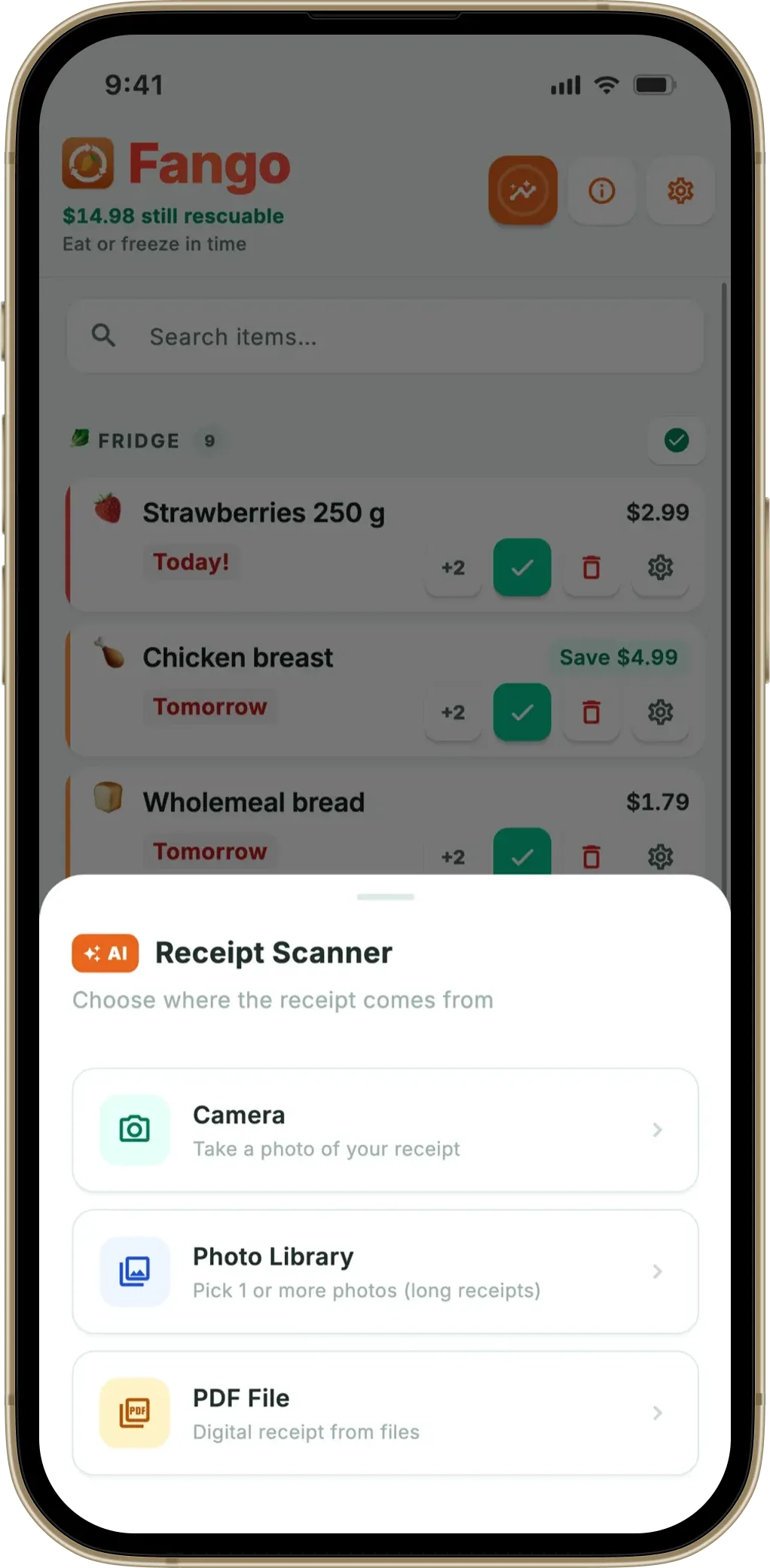
Fango tracks raw shrimp, cooked seafood, and everything else in your fridge with reminder dates. Get a push notification the day before anything needs cooking or freezing. Scan your grocery receipt and AI adds products automatically. No sign-up, no cloud by default.
Download on the App Store Get it on Google PlayFree for a month · No sign-up · iOS and Android
How to Freeze Shrimp
Shrimp is one of the best proteins for freezing — it thaws quickly, cooks well from frozen, and loses very little quality in the process. Here’s how to freeze it properly:
-
1
Rinse and pat dry. Rinse raw shrimp under cold water and pat dry with kitchen paper. Excess surface moisture leads to ice crystals that damage texture.
-
2
Freeze in a single layer first. Spread shrimp on a baking sheet lined with baking parchment and freeze for 1–2 hours until solid. This prevents them clumping together into a block.
-
3
Transfer to a freezer bag and remove the air. Once individually frozen, bag them up with as little air as possible. Label with the date. Raw shrimp: up to 12 months. Cooked shrimp: up to 6 months.
-
4
Thaw in the fridge overnight or in cold water. Place the sealed bag in a bowl of cold water and change the water every 30 minutes. Shrimp thaws in 15–20 minutes this way. Never thaw at room temperature — bacterial growth in the danger zone (8–63°C) is rapid for seafood. Use within 1–2 days of thawing and do not refreeze.
How to Tell If Shrimp Has Gone Bad
-
1
Smell — The most reliable test. Fresh shrimp smells mildly of the sea — clean and slightly briny. Spoiled shrimp smells of ammonia or strongly and unpleasantly “fishy”. If it smells wrong, discard immediately.
-
2
Look — Raw shrimp should be translucent grey (before cooking). Black spots on the shell or the meat, or flesh that has turned opaque white or yellow, indicate spoilage. Cooked shrimp should be pink and white — grey or yellow patches are a warning sign.
-
3
Feel — Fresh shrimp has a firm, slightly springy texture. Slimy or mushy shrimp that doesn’t firm up is spoiled.
Compare with how long salmon lasts in the fridge — raw salmon is similarly short at 1–2 days and shares the same storage and spoilage signs. For general food storage tips that apply to all proteins, see our dedicated guide.
Related reading: How Long Do Strawberries Last.
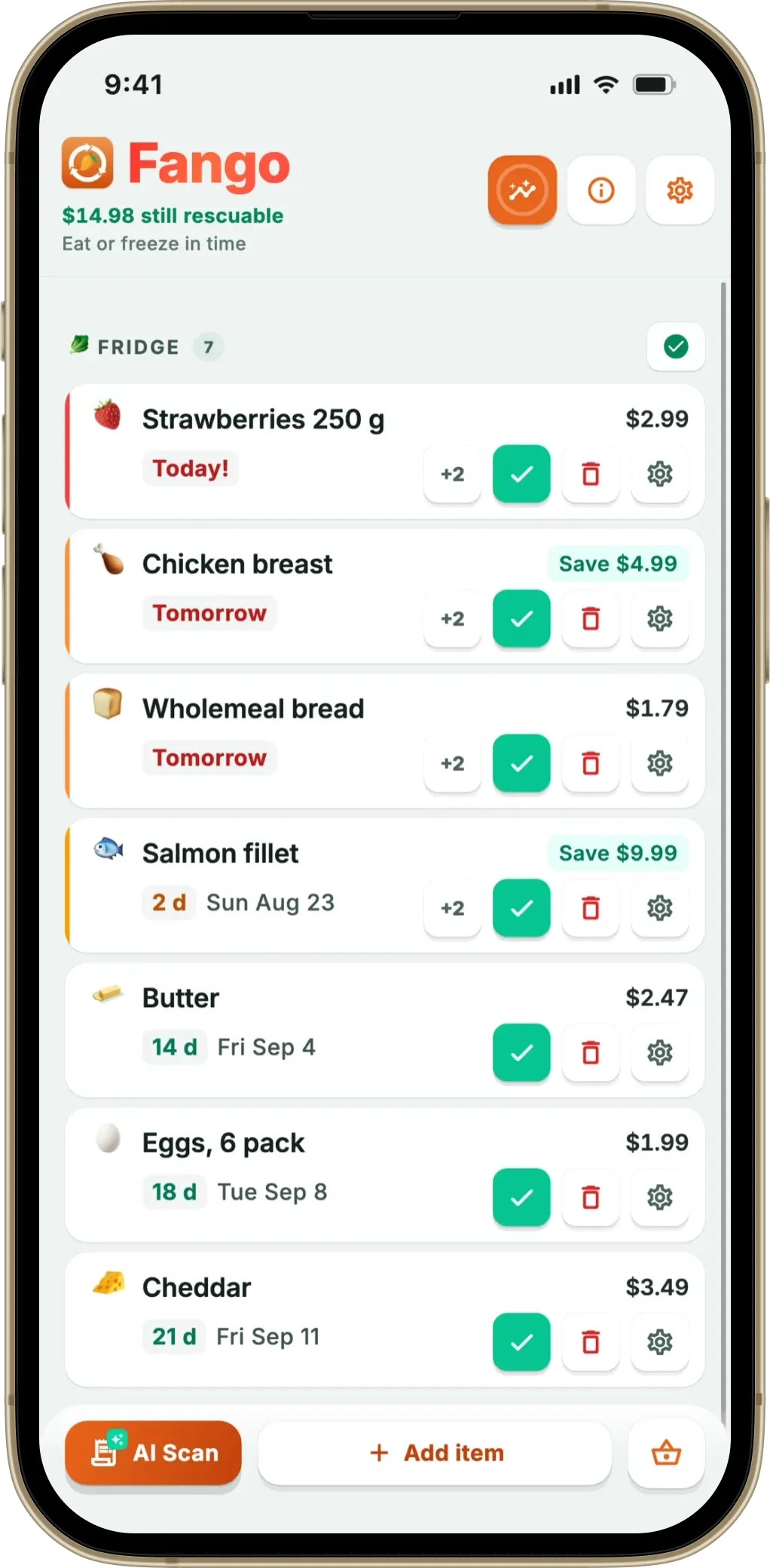
Fango sorts everything by reminder date and colour-codes the urgent items in red. The home screen widget shows what to use next without opening the app.
Download on the App Store Get it on Google PlayFree for a month · No sign-up · iOS and Android
Frequently Asked Questions
Is it safe to eat shrimp that has been in the fridge for 3 days?
Raw shrimp: no — the safe window is 1–2 days. Three-day-old raw shrimp should be discarded. Cooked shrimp: 3 days is within the 3–4 day window and generally safe if stored properly in an airtight container at the correct temperature. Check for smell and texture before eating.
Can you cook shrimp from frozen?
Yes — shrimp cooks well directly from frozen. Add it to boiling water or a hot pan and cook for 3–5 minutes (depending on size) until pink and opaque. There’s no need to thaw if cooking immediately. This is one of the advantages of frozen shrimp over fresh.
Does the smell of shrimp always mean it’s gone bad?
No — fresh shrimp has a mild, clean, ocean smell. That’s normal and not a sign of spoilage. What to watch for is an ammonia smell, a rotten smell, or an unusually strong “fishy” odour. If you’re unsure, the rule is: when in doubt, throw it out.
How long does raw shrimp last in the fridge?
Raw fresh shrimp lasts 1–2 days in the fridge when stored in an airtight container at 0–5°C. If the shrimp was previously frozen and thawed in the fridge, use it within 1–2 days and do not refreeze. For longer storage, freeze raw shrimp immediately — it keeps for 6–12 months in the freezer.
How long does cooked shrimp last in the fridge?
Cooked shrimp lasts 3–4 days in the fridge when stored in an airtight container. Cool it quickly after cooking — don’t leave it at room temperature for more than two hours. Cooked shrimp can also be frozen for up to 3–6 months, though the texture softens slightly after thawing.
How do you know if shrimp has gone bad?
Signs of spoiled shrimp: an ammonia or strong ‘off’ fishy smell (fresh shrimp smells mildly of the sea, not strongly of fish); slimy texture; discolouration — black spots on the shell or meat, or greyish flesh that should be translucent pink. Any of these means discard. Don’t taste shrimp to check — the smell test is reliable enough.
Can you freeze shrimp?
Yes — shrimp freezes very well. Raw shrimp keeps for 6–12 months in the freezer. Cooked shrimp keeps for 3–6 months. For best results, rinse and pat dry before freezing, place in a single layer on a tray to freeze solid, then transfer to a freezer bag. This prevents them from clumping together so you can take out just what you need.