Yes — soup is one of the best things you can freeze, and a big-batch pot of it is a freezer’s whole reason for being. Most soups keep their quality for up to 3 months frozen. Three things make it work: cool it quickly, freeze it in portions, and leave a little headspace in the container, because liquid expands as it freezes. Cream-based soups can split, but they’re easily brought back on reheating.
Log frozen soup portions and Fango reminds you to eat them in time. No sign-up, your data stays on your device by default.
Download on the App Store Get it on Google PlayFree for a month · No sign-up · iOS and Android
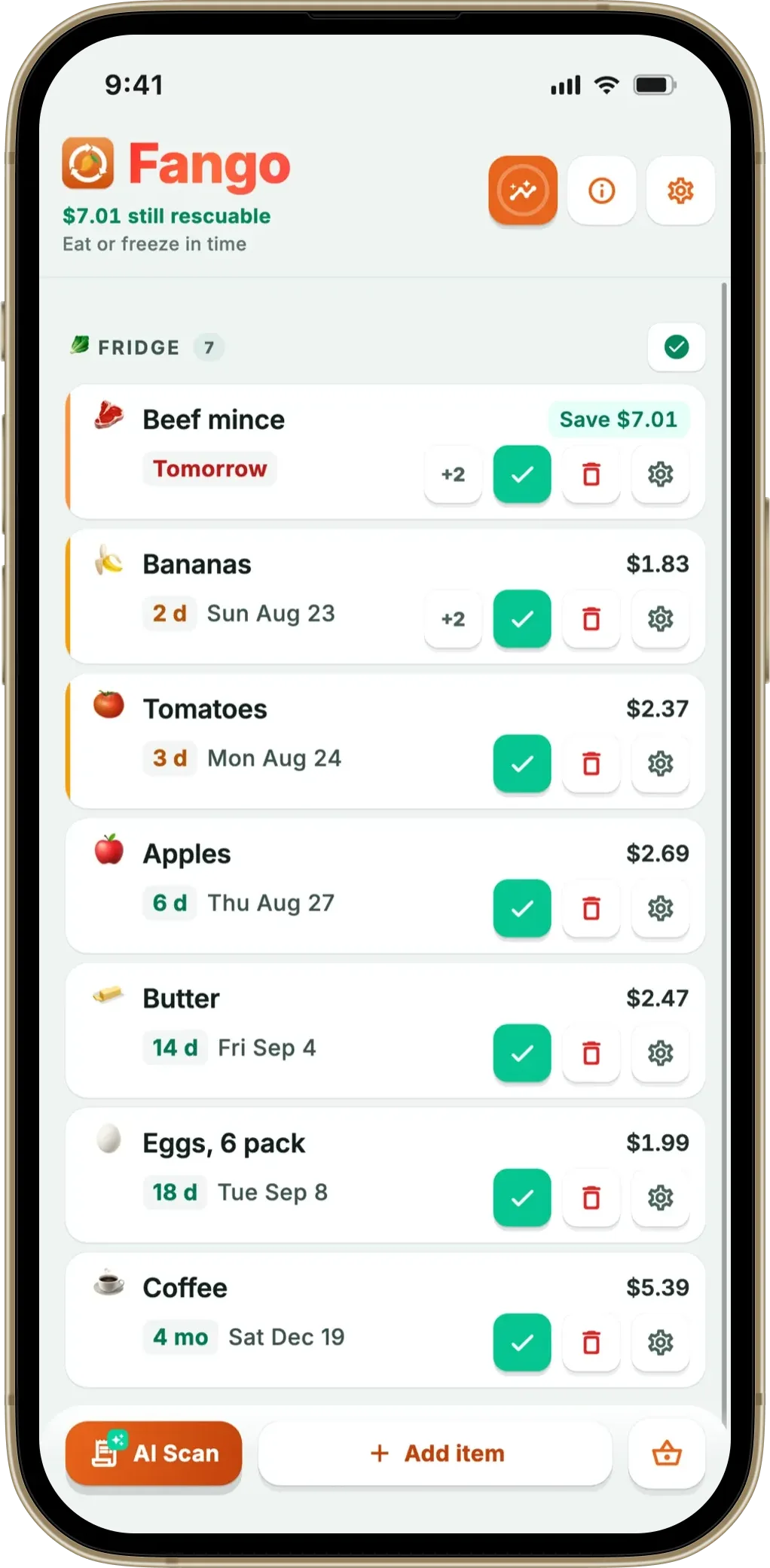
Home-made soup is a brilliant way to use up vegetables before they turn — and freezing the extra means none of that effort goes to waste. Fango lets you log frozen portions and set a reminder so they actually get eaten rather than lost at the bottom of the freezer.
- Yes — most soups freeze well for up to 3 months
- Cool it fast, then portion into containers or flat bags
- Leave headspace — liquid expands as it freezes
- Creamy soups can split — stir or blend to fix on reheating
How to Freeze Soup — Step by Step
Freezing soup is mostly about cooling it fast and packing it smart. As with all cooked food, the UK Food Standards Agency advises cooling it quickly before it goes in the freezer.
This is exactly the kind of date an expiry date tracker app reminds you about in time.
-
1
Cool it quickly. Don’t put a hot pot straight in the freezer. Sit the pan in cold water, or ladle the soup into shallow containers so it cools faster. Get it cooling within a couple of hours of cooking.
-
2
Portion it. Freeze soup in meal-sized containers or freezer bags so you only defrost what you need. Bags laid flat freeze fast, thaw fast, and stack neatly.
-
3
Leave headspace. Liquid expands as it freezes, so leave about 2–3 cm at the top of any rigid container, or don’t overfill a bag. This stops lids popping and bags splitting.
-
4
Seal, label, and date. Press out air, seal well, and label with the soup and the date. Use within about 3 months for the best flavour.
Which Soups Freeze Best — and Which Split
Most soups freeze beautifully. A few ingredients change texture, but none of it is a safety issue — just something to plan around.
Once food is in the freezer, the date is the part that gets lost — a pantry inventory app that includes the freezer keeps it on the list.
The trick with tricky soups: freeze the base and add the finishing touch fresh. Hold back the cream, pasta, or potato, freeze the rest, and stir them in when you reheat. For more batch-cooking and storage ideas, see food storage tips and the broader guide to freezing food.
How to Reheat Frozen Soup
Defrost soup in the fridge overnight, or reheat it gently straight from frozen in a pan or the microwave, stirring now and then. Heat it until it is steaming hot all the way through before serving, and only reheat the portion you’ll actually eat. If a creamy soup looks separated, a quick whisk or a few seconds with a stick blender brings it back together. Soup is the ultimate use-it-up meal — pair it with frozen rice or bread for a fast lunch, and see how to reduce food waste at home for more.
Log frozen soup portions and Fango reminds you to eat them in time. No sign-up, your data stays on your device by default.
Download on the App Store Get it on Google PlayFree for a month · No sign-up · iOS and Android
Related reading: Can You Freeze Aubergine and Can You Freeze Cooked Pasta.
Frequently Asked Questions
Can you freeze soup?
Yes. Most soups freeze very well for up to about 3 months. Cool the soup quickly, freeze it in portions, and leave a little headspace in the container because liquid expands as it freezes. Cream- or dairy-based soups can split but are easily fixed on reheating.
How do you freeze soup?
Cool the soup quickly, then ladle it into portion-sized containers or freezer bags, leaving about 2–3 cm of headspace for expansion. Seal, label with the date, and freeze. Bags laid flat freeze and thaw fastest and stack neatly.
Can you freeze creamy soup?
Yes, but cream- and milk-based soups can separate or look grainy after freezing. Reheat them gently while stirring, and a quick whisk or blitz with a stick blender usually brings the texture back. For the best result, freeze the soup base and stir in the cream when you reheat.
How do you reheat frozen soup?
Defrost it in the fridge overnight, or reheat gently from frozen in a pan or microwave, stirring now and then. Heat it until it is steaming hot all the way through before serving, and only reheat the portion you’ll eat.
How long does soup last in the freezer?
Soup keeps its best quality for about 3 months in the freezer. It stays safe for longer if kept frozen, but flavour and texture decline over time, so label each container with the date.
Which soups don’t freeze well?
Soups with cream or milk can split, and potato can turn grainy or mushy. They’re still safe and usually fixable by stirring or blending. For the smoothest result, freeze a chunky or brothy base and add cream, pasta, or potato fresh when you reheat.
The habit that makes batch-cooking pay off: freeze soup in portions, log them in Fango, and get a nudge to use them. A pot of soup becomes a week of easy lunches instead of a forgotten tub at the back.