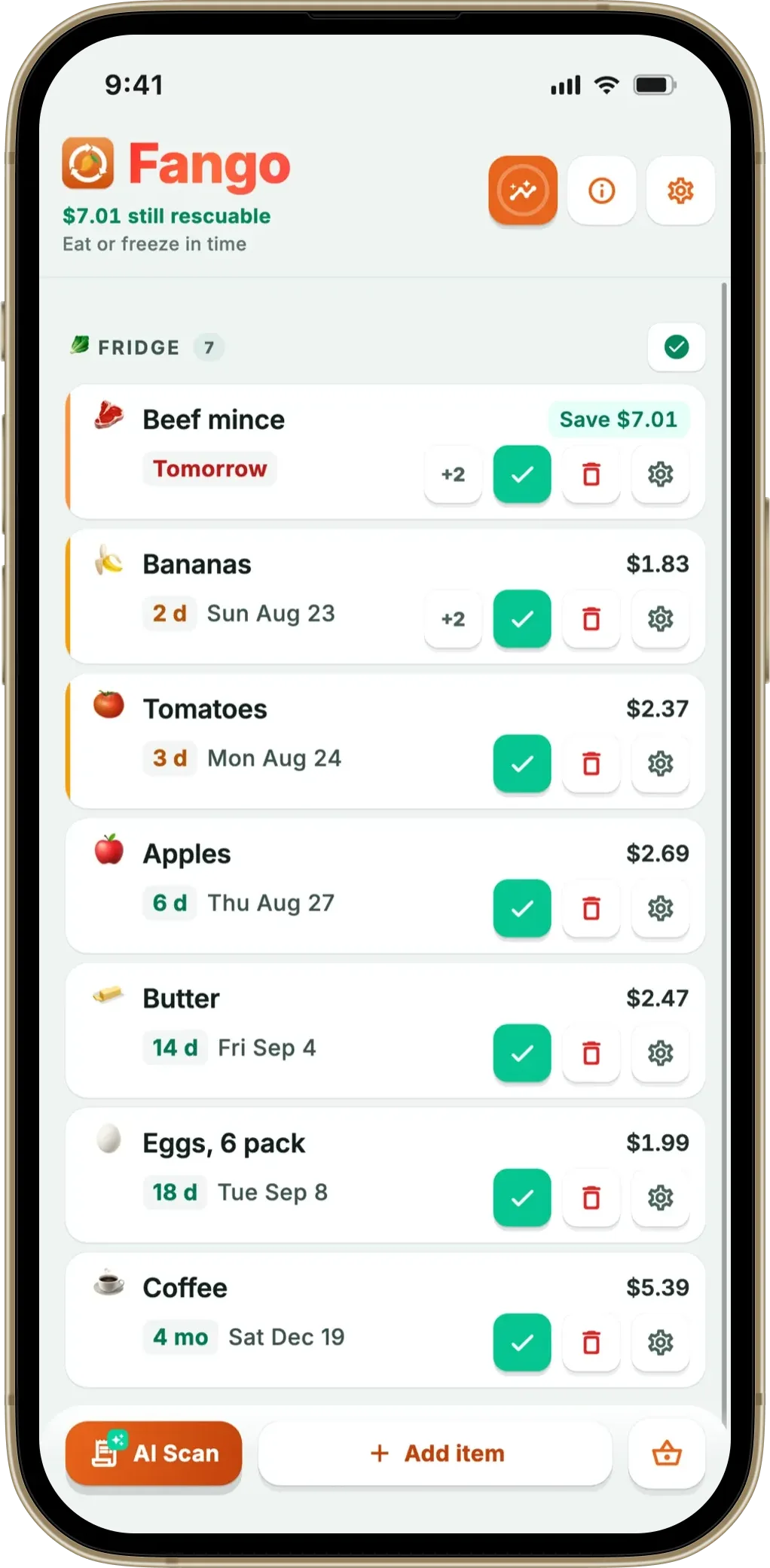
You bought a large tub of Greek yogurt for a recipe, used two tablespoons, and now it’s been sitting in the fridge for a week. Can you freeze the rest rather than throw it away? Yes — freezing yogurt is safe and effective for saving it before it expires. Fango tracks opened yogurt alongside everything else in your fridge and sends a reminder in time, so you catch it in time to freeze rather than bin it.
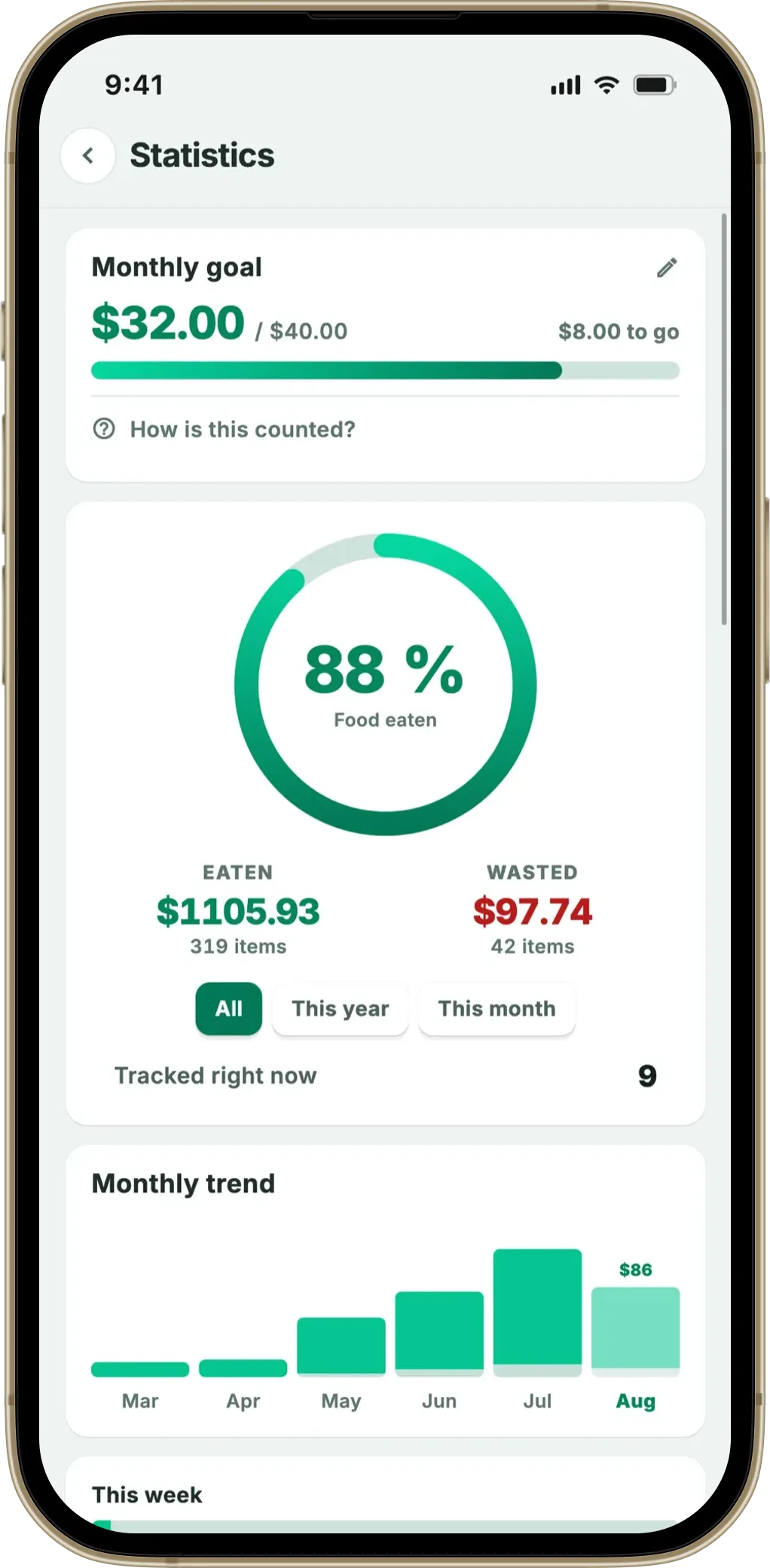
Fango tracks opened yogurt and everything else in your fridge with reminder dates. Get a push notification before anything goes to waste. Scan your grocery receipt and AI adds products automatically. No sign-up, no cloud by default.
Download on the App Store Get it on Google PlayFree for a month · No sign-up · iOS and Android
The catch: the texture changes. Frozen yogurt becomes grainy and watery when thawed — the smooth creaminess is gone. But it remains perfectly good for smoothies, cooking, and baking, where texture matters less.
- Safe to freeze? Yes — for 1–2 months at best quality
- Texture change — becomes grainy and watery after thawing (always)
- Greek yogurt — freezes better than regular; stirring restores some creaminess
- Best uses after freezing — smoothies, marinades, baking, cooking sauces
What Happens to Yogurt When You Freeze It?
Yogurt is an emulsion of water, proteins, and fats. When it freezes, the water forms ice crystals that break apart the protein network. When thawed, the water doesn’t fully reincorporate — it pools separately as whey, leaving the yogurt looking grainy and lumpy rather than smooth.
This is exactly the kind of date an expiry date tracker app reminds you about before it passes.
This is the same syneresis that happens when yogurt sits in the fridge for too long — you open the tub and see liquid pooled on top. Freezing accelerates this process significantly. The yogurt is still safe to eat and tastes essentially the same, but the texture is permanently altered.
Greek yogurt handles this better than regular yogurt because it has already had much of its whey strained out during production. Less water means fewer ice crystals and less separation. After thawing Greek yogurt, vigorous stirring can restore most of the creaminess. See also how long yogurt lasts in the fridge if you’re deciding whether to freeze or use it now.
How to Freeze Yogurt — Step by Step
-
1
Freeze in individual portions. Don’t freeze an entire large tub — you’ll end up thawing more than you need and refreezing is not recommended. Portion into small airtight containers or spoon into an ice cube tray. Each cube is roughly 2 tablespoons — easy to pop into a smoothie directly from frozen.
-
2
Leave headroom in the container. Yogurt expands when frozen. Leave at least 1–2 cm of space at the top of each container to prevent lids popping off or containers cracking.
-
3
Label with the date and freeze for up to 2 months. After 2 months, the texture degrades further and the flavour can become slightly tangy. Label clearly so you don’t forget how long it’s been in the freezer — a freezer inventory app does this automatically.
-
4
Use directly from frozen in smoothies. Yogurt cubes can go straight into a blender from the freezer — no thawing needed for smoothies. This is the easiest and most convenient use of frozen yogurt.
How to Thaw Frozen Yogurt
-
1
Thaw overnight in the fridge. This is the safest method. Transfer the container from the freezer to the fridge the night before you need it. Never thaw yogurt at room temperature — it spends too long in the bacterial danger zone (8–63°C).
-
2
Stir vigorously after thawing. The separated whey will look alarming — don’t tip it off. Instead, stir the liquid back into the yogurt until as smooth as possible. Greek yogurt will mostly recombine; regular yogurt will remain somewhat grainy.
-
3
Use within 2–3 days of thawing. Thawed yogurt should be treated like fresh opened yogurt — use it within a few days and don’t refreeze.
Best Uses for Frozen and Thawed Yogurt
For other dairy products, see can you freeze milk and can you freeze butter — both freeze well with fewer texture compromises than yogurt. The general guide to freezing food covers best practices for all dairy and other food categories.
Fango tracks opened yogurt and everything else in your fridge with reminder dates. Get a push notification before anything goes to waste. Scan your grocery receipt and AI adds products automatically. No sign-up, no cloud by default.
Download on the App Store Get it on Google PlayFree for a month · No sign-up · iOS and Android
Related reading: Can You Freeze Salmon.
Frequently Asked Questions
Can you freeze yogurt in the original container?
If there’s space at the top (at least 2 cm), yes — the sealed container is fine. If the tub is full, decant some yogurt into a separate container first. A completely full sealed tub may crack or deform as the yogurt expands during freezing.
Is frozen yogurt the same as yogurt that’s been frozen?
No — commercially made frozen yogurt is a specially formulated product with stabilisers, sugars, and other ingredients that prevent ice crystal formation and maintain a scoopable texture. Regular yogurt that’s been frozen and thawed has a completely different (grainy, watery) texture and is not the same product.
How do you know if frozen yogurt has gone bad after thawing?
Thawed yogurt that has gone bad will smell sour or unpleasant beyond the normal mild tang of yogurt, or may show visible mould. The texture will look more watery than usual — that’s normal. The smell test is the most reliable: if it smells off or rancid rather than tangy-fresh, discard it.
Can you freeze yogurt?
Yes — yogurt can be frozen safely and keeps for 1–2 months in the freezer. The trade-off is texture: freezing causes the water in yogurt to separate from the proteins, leaving it grainy and watery when thawed. It’s still safe to eat and tastes the same, but the smooth, creamy texture is gone. Frozen-thawed yogurt is best used in smoothies, cooking, or baking where the texture difference doesn’t matter.
Does Greek yogurt freeze better than regular yogurt?
Yes — Greek yogurt has a higher protein content and lower water content than regular yogurt, which means less ice crystal formation during freezing and less separation when thawed. It still becomes grainy compared to fresh, but the change is less dramatic. Vigorous stirring after thawing can restore much of the creaminess in Greek yogurt, whereas regular yogurt tends to remain watery.
How long does yogurt last in the freezer?
Frozen yogurt keeps for 1–2 months at best quality. Beyond 2 months it remains safe but the flavour and texture deteriorate further. Freeze in individual portions rather than the whole container — this lets you thaw only what you need and keeps the rest in better condition.
How do you thaw frozen yogurt?
Thaw frozen yogurt overnight in the fridge — this is the safest method and produces the best result. Never thaw at room temperature. After thawing, stir vigorously to recombine the separated liquid (whey) with the solids. The texture will still be different from fresh, but stirring improves it considerably, especially for Greek yogurt.