Opened regular yogurt lasts 5–7 days in the fridge, Greek yogurt and skyr last 7–10 days, and an unopened pot stays good for 1–2 weeks past the best-before date. Dairy is also one of the most wasted food categories in UK households — WRAP estimates that milk, cheese, and yogurt together account for billions of pounds of food thrown away every year, most of it avoidable. Fango tracks your dairy expiry dates and sends you a reminder before anything needs using up.
The exact shelf life depends on the type of yogurt, how you store it, and whether you have opened the pot. This guide covers all the main types and tells you exactly what to look for to know when yogurt has gone off.
- Regular yogurt (opened) — 5–7 days; reseal tightly after use
- Greek yogurt / skyr (opened) — 7–10 days; lower moisture = longer life
- Unopened yogurt — 1–2 weeks past best-before if stored at 0–5°C
- Frozen — 1–2 months; texture becomes grainy, fine for smoothies and baking
- Whey pooling on top is normal — stir it back in, not a sign of spoilage
Yogurt Shelf Life by Type
| Yogurt | Unopened, past date | Opened, fridge | Frozen |
|---|---|---|---|
| Regular yogurt | 1–2 weeks past best-before | 5–7 days | 1–2 months |
| Greek yogurt / skyr | 1–2 weeks past best-before | 7–10 days | 1–2 months |
| Drinkable yogurt / kefir | 1 week past best-before | 5–7 days | 1–2 months |
| Yogurt opened and left out >2 h | — | Discard | — |
← scroll →
How Long Does Yogurt Last After the Best-Before Date?
The best-before date on yogurt is a quality indicator, not a safety deadline. An unopened pot stored consistently at 0–5°C is typically safe and good quality for one to two weeks past that date. Once you open it, however, the clock resets — you should aim to finish it within 5–7 days regardless of what the printed date says. A food expiry reminder app can send a push notification a few days before that window closes, so an opened pot doesn’t get pushed to the back and forgotten.
For the household version of this problem — remembering the dates for everything you buy — see our guide to choosing an expiry date tracker.
The UK Food Standards Agency distinguishes clearly between best-before (quality) and use-by (safety). Yogurt carries a best-before date — which means you can use your judgement. Always check the pot before eating: smell it, look at the surface, and check the colour. If anything seems off, discard it.
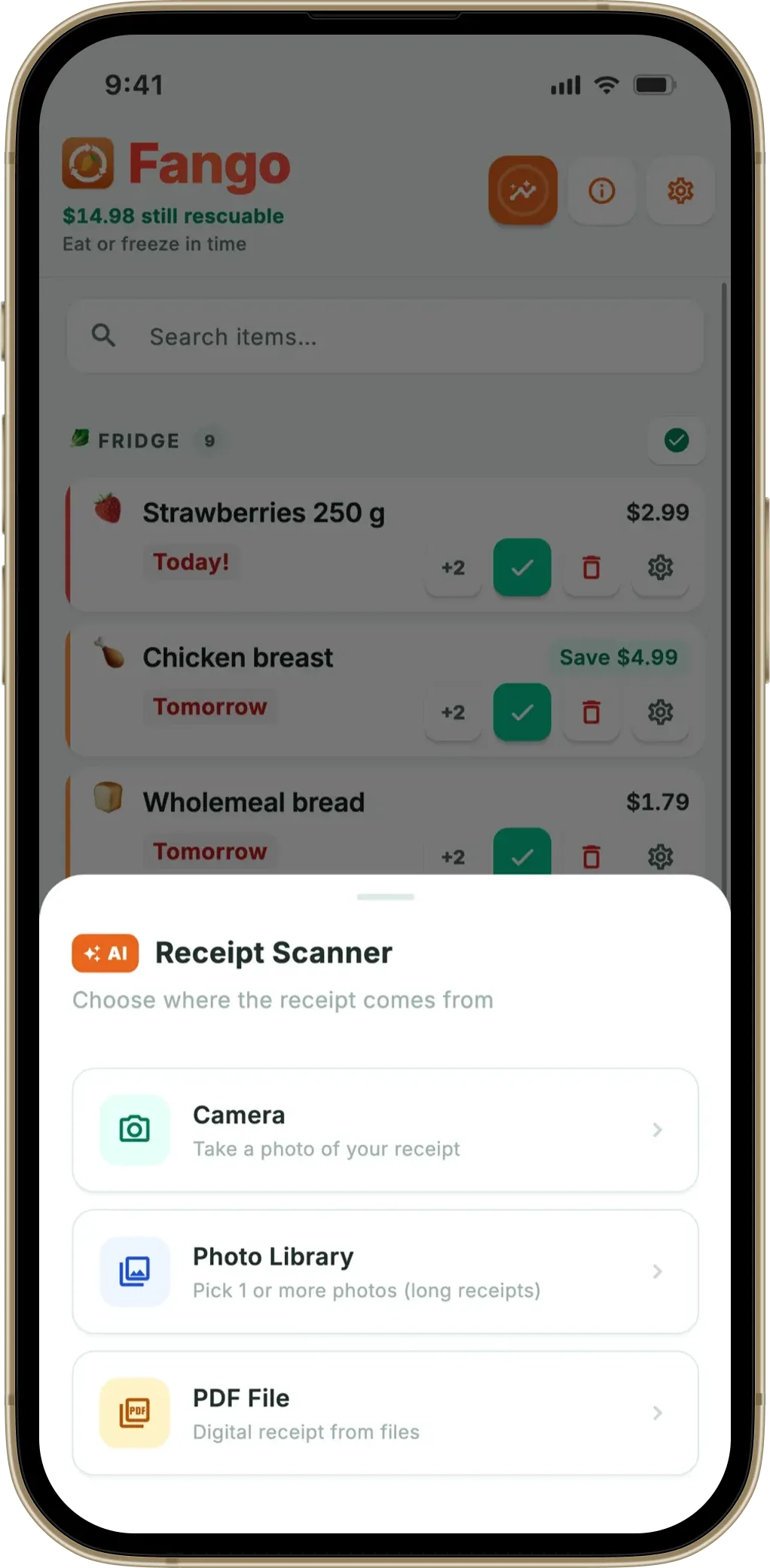
Fango tracks reminder dates for your whole fridge and sends a push notification in time. Scan your grocery receipt — AI reads the products and adds them automatically. No sign-up, fridge data stays on your device by default.
Download on the App Store Get it on Google PlayFree for a month · No sign-up · iOS and Android
How to Tell If Yogurt Has Gone Bad
The most reliable sign of spoiled yogurt is visible mould — any pink, green, or black spots on the surface mean the entire pot should be discarded. Do not scrape off the mould and eat the rest: mould produces invisible toxins that spread through soft, moist foods.
- Visible mould — any colour (pink, green, black) on the surface or around the lid seal. Discard the entire pot immediately.
- Strongly sour or rancid smell — distinct from the natural mild tang of yogurt. Fresh yogurt smells clean and slightly tart; spoiled yogurt smells sharp, musty, or chemically off.
- Yellow, brown, or unusual discolouration throughout the yogurt (not just the surface).
- Swollen or bulging lid — a sign of gas produced by bacterial activity.
Watery liquid on top is normal. This is whey — the liquid that naturally separates from yogurt when it sits. Simply stir it back in before eating. It is not a sign of spoilage.
Can You Freeze Yogurt?
Yes — but with an important caveat. Freezing changes yogurt’s texture. The water in yogurt forms ice crystals that break down the protein structure, so when thawed the yogurt becomes grainy, separated, and watery. It is no longer pleasant to eat on its own, but it works well in smoothies, baked goods, sauces, and marinades.
For a general guide on freezing dairy products and how to minimise quality loss, see the complete guide to freezing food.
-
1
Freeze in individual portions. Spoon yogurt into ice cube trays or small freezer-safe containers. This lets you take out exactly what you need for a smoothie without thawing a large batch.
-
2
Leave headroom in the container. Yogurt expands slightly when frozen. Leave about 2 cm of space at the top to avoid cracking lids or bursting bags.
-
3
Label with the date. Frozen yogurt is best used within 1–2 months. After that it remains safe but flavour and texture deteriorate further.
-
4
Thaw in the fridge, not on the counter. Transfer frozen yogurt to the fridge 8–12 hours before you need it. Thawing at room temperature increases the risk of bacterial growth. Stir thoroughly after thawing — separation is normal.
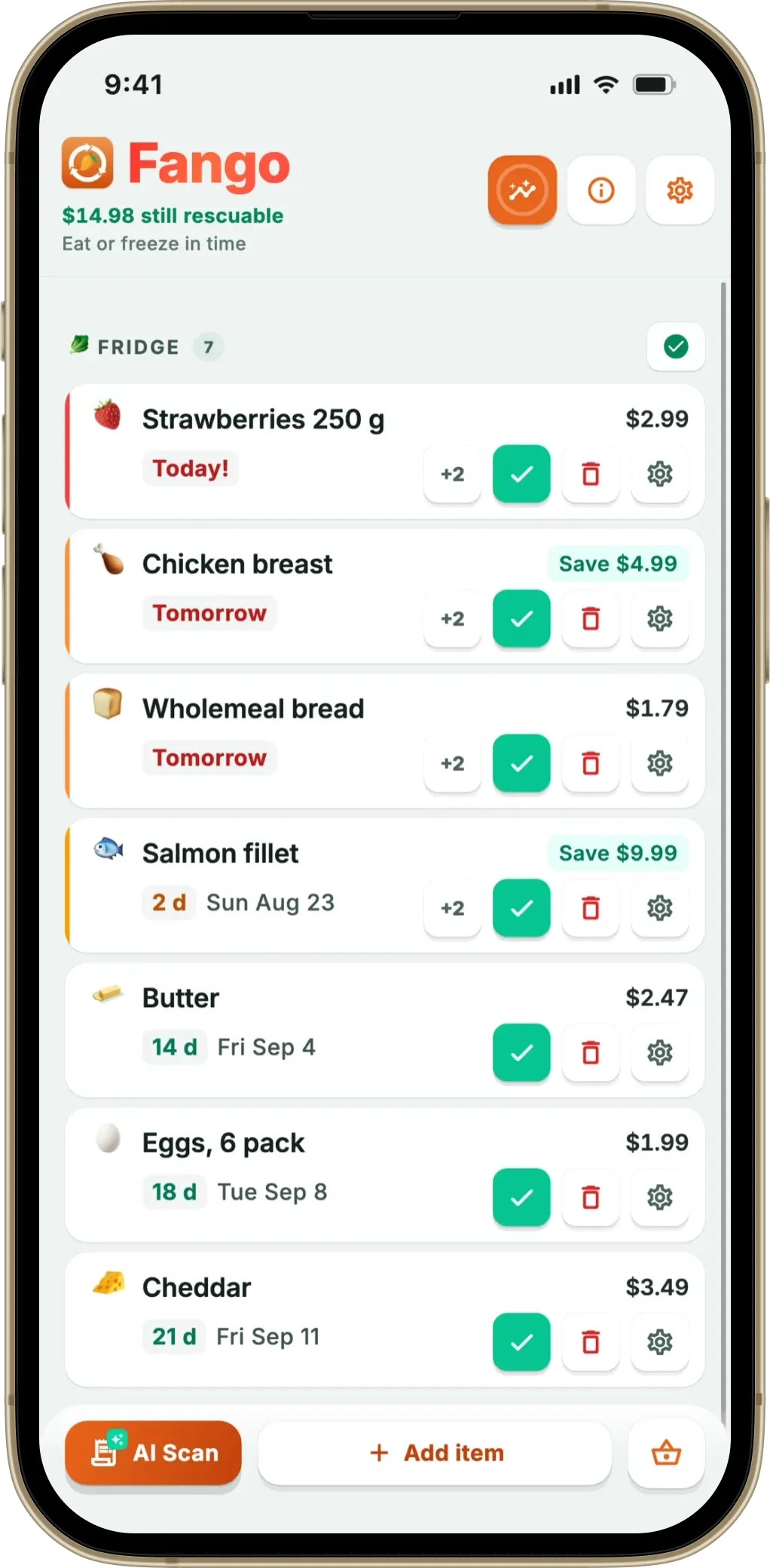
Fango sorts everything by reminder date and colour-codes the urgent items in red. The home screen widget shows what to use next without opening the app.
Download on the App Store Get it on Google PlayFree for a month · No sign-up · iOS and Android
How to Store Yogurt Properly
Proper storage makes the difference between yogurt lasting 5 days and 7 days after opening. The principles are simple: keep it cold, keep it sealed, and avoid contaminating the pot.
Like how long cheese lasts in the fridge, yogurt’s shelf life depends heavily on temperature consistency — the back of the fridge (not the door) is consistently coldest.
-
1
Store at 0–5°C. The UK Food Standards Agency recommends keeping dairy at 0–5°C. The door of the fridge is the warmest spot — keep yogurt on a shelf at the back instead.
-
2
Use a clean spoon every time. Never eat directly from the pot and put it back. Bacteria from your mouth or a used utensil can contaminate the whole pot and cause it to spoil faster.
-
3
Reseal the lid tightly. If the original lid is damaged or hard to close, transfer the yogurt to an airtight container. Exposure to other fridge odours and bacteria shortens shelf life.
-
4
Don’t leave it out for more than 2 hours. Yogurt left at room temperature for more than 2 hours (or 1 hour in a warm kitchen above 32°C) should not be returned to the fridge — bacteria multiply rapidly at room temperature.
For a full overview of how to keep dairy and other fridge staples fresh, see our food storage tips guide.
Frequently Asked Questions
How long does yogurt last once opened?
Regular yogurt: 5–7 days. Greek yogurt and skyr: 7–10 days. Keep the pot sealed between uses and store at the back of the fridge where it is coldest.
Can you eat yogurt after the best-before date?
Yes — unopened yogurt is typically safe and good for 1–2 weeks past the best-before date if stored properly. Always check for mould, off smell, or unusual colour before eating.
Is watery liquid in yogurt a sign it has gone bad?
No. The liquid is whey — it naturally separates from yogurt when it sits. Simply stir it back in. It is not a sign of spoilage. Visible mould, an off smell, or discolouration are the real signs to watch for.
Can you freeze yogurt?
Yes, for up to 1–2 months. The texture changes — thawed yogurt becomes grainy and watery — but it works well in smoothies, baking, and cooking. Freeze in small portions and thaw in the fridge.
Does Greek yogurt last longer than regular yogurt?
Yes — Greek yogurt and skyr last 7–10 days after opening, versus 5–7 days for regular yogurt. The straining process removes moisture, which slows bacterial growth.
Can you eat yogurt left out overnight?
No. Yogurt left at room temperature for more than 2 hours should not be eaten — bacteria multiply rapidly between 5°C and 60°C. If a pot has been left out overnight, discard it even if it looks and smells fine.
Can expired yogurt make you sick?
Yogurt eaten a few days past its best-before date is usually fine if it has been stored correctly and shows no signs of spoilage. But yogurt with visible mould, an off smell, or a swollen lid can cause food poisoning — discard it. The best-before date is a quality guide, not a safety deadline.