Pasta sauce is one of the most common items left half-used in the fridge. You open a jar for Monday’s dinner, use half, put the lid back on, and then forget about it. By the time you open the fridge for next week’s pasta, you’re not sure whether it’s still good. Fango tracks what is in your fridge, and for an opened jar you set your own date — the push notification arrives before it, so you use the sauce before it goes to waste.
The answer depends on the type: tomato-based jarred sauces last the longest, homemade sauces and cream-based sauces the shortest. Here’s the full breakdown.
One quick note on names: pasta sauce, spaghetti sauce, and marinara are the same thing for storage purposes — a tomato-based sauce. The timings below apply to all of them. Cream sauces (alfredo, carbonara) and meat sauces (bolognese, ragù) are the exceptions and get shorter windows, covered separately.
- Opened jarred tomato sauce — 5–7 days in the fridge
- Homemade pasta sauce — 3–4 days in the fridge
- Cream-based sauce (alfredo, carbonara) — 3–4 days in the fridge
- Frozen pasta sauce — up to 3 months (tomato-based freezes best)
How Long Does Pasta Sauce Last — by Type
Jarred tomato sauces last longer after opening because commercial production includes more acid (tomatoes are naturally acidic) and sometimes preservatives. Homemade sauces and meat-based sauces have a shorter window because they contain protein that bacteria can act on more readily.
Cream-based sauces — alfredo, carbonara, or anything made with double cream — are the most perishable. The dairy component spoils faster than tomato, and cream sauces should be refrigerated promptly and used within 3–4 days.
| Sauce | Opened, fridge | Unopened, pantry | Freezer |
|---|---|---|---|
| Jarred tomato / marinara / spaghetti sauce | 5–7 days | Until best-before (~1 year) | Up to 3 months |
| Homemade tomato sauce | 3–4 days | — | Up to 3 months |
| Meat sauce / bolognese / ragù | 3–4 days | — | 2–3 months |
| Cream sauce (alfredo, carbonara) | 3–4 days | — | Not recommended |
| Pesto (opened) | 5–7 days | Until best-before | Up to 3 months |
← scroll →
Opened vs Unopened: When the Clock Starts
The most common confusion is what the printed date actually covers. An unopened jar of shop-bought pasta sauce is shelf-stable — it keeps in the pantry until its best-before date, usually a year or more out, because it was sealed hot and hasn’t been exposed to air or bacteria. Discard an unopened jar early only if the lid is bulging, the seal has popped, or it’s leaking — signs the contents have fermented.
The moment you open it, that printed date stops applying. Air and any bacteria from a serving spoon now have access, so the sauce becomes fresh food on a 5–7 day fridge clock (3–4 days for homemade, meat, or cream sauces) regardless of what the jar says. This is why “how long does pasta sauce last after opening” has a completely different answer from the best-before date — opening resets the timer.
Fango tracks everything in your fridge with reminder dates and sends a push notification before anything goes bad. Scan your grocery receipt and AI adds products automatically. No sign-up, no cloud account by default — fridge data stays on your device by default.
Download on the App Store Get it on Google PlayFree for a month · No sign-up · iOS and Android

How to Store Pasta Sauce Properly
-
1
Transfer to an airtight container. Don’t leave sauce in the opened jar with the lid loosely on. Transfer to a clean airtight container — this reduces oxidation, limits exposure to other fridge odours, and makes it clearer how much is left. A glass container with a clip-top lid works well.
-
2
Refrigerate within two hours of cooking. For homemade sauces, don’t leave them on the hob to cool slowly — bacteria multiply fastest between 8°C and 63°C. Transfer to a shallow container so it cools quickly, then refrigerate. The UK Food Standards Agency recommends a fridge temperature of 0–5°C.
-
3
Don’t double-dip with used utensils. Introducing bacteria from a used spoon into the jar shortens how long it stays safe. Always use a clean spoon to serve from the jar or container.
-
4
Freeze the rest if you won’t use it in time. If you’ve opened a large jar and know you won’t use it within a week, freeze the remainder immediately. Portion it into ice cube trays or small containers — frozen tomato sauce is ready to use for soups, stews, or pizza sauce for the next three months.
Can You Freeze Pasta Sauce?
Yes — and this is almost always the right call when you have leftover sauce and don’t plan to use it within the week. Tomato-based pasta sauce freezes exceptionally well: the texture and flavour survive freezing and thawing without much degradation, and it keeps for up to three months. Read the full guide to freezing food for tips on containers and thawing.
Cream-based sauces are trickier. The dairy tends to separate on thawing — you’ll often see the sauce looking grainy or split. The flavour is usually still good, and vigorous stirring and gentle reheating often bring it back together. But if texture matters, cream-based sauce is better eaten fresh and not frozen.
Pesto is a special case: it freezes well in ice cube trays — pop out individual cubes and store them in a bag for up to 3 months. Each cube is roughly one portion, and it thaws in minutes.
How to Tell If Pasta Sauce Has Gone Bad
-
1
Look — Any visible mould (fuzzy growth, any colour) means the whole jar should be discarded. A slight darkening of colour after a few days is normal for tomato sauce and not a sign of spoilage.
-
2
Smell — A sour, fermented, or “off” smell is a clear sign it has spoiled. Fresh tomato sauce smells bright and slightly acidic. Anything musty or unpleasant means discard.
-
3
Texture — Fizzing, bubbling, or a watery layer that won’t stir back in means the sauce has started to ferment. Discard it.
When in doubt, throw it out. Pasta sauce is inexpensive enough that the risk of food poisoning is never worth a jar of sauce.
Does Pasta Sauce Go Off Before the Best-Before Date?
The best-before date on an unopened jar refers to quality in an unopened, shelf-stable state. Once opened, that date is no longer relevant — the exposure to air and introduction of bacteria from utensils means it should be treated as fresh food and used within 5–7 days regardless of what’s printed on the lid.
The difference between best-before and use-by dates matters here: best-before is about quality, use-by is about safety. Opened pasta sauce in the fridge should be used within the timeframes above, not based on the jar’s printed date.
Use proper food storage and track your opened jars to avoid waste — an expiry date tracker is the simplest way to stop forgetting what you’ve opened and when. If you’re making pasta to go with it, see also how long spaghetti lasts in the fridge — cooked pasta keeps 3–5 days and should be stored separately from the sauce.
Related reading: How Long Does Cream Last in the Fridge.
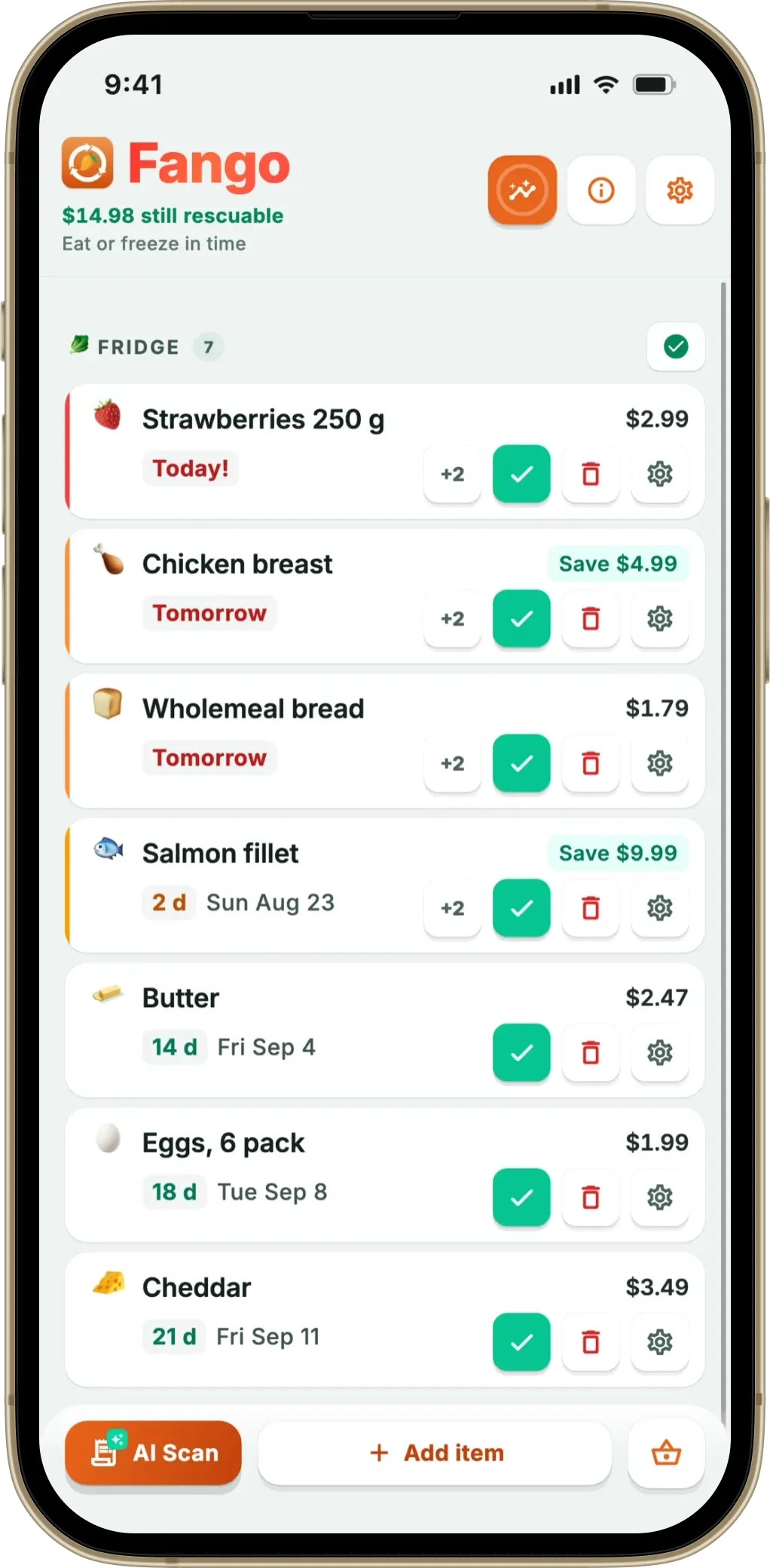
Fango sorts everything by reminder date and colour-codes the urgent items in red. The home screen widget shows what to use next without opening the app.
Download on the App Store Get it on Google PlayFree for a month · No sign-up · iOS and Android
Frequently Asked Questions
Is pasta sauce still good after 7 days?
Jarred tomato sauce is generally still good at 5–7 days if stored properly in an airtight container. Beyond 7 days, the risk of spoilage increases — inspect it for mould, smell it, and if anything seems off, discard it. Homemade sauce should not be kept longer than 4 days.
Can you reheat pasta sauce multiple times?
Yes, but each time you reheat it the quality declines slightly. More importantly, only reheat the amount you plan to eat — repeatedly heating and cooling the full batch promotes bacterial growth. Portion it out before reheating.
What’s the best container for storing pasta sauce?
An airtight glass container is ideal — glass doesn’t absorb odours or stain, and you can see at a glance how much is left. A clip-top glass jar or a container with a rubber seal keeps air out better than the original lid once a jar has been opened.
How long does spaghetti sauce last in the fridge?
Spaghetti sauce is the same as pasta sauce — a tomato-based sauce — so it follows the same timings: 5–7 days for an opened jar, 3–4 days if it’s homemade or has meat in it. Store it in an airtight container and keep the fridge at 0–5°C.
How long does marinara sauce last after opening?
Opened marinara lasts 5–7 days in the fridge in an airtight container. Marinara is a tomato-based sauce with no dairy, so it keeps as long as any jarred tomato sauce. Freeze the remainder if you won’t finish it within a week — it holds for up to 3 months.
Does unopened pasta sauce go bad?
An unopened jar keeps until its best-before date — usually a year or more — because it’s sealed and shelf-stable. Store it in a cool, dark pantry. Only discard an unopened jar early if the lid is bulging, the seal has popped, or it’s leaking, which signal the contents have spoiled.
How long does carbonara last in the fridge?
Carbonara is an egg- and cream-based sauce, so it’s one of the shortest-lived: 3–4 days in the fridge in an airtight container. Reheat gently and only the portion you’re eating — high heat can scramble the egg. Carbonara doesn’t freeze well; the sauce tends to separate.
How long does opened pasta sauce last in the fridge?
Opened jarred pasta sauce (tomato-based) lasts 5–7 days in the fridge when stored in an airtight container or with the lid firmly closed. Cream-based pasta sauces (alfredo, carbonara) last only 3–4 days due to the dairy content. Meat-based sauces like bolognese last 3–4 days whether jarred or homemade.
How long does homemade pasta sauce last?
Homemade tomato pasta sauce lasts 3–4 days in the fridge. Without the preservatives found in commercial jars, it spoils faster. Store it in an airtight container and cool it quickly before refrigerating. For longer storage, freeze homemade pasta sauce in portions — it keeps for up to 3 months in the freezer.
Can you freeze pasta sauce?
Yes — tomato-based pasta sauces freeze very well and keep for up to 3 months. Freeze in individual portions (enough for one meal) in freezer bags or airtight containers. Cream-based sauces don’t freeze as well — the cream tends to separate on thawing, though the flavour is still good. Thaw overnight in the fridge and reheat gently.
How do you know if pasta sauce has gone bad?
Signs that pasta sauce has spoiled: visible mould (any colour), off or sour smell, or a noticeably different taste. Tomato sauce may darken slightly in colour after a few days — this is normal. If you see mould or smell anything off, discard the whole jar. Don’t scrape off mould and eat the rest.
How long does homemade pasta sauce last in the fridge?
Homemade pasta sauce lasts 3–4 days in the fridge in an airtight container — shorter than an opened shop-bought jar, which contains more preservatives and keeps 5–7 days. Cool homemade sauce within 2 hours of cooking before refrigerating, and freeze it for up to 3 months for longer storage.