Raw chicken has gone bad if it has a sour or ammonia-like smell, a slimy or sticky surface, or grey, green, or yellow patches. Any one of those means throw it away — do not cook it. But there’s a catch most people miss: chicken can be unsafe even when it looks and smells perfectly fine, because the bacteria that cause food poisoning leave no clue you can see or smell. That’s why the use-by date does the job your nose can’t.
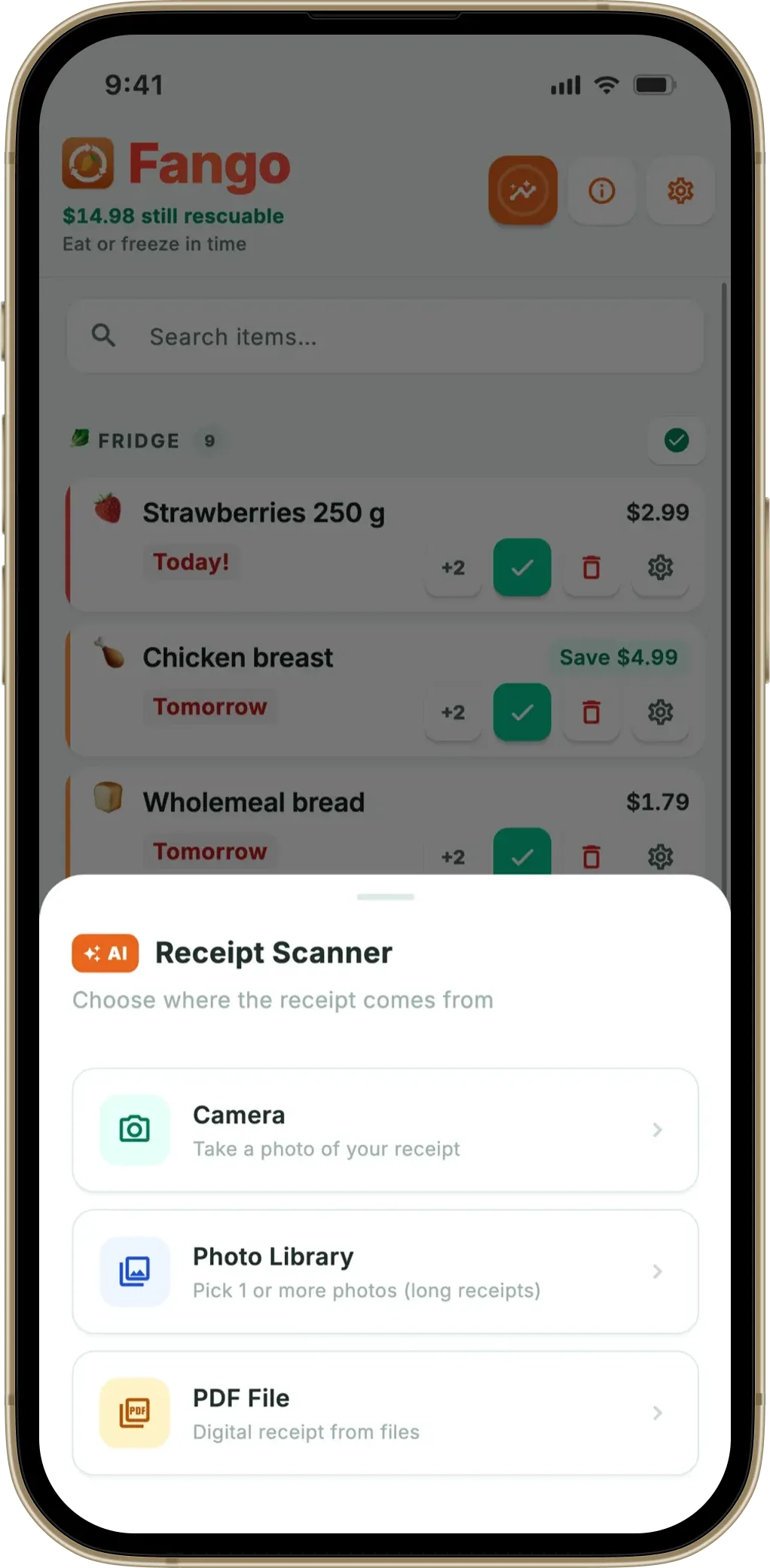
The simplest way to never face the question is to know how old your chicken is. Fango lets you log chicken when you buy it and set a 1-day expiry reminder — so you cook or freeze it inside the safe window instead of squinting at a fillet wondering if it’s still good.
- Smell, texture, colour — sour odour, slime, or grey/green patches = spoiled
- Looks fine ≠ safe — Campylobacter has no visible or smell warning
- Follow the use-by date — it’s a strict safety deadline, not a guess
- Never taste-test or cook to rescue spoiled chicken — bin it
Raw chicken has a short window. Fango reads your grocery receipt and reminds you before it closes, so it gets eaten instead of binned — try it free for a month.
The 3 Signs Raw Chicken Has Gone Bad
Fresh raw chicken is pale pink, faintly smelling or odourless, and slightly moist but not slippery. When it spoils, three of your senses pick it up. If you notice any one of these, discard the chicken — do not cook or taste it.
-
1
Smell — Fresh chicken has almost no odour. A sour, sharp, or ammonia-like smell is the clearest sign of spoilage. If you have to lean in and “check,” it has likely already turned. Trust the first sniff — don’t keep smelling to convince yourself.
-
2
Texture — Healthy raw chicken feels moist. A slimy, sticky, or tacky film that stays slippery even after patting the surface dry with kitchen paper means bacterial breakdown has started. Slime is a reliable, unambiguous sign — throw it away.
-
3
Colour — Fresh chicken is pale pink. Grey, green, or yellow patches, or a generally dull, faded look, point to spoilage — especially alongside an off smell or slimy feel. A small amount of dullness inside the use-by date can be harmless, but discolouration plus any other sign means bin it.
Why Chicken Can Be Bad Even When It Looks Fine
This is the most important thing to understand about chicken: your senses are not a safety test. Raw chicken commonly carries Campylobacter, the UK’s most common cause of food poisoning, which produces no smell, colour change, or sliminess. According to the UK Food Standards Agency, you cannot see, smell, or taste the bugs that make you ill — food can look and smell fine and still be unsafe after its use-by date.
If the fridge is where food gets lost, a fridge tracker app puts everything in it on one list with dates.
That’s why raw chicken carries a use-by date, not a best-before date. A use-by date is about safety, and it’s the date that matters most. Never cook or eat raw chicken past it, even if every sign above looks reassuring. The spoilage signs tell you when chicken is definitely bad; the use-by date tells you when it’s no longer safe — and that line comes first. For the full difference between the two labels, see best-before vs use-by dates.
Log chicken when you unpack the shopping and Fango reminds you the next day — before the 1–2 day window closes. No sign-up, your fridge data stays on your device by default.
Download on the App Store Get it on Google PlayFree for a month · No sign-up · iOS and Android
How to Tell if Cooked Chicken Has Gone Off
Cooked chicken gives clearer warnings than raw, because spoilage organisms grow on it more visibly. Cooked chicken keeps for 3–4 days in the fridge — see how long cooked chicken lasts for the detail. Throw it out if you spot any of these:
- A sour, cheesy, or otherwise off smell when you open the container
- A slimy or sticky coating on the meat
- Grey, green, or fuzzy mould spots anywhere on the surface
- It has been in the fridge longer than 4 days, even with no obvious signs
When cooked chicken is still good, reheat it until it is steaming hot all the way through — a core temperature of 70°C held for 2 minutes — and only reheat it once. If you froze it, follow the same checks after thawing; freezing pauses spoilage but doesn’t reverse it.
Common Chicken Worries, Answered
A few situations cause more confusion than they should. Here’s the quick verdict on each.
What Happens If You Eat Bad Chicken
Eating spoiled or undercooked chicken can cause food poisoning. With Campylobacter, symptoms usually begin 2–5 days after eating and include stomach cramps, diarrhoea (sometimes bloody), vomiting, and fever. Most healthy adults recover within a few days without treatment, and the NHS advises resting and drinking plenty of fluids to avoid dehydration.
Seek medical advice if symptoms are severe, you can’t keep fluids down, there’s blood in your stool, you have a high fever, or symptoms last more than a few days. Take extra care with young children, older adults, pregnant women, and anyone with a weakened immune system. The safest move is always prevention — if there’s any real doubt about the chicken, throw it away. A few pounds of wasted meat is cheaper than a bout of food poisoning.
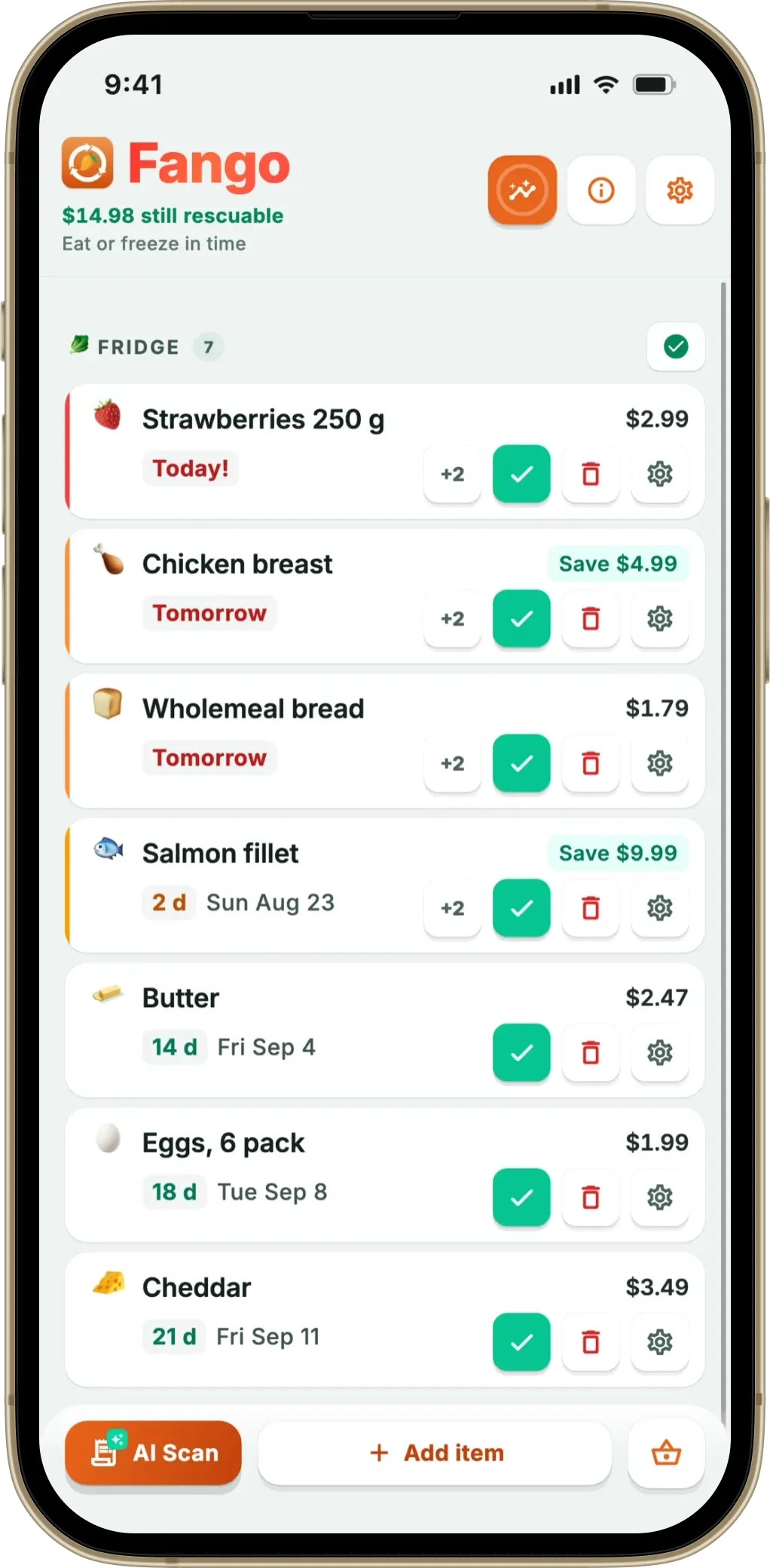
Fango sorts everything by reminder date and colour-codes the urgent items in red. The home screen widget shows what to use next without opening the app.
Download on the App Store Get it on Google PlayFree for a month · No sign-up · iOS and Android
How to Avoid Throwing Out Good Chicken
Most binned chicken isn’t spoiled — it’s just forgotten until no one trusts it any more. A little structure fixes that. Store it right, and track the clock.
-
1
Store it cold and low. Keep raw chicken at 0–5°C on the bottom shelf, sealed, so juices can’t drip onto other food. For full storage rules and freezer times, see how long chicken lasts in the fridge.
-
2
Freeze before the deadline, not after. If you won’t cook it in 1–2 days, freeze it while it’s still within the use-by date. Frozen raw chicken pieces keep for up to 9 months.
-
3
Log it the day you buy it. The window is short and easy to lose track of. Add chicken to Fango, an expiry date tracker, on shopping day and set a next-day reminder, so you cook or freeze it in time — every time.
-
4
Keep an eye on the whole fridge. Chicken is rarely the only thing racing its date. See how long food lasts in the fridge for a one-glance overview of every food group.
Related reading: How to Tell if Cooked Chicken Is Bad.
Frequently Asked Questions
How can you tell if raw chicken is bad?
Three signs mean raw chicken has spoiled: a sour or ammonia-like smell, a slimy or sticky surface that stays slippery after patting dry, and grey, green, or yellow discolouration. Any one of these means discard it — do not cook it.
Can chicken be bad even if it looks and smells fine?
Yes. Raw chicken commonly carries Campylobacter, which leaves no smell, colour change, or texture clue. Chicken can look perfect and still be unsafe after its use-by date, so follow the date rather than relying on your senses alone.
Is grey chicken safe to eat?
Fresh raw chicken is pale pink. A slight dullness within the use-by date can be normal, but grey, green, or yellow patches combined with any off smell or slimy feel mean it has spoiled and should be thrown away.
How do you know if cooked chicken has gone off?
Cooked chicken that smells sour, feels slimy, or shows mould or grey-green spots has spoiled. Eat cooked chicken within 3–4 days of cooking and reheat it until steaming hot — 70°C for 2 minutes.
What happens if you eat bad chicken?
Eating spoiled or undercooked chicken can cause food poisoning — stomach cramps, diarrhoea, vomiting and fever, usually 2–5 days later with Campylobacter. Most cases pass in a few days, but seek medical advice if symptoms are severe or last beyond a week.
Can you cook chicken to make it safe after it has gone bad?
No. Cooking kills bacteria but does not remove the toxins some bacteria leave behind, and it does not fix spoiled meat. If chicken smells off, feels slimy, or is past its use-by date, throw it away — never cook it to rescue it.
The reliable habit: add chicken to Fango when you unpack your shopping and set a same-day or next-day reminder. You’ll cook or freeze it in time, and you’ll never have to play detective with a doubtful fillet again.