Milk has gone off if it smells sour or unpleasant, looks lumpy, thickened, or curdled, or tastes sharply acidic. Fresh milk smells almost neutral and pours smooth. But milk comes with a twist most foods don’t: whether you can trust your nose at all depends on one thing — does the bottle carry a use-by date or a best-before date? Get that right and you’ll stop both drinking off milk and pouring good milk down the sink.
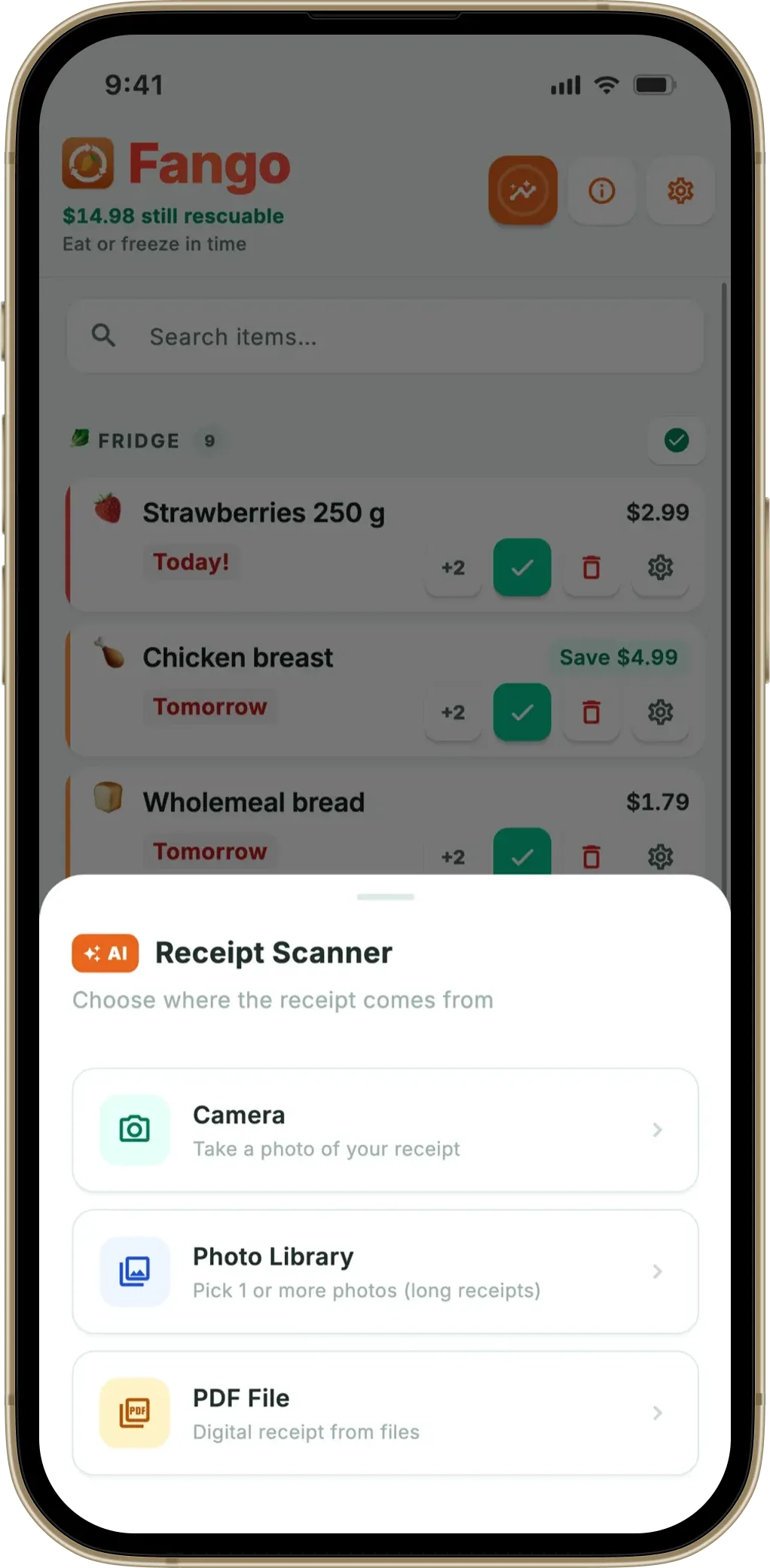
The everyday fix is to know when you opened it. Fango lets you log milk and set an expiry reminder for a few days out, so you use it while it’s fresh instead of doing the cautious morning sniff over your coffee.
- Smell, look, taste — sour smell, lumps, or acidic taste = off
- Best-before date — sniff test is valid (it’s about quality)
- Use-by date — never drink past it, even if it smells fine
- Opened milk — keeps about 3–4 days; store on a shelf, not the door
The 3 Signs Milk Has Gone Off
Spoiled milk announces itself through three senses. Fresh milk is near-odourless, smooth, and clean-tasting; as bacteria turn the lactose to acid, all three change. If you notice any of these, don’t drink it.
If keeping track of dates like these by hand is the part that never sticks, an expiry date tracker app can do it from your grocery receipt.
-
1
Smell — Fresh milk has almost no smell. A sour, sharp, or generally unpleasant odour is the earliest and clearest sign that milk is turning. One honest sniff is enough — if it’s sour, it’s sour.
-
2
Look and texture — Good milk pours thin and smooth. Lumps, a thickened or slimy consistency, visible curdling, or a slightly yellow tinge all mean it has spoiled. Curdles when you add it to hot tea or coffee? It’s off.
-
3
When in doubt — If smell or look seems borderline, that is your answer: tip it away. Never taste-test milk to confirm — the bacteria that matter don’t announce themselves.
Use-By or Best-Before? It Changes the Rule
This is the part that catches people out. In the UK, the manufacturer decides whether milk carries a use-by or a best-before date, and the two mean very different things — so check your bottle first. The UK Food Standards Agency sets the rules for both.
If the fridge is where food gets lost, a fridge tracker app puts everything in it on one list with dates.
About safety. Never drink milk past its use-by date, even if it smells and looks perfectly fine — you can’t see or smell the bacteria that cause food poisoning. The sniff test is not valid here. Keep it refrigerated at 0–5°C for the date to hold.
About quality. Milk is often fine for a short time after a best-before date. Here the sniff test is valid: a sour smell or lumps mean pour it away, whatever the date says.
So the headline question — “can I drink this?” — has two answers depending on the label. For the full logic behind the two date types, see best-before vs use-by dates. When in doubt with a use-by date, the date wins.
Log milk when you open it and Fango reminds you in time. No sign-up, your fridge data stays on your device by default.
Download on the App Store Get it on Google PlayFree for a month · No sign-up · iOS and Android
When Slightly Sour Milk Is Still Useful
Milk that has only just started to turn — a best-before bottle that smells mildly sour but isn’t lumpy, mouldy, or strongly off — doesn’t have to be wasted. Mild acidity is exactly what many bakes want. Use it in scones, pancakes, soda bread, or marinades, where heat and acid do the work. It’s a small win against waste; for more like it, see how to reduce food waste at home.
Two firm exceptions: don’t bake with milk from a use-by bottle that’s past its date, and never use milk that’s visibly curdled, lumpy, mouldy, or smells strongly rancid. Mild and best-before = usable; properly spoiled or past a use-by date = bin it.
Quick Verdicts on Common Milk Worries
Here’s the short answer to the situations that come up at the fridge door most often.
How to Keep Milk Fresh for Longer
Most binned milk simply got too warm or was forgotten at the back. A few habits stretch every bottle.
-
1
Store it on a shelf, not the door. The door is the warmest part of the fridge and swings in temperature each time it opens. Keep milk at 0–5°C on an interior shelf for the longest life.
-
2
Close it and chill it quickly. Don’t leave the bottle out on the worktop during breakfast. Return it to the fridge straight after pouring.
-
3
Freeze what you won’t drink in time. Milk freezes well for up to about a month — see can you freeze milk for how to do it and thaw it properly.
-
4
Log it when you open it. Add milk to Fango and set a reminder a few days out, so the carton gets used before it turns. For storage times across your whole fridge, see how long food lasts in the fridge.
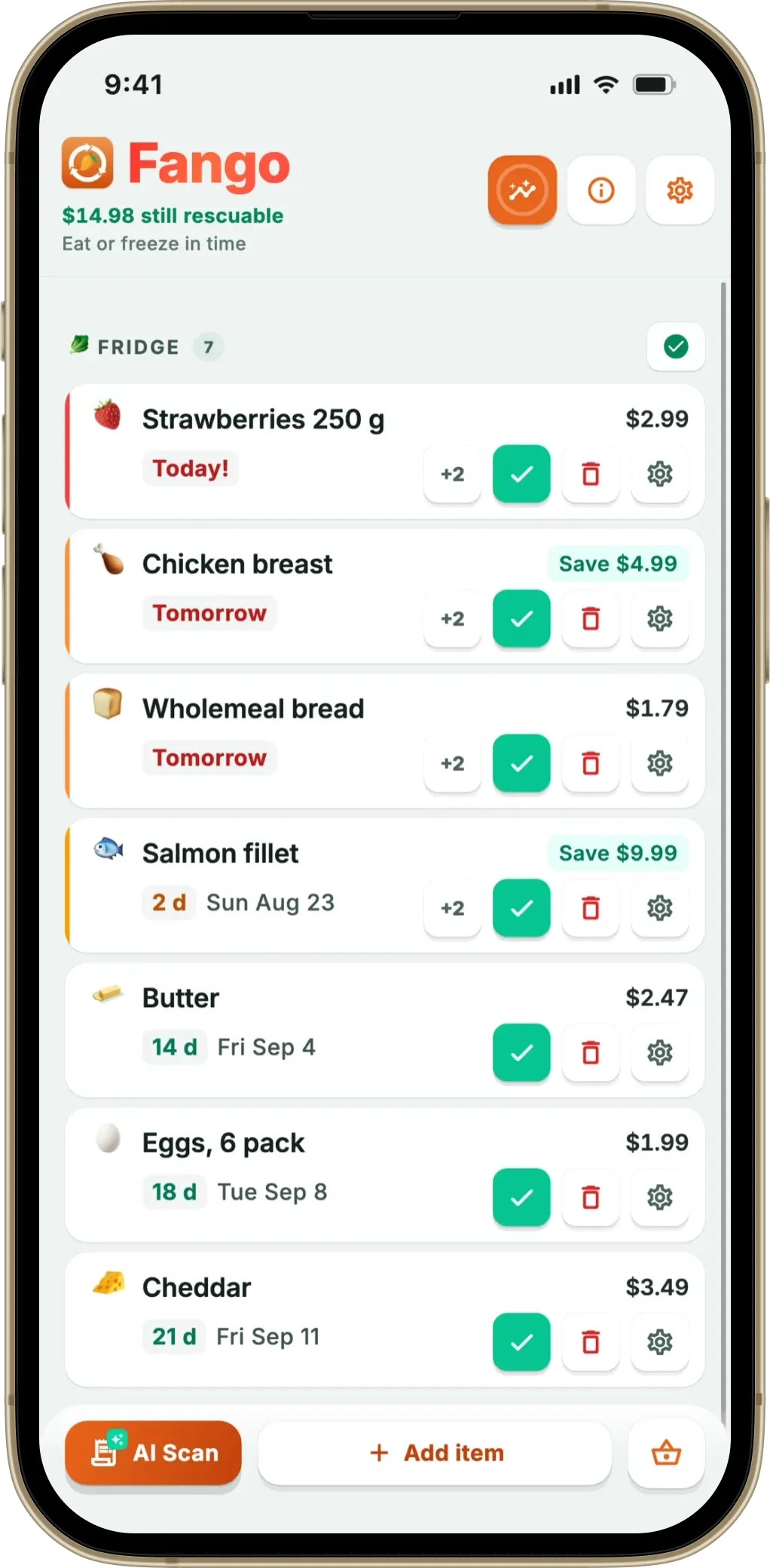
Fango sorts everything by reminder date and colour-codes the urgent items in red. The home screen widget shows what to use next without opening the app.
Download on the App Store Get it on Google PlayFree for a month · No sign-up · iOS and Android
See also: How to tell if cream is bad.
Frequently Asked Questions
How can you tell if milk is bad?
Off milk smells sour or unpleasant, looks lumpy, thickened, or curdled, and tastes acidic. Slight yellowing can also appear. If it smells or pours wrong, don’t drink it — but check the date label first, because the rules differ.
Does the sniff test work for milk?
Only for milk with a best-before date, which is about quality — there the sniff test is valid. Milk with a use-by date is about safety, and you must not use it past the date even if it smells fine, because harmful bacteria leave no smell.
Is it safe to drink milk a day after the date?
If it’s a best-before date and the milk has been kept cold, it is usually still fine — but a sour smell or lumps mean pour it away. If it’s a use-by date, do not drink it past the date — the use-by date is a safety deadline, not a quality guide.
How long does milk last once opened?
Opened milk keeps about 3–4 days in the fridge at 0–5°C, and should still be finished by the date on the bottle. Keep it on a shelf, not the door, where the temperature is steadier.
Can you use slightly sour milk for cooking?
Milk that has only just started to turn (best-before, mildly sour, no off smell or mould) can be used in baking like scones or pancakes, where heat and acidity work together. If it smells strongly off, is lumpy, or is past a use-by date, throw it away.
What happens if you drink spoiled milk?
Sour milk usually tastes unpleasant enough that most people stop at the first mouthful. Drinking properly spoiled milk can cause stomach upset, cramps, nausea, and diarrhoea. If symptoms are severe or persist, seek medical advice from the NHS.
The simplest habit: log milk in Fango when you open it and set a short reminder. You’ll finish it fresh — and the cautious morning sniff test becomes a thing of the past.