Salmon has gone bad if it smells sour, ammonia-like, or strongly fishy, feels slimy or sticky, or looks dull, grey, or milky instead of bright. Flesh that has turned mushy and won’t spring back when pressed is another clear sign. Fresh salmon, by contrast, smells faintly of the sea, looks glossy and moist, and feels firm. If any spoilage sign is there, throw it away — fish goes off fast and isn’t worth the risk.
The honest truth about salmon is that it has a very short window. The best way to use it in time is to know its age. Fango lets you log fish on shopping day and set a same-day or next-day expiry reminder, so it gets cooked or frozen before it ever reaches the sniff-test stage.
- Smell — sour, ammonia, or strong fishy odour = spoiled
- Texture — slimy, sticky, or mushy flesh = spoiled
- Look — dull, grey, or milky instead of bright and moist = spoiled
- Use-by date wins — fish can be unsafe with no smell at all
Fresh salmon has a short window. Fango reads your grocery receipt and reminds you before it closes, so it gets eaten instead of binned — try it free for a month.
Fresh Salmon vs Bad Salmon: What to Check
The fastest way to judge salmon is to compare it to what fresh looks, smells, and feels like. Fresh salmon is bright and translucent, smells clean and mild, and is firm enough to bounce back when you press it. Spoilage reverses all three. Run through these in order.
If keeping track of dates like these by hand is the part that never sticks, an expiry date tracker app can do it from your grocery receipt.
-
1
Smell — Fresh salmon smells mild and clean, like the sea. A sour, sharp, or ammonia-like odour, or an aggressively “fishy” stink, means it has spoiled. This is the most reliable single clue for fish that has clearly turned.
-
2
Texture — Fresh fillets are firm and spring back when pressed. A slimy or sticky film on the surface, or soft, mushy flesh that holds a dent, signals bacterial breakdown. Slime that returns after rinsing is a definite no.
-
3
Look — Fresh salmon is vivid pink-orange, glossy, and moist. Dullness, grey or faded patches, a milky or opaque liquid on the flesh, or darkened, drying edges all point to spoilage. The colour should look alive, not tired.
Why Salmon Can Be Unsafe With No Smell at All
Here’s the part the sniff test misses. Raw salmon carries a use-by date because harmful bacteria can be present without changing how the fish smells, looks, or feels. The UK Food Standards Agency is explicit that you can’t see or smell the bugs that cause food poisoning, and that food can look and smell fine after the use-by date yet still make you ill.
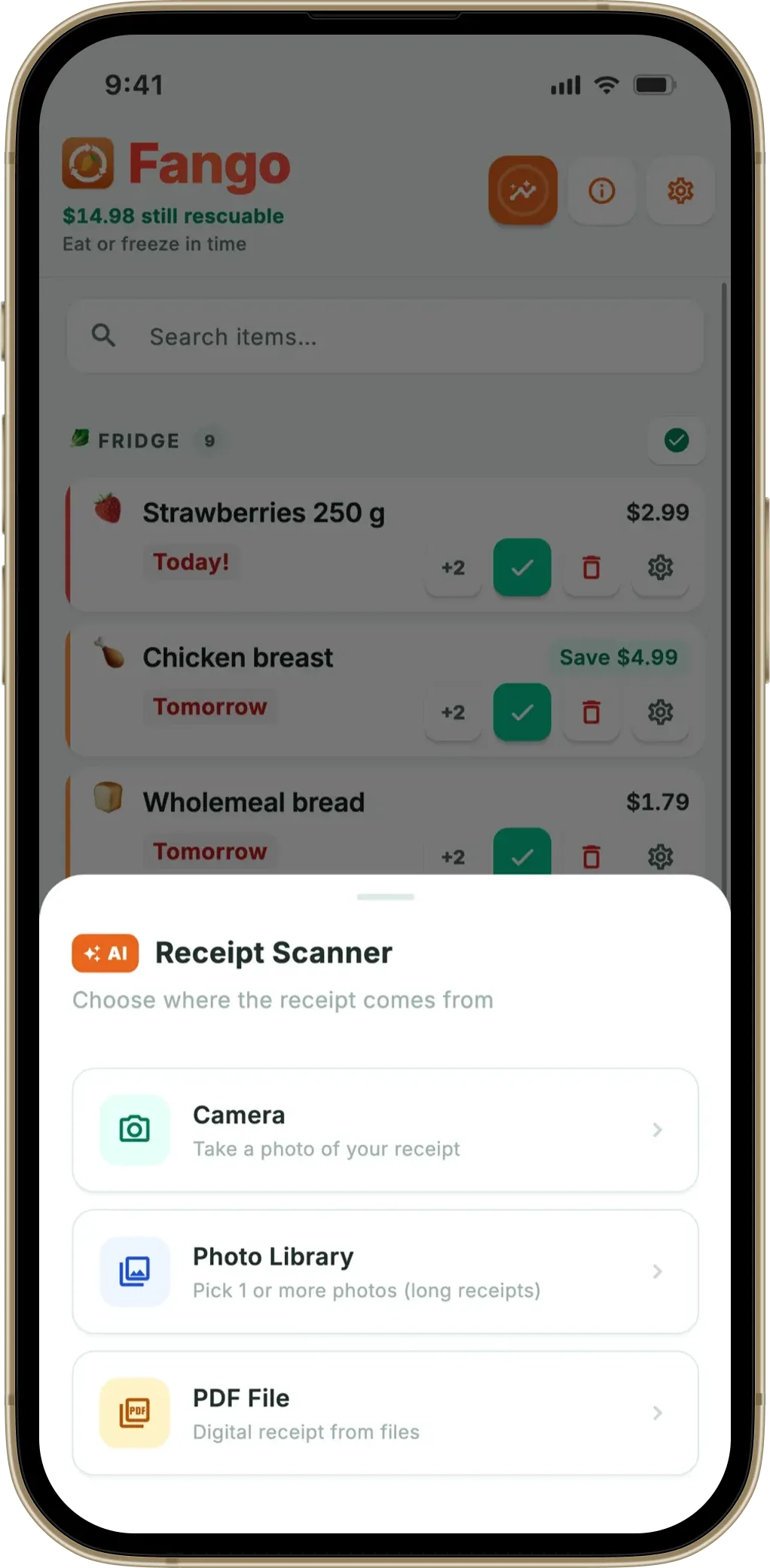
A fridge tracker app keeps this for every item in the fridge at once and reminds you before the day runs out.
So treat the signs above as a one-way test: any of them means definitely bad, but their absence does not mean safe. The use-by date is the deciding line — never eat raw salmon past it, even if it seems perfect, and keep it at 0–5°C so the date stays valid. If you want the full logic behind these labels, see best-before vs use-by dates.
Log fish when you buy it and Fango reminds you the same or next day, while it’s still firm and fresh. No sign-up, your fridge data stays on your device by default.
Download on the App Store Get it on Google PlayFree for a month · No sign-up · iOS and Android
How to Tell if Cooked Salmon Has Gone Bad
Cooked salmon keeps for 3–4 days in the fridge and shows spoilage more obviously than raw. Throw it out if you notice any of these:
- A sour, rancid, or strongly fishy smell when you open the container
- A slimy or sticky film on the surface of the flesh
- Mould, or grey-green or white fuzzy spots anywhere on the salmon
- It has been in the fridge longer than 4 days, even if it looks fine
When cooked salmon is still good, reheat it until it is steaming hot all the way through before serving, and reheat it only once. Don’t leave cooked salmon at room temperature for more than 2 hours — bacteria multiply quickly between 8–63°C.
What About Smoked Salmon?
Smoked salmon is ready to eat and behaves differently from raw fillets. It still carries a use-by date — and once opened, finish it within the time stated on the pack. Discard smoked salmon if it smells sour or sharply ammonia-like, feels slimy, or is past its use-by date.
Because cold-smoked and cured fish can carry a small Listeria risk, the Food Standards Agency advises higher-risk groups — pregnant women, older adults, and people with weakened immune systems — to follow its current guidance on ready-to-eat smoked fish. For everyone, the use-by date and clean storage remain the key controls.
Quick Verdicts on Common Salmon Worries
A few situations come up again and again. Here’s the short answer to each.
What Happens If You Eat Bad Salmon
Eating spoiled fish can cause food poisoning, with symptoms such as nausea, stomach cramps, vomiting, and diarrhoea, often within hours. The NHS advises resting and drinking plenty of fluids; most people recover within a few days at home.
Get medical advice if symptoms are severe, you can’t keep fluids down, or they don’t improve after a few days — and take extra care with young children, pregnant women, older adults, and anyone with a weakened immune system. As with all high-risk foods, prevention beats the cure: if there’s genuine doubt, bin the salmon.
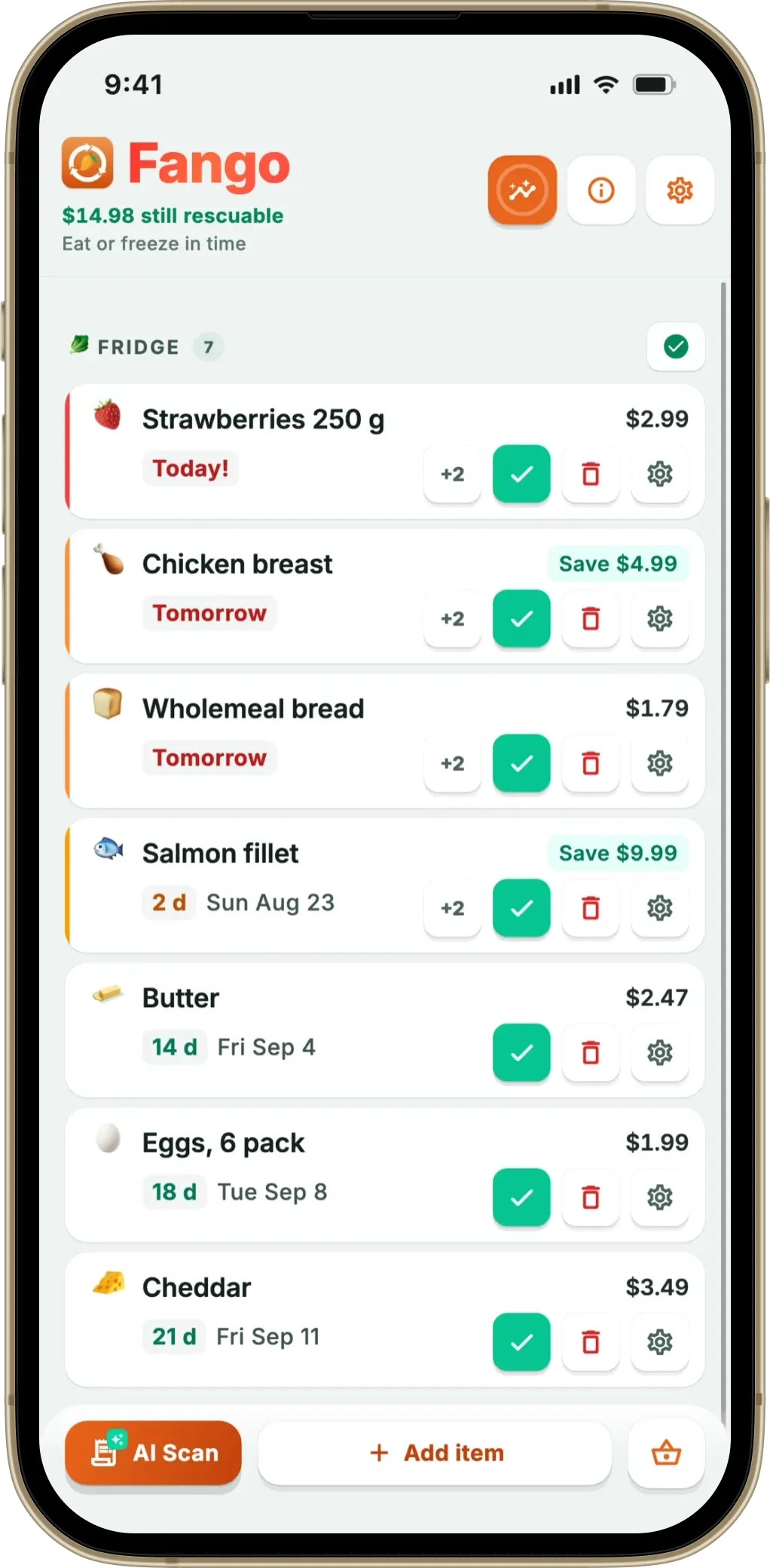
Fango sorts everything by reminder date and colour-codes the urgent items in red. The home screen widget shows what to use next without opening the app.
Download on the App Store Get it on Google PlayFree for a month · No sign-up · iOS and Android
How to Avoid Wasting Good Salmon
Most thrown-out salmon was perfectly good a day earlier — it just got forgotten past its short window. Store it cold, and keep track of the clock.
-
1
Keep it cold and covered. Store salmon at 0–5°C, ideally the coldest part of the fridge, sealed or covered. For full storage and freezer times, see how long salmon lasts in the fridge.
-
2
Freeze before the deadline. If you won’t cook it in 1–2 days, freeze it while it’s still within the use-by date — never after.
-
3
Log it on shopping day. Fish has one of the tightest windows in the fridge. Add it to Fango when you get home and set a same-day or next-day reminder so it never slips past.
-
4
Track the other quick-spoilers too. Salmon often shares a shelf with prawns and other seafood — see how long shrimp lasts and the full fridge storage overview.
Related reading: How to Tell if Butter Is Bad and How to Tell if Shrimp Is Bad.
Frequently Asked Questions
How can you tell if raw salmon is bad?
Bad raw salmon smells sour, ammonia-like, or strongly fishy, feels slimy or sticky, and looks dull, grey, or milky rather than bright. Mushy flesh that doesn’t spring back is another sign. Any of these means discard it.
What does fresh salmon smell like?
Fresh salmon has a mild, clean smell of the sea — not a strong, sour, or ammonia-like odour. A sharp fishy or sour smell means it has started to spoil and should not be eaten.
Can salmon be off even if it smells okay?
Yes. Raw salmon carries a use-by date because harmful bacteria can be present without any smell, colour, or texture change. The Food Standards Agency advises that the sniff test is not a safe check for use-by foods — follow the date.
How long does salmon last in the fridge?
Fresh raw salmon lasts 1–2 days in the fridge at 0–5°C. Cooked salmon keeps for 3–4 days. If you won’t use raw salmon in time, freeze it before the use-by date.
How do you tell if cooked salmon has gone bad?
Cooked salmon that smells sour or strongly fishy, feels slimy, or shows mould has spoiled. Eat cooked salmon within 3–4 days and reheat it until steaming hot before serving.
Is smoked salmon different to check?
Yes. Smoked salmon is ready to eat and carries its own use-by date. Discard it if it smells sour or sharply ammonia-like or feels slimy, and always finish it by the use-by date — higher-risk groups like pregnant women should follow current FSA advice on cold-smoked fish.
The simplest habit: add salmon to Fango when you unpack your shopping and set a same-day or next-day reminder. You’ll cook or freeze it while it’s still fresh — and skip the sniff-test gamble entirely.