The biggest reason households overspend on groceries isn’t price — it’s invisibility. WRAP estimates the average UK family throws away £1,000 of food a year, and the largest single cause is buying things you already had at home. A pantry management app fixes this by turning your invisible cupboard into a visible, sortable list — so weekly meal plans start with what’s there rather than what’s at the supermarket. Fango takes the friction out of building that list: scan your supermarket receipt and AI adds every food product automatically.
Fango sorts your fridge, freezer, and pantry by reminder date. Open the app and the meal you should make tonight is on top. Receipt scanning means a weekly shop is added in 30 seconds. No sign-up, no cloud account by default — fridge data stays on your phone by default.
Download on the App Store Get it on Google PlayFree for a month · No sign-up · iOS and Android
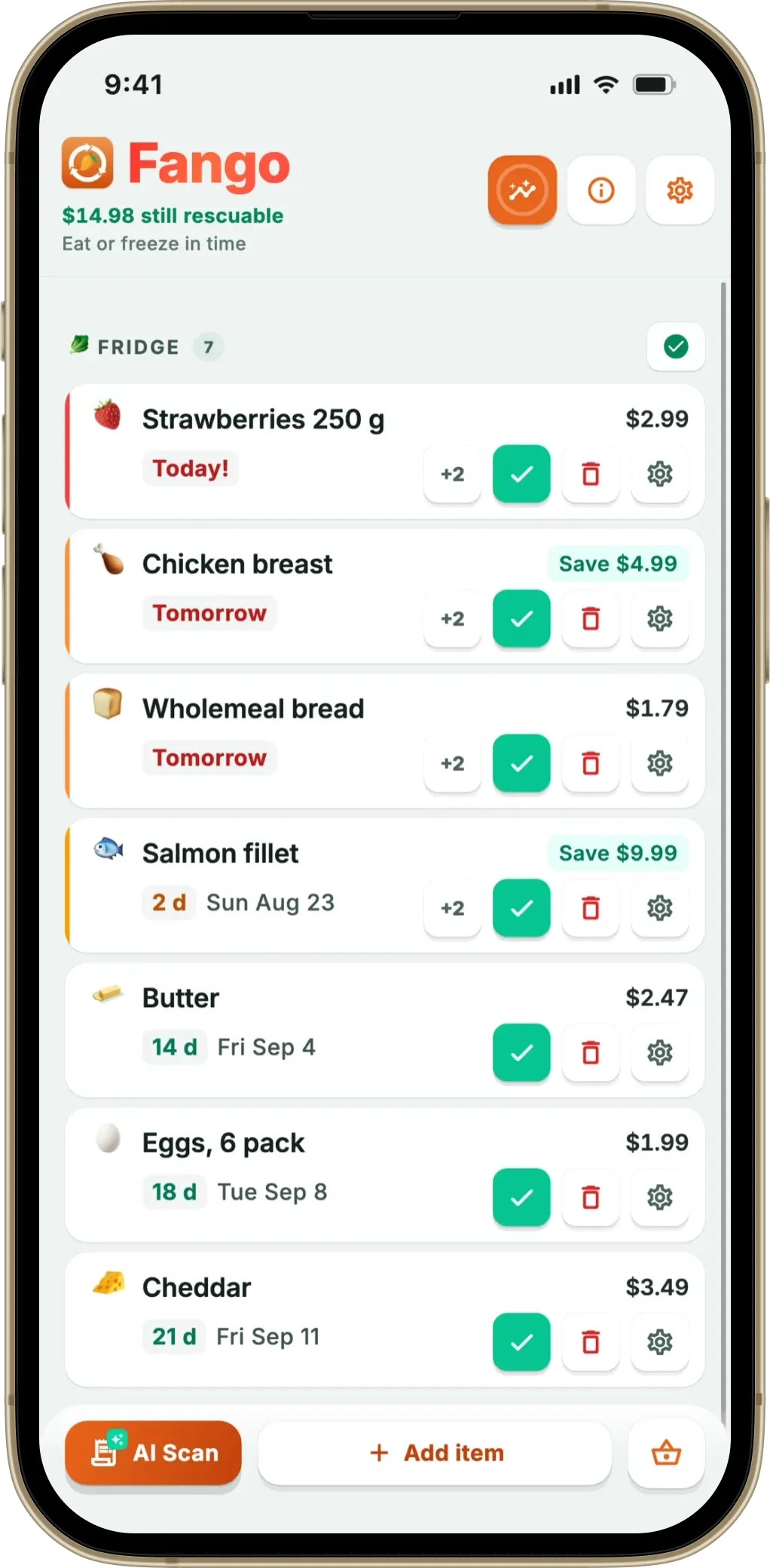
“Management” is the difference between a digital list (inventory) and an active workflow that drives shopping and meal planning. This guide covers both.
- Inventory + planning + restock — three workflows, one screen
- Expiry alerts drive meal choice — what expires next is what you cook
- Receipt scanning keeps the list current — without it, the workflow dies
- Privacy-first — Fango stores everything locally with no account required
The Three Workflows of Pantry Management
“Pantry management” is shorthand for three distinct workflows that share the same underlying inventory. A good app supports all three — even if the user thinks of them as separate things.
-
1
Tracking — what’s in the cupboard right now. The base layer. Items, quantities, dates. Without this, nothing else works. Receipt scanning is the only practical way to keep this current for a typical household.
-
2
Planning — what to cook and when. The middle layer. Expiry-sorted view of the inventory tells you what to use first. Meals are built around what’s about to go off, not chosen from a recipe app and then shopped for.
-
3
Restocking — what to add to the next shop. The output layer. Items finished or running low go on the next shopping list. Combined with planning, this means you only buy what you actually need.
How Fango Supports Each Workflow
Tracking
Fango is built around AI receipt scanning specifically because tracking is the workflow that breaks first. When the inventory drifts out of sync with reality, the planning and restock layers become useless. After every shop, photograph the till receipt and the app handles the rest — products identified, expiry dates assigned, list updated. Fango is free to try for one month, then from $2.99/month.
Planning
The default list view is sorted by reminder date. The thing about to go off is at the top of the screen. That single design choice changes meal planning: instead of opening a recipe app, you open Fango and see “the cream expires Friday — pasta tonight”. This is a different mental model from picking recipes top-down — it’s bottom-up, driven by what’s already there.
Restocking
When you mark an item as used, it leaves the active list. For staples you want to track ongoing, the simplest pattern is to keep them as low-quantity items and use the expiry alert as a “still on the shelf?” check. Fango’s shopping list closes this layer without you writing anything twice: it reads the inventory and suggests items that are about to run out, alongside items your receipt history shows you buy on a regular cadence. Ticked-off items sort themselves into 13 supermarket aisles, so the list is ordered by the route you walk rather than the order you thought of things.
A Weekly Pantry Management Loop
The full workflow takes about 10 minutes a week, spread across three moments. After the first month it becomes habitual.
-
1
Saturday — meal-plan around the inventory. Open the app, scroll through the next 7 days of expiry. Pick 3–4 meals that use what’s at the top of the list. Mark which ingredients you’ll use for which meal — this is the planning step that prevents “Sunday spinach” from becoming “Wednesday compost”.
-
2
Saturday — write the shopping list around the gaps. What’s not in the inventory but needed for the planned meals goes on the shopping list. Anything already in the inventory does not. This is the single biggest spend-cutter — most overshopping happens because people don’t check what they have first.
-
3
Sunday — shop, scan the receipt. Photograph the till receipt at home. The new items are added to the inventory in 30 seconds. Now everything is in one place again.
-
4
Through the week — react to push notifications. The app reminds you when items are 1–2 days from expiry. Use them; don’t browse Deliveroo. This is where the savings appear in real life.
Pantry Management and Money
The savings from a working pantry management workflow come from three sources, each measurable:
-
1
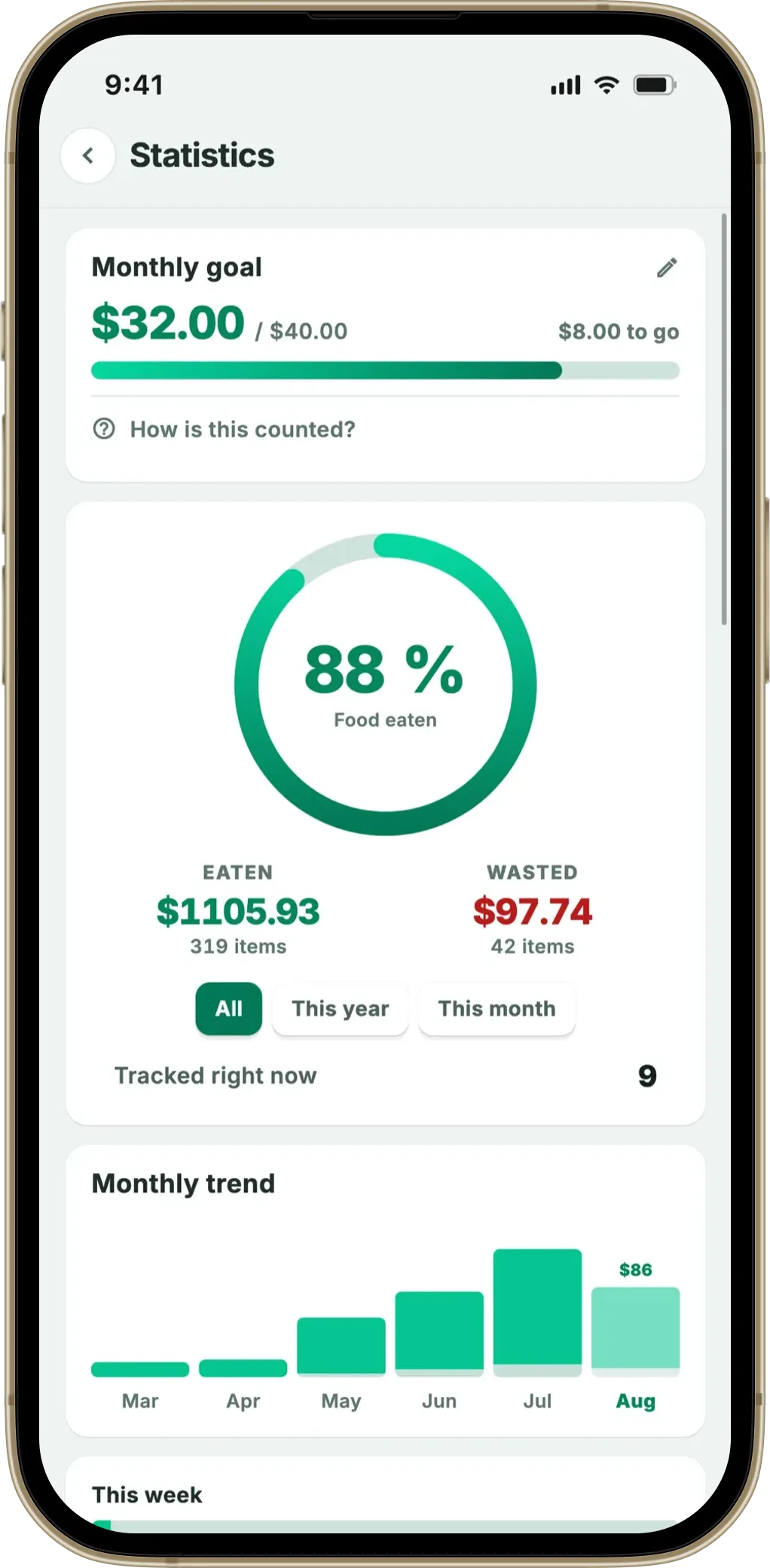
Less duplicate buying. Knowing you already have rice prevents the £2 packet you didn’t need. Across a year that adds up, and the app’s own stats show your actual figure rather than an average.
-
2
Less food expired and binned. The expiry alerts mean salmon gets cooked Tuesday, not discovered Friday. WRAP’s £1,000/year figure is the worst-case ceiling — the recoverable share is whatever you were previously binning — which the app’s own stats will show you rather than a generic estimate.
-
3
Fewer last-minute takeaways. When you can see at a glance that there’s pasta and salmon to use, you cook. When the fridge looks empty, you order food. The app turns the fridge from “looks empty” to “obviously has dinner ingredients”.
For more ways to cut grocery spending, see how to save money on groceries. For storage habits that make the inventory accurate, see food storage tips.
Fango sorts your fridge, freezer, and pantry by reminder date. Open the app and the meal you should make tonight is on top. Receipt scanning means a weekly shop is added in 30 seconds. No sign-up, no cloud account by default — fridge data stays on your phone by default.
Download on the App Store Get it on Google PlayFree for a month · No sign-up · iOS and Android
What a Pantry Management App Won’t Solve
- Buying habits driven by stress or boredom — the app gives information, not willpower
- Storing food at the wrong temperature — the app’s expiry dates assume a properly chilled fridge
- Recipe ideas — most apps’ built-in suggestions are weak; pair the inventory with whatever recipe source you already trust
- Households of more than four — Fango’s sharing tops out at four people; for larger shared inventories, look at apps with cloud sync
For a wider category overview, see kitchen inventory app and pantry inventory app.
Frequently Asked Questions
Is Fango a pantry management app or just an inventory app?
Both — Fango covers all three layers natively. Tracking comes from receipt scanning, planning from the expiry dates, and restocking from the built-in shopping list, which reads the inventory and suggests what is about to run out. The one thing it doesn’t do is share that list with another phone: everything stays on your device by default.
How long does it take to set up?
About 15 minutes for an initial inventory if you walk around the kitchen and add items. Faster if you’ve just shopped — a single receipt scan adds the entire weekly shop in around 30 seconds.
What happens if I forget to scan a receipt?
The inventory drifts out of sync. The fix is to either scan the receipt later (Fango can keep an in-progress draft for 7 days) or add the missed items manually. The longer you go without scanning, the harder it is to get back on track — start fresh rather than retrofit if you’ve missed several weeks.
Can I share a pantry management app between multiple people?
Some apps support family sharing via a cloud account. Fango doesn’t — it’s local-only by design. For households where one person handles shopping and the inventory, Fango works well. For multi-person shared inventories, look at apps that explicitly support sharing.