Most household food waste isn’t wilful — it’s small mistakes about storage that compound over the week. The chicken sits at the front of the fridge instead of the bottom shelf. The bananas go in next to the tomatoes. The leftover rice gets left on the counter to cool for an hour too long. WRAP estimates that the average UK household bins £1,000 of edible food a year, and a fair chunk of that comes down to where things ended up rather than what was bought. A food storage app helps in two ways — it tells the fridge what to remember, and it tells you what to use next. Fango handles the second half with a sorted list and reminders; the first half is on you.
Fango doesn’t make you choose a location for every item. The list is sorted by what needs using first, regardless of which appliance it’s in. Receipt scan once a week, glance daily, never lose track. No sign-up — data stays on your phone by default.
Download on the App Store Get it on Google PlayFree for a month · No sign-up · iOS and Android
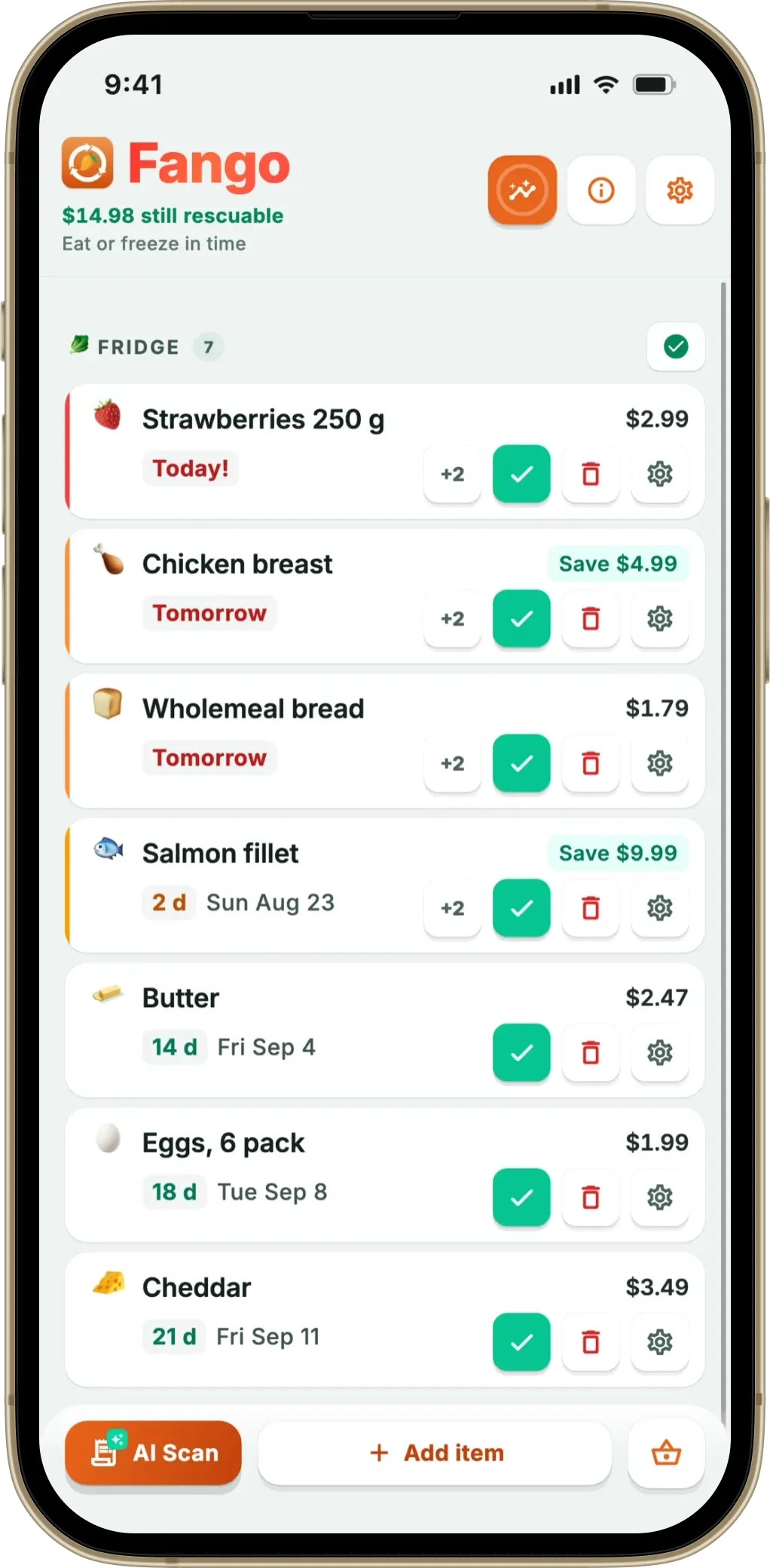
This article covers the storage rules that matter, the temperatures the app’s default dates assume, and how to keep the fridge–freezer–pantry split sensible. None of it is complicated; all of it is easy to forget.
- Fridge 0–5°C — UK FSA target; check with a thermometer, most fridges run warmer
- Freezer −18°C or below — keeps food safe indefinitely; quality drops at 3–12 months depending on item
- Pantry under 21°C, dark, dry — shelf life of months to years for tinned, dry, jarred
- Fango defaults assume these conditions — adjust dates manually if your storage runs warmer
The Three Zones — and Why It Matters Which One You Pick
A food storage app’s default expiry dates only work if the storage matches the assumption. Three rooms, three temperatures, three different shelf-life clocks:
A pantry inventory app turns this from a one-off check into a running list — our comparison covers what to look for.
Putting a fridge item in the pantry kills it in days. Putting a freezer-safe item in the fridge cuts its useful life by an order of magnitude. The app’s defaults assume the standard target temperatures from UK Food Standards Agency guidance — if your fridge runs at 8°C, the actual life is half what Fango suggests.
Fridge — Zones Within the Zone
A fridge isn’t uniform. The bottom shelf, just above the salad drawer, is the coldest. The door is the warmest. Most short-shelf items belong on the bottom; condiments and butter tolerate the door.
- Bottom shelf — raw meat, fish, deli items. Lowest temperature, prevents drip onto other food
- Middle shelf — dairy, cooked leftovers, ready meals
- Top shelf — items needing no further cooking: yoghurt, cheese, cold cuts in sealed packs
- Salad drawer — leafy greens, herbs, washed produce — slightly higher humidity
- Door — condiments, butter, eggs (if you keep eggs cold) — warmest spot, tolerated by these items
For per-item shelf life inside the fridge, see how long does food last in the fridge. For arrangement, see how to organise your fridge. For app options, compare the best food storage app and apps built for home food storage.
Freezer — The Forgiving Zone
At −18°C, bacterial growth effectively stops — food stays safe indefinitely. What does change is quality: ice crystals damage cell structure, fats can go rancid, freezer burn dries the surface. A storage app’s freezer reminders are about quality, not safety:
For the full freezer protocol — packaging, thawing, what not to freeze — see how to freeze food.
Pantry — Everything Below 21°C, Dry, Dark
Pantry items have the longest shelf life and the lowest waste rate, which is exactly why they’re the wrong place to focus app attention. Tinned beans, dry pasta and rice last for years; an annual cabinet check beats a per-item reminder. Where the pantry does need attention:
- Opened jars — most need refrigeration after opening (check label)
- Flour and grains — pantry moth risk, store in sealed containers
- Oils — go rancid over months, especially nut and seed oils; store dark and cool
- Spices — lose potency after 1–2 years; not unsafe, just bland
Long-shelf-life pantry staples are the items where it’s safe to delete the reminder entirely. Fango lets you do this per item — for tinned tomatoes, set the reminder to “off” and the item just sits in the list as inventory.
Produce — Some of It Doesn’t Belong in the Fridge
A frequent storage mistake is putting everything in the fridge by default. Several items spoil faster at fridge temperatures:
- Tomatoes — lose flavour below 10°C; counter is correct
- Bananas — skin blackens in the cold; counter, separate from other fruit (ethylene)
- Potatoes — convert starch to sugar in the cold; dark, ventilated, cool but not refrigerated
- Onions, garlic — go soft and mouldy; ventilated, dark, dry
- Whole avocados (unripe) — counter until ripe, then fridge
- Stone fruit (peach, plum, nectarine) — unripe — counter until soft, then fridge
Fango doesn’t refuse to track items at any location — if you put bananas in the fridge, the app still notifies you in time. The list doesn’t lecture you about your choices.
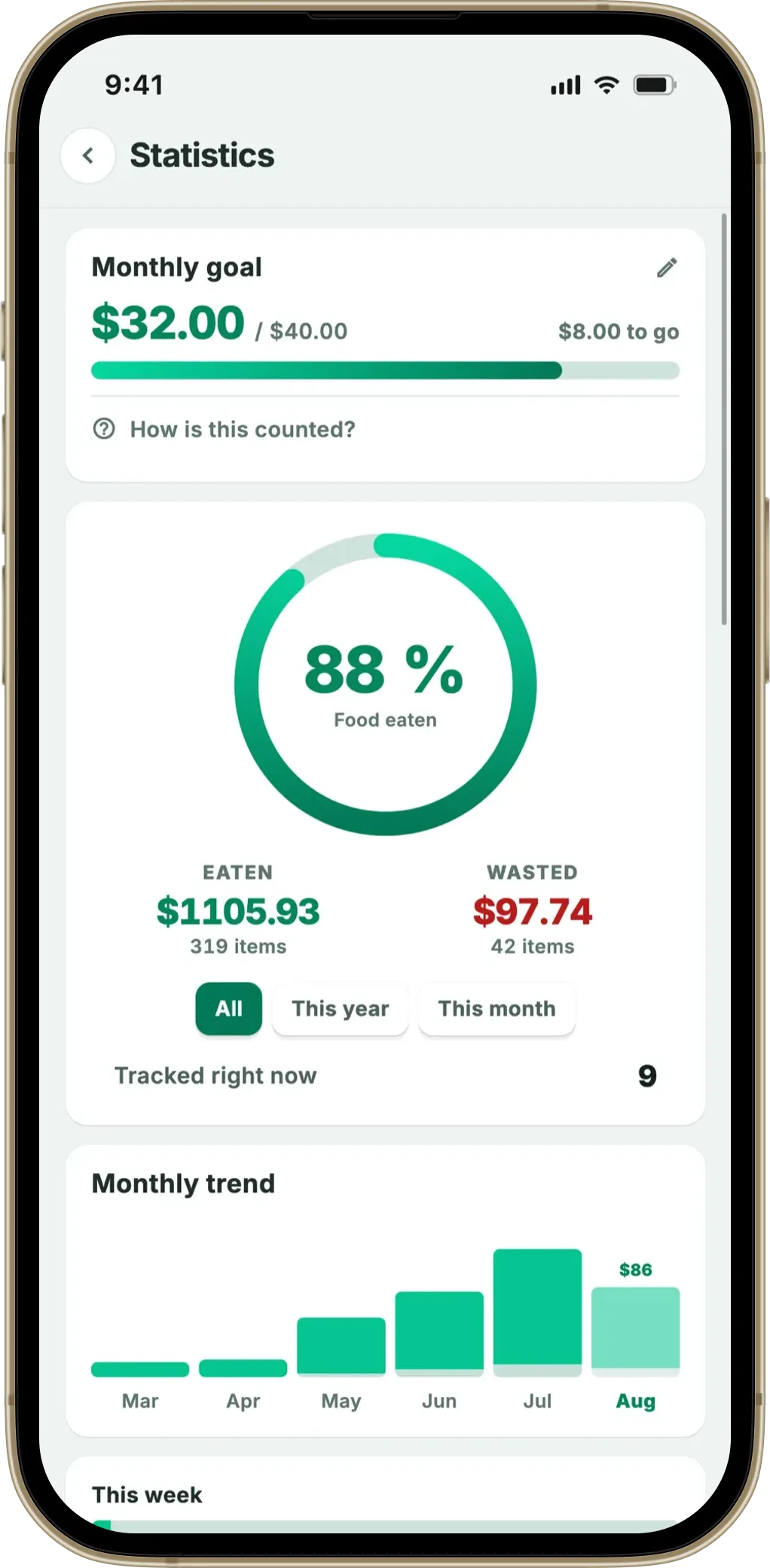
Fango doesn’t make you choose a location for every item. The list is sorted by what needs using first, regardless of which appliance it’s in. Receipt scan once a week, glance daily, never lose track. No sign-up — data stays on your phone by default.
Download on the App Store Get it on Google PlayFree for a month · No sign-up · iOS and Android
What the App Should Get Right (and What It Can’t)
A storage app can give you decent default dates, sort your inventory by urgency, and send you a reminder. It cannot:
- Know whether your fridge is actually at 5°C or quietly at 9°C
- Detect that you left the chicken on the counter for an hour
- Account for items that were already old when you bought them
- Track items you forgot to add to the list
The dates are an upper bound assuming the conditions were right. They’re not a warranty.
Storage and shopping are the same problem seen from two ends. Fango’s shopping list reads what you already have stored and suggests only what is running low, so the cupboard does not quietly accumulate a third jar of the same thing.
Frequently Asked Questions
Is there a free food storage app?
Yes — Fango is free to try for one month — enough to test the workflow on real weekly shops. After the trial it’s from $2.99/month, with per-item reminder timing.
Does the app suggest where to store each item?
Indirectly — the default expiry assumes fridge for perishables, freezer for frozen items, pantry for tinned and dry. You can override the location and date manually. Most users don’t bother labelling locations; the sorted-by-expiry list works regardless.
How does it handle a busy fridge with mixed locations?
One sorted list across fridge, freezer and pantry — the front-of-list item is the next to use, regardless of which appliance it’s in. A home screen widget shows the next item without opening the app.
Where do the storage defaults come from?
UK FSA chilling and freezing guidance, adjusted for cooking state and packaging. For specific items see how long does food last in the fridge and food storage tips.