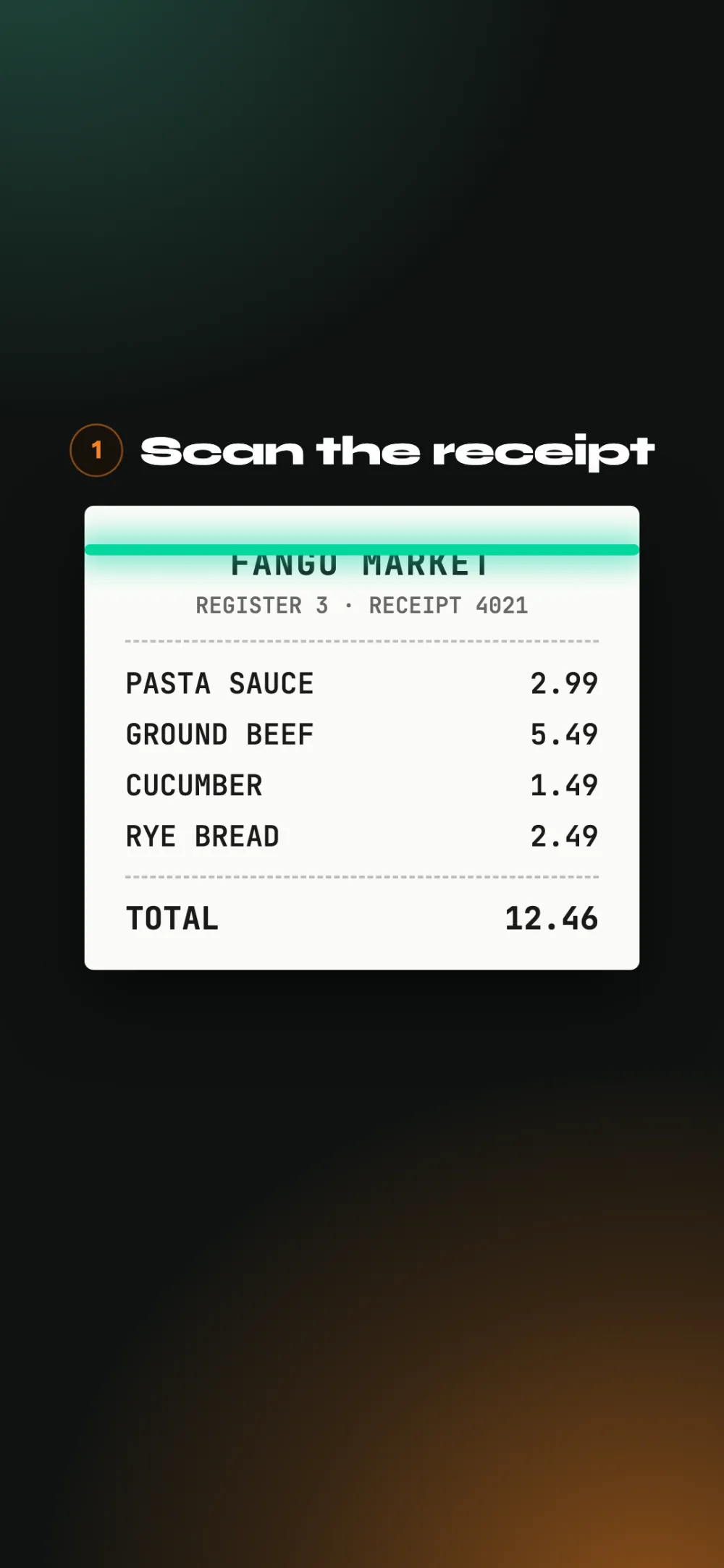
Fango goes one step further: scan your grocery receipt and AI automatically reads all your products and adds them with estimated expiry dates — so your fridge is tracked before you even get home.
Fango tracks what’s in your fridge and sends a push notification in time — 1 to 14 days ahead. Scan your grocery receipt and AI adds everything in under 30 seconds. No sign-up, no cloud account by default — your fridge data stays on your device by default.
Download on the App Store Get it on Google PlayFree for a month · No sign-up · iOS and Android
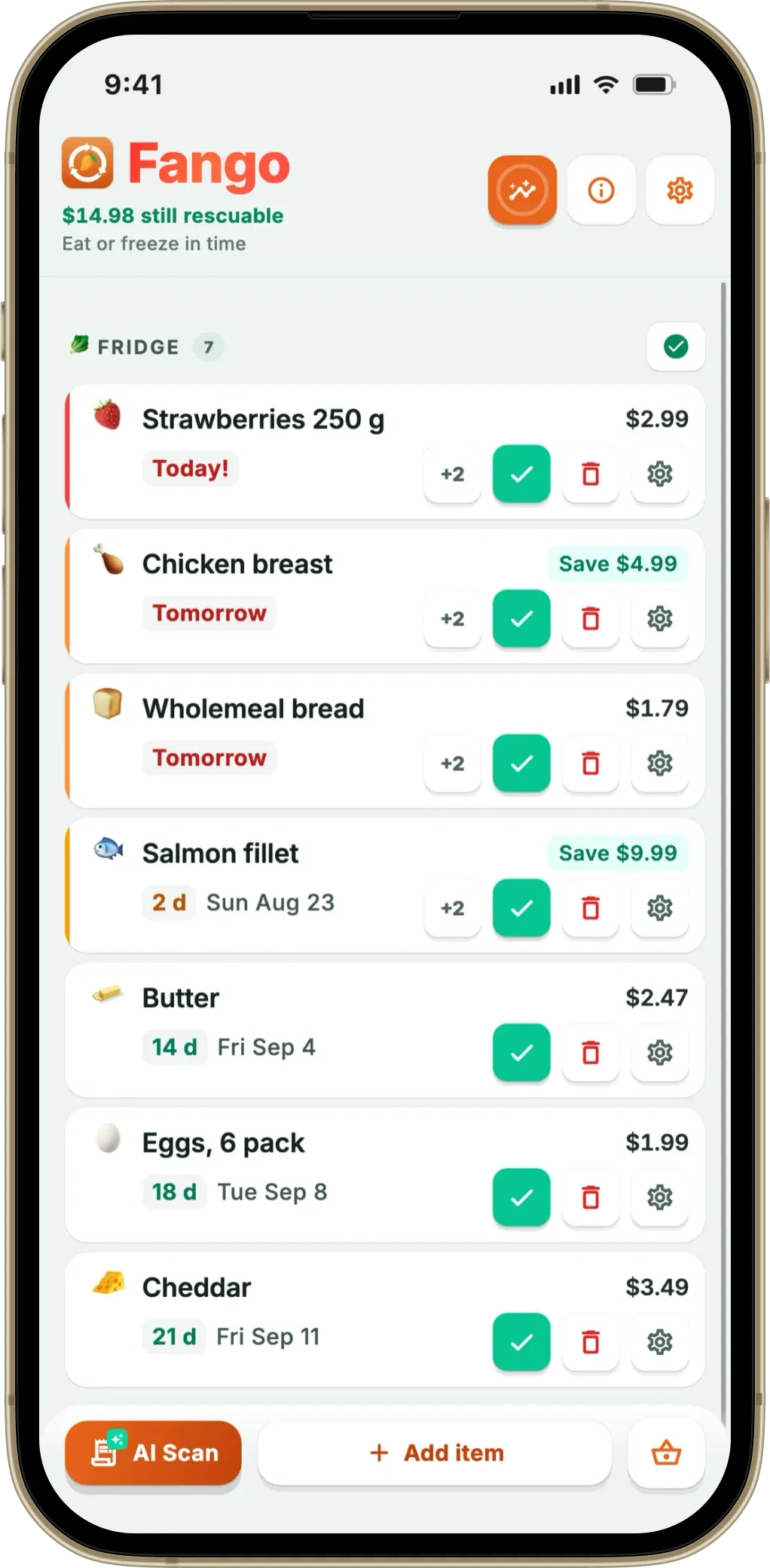
- What it does — tracks everything in your fridge with expiry dates, sorted by what expires first
- AI receipt scanning — photograph your receipt, AI adds all food products automatically
- Push notifications — get reminded 1–14 days ahead
- No sign-up — Fango requires no account; your fridge data stays on your device by default
What Is a Fridge Tracker App?
A fridge tracker app is a phone app that maintains a digital inventory of what’s in your fridge — each item’s name, quantity, and expiry date — and alerts you in time. It’s essentially an expiry date tracker and a food expiry reminder app combined into one.
The problem it solves is simple: most people can’t remember what’s in their fridge, when they bought it, or when it expires. Food gets pushed to the back, forgotten, and thrown away. A fridge tracker app makes the invisible visible — you can see at a glance that the salmon bought on Monday expires tomorrow, or that there’s cream cheese you’ve had since last week.
How AI Receipt Scanning Changes Everything
The main reason food tracking apps fail is friction. If adding your weekly shop takes 10 minutes of typing, you stop doing it by day three.
AI receipt scanning in Fango eliminates that friction. Here’s how it works:
-
1
Take a photo of your grocery receipt. After unpacking your shopping, open Fango and tap the scan button. Take a photo of your till receipt — or select a PDF receipt from your online grocery order.
-
2
AI identifies every food product. The receipt is processed by Claude (Anthropic’s AI model), which reads every line, identifies which items are food, filters out non-food items, and estimates a typical fridge shelf life for each product.
-
3
Review and confirm — done. Each product is shown with its suggested expiry date. Accept, adjust, or skip individual items. A full weekly shop is typically reviewed in under a minute. Your fridge list is now up to date.
What Makes a Good Fridge Tracker App?
-
1
Fast input. The app must make it easy to add food — ideally from a receipt photo. If adding a weekly shop takes more than a couple of minutes, the habit won’t stick.
-
2
Useful notifications. A reminder the day something expires is too late. Good apps let you set reminders days in advance — and ideally per-product, since chicken needs a different lead time than a block of parmesan.
-
3
No account required. Your grocery history is private. Fridge trackers that require cloud accounts mean your food habits are stored on someone else’s server tied to your identity. Fango stores your fridge list locally on your device by default, with no registration needed.
-
4
Clear at-a-glance view. The main screen should show what expires soonest at the top — not a flat alphabetical list. Colour coding (red for imminent, green for safe) adds further clarity without extra effort.
Freezer and Pantry Tracking on the Same List
Most people who look for a fridge tracker end up wanting the freezer covered too, because that is where food goes to be forgotten for months. A good refrigerator app should not make you keep three separate inventories. Fango keeps one list and lets you filter it by fridge, freezer or pantry, so a single receipt scan puts each product where it belongs. Fresh food is measured in days; frozen and dry goods get month-scale shelf lives and reminders that start up to a month ahead, so the bag of frozen shrimp gets used while it is still worth eating.
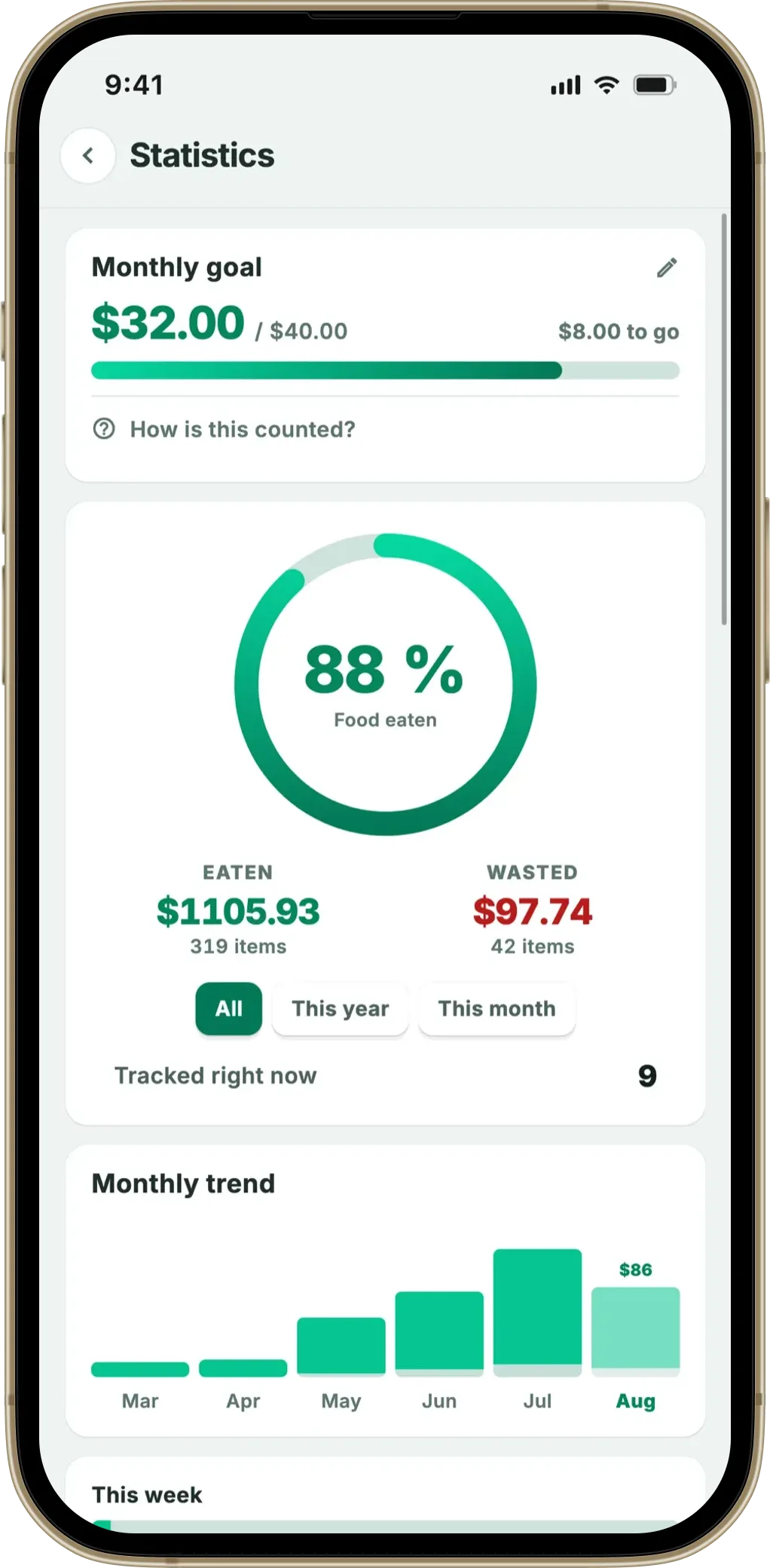
Tracking spoilage across the whole kitchen is also what makes the savings visible. Everything you use up close to its date counts toward a monthly total, so after a few weeks you can see in dollars whether the list is working. If your shelves of dry goods are the bigger problem, our guide to the best pantry inventory app compares the options for that side of the kitchen.
How Fridge Tracking Saves Money
The saving mechanism is awareness. When you can see that the smoked salmon in your fridge expires tomorrow, you use it. Without that information, you open the fridge, reach for something else, and find the salmon two days later.
According to UNEP, a fifth of the food available to consumers globally is wasted. The majority of household food waste is avoidable — it’s not bad food, it’s forgotten food. Tracking prevents the forgetting.
Over time, a fridge tracker also reveals patterns: which foods you consistently throw away, which quantities you over-buy, which days of the week you cook versus order in. That data quietly changes shopping habits — and the savings compound. For more on this stats-and-tracking angle, see our deep dive on expiration date tracking apps.
Fango tracks what’s in your fridge and sends a push notification in time — 1 to 14 days ahead. Scan your grocery receipt and AI adds everything in under 30 seconds. No sign-up, no cloud account by default — your fridge data stays on your device by default.
Download on the App Store Get it on Google PlayFree for a month · No sign-up · iOS and Android
Which Foods Benefit Most From Fridge Tracking
Not everything in the fridge needs the same attention. The highest-value items to track are the perishables that are both expensive and easy to forget: fresh fish and meat, opened dairy, soft cheese, prepared salads, and leftovers. These carry short windows and a real cost when binned, so a notification a day or two ahead pays for itself quickly.
Long-life condiments — ketchup, mustard, jars of sauce — matter far less, because they sit well past their printed best-before date and rarely go off before you finish them. The trick is to track what genuinely spoils and not drown the useful alerts in noise. If you are unsure how long a specific item actually keeps, hub guides like how long does cheese last give realistic fridge windows.
The same list answers what you do not need to buy. Fango’s shopping list helps with the comparison: it suggests what is running low in the fridge, freezer and cupboard, never repeats what is already on the list, and sorts the rows into supermarket aisles.
Tracking Fruit and Vegetables in the Fridge
Fresh produce is the part of the fridge that a date-based tracker most often misses, because loose fruit and vegetables rarely carry a printed date at all. That is also why they make up so much of what gets thrown out: a bag of salad or a box of berries has a short life and no label reminding you of it. When the list is built from your receipt, produce is tracked like everything else. The AI estimates a typical fridge life for each item, so berries and leafy greens get a short window while apples, carrots and citrus get a longer one, and you can adjust any date with a tap.
Two habits make produce tracking work. Put the fastest-spoiling items where you will see them, at eye level rather than in the bottom drawer, and plan the first meals of the week around whatever the app shows as due soonest. Cooking the spinach on Tuesday instead of finding it slimy on Saturday is the whole point of a fridge tracker app.
Frequently Asked Questions
What is a fridge tracker app?
An app that maintains a digital list of everything in your fridge with expiry dates, and sends push notifications in time. The best apps use AI to add products automatically from your grocery receipt.
Is Fango free?
Yes — Fango is free to try for one month. After that it’s a monthly or yearly subscription (price for your country shown in the app), with per-product notification timing and spending statistics.
Does Fango work offline?
Yes — your food list and push notifications work fully offline. An internet connection is only needed when scanning a new receipt with AI.
Does Fango require an account?
No — there is no registration, no sign-up, and no Fango account. Download and start tracking immediately. Your fridge data stays on your device by default.
What foods should I track in my fridge?
Prioritise the perishables that are expensive and easy to forget — fresh fish and meat, opened dairy, soft cheese, prepared salads, and leftovers. Long-life condiments matter far less because they outlast their printed date. Tracking what genuinely spoils, rather than everything, keeps the notifications useful instead of background noise.
Can I check what’s in my fridge while I’m at the store?
Yes. The list lives on your phone, so you can open it in the aisle and see what you already have and what needs using first. That is where a fridge tracker saves the most money: the second tub of yogurt or bag of spinach never gets bought.
Can the whole family use the same fridge tracker?
Yes. With Fango’s household sharing, up to four people see the same fridge, freezer and pantry list on one subscription. Everyone joins with an 8-character invite code instead of an account, and when someone adds, eats or throws out an item, the other phones update within seconds.
Is there a fridge tracker app for Android?
Yes. Fango is on Google Play as well as the App Store, with the same receipt scanning, reminders and home-screen widget on both, and the same one-month free trial.