Butter has gone bad if it has a sharp, sour, or cheesy smell, a waxy or crumbly texture, or darkened, discoloured edges — and any mould means bin it. Here’s the reassuring part: butter is one of the lowest-risk foods in your fridge. Because it’s high in fat and low in water, it resists bacteria well, so the real question is usually rancidity — a quality problem, not a food-poisoning one. Your nose and eyes are the best tests — and they can only ever tell you to discard, never that a block is fine to eat.
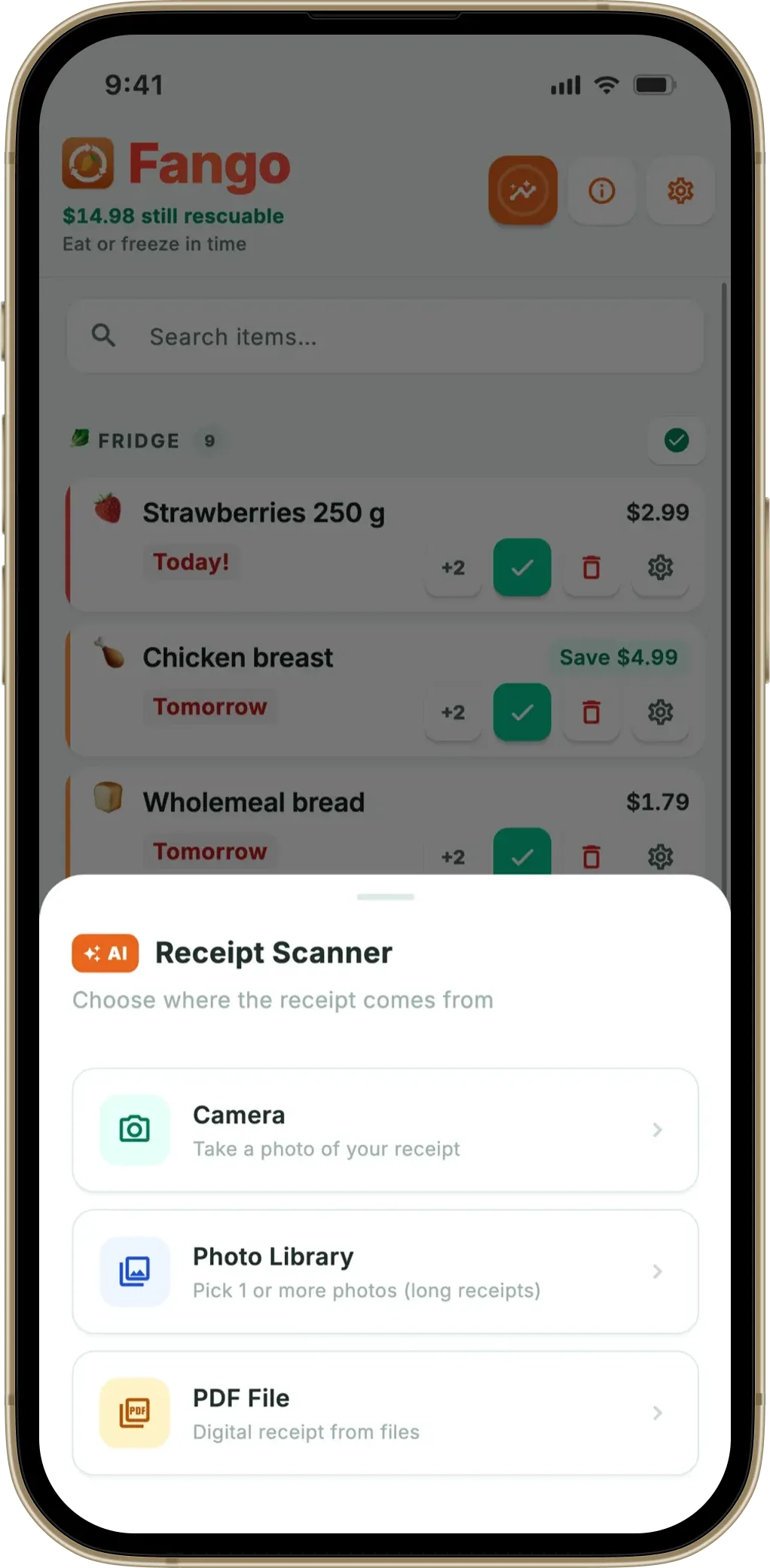
Butter lasts a while, which is exactly why a half-used block can slip to the back of the fridge and slowly turn. Fango lets you log butter when you open it and set an expiry reminder, so you use it while it’s still fresh and creamy.
- Smell — sharp, sour, or cheesy = rancid
- Look — darkened edges or any mould = discard
- Low risk — rancidity is a quality issue, not food poisoning
- Best-before, not use-by — salted butter lasts longest
The 3 Signs Butter Has Gone Bad
Fresh butter smells clean, milky, and faintly sweet, with an even pale-yellow colour. When it turns, the signs are clear. If you notice any one of these, it’s time to throw the butter out.
If keeping track of dates like these by hand is the part that never sticks, an expiry date tracker app can do it from your grocery receipt.
-
1
Smell — Rancid butter smells sharp, sour, cheesy, or a bit like old crayons or paint. Fresh butter has a clean, creamy scent, so any harsh or sour note means it has oxidised.
-
2
Texture — Rancid butter turns waxy or crumbly rather than smooth, and the surface can feel greasy or tacky where it has been exposed to air.
-
3
Look — Watch for darker, translucent, or greasy-looking edges where butter has been exposed to air, uneven discolouration, or any fuzzy mould spots. Mould means the whole block goes.
Why Butter Goes Rancid Rather Than “Off”
Butter doesn’t spoil the way meat or fresh dairy does. With very little water and a high fat content, it’s an inhospitable place for the bacteria that cause food poisoning. Instead, butter goes rancid: its fats react with oxygen over time, producing those sharp, sour, cheesy flavours. Light, heat, air, and strong-smelling neighbours in the fridge all speed it up — and because butter readily absorbs odours, a block stored next to onions or fish can taste off without being truly rancid.
A fridge tracker app keeps this for every item in the fridge at once and reminds you before the day runs out.
This is why butter carries a best-before date, not a use-by date. As the UK Food Standards Agency explains, best-before dates are about quality — food is usually still safe to eat after them, just past its best. So for butter the smell is what decides: a sharp, sour or cheesy note means it has gone rancid, date or no date. Butter that smells clean is simply showing no sign yet — treat the best-before date as the point to use it up rather than a line to push past. For the full difference, see best-before vs use-by dates.
Log butter when you open it and Fango reminds you to use it up while it’s fresh. No sign-up, your fridge data stays on your device by default.
Download on the App Store Get it on Google PlayFree for a month · No sign-up · iOS and Android
Common Butter Worries, Answered
A few situations cause the most doubt. Here’s the quick verdict on each.
How to Keep Butter Fresh Longer
Butter keeps well when you protect it from the things that turn it rancid — air, light, heat, and strong smells. Opened butter holds its quality for around 3 weeks in the fridge — see how long butter lasts for the detail.
-
1
Keep it wrapped and covered. Store butter in its wrapper or a sealed dish so it isn’t exposed to air or fridge odours. Chill it at 0–5°C.
-
2
Choose salted to keep longer. Salt acts as a natural preservative, so salted butter lasts noticeably longer than unsalted before turning.
-
3
Only keep out what you’ll use. A small butter dish on the counter is fine for a few days’ worth, but keep the main block chilled so it doesn’t go rancid faster in the warmth.
-
4
Freeze the spare. Butter freezes for months with no loss of quality — see can you freeze butter. Log it in Fango so the open block gets used first.
Related reading: How to Tell if Tofu Is Bad.
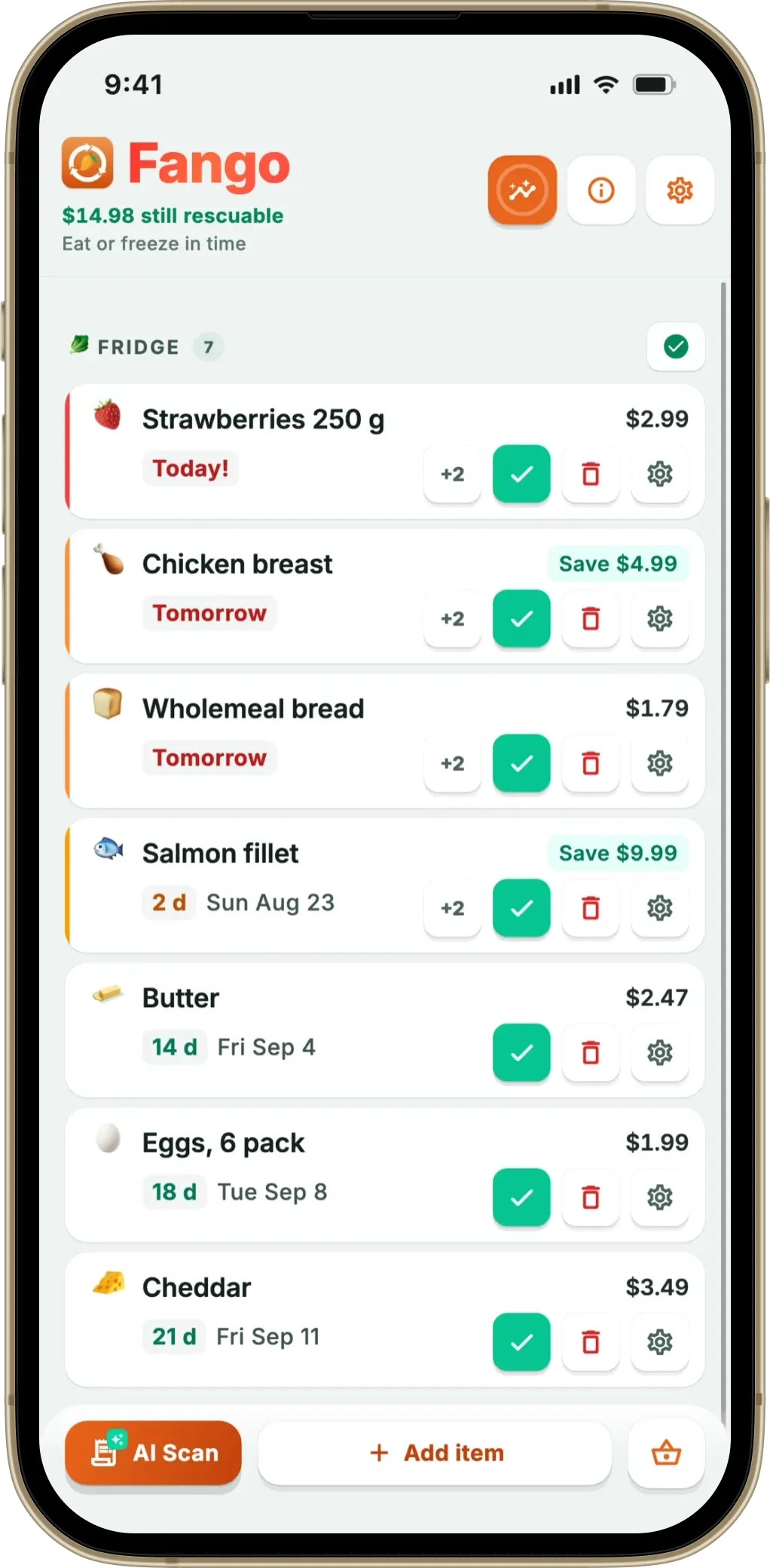
Fango sorts everything by reminder date and colour-codes the urgent items in red. The home screen widget shows what to use next without opening the app.
Download on the App Store Get it on Google PlayFree for a month · No sign-up · iOS and Android
Frequently Asked Questions
How can you tell if butter is bad?
Butter has gone bad if it smells sharp, sour, or cheesy, has turned waxy or crumbly, or has darkened, discoloured edges. Any mould means throw it away. Fresh butter smells clean and creamy and has an even pale colour.
Is it safe to eat rancid butter?
Rancidity is a quality problem rather than a food-poisoning one, but rancid butter is still discarded — the flavour spoils whatever it goes into, and smell can only ever tell you to throw it out, not that it is fine. Mouldy butter, on the other hand, should always be thrown away.
Does butter go off?
Yes, but slowly. Because butter is high in fat and low in water, it resists bacteria well, so it goes rancid through oxidation rather than spoiling like meat or dairy. Salted butter lasts longer than unsalted, as the salt acts as a preservative.
How long does butter last in the fridge?
Opened butter keeps its quality for around 3 weeks in the fridge, and often longer if well wrapped. It carries a best-before date rather than a use-by date, so it’s about quality, not safety. Freezing extends it by a couple of months or more.
Why does butter taste sour or off?
Butter develops a sour, sharp, or cheesy taste when its fats oxidise and go rancid, which happens faster with exposure to air, light, heat, and strong-smelling foods. Butter also absorbs nearby odours, so an off taste can come from poor storage.
Can you still bake with slightly off butter?
It’s not recommended. Rancid butter has an unpleasant flavour that carries through into whatever you bake, so it won’t be hidden by cooking. If the butter smells or tastes off, it’s better to discard it than to spoil a whole batch.
The reliable habit: log butter in Fango when you open it and let the open block get used before you start the next. You’ll always be cooking with fresh, creamy butter. For the whole fridge at a glance, see how long food lasts in the fridge.