Ham has gone bad if it has a sour or off smell, a slimy or tacky surface, or a grey, green, or dull colour. Any one of those means throw it away. But sliced ham and deli meats carry a catch most people miss: because they’re ready-to-eat, they can be unsafe even when they look and smell fine, thanks to bacteria that grow in the fridge without any warning sign. That’s why the use-by date does the job your senses can’t.
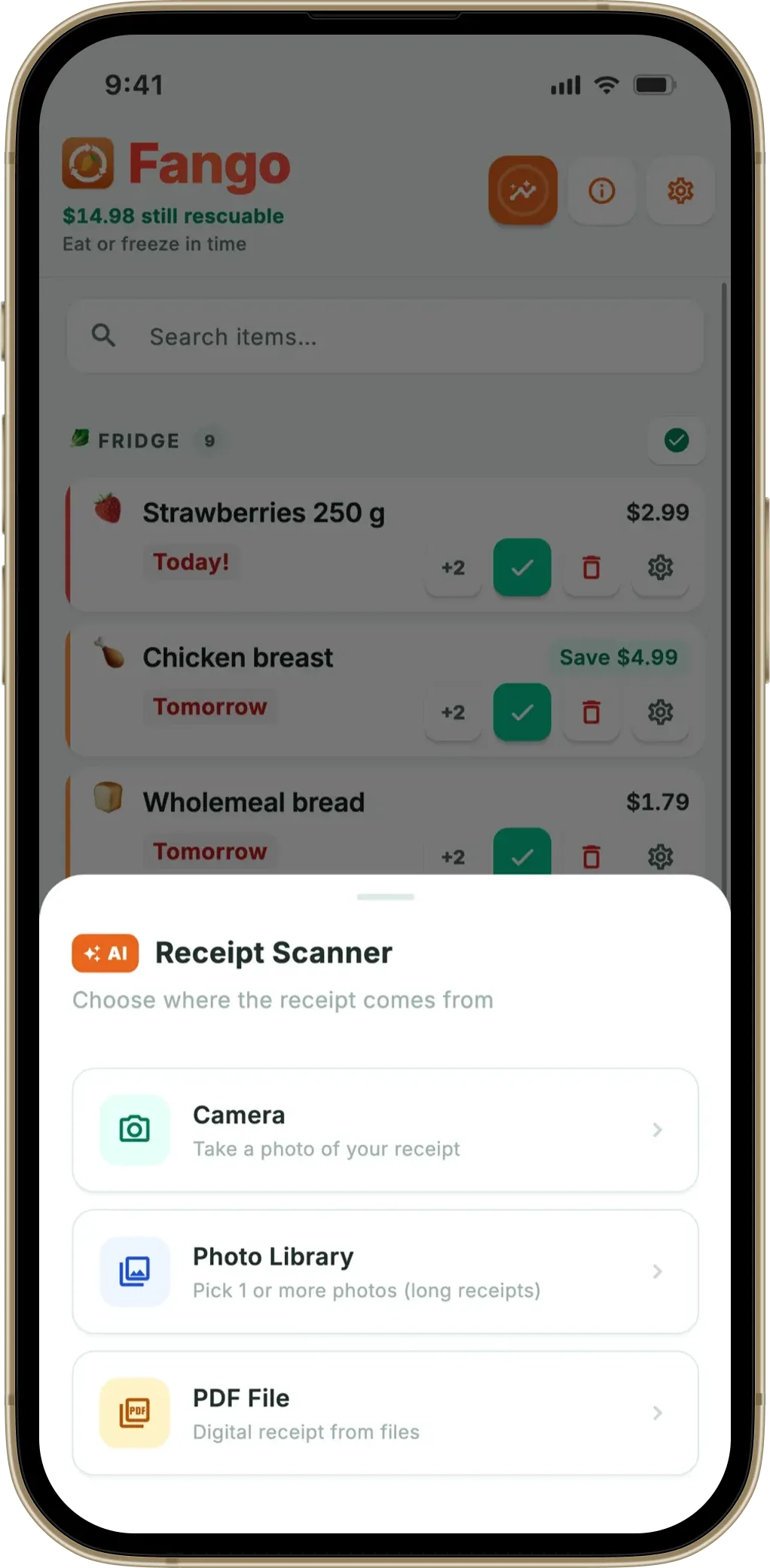
The simplest way to never face the question is to know how long an opened pack has been sitting there. Fango lets you log ham when you open it and set an expiry reminder, so you finish or freeze it inside the safe window instead of sniffing a slice and hoping.
- Smell, texture, colour — sour odour, slime, or grey/green = spoiled
- Looks fine ≠ safe — Listeria grows in the fridge with no clue
- Follow the use-by date — it’s a safety deadline on ready-to-eat meat
- Opened ham — eat within about 3–5 days
Opened ham has a short window. Fango reads your grocery receipt and reminds you before it closes, so it gets eaten instead of binned — try it free for a month.
The 3 Signs Ham Has Gone Bad
Fresh sliced ham is moist but not wet, pink or rosy (cured) or pale (cooked), and almost odourless. When it spoils, your senses usually pick it up. If you notice any one of these, discard the ham — don’t taste it to check.
This is exactly the kind of date an expiry date tracker app reminds you about in time.
-
1
Smell — Fresh ham has little smell. A sour, sharp, or “off” odour — sometimes like sour milk or vinegar — is a clear sign of spoilage. Bin it.
-
2
Texture — Good ham feels moist and smooth. A slimy, sticky, or tacky film that stays after patting it dry is a classic sign of bacterial growth on deli meat. Throw it away.
-
3
Colour — Watch for grey, green, or dull patches and any fuzzy mould. A slight greying from air contact can be harmless within the use-by date, but discolouration plus any off smell or slime means bin it.
Why Ham Can Be Bad Even When It Looks Fine
This is the key thing about sliced ham and deli meats: they’re ready-to-eat, so there’s no cooking step to kill bacteria before you eat them. Chilled ready-to-eat meats can carry Listeria monocytogenes, a bacterium that, unusually, keeps growing at fridge temperatures and produces no smell, colour change, or sliminess you can detect. According to the UK Food Standards Agency, you can’t see, smell, or taste the bugs that cause food poisoning — food can look and smell fine and still be unsafe after its use-by date.
If the fridge is where food gets lost, a fridge tracker app puts everything in it on one list with dates.
That’s why ham carries a use-by date, not a best-before date. Use-by is about safety, and it’s the line that matters most. Never eat ham past it, even if it looks perfect. The spoilage signs tell you when ham is definitely bad; the use-by date tells you when it’s no longer safe — and that comes first. For the full difference, see best-before vs use-by dates.
Log ham when you open it and Fango reminds you to use it within a few days — before the window closes. No sign-up, your fridge data stays on your device by default.
Download on the App Store Get it on Google PlayFree for a month · No sign-up · iOS and Android
Common Ham Worries, Answered
A few situations cause the most doubt. Here’s the quick verdict on each.
What Happens If You Eat Bad Ham
Eating spoiled ready-to-eat meat can cause food poisoning. Listeria infection is uncommon but can be serious, especially for pregnant women, older adults, newborns, and anyone with a weakened immune system; symptoms can include fever, aches, and digestive upset, sometimes appearing days or weeks later. More common spoilage bugs bring quicker stomach cramps, diarrhoea, and vomiting. The NHS advises resting and drinking plenty of fluids, and seeking medical advice if symptoms are severe or you’re in a higher-risk group.
The safest move is always prevention: keep ham sealed and chilled at 0–5°C, and if it’s slimy, smells off, or is past its use-by date, throw it away. For storage times across your fridge, see how long food lasts in the fridge, and to keep a pack longer, see whether you can freeze ham.
Related reading: How to Tell if Pork Is Bad.
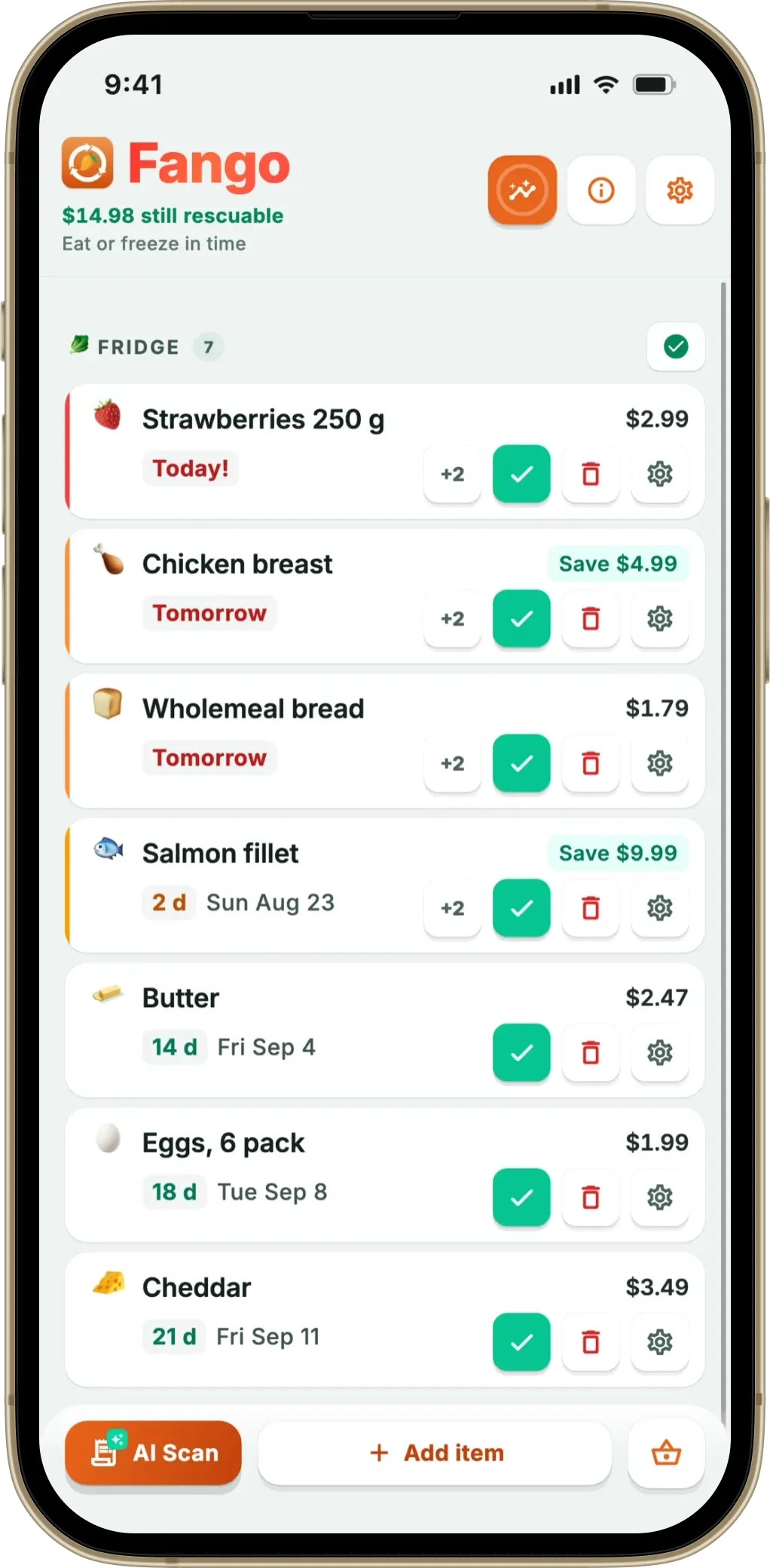
Fango sorts everything by reminder date and colour-codes the urgent items in red. The home screen widget shows what to use next without opening the app.
Download on the App Store Get it on Google PlayFree for a month · No sign-up · iOS and Android
Frequently Asked Questions
How can you tell if ham is bad?
Ham has gone bad if it smells sour or off, feels slimy or tacky, or has turned grey, green, or dull. Any one of these means throw it away. Ready-to-eat ham can also be unsafe past its use-by date even when it looks and smells fine.
Is slimy ham safe to eat?
No. A slimy or sticky film on sliced ham is a classic sign of bacterial growth. Rinsing won’t fix it — discard slimy ham rather than eating or cooking it.
Can ham be bad even if it looks and smells fine?
Yes. Ready-to-eat chilled meats like sliced ham can carry Listeria, which grows even at fridge temperatures and leaves no smell or visible clue. That’s why ham carries a use-by date — don’t eat it past that, even if it seems fine.
How long does opened ham last in the fridge?
Once opened, sliced ham and deli meats are best eaten within about 3 to 5 days, and always within the use-by date on the pack. Keep them sealed and chilled at 0–5°C, and check the smell and surface before eating.
Is grey ham off?
Some cooked and cured ham naturally turns greyish as it reacts with air, which on its own isn’t always a problem within the use-by date. But grey, green, or dull colour combined with a sour smell or slimy feel means it has spoiled — throw it out.
Can you freeze ham to make it last longer?
Yes. Freeze ham before its use-by date and it keeps for a couple of months. Freeze it in portions so you can thaw only what you need, and use it soon after thawing rather than refreezing.
The reliable habit: log ham in Fango when you open the pack and set a reminder. You’ll finish or freeze it in time, and never have to play detective with a doubtful slice again. An expiration date app does the same job for everything else you opened this week.