Shrimp has gone bad if it smells of ammonia or sour, rancid fish, feels slimy or sticky, or looks faded, grey, or discoloured. Fresh shrimp — and prawns — should be firm, clear with a pearl-like sheen, and have almost no smell at all. The ammonia note is the giveaway: fresh seafood never smells of it, so if you catch a whiff, the shrimp is done.
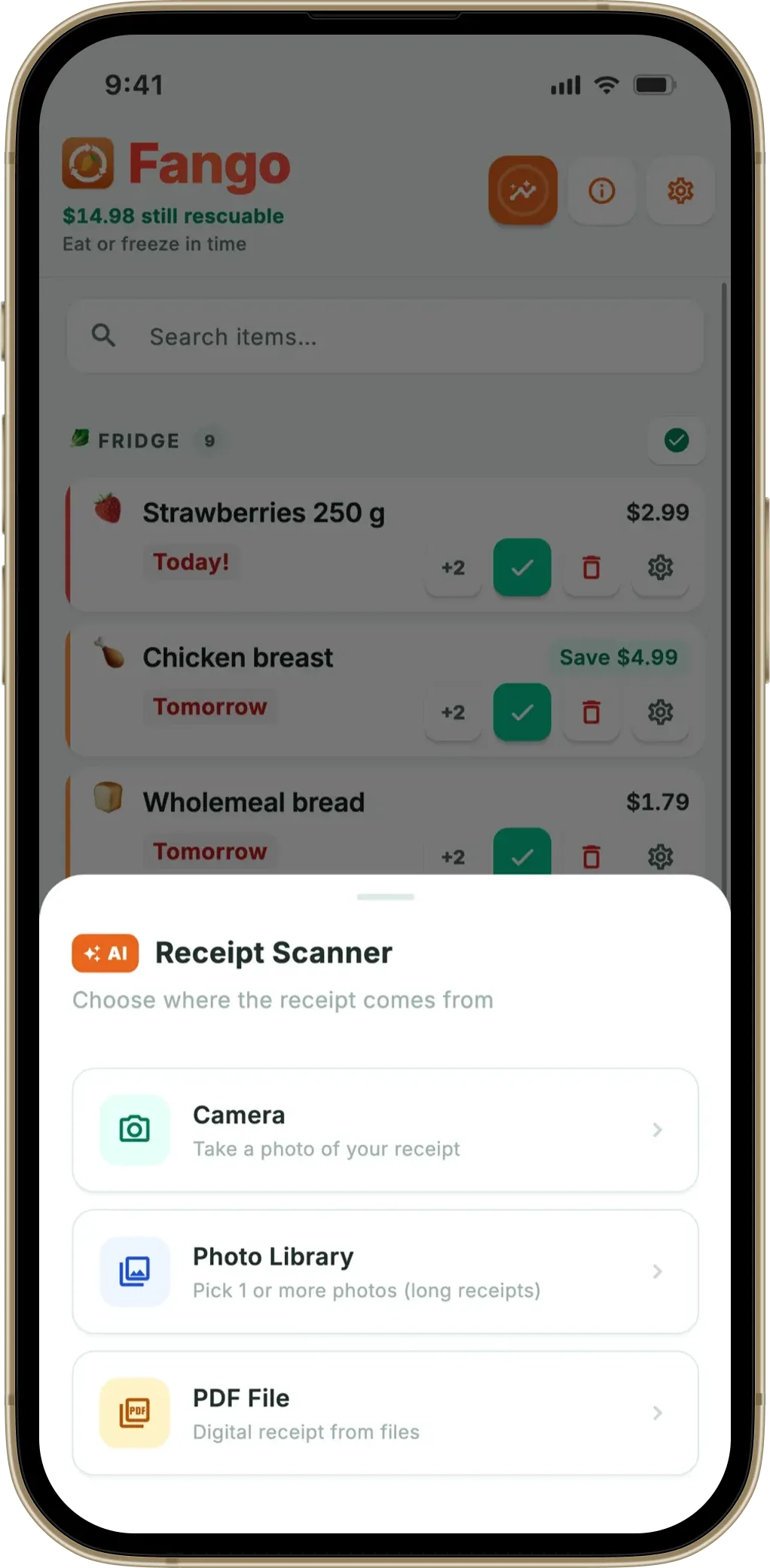
Shrimp spoils fast, so the real trick is using it in time. Fango lets you log shrimp on shopping day and set a same-day or next-day expiry reminder, so it gets cooked or frozen while it’s still fresh — not sniff-tested at the back of the fridge.
- Smell — ammonia, sour, or strong fishy odour = spoiled
- Texture — slimy, sticky, or mushy = spoiled
- Look — faded, grey, or discoloured instead of clear and pearly
- Use-by date wins — and fresh shrimp keeps just 1–2 days
Fresh shrimp has a short window. Fango reads your grocery receipt and reminds you before it closes, so it gets eaten instead of binned — try it free for a month.
The Signs Shrimp Has Gone Bad
Seafood gives clear warnings once it turns. The US Food and Drug Administration notes that fresh shellfish flesh should be clear with a pearl-like colour and little or no odour, and that spoiled seafood smells sour, rancid, fishy, or of ammonia. Run through these in order.
For the household version of this problem — remembering the dates for everything you buy — see our guide to choosing an expiry date tracker.
-
1
Smell — Fresh shrimp has virtually no smell. An ammonia-like, sour, or strongly fishy odour is the clearest sign it has spoiled. Ammonia in particular is a hard stop — fresh seafood never smells of it.
-
2
Texture — Fresh shrimp is firm and slightly springy. A slimy or sticky coating, or soft, mushy flesh that falls apart, signals bacterial breakdown. Slime that returns after rinsing means discard.
-
3
Look — Fresh shrimp is translucent with a clean, pearly sheen. Faded, grey, yellowing, or generally dull shrimp point to spoilage — bin it rather than risk it. Black spots on the shells are a different thing: that is melanosis, an enzymatic browning of the shell rather than a health risk. Treat spreading spots as an age signal that tells you to check the smell and the texture, not as a reason to throw the pack out on its own.
Why Shrimp Can Be Unsafe With No Smell
The signs above catch shrimp that is clearly off — but their absence isn’t a safety guarantee. Shrimp carries a use-by date because harmful bacteria can be present without changing the smell, look, or feel. The UK Food Standards Agency stresses that you can’t see or smell the bugs that cause food poisoning, and that seafood can look and smell fine past its use-by date yet still be unsafe.
If the fridge is where food gets lost, a fridge tracker app puts everything in it on one list with dates.
So treat the signs as a one-way test: any of them means discard, but a clean nose doesn’t override the date. Never eat shrimp past its use-by date, and keep it at 0–5°C so the date stays valid. For the full logic behind date labels, see best-before vs use-by dates.
Log shrimp when you buy it and Fango reminds you the same or next day, while it’s still firm and pearly. No sign-up, your fridge data stays on your device by default.
Download on the App Store Get it on Google PlayFree for a month · No sign-up · iOS and Android
How to Tell if Cooked Shrimp Has Gone Bad
Cooked shrimp keeps for 2–3 days in the fridge and shows spoilage clearly. Throw it out if you notice any of these:
- A sour, ammonia-like, or strongly fishy smell
- A slimy or slippery coating on the shrimp
- Dull, faded flesh, or any mould
- It has been in the fridge longer than 3 days, even if it looks fine
When cooked shrimp is still good, reheat it until it is steaming hot all the way through, only once, and don’t leave it at room temperature for more than 2 hours — bacteria multiply quickly between 8–63°C.
Real Sign or Harmless? A Quick Reference
The situations that cause the most doubt, with the short verdict on each.
What Happens If You Eat Bad Shrimp
Eating spoiled shrimp can cause food poisoning, with nausea, stomach cramps, vomiting, and diarrhoea, often within hours. The NHS advises resting and drinking plenty of fluids; most people recover within a few days at home. Seek medical advice if symptoms are severe, you can’t keep fluids down, or they don’t improve — and take extra care with pregnant women, young children, older adults, and anyone with a weakened immune system. When in real doubt, bin it.
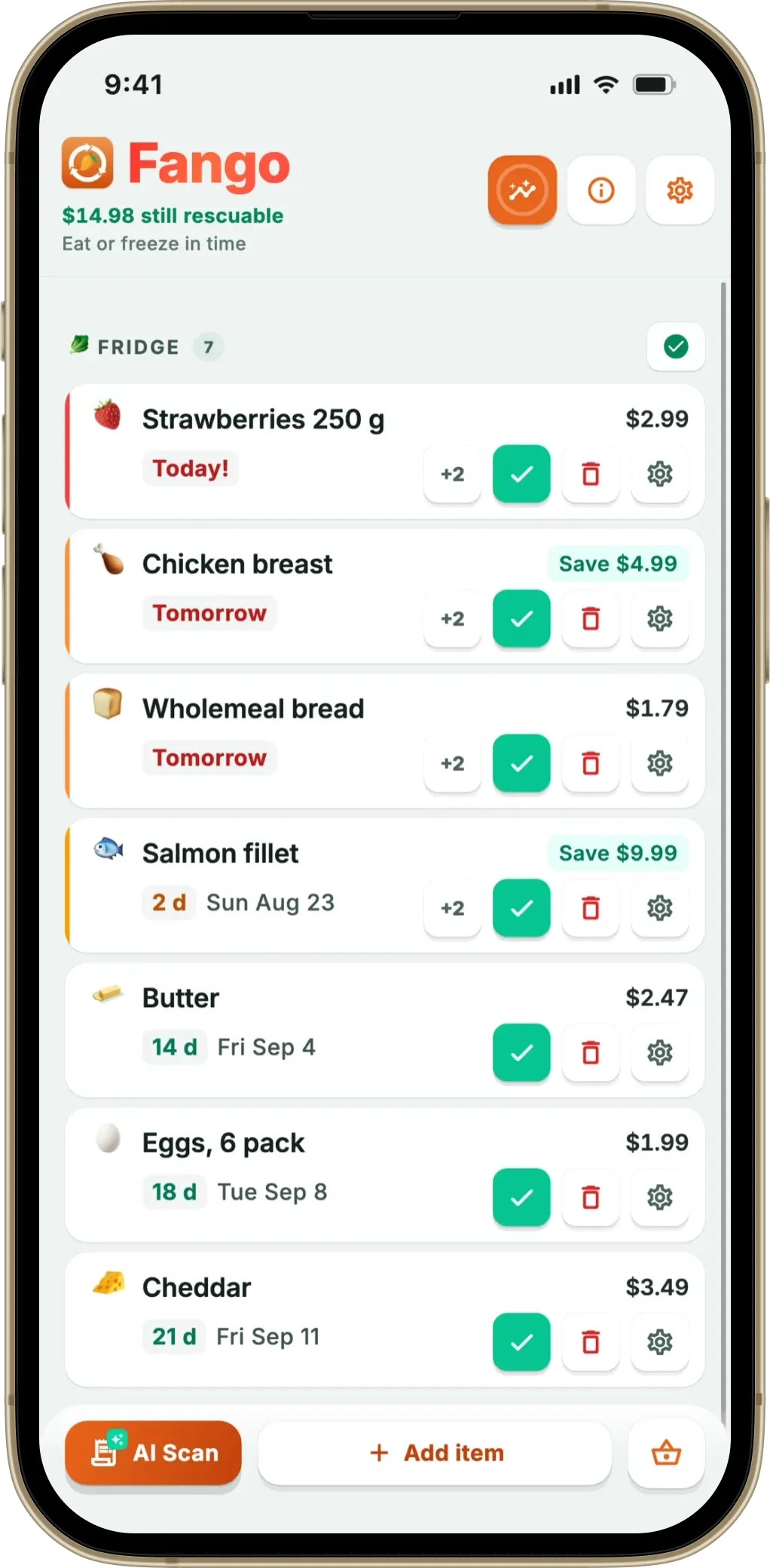
Fango sorts everything by reminder date and colour-codes the urgent items in red. The home screen widget shows what to use next without opening the app.
Download on the App Store Get it on Google PlayFree for a month · No sign-up · iOS and Android
How to Avoid Wasting Good Shrimp
Most binned shrimp was fine the day before — seafood just has one of the tightest windows in the fridge. Keep it cold and track the clock.
-
1
Keep it cold and covered. Store shrimp at 0–5°C in the coldest part of the fridge, sealed. For full storage and freezer times, see how long shrimp lasts.
-
2
Freeze before the deadline. If you won’t cook it in 1–2 days, freeze it while it’s still within the use-by date — never after.
-
3
Log it on shopping day. Shrimp’s window is short and easy to forget. Add it to Fango when you get home and set a same-day or next-day reminder.
-
4
Watch the other seafood too. Shrimp rarely shops alone — see how to tell if salmon is bad and the full fridge storage overview.
Related reading: How to Tell if Pork Is Bad.
Frequently Asked Questions
How can you tell if shrimp is bad?
Bad shrimp smells of ammonia, or sour and rancid fish, feels slimy or sticky, and looks faded, grey, or discoloured. Fresh shrimp is firm, clear with a pearl-like sheen, and almost odourless. Any ammonia or sour smell means discard it.
What does fresh shrimp smell like?
Fresh shrimp has virtually no smell, or just a faint clean scent of the sea. A strong fishy, sour, or ammonia-like odour is a clear sign it has spoiled and should not be eaten.
Can shrimp be off even if it smells okay?
Yes. Shrimp carries a use-by date because harmful bacteria can be present without an obvious smell. Follow the use-by date and keep shrimp at 0–5°C — the sniff test catches clearly spoiled shrimp, but the date is the safety guide.
How long does shrimp last in the fridge?
Fresh raw shrimp lasts 1–2 days in the fridge at 0–5°C; cooked shrimp keeps 2–3 days. Use it by the date on the pack, and freeze before the use-by date if you won’t cook it in time.
How do you tell if cooked shrimp has gone bad?
Cooked shrimp that smells sour or of ammonia, feels slimy, or has turned slippery and dull has spoiled. Eat cooked shrimp within 2–3 days and reheat it until steaming hot before serving.
What happens if you eat bad shrimp?
Eating spoiled shrimp can cause food poisoning — nausea, stomach cramps, vomiting, and diarrhoea, often within hours. Most people recover at home with rest and fluids, but seek medical advice if symptoms are severe or persist.
The simplest habit: add shrimp to Fango when you unpack your shopping and set a same-day or next-day reminder. You’ll cook or freeze it while it’s still fresh — and skip the sniff-test gamble entirely. If you want to weigh up the alternatives first, we compared them in our roundup of the best food expiration reminder apps.