The cheapest Thanksgiving is the one where you eat everything you bought. Size the list by headcount (the USDA says 1 pound of turkey per person), shop in three phases so fresh food isn’t sitting around for a week, keep one shared list so nobody buys a second turkey, and decide before Thursday what happens to the leftovers. That last step matters more than it sounds: ReFED estimated that about 320 million pounds of food, worth around $550 million, would be thrown away across the US on Thanksgiving 2025 alone.
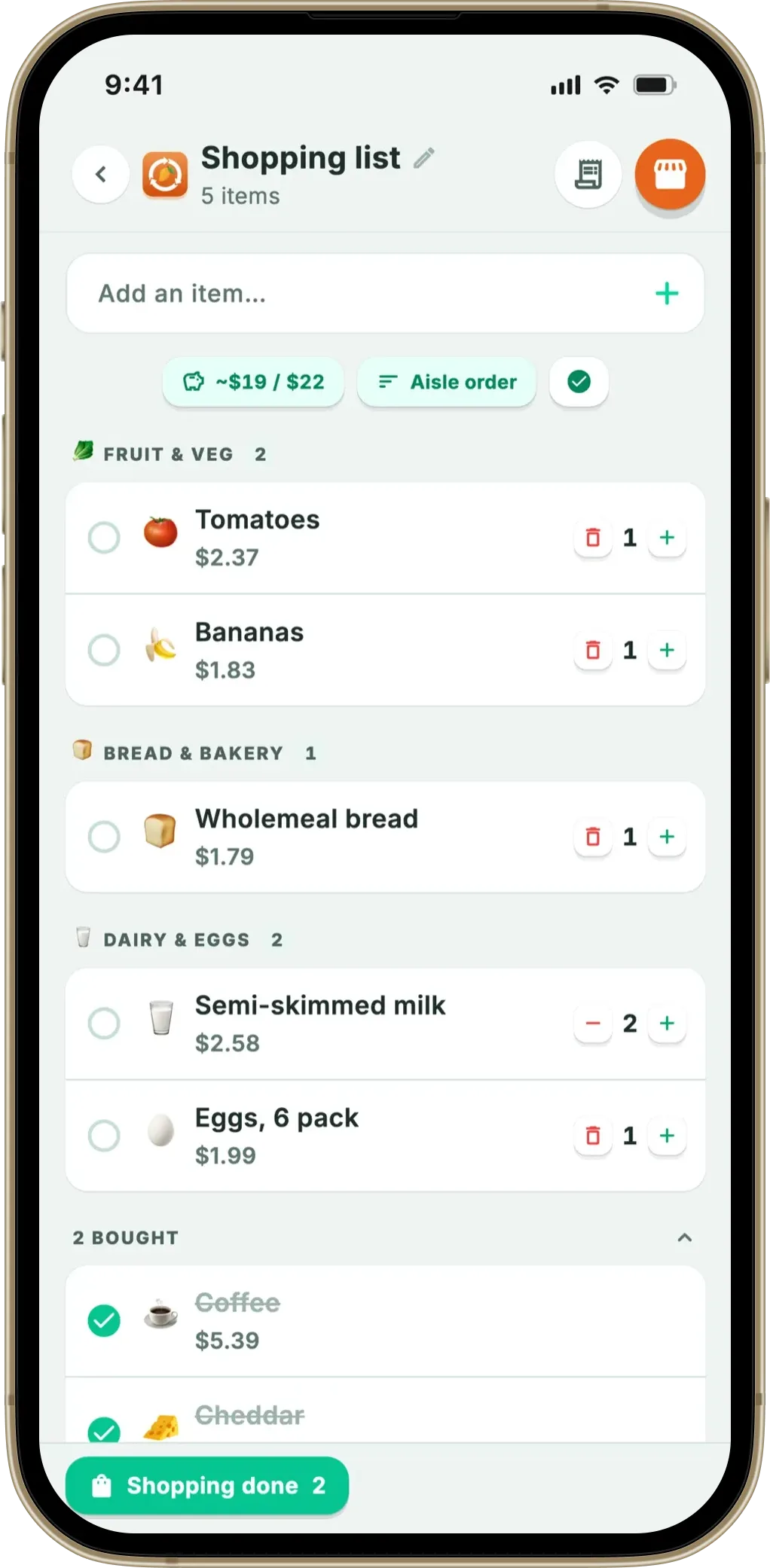
Share a shopping list with the people you live with, sorted by supermarket section, with ticks that show up on everyone’s phone within seconds. Scan the big receipt afterward and Fango reminds you in time to use what you bought.
Download on the App Store Get it on Google PlayFree for a month · No sign-up · iOS and Android
Below: a headcount table for the turkey, a shopping timeline counting back from Thursday, November 26, the rules for keeping leftovers safe, and how to make sure the money you spent on the big shop doesn’t end up in the trash the following week.
- Plan by headcount: 1 pound of turkey per person, per the USDA, plus planned leftovers only if you’ll really eat them
- Shop in phases: pantry three weeks out, frozen turkey into the fridge days ahead, fresh food in the last two days
- One shared list stops duplicate cranberry sauce, stuffing mix and second turkeys
- Leftovers: fridge within 2 hours, eat within 3–4 days, freeze the rest
Why Thanksgiving is the most expensive meal to waste
Thanksgiving is designed for surplus. In the same ReFED analysis, more than 90% of hosts said they deliberately cook more than their guests need, and turkey makes up about 40% of the food that ends up wasted. The most expensive item on the table is also the one most likely to be thrown out.
It isn’t a one-day problem either. The EPA’s 2025 estimate puts the cost of wasted food at $728 per person a year, or $2,913 for a household of four. That is around $56 a week. A holiday shop is simply the week when that number is largest, because the cart is fullest and the plans are least certain.
So the goal isn’t a smaller Thanksgiving. It’s a list where every line has a plan attached: who eats it, when, and what happens to whatever is left.
Step 1: Plan the list by headcount
Count the people first, then write the list. The USDA Food Safety and Inspection Service says to allow 1 pound of turkey per person, fresh or frozen, and 1¼ pounds per person for a frozen pre-stuffed turkey. The same guide puts thawing in the refrigerator at roughly 24 hours for every 4 to 5 pounds, which turns the headcount straight into a calendar:
| Guests | Turkey (1 lb per person) | Fridge thawing time |
|---|---|---|
| 6 | About 6 lb (a turkey breast often fits better) | About 1–1½ days |
| 10 | About 10 lb | About 2–2½ days |
| 14 | About 14 lb | About 3–3½ days |
| 20 | About 20 lb | About 4–5 days |
← scroll →
Apply the same thinking to the sides. Before you add a dish, ask who it is for. Three kinds of potatoes for eight people is how a fridge fills up with half-eaten casserole dishes. If you want leftovers on purpose, decide how many extra meals you actually want (two lunches, one turkey soup) and buy for those, instead of rounding everything up out of habit.
Step 2: Shop in three phases
One giant trip the weekend before means fresh vegetables and dairy sit in the fridge for five days before the cooking starts. Splitting the shop keeps the long-life items early and the short-life ones late. Counting back from Thursday, November 26:
- Three weeks out (early November): the pantry. Canned pumpkin, broth, flour, sugar, spices, stuffing mix, canned cranberry sauce, oil, foil and roasting bags. These keep for months, so buying early costs nothing. It’s also the moment to buy a frozen turkey if you have freezer room. Before you buy, check the cupboard: half-used bags of brown sugar and last year’s spices are where the double purchases hide.
- The weekend before: the turkey moves. Work backward from the table above. A 20-pound bird needs four to five days in the refrigerator, so it should be out of the freezer by Saturday, November 21. The USDA adds that a thawed turkey keeps one to two days in the fridge, so there’s a little slack but not much.
- Two days before: the fresh food. Salad, herbs, green beans, cream, butter, bread rolls and a fresh turkey, which the USDA says to buy only 1 to 2 days before cooking. This is the trip where waste is decided, so take the list and stick to it.
- The day after: the leftovers plan. Not a shopping trip, but it belongs on the list: containers, freezer bags and a note of what gets eaten when.
The same principle runs through our weekly grocery list template: buy fresh food for the days you’ll actually cook it, and let everything else wait in the pantry.
Step 3: One shared list, so nobody buys it twice
Thanksgiving shopping is rarely one person’s job. Someone grabs the turkey on the way home from work, someone else does the big store run, and a third person “just picks up a few things”. The result is two bags of stuffing mix and no celery. Duplicates don’t come from carelessness; they come from everyone shopping from their memory of a conversation.
The fix is a list that updates when something goes in a cart. In practice that means:
- A shared list for the people you live with. When one person ticks off the turkey, it shows as bought on everyone else’s phone.
- Each guest dish assigned to one name. For relatives who bring sides from their own homes, write “Pie: Aunt Carol” on the list. Nobody else buys pie.
- The list sorted by store section, so the person doing the big trip makes one lap of the store instead of three.
If you’d like the app version of this, our guide to a shopping list app that reduces food waste explains how a list that knows what is already in your fridge differs from a plain checklist.
Step 4: Leftovers, safely
Leftovers are only a saving if they get eaten in time, and the rules here are short and firm. According to the USDA’s Leftovers and Food Safety guidance:
- Refrigerate within 2 hours of cooking. Food left at room temperature longer than that should be thrown away, because bacteria multiply fastest between 40°F and 140°F.
- Use shallow containers so large amounts cool quickly. Cut the turkey into smaller pieces rather than putting the whole bird in the fridge.
- Eat within 3–4 days from a fridge at 40°F or below. For a Thursday dinner, that means Sunday or Monday at the latest.
- Freeze what you won’t eat by then. Frozen leftovers keep their quality for about 3–4 months.
- Reheat to 165°F, or until hot and steaming.
One rule that the calendar enforces better than your nose: the date decides, not the smell. The bacteria that cause food poisoning usually don’t change how food looks or smells, so a turkey sandwich on Tuesday that seems fine is not proof of anything. If you can’t remember when it was cooked, throw it out. Our guide to freezing leftovers covers which dishes freeze well, and how to use up leftovers has ideas for turning turkey and sides into new meals within the window.
The practical trick is to decide on Thursday night, while you’re packing the containers: what gets eaten Friday and Saturday, and what goes straight into the freezer. A decision made on Thursday doesn’t need to be remembered on Monday.
Where Fango fits: closing the loop after the shop
The list gets you through the store. The money is saved, or lost, in the week after, when the fridge is packed and nobody remembers what was bought when. That is the part Fango is built for:
- Shop from a shared list. Up to four people in a household share the same list with an eight-character invite code, no account needed. A tick on one phone appears on the others within seconds, and each list is shared only if you choose to share it.
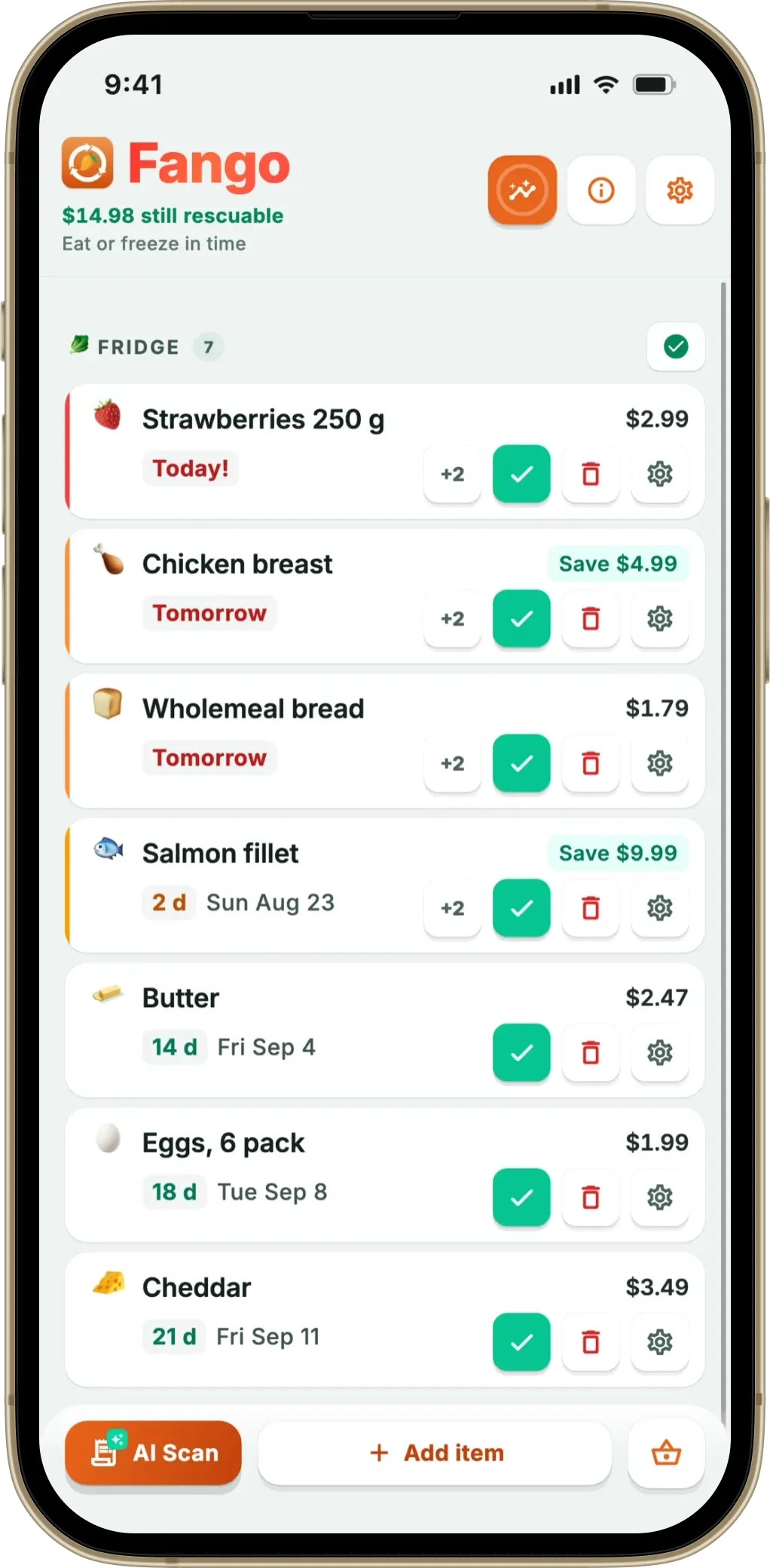
- Scan the big receipt. AI reads every line of the holiday receipt, whether you photograph it, pick a PDF or share it from your email, and adds the products to your fridge list with an estimated shelf life for each.
- Add the leftovers. Put “turkey leftovers” in by hand and set the reminder date to the end of the 3–4 day window, and they’re tracked like everything else.
- Get reminded in time. Fango reminds you on the day or up to 14 days ahead, so the cream bought for Thursday doesn’t get forgotten behind the leftovers.
- See the savings in dollars. Mark things as eaten and the stats show what you used in time, in your own currency, against a monthly goal.
If you’re weighing up options, we compared apps for American households in the best food waste app in the USA. Lists you don’t share stay on your phone by default.
Fango keeps your fridge, freezer and pantry in one list sorted by reminder date, so Monday’s leftovers don’t get lost behind Thursday’s cream. Shared with your household, updated in seconds.
Download on the App Store Get it on Google PlayFree for a month · No sign-up · iOS and Android
Frequently asked questions
How much turkey do I need per person for Thanksgiving?
The USDA Food Safety and Inspection Service says to allow 1 pound of turkey per person, for both fresh and frozen birds, and 1¼ pounds per person for a frozen pre-stuffed turkey. So ten guests means a bird of around 10 pounds. If you want leftovers on purpose, decide how many extra meals you actually want and size up for those, rather than rounding up by habit.
When should I start my Thanksgiving grocery shopping?
Start about three weeks out with everything that keeps: canned goods, baking supplies, broth, spices and a frozen turkey if you have freezer space. Move a frozen bird into the fridge early enough to thaw, at about 24 hours for every 4 to 5 pounds. Buy fresh produce, dairy and bread in the last two days, and a fresh turkey only 1 to 2 days before you cook it.
How long are Thanksgiving leftovers good for?
According to the USDA, leftovers keep 3 to 4 days in a refrigerator at 40°F or below, provided they went in within 2 hours of cooking. For a Thursday dinner that means Sunday or Monday at the latest. Anything you will not eat by then belongs in the freezer, where leftovers keep their quality for about 3 to 4 months. The date decides, not the smell: bacteria that cause food poisoning usually do not change how food looks or smells.
How do I stop family members buying the same things twice?
Use one shared list instead of a group chat. Duplicates happen when each person shops from memory of what was said, not from what has already been bought. A shared list where an item is ticked off the moment it goes in a cart fixes that. For guests who bring dishes, assign each dish to one name on the list, so two people never arrive with cranberry sauce.