Leftovers are some of the easiest food to waste. They go into a container with the best intentions, slide behind the milk, and reappear a week later as something you no longer trust. Yet they’re also some of the easiest to save — you’ve already done the cooking. The trick is knowing how long they actually keep, catching them before the window closes, and having a few easy ways to use them up. Here’s the practical version, and how to make sure they don’t get forgotten in the first place.
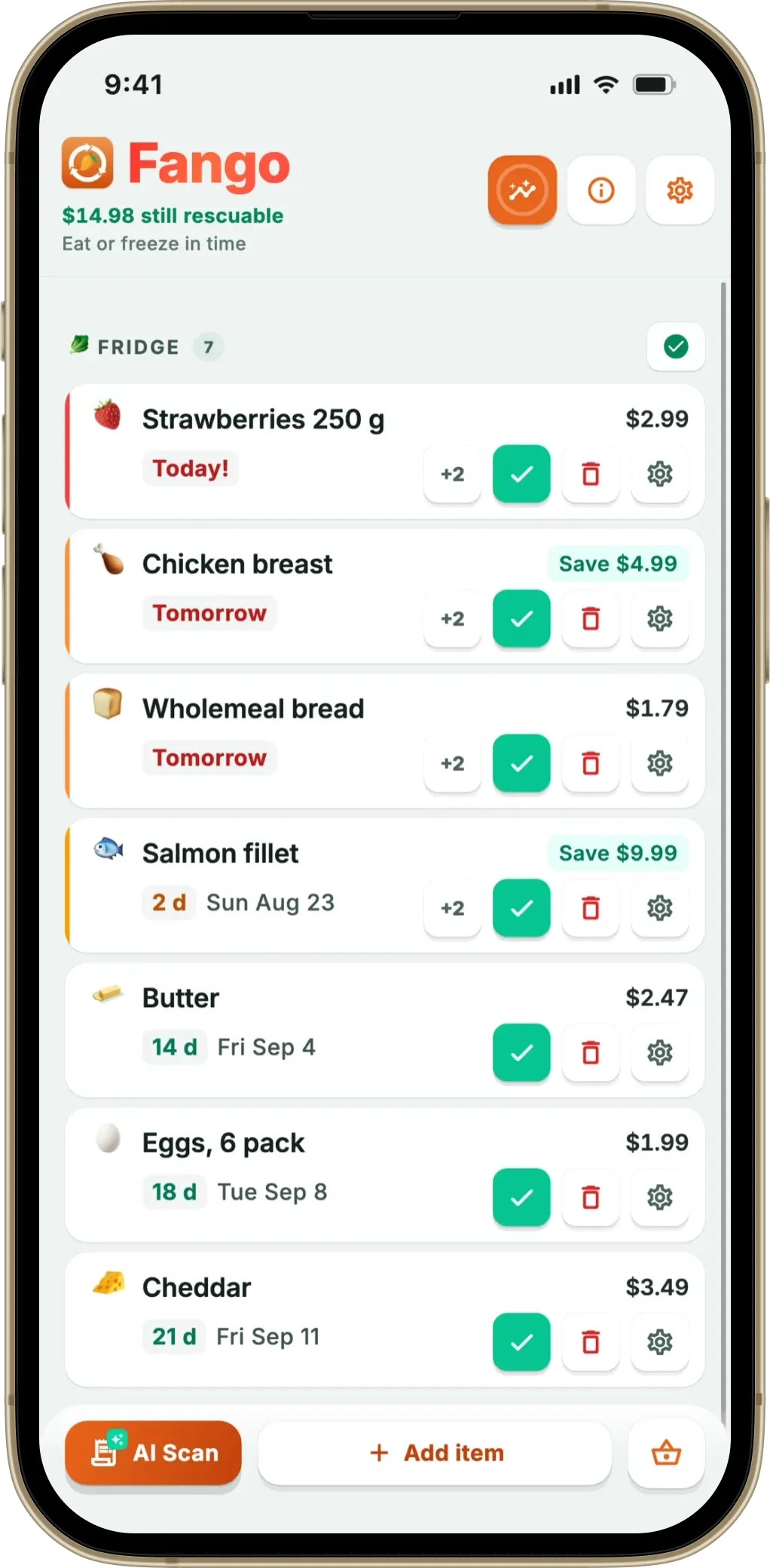
Add a cooked meal to Fango with a date and it reminds you before it’s due. Your shopping gets added automatically by scanning the receipt, and the widget shows what to use next — so nothing hides at the back of the fridge.
Download on the App Store Get it on Google PlayFree for a month · No sign-up · iOS and Android
- Most leftovers: eat within 2 days in the fridge at 0–5°C (UK FSA); USDA allows 3–4 days.
- Freeze what you won’t eat in time — most cooked meals freeze well for 2–3 months.
- Cool them fast (within ~2 hours), store airtight, and reheat until piping hot.
- The real enemy is forgetting — a reminder a day before they’re due is what saves them.
How long leftovers actually last
Cooked food doesn’t last as long as people assume. The UK Food Standards Agency advises eating most leftovers within 2 days when kept in the fridge at 0–5°C. Cool them within about two hours of cooking, get them into an airtight container, and when you reheat, make sure they’re piping hot all the way through. Rice is the one to respect: cool it quickly and eat it within a day, as it carries a higher risk if left warm.
The feature that matters most in any of these apps is the reminder — see what a good expiry date tracker app does differently.
Here’s a rough guide to common leftovers in the fridge:
For the full picture across all foods, see how long food lasts in the fridge.
Freeze what you can’t eat in time
The single best move for leftovers you won’t finish is the freezer. Most cooked meals — stews, curries, bolognese, soups, roast meat, even cooked rice — freeze well for two to three months and reheat almost as good as new. Freeze them in meal-sized portions while they’re still fresh, within a day or two of cooking rather than on day four, and label each container with the date so it doesn’t become a frozen mystery. Future-you gets a ready meal; nothing gets wasted. Our guide to freezing food covers what freezes well and what doesn’t. Before a big holiday meal, the cheaper move is buying less in the first place — our Thanksgiving grocery list shows how to size it.
If the fridge is where food gets lost, a fridge tracker app puts everything in it on one list with dates.
How to tell if leftovers have gone off
When something’s borderline, your senses can only confirm that something is off — they never overrule the calendar. Bin leftovers if you notice any of these:
- Smell: any sour, off or “wrong” smell — the clearest signal.
- Texture: slimy, sticky or tacky surfaces mean bacteria.
- Sight: visible mould, or a dull or changed colour.
And the rule that overrides looks: if it’s been in the fridge longer than 3–4 days, throw it out even if it seems fine. Reheating doesn’t make spoiled food safe — when in doubt, bin it.
Easy ways to use them up
You don’t need recipes so much as a few flexible formats that absorb almost anything. The night before leftovers are due, reach for one of these: a fried rice or noodle stir-fry takes leftover rice, veg and any cooked protein; a frittata or omelette uses up odd vegetables, cheese and cooked potato; a soup or stew swallows tired veg and a bit of leftover meat; and a “big plate” lunch just reheats two or three small portions together. Designating one weeknight as a leftovers night clears the fridge on a schedule, before anything has a chance to turn.
The thread through all of it is timing — leftovers wasted are almost always leftovers forgotten, not leftovers that couldn’t be used. Catching them a day before they’re due is the whole game, which is why a reminder beats willpower. See what to do when food is about to expire for more, and how to track how much food you waste to see the difference it makes.
Add a cooked meal to Fango with a date and it reminds you before it’s due. Your shopping gets added automatically by scanning the receipt, and the widget shows what to use next — so nothing hides at the back of the fridge.
Download on the App Store Get it on Google PlayFree for a month · No sign-up · iOS and Android
Cool it fast, store it shallow
How leftovers are put away decides how long they last, and the rule of thumb is to get them into the fridge within about two hours of cooking. The gap between hot and cold is where bacteria multiply fastest, so a pan left on the hob to cool overnight has effectively spent that time in the danger zone, however cold the kitchen feels.
Shallow containers are the trick for getting there quickly. A deep tub of stew holds its heat in the middle for hours; the same amount divided between two shallow boxes is cold in a fraction of the time. If you are in a hurry, standing the container in a sink of cold water speeds it up further.
Reheating is the other half of the same rule: heat leftovers until they are steaming hot all the way through, and do it once. Reheating repeatedly gives bacteria several passes through the warm zone, and each round costs the food more of its texture — which is usually why the third day of a dish is the one nobody wants.
Frequently Asked Questions
How long do leftovers last in the fridge?
The UK Food Standards Agency advises eating most cooked leftovers within 2 days; US guidance (USDA) allows 3–4 days for many dishes. When the two differ, the shorter window is the safer one. Cool them within a couple of hours, store them in an airtight container, and keep your fridge at 0–5°C. If you won’t eat them within that window, freeze them — most cooked meals freeze well for a few months.
Can you freeze leftovers?
Yes, and it’s the best way to avoid wasting them. Most cooked meals — stews, curries, pasta dishes, rice, roast meat — freeze well for two to three months. Freeze them in portions while still fresh, ideally within a day or two of cooking, and label them with the date so they don’t become mystery containers.
How can you tell if leftovers have gone bad?
Use your senses: an off or sour smell, a slimy or sticky texture, visible mould, or a change in colour all mean throw it out. When in doubt, don’t risk it — reheating won’t make spoiled food safe. Leftovers kept beyond 3–4 days in the fridge should be binned even if they look fine.
How does Fango help with leftovers?
You can add cooked meals to Fango with a date, and it reminds you before they’re due so they don’t get forgotten at the back of the fridge. Your grocery items get added automatically by scanning the receipt, and the home-screen widget shows what to use next — leftovers included once you add them.
How many times can you reheat leftovers?
Once is the sensible limit. Each cycle from cold to hot and back gives bacteria another opportunity, and there is no benefit in return — the food is worse each time. If you know you will not eat a whole batch in one sitting, split it into portions before it goes in the fridge, so you only ever reheat what you are about to eat.
Can you put hot food straight into the fridge?
In small, shallow amounts, yes — modern fridges cope with it, and it is much better than leaving food out for hours. What you should avoid is putting a large, deep, hot pot straight in, because it warms everything around it while it cools. Divide it between shallow containers first, and let it stop steaming before the lid goes on.
Which leftovers should you not keep at all?
Anything that has been sitting out for hours — a buffet plate, a takeaway that arrived and was forgotten, food carried home from a warm restaurant. Rice deserves particular care: cool it quickly, refrigerate it within an hour if you can, and keep it no more than a day or so before reheating it once until piping hot.