According to WRAP 2022, the average UK household throws away about £1,000 of food a year. A food tracker subscription costs about as much as a couple of grocery items a month. Even a modest reduction in waste is enough for the maths to favour the app. The actual question is whether the household is one of the ones the app works for. Fango is the worked example throughout, but the structure of the calculation applies to receipt-scan trackers in general.
One month free with full access — enough to see whether the receipt-scan workflow fits your week, the reminders catch real items, and the savings are real. After that it’s a monthly or yearly subscription (price for your country shown in the app), no commitment.
Download on the App Store Get it on Google PlayFree for a month · No sign-up · iOS and Android
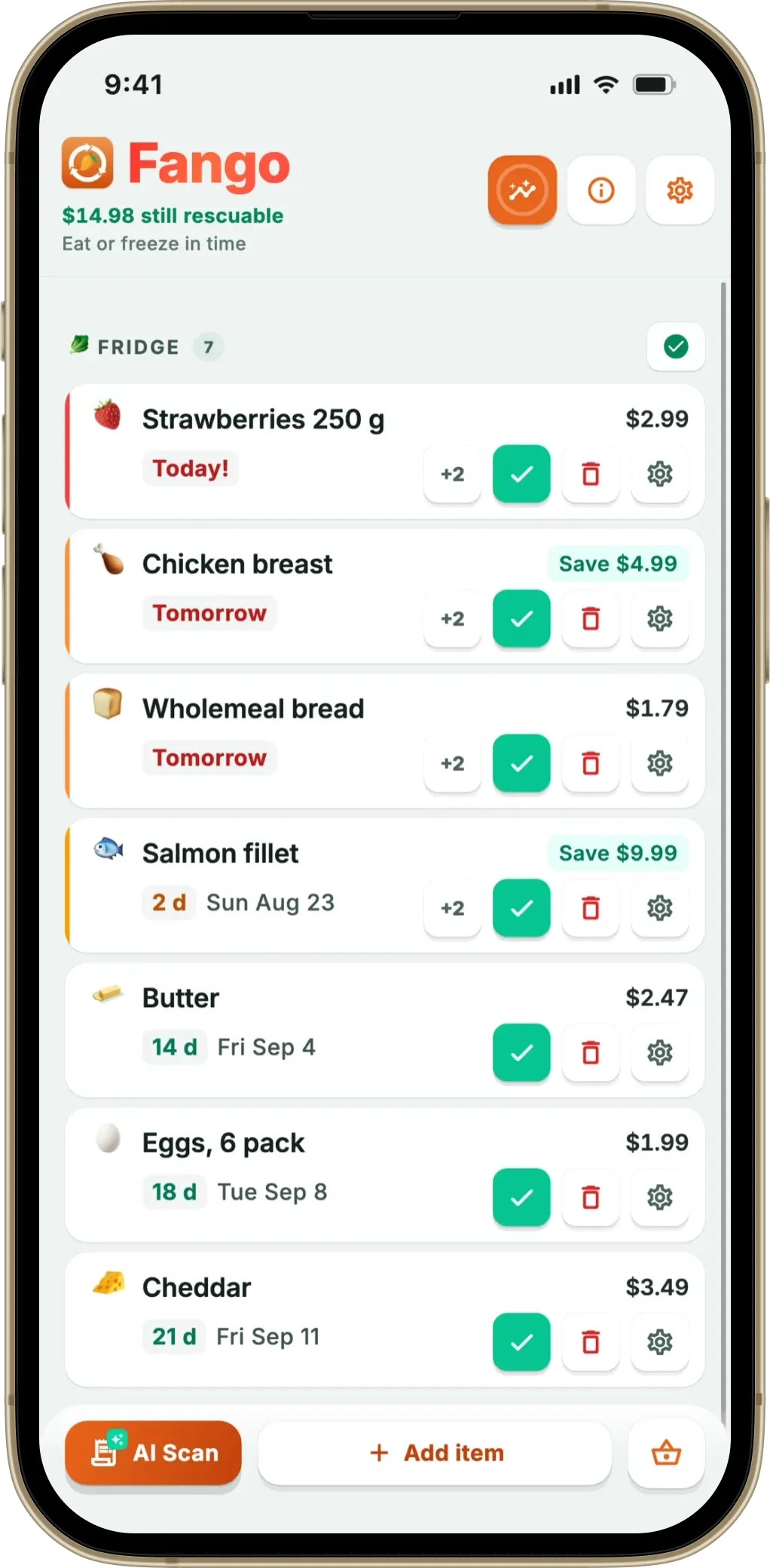
This article walks through the break-even maths plainly, then covers the three honest cases where the calculation doesn’t favour subscribing, and how to test before committing.
- Break-even is low — the subscription costs about as much as a couple of grocery items a month, against £1,000 average waste a year
- Most successful users see 30–50% reduction after month three
- Free to try for a month, then a monthly or yearly subscription, with the price for your country shown in the app
- Doesn’t work for low-waste households, daily-shoppers, no-habit users
- Hidden value — less mental load, no expired food in the back of the fridge
The break-even maths plainly
One average weekly grocery item in the UK costs £1.50–£3. After the free month, the Fango subscription costs about as much as a couple of those items a month. So:
If you are choosing between apps, our guide to picking an expiry date tracker lists the features that decide whether you are still using it a month later.
To break even on the subscription, a household needs to avoid only a couple of forgotten grocery items a month. For a household that previously threw away three items a week, the subscription pays for itself within the first week.
What the real savings look like at scale
Even at a modest reduction in what gets binned, the maths gets less interesting and more obvious:
| Household profile | Annual waste before | Realistic reduction | Annual saving |
|---|---|---|---|
| Low-waste single person | £300 | 10% | £30 |
| Average household | £1,000 | 30% | £300 |
| High-waste household | £1,600 | 40% | £640 |
| Online-grocery household | £1,200 | 45% | £540 |
← scroll →
The “low-waste single person” row is the interesting one. The maths still nominally works, but the saving is small relative to other expenses — and the workflow change cost is the same as for any other household. For users in that segment, the honest answer is often “try it free for a month and see”.
Three honest cases where it isn’t worth it
- Households that throw away less than one item a week. Already-low-waste users don’t have enough room above zero to recover the subscription. The subscription is mathematically recoverable but practically marginal, and the workflow change isn’t free.
- Daily-shop single-person households. If you buy and eat the same day for most meals, the fridge rarely has more than a handful of items. Receipt scanning is overkill for inventories that fit in one glance.
- Users who won’t form the scan-after-shop habit. Without consistent input, no app delivers savings. If the answer to “will I scan within an hour of getting home” is “probably not”, the subscription is wasted regardless of price.
None of these are insults — they’re real, common patterns. An honest look at whether these apps work for a given household starts with these three questions.
The hidden value that isn’t in pounds
The break-even maths captures only what’s easy to count. Three other things show up consistently in long-term users:
- Less mental load. “Is there still chicken in the fridge?” stops being a question.
- Better Sunday cooking. The “use these three things up” weekly audit becomes a quick glance instead of a fridge-rummage.
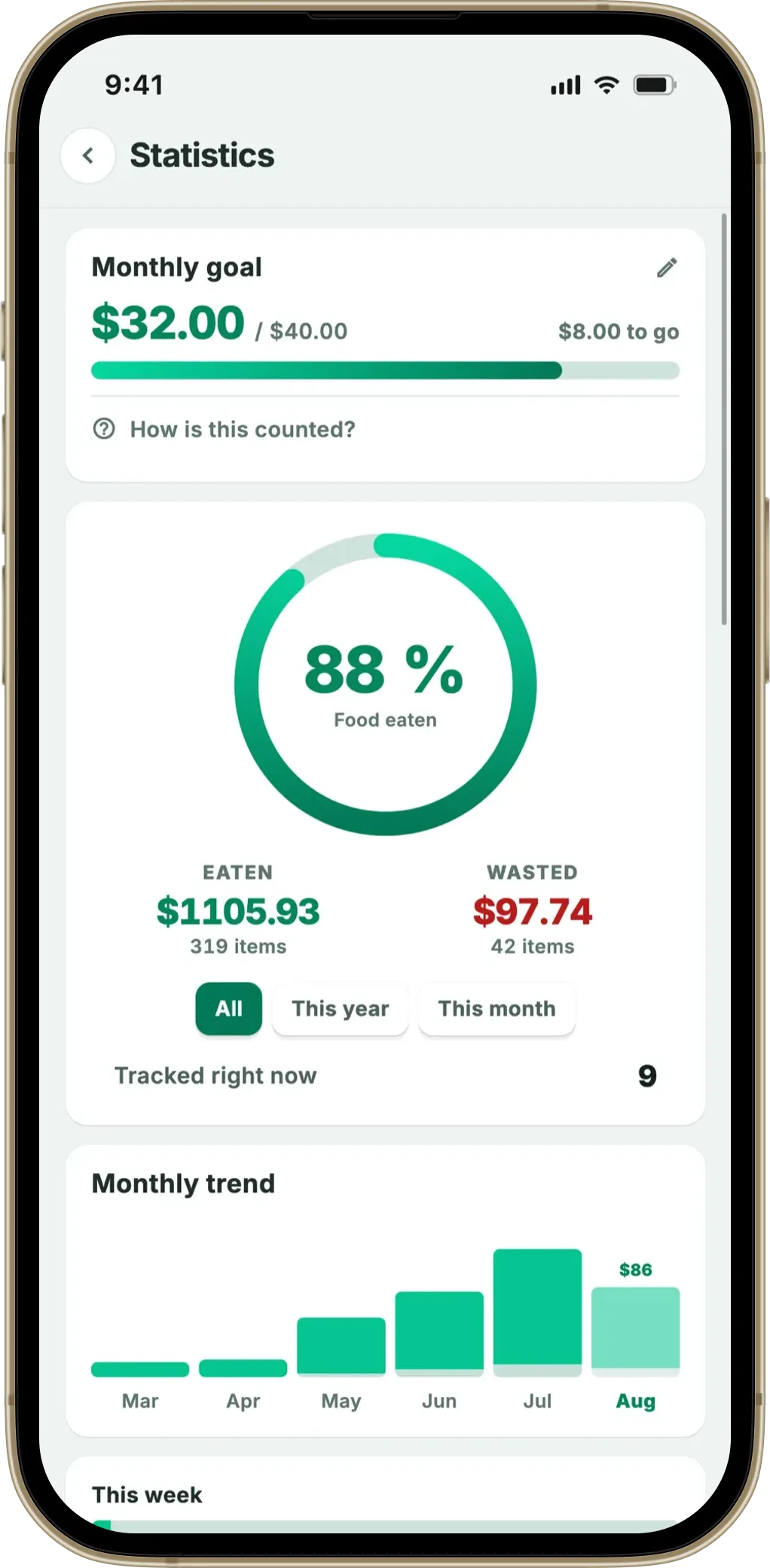
- Repeat-offender visibility. The yoghurt that always gets forgotten shows up in the stats view, leading to a buying-behaviour change rather than a tracking-behaviour change.
For households that value any of these, the subscription decision is essentially settled before the maths starts.
How to actually test it
Fango is free to try for one month, with full access to every feature — which is well past the threshold for habit formation. That’s plenty of time to find out whether it fits. The honest test sequence:
- Week one — scan your normal weekly shop. Check whether the items you actually buy come through correctly and whether the reminders fire at sensible times.
- Weeks two and three — scan two more shops, including any top-ups. Set a personal rule: scan within an hour of getting home or it doesn’t get scanned at all.
- End of the month — answer two honest questions: (a) did you reach for the app at any point without prompting? (b) did any item get caught by a reminder that would otherwise have expired? If both answers are yes, the subscription is worth keeping. If both are no, cancel; the workflow didn’t form.
This is the cleanest version of the value test. It costs nothing if cancelled inside the free month, and the answer is the same one a household would reach a month into a paid subscription anyway.
Summary
The simple break-even is so low — a small fraction of the average household waste figure — that any honest engagement with the app pays for the subscription. The harder question is whether a household is in one of the three “doesn’t fit” patterns, and a few weeks of honest use is enough to find out. The one-month free trial costs nothing; the wasted yoghurt over a year often costs more than the annual subscription.
Related reading: do food waste apps actually work, best free food waste app, best food waste tracker app 2026, how to save money on groceries, expiration date tracking app, smart fridge vs a food tracking app.
One thing belongs in the sum that rarely gets counted: an app that only watches the fridge repairs things after the fact, while checking what you already own before you shop stops the duplicate purchase before it can become waste. That item would have been thrown out however good the reminders were.
One month free with full access — enough to see whether the receipt-scan workflow fits your week, the reminders catch real items, and the savings are real. After that it’s a monthly or yearly subscription (price for your country shown in the app), no commitment.
Download on the App Store Get it on Google PlayFree for a month · No sign-up · iOS and Android
Frequently Asked Questions
Are food tracking apps worth the price?
On pure maths, yes — by a wide margin. A UK household wastes about £1,000 of food a year (WRAP 2022). A food tracker subscription costs about as much as a couple of grocery items a month, so avoiding even one item a week from going to waste covers it. The real question isn’t whether the maths works; it’s whether the user sticks with the app long enough to capture the savings. Apps that pair fast input (receipt scanning) with reliable reminders survive long enough; manual-entry apps usually don’t.
Is a free trial enough to evaluate a food tracking app?
Usually, yes. A month is enough to scan several weekly shops, see whether the reminders catch real items, and judge whether the workflow fits a household. Fango is free to try for one month, with full access to every feature — AI receipt scanning, unlimited fridge items and adjustable reminders. After the trial it’s a monthly or yearly subscription (price for your country shown in the app), so you can decide once you’ve seen the savings for yourself.
When isn’t a food tracking app worth it?
Three honest cases. First, households that already throw away less than one item a week — the marginal savings can’t beat any subscription. Second, single-person households doing daily top-up shops where the fridge rarely has more than ten items — the workflow advantage is too small. Third, households that won’t form the scan-after-shop habit; without the habit, no app delivers savings regardless of price.
How fast does the subscription pay for itself?
Fast. The average price of a UK weekly grocery item is around £1.50–£3, and the subscription costs about as much as a couple of those a month, so avoiding a couple of items a month from going off pays for it. For households that previously threw away three or more items a week, the payback is in the first month.
Is the value mostly money, or something else?
Money is the easiest to quantify, but it’s often not the strongest motivator. The bigger value for many households is the reduction in mental load — knowing the chicken in the fridge is being tracked means one less thing to remember on a Sunday evening. The drop in repeat-offender items (the same yoghurt forgotten every fortnight) is also a quality-of-life win that doesn’t show up in pounds. The price comparison is just the easiest to write down.