Yes — kale freezes well, and there are two easy ways to do it. Freeze it raw for a two-minute job that’s perfect for smoothies and cooking, or blanch it first to keep its colour and texture for longer. Either way, strip out the tough stalks first, and remember that frozen kale wilts when it thaws — so it’s a brilliant cooking ingredient for soups, stews, and curries rather than a crisp salad leaf.
Log kale when you buy it and Fango reminds you to use or freeze it in time. No sign-up, your data stays on your device by default.
Download on the App Store Get it on Google PlayFree for a month · No sign-up · iOS and Android
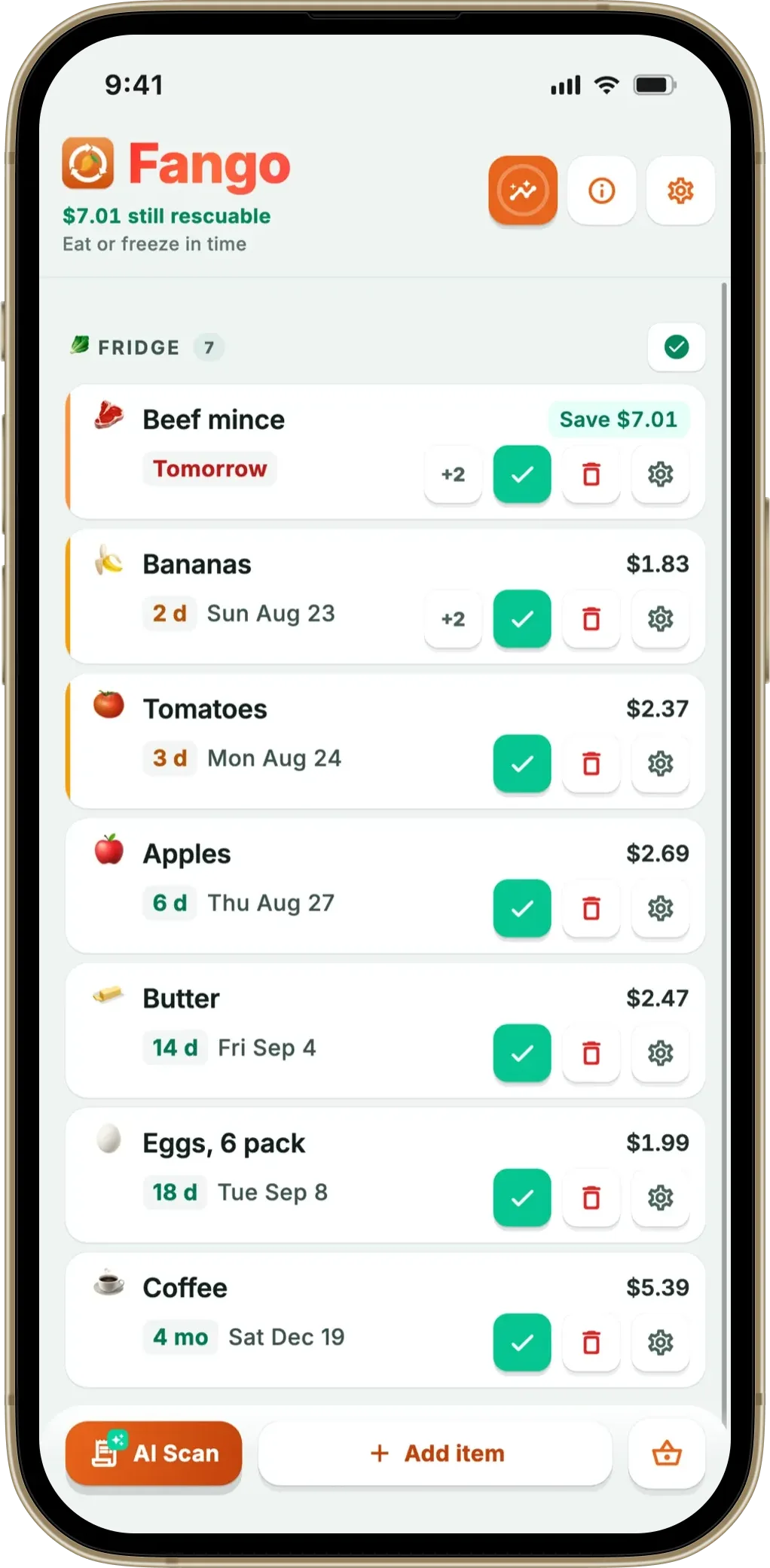
A big bag of kale is easy to over-buy and slow to get through before it yellows. Freezing what you won’t use is a simple save. Fango lets you log kale and set a reminder to use or freeze it before it turns.
- Yes — freeze it raw or blanched
- Raw is quickest and great for smoothies (about 2–3 months)
- Blanched keeps colour and texture a little longer
- Strip the stalks and cook from frozen
How to Freeze Kale Raw
Freezing raw kale takes about two minutes and is ideal if you’ll be cooking or blending it. Strip the leaves from the stalks, wash and dry them well, pack them loosely into a freezer bag, and freeze. The frozen leaves crumble in the bag, so you can grab exactly the handful you need. The UK Food Standards Agency advises freezing food before its use-by date and labelling it with the date — kale is no exception.
If keeping track of dates like these by hand is the part that never sticks, an expiry date tracker app can do it from your grocery receipt.
-
1
Strip the stalks. Pull or cut the leaves away from the tough central stalks, which stay fibrous even after freezing.
-
2
Wash and dry well. Rinse the leaves and dry them thoroughly in a salad spinner or on a clean tea towel — excess water means clumps and ice.
-
3
Bag it loosely. Pack the dry leaves into a freezer bag without cramming them, so they stay loose and crumbly rather than freezing into a block.
-
4
Press out the air, then freeze. Squeeze the air out, seal, label with the date, and freeze. Crumble off a handful whenever you need it.
How to Freeze Kale by Blanching
Blanching takes a few extra minutes but keeps kale greener and better-textured for longer storage — the brief heat slows the enzymes that dull colour and flavour in the freezer. It’s the better choice if you want to keep kale for several months or use it where appearance matters.
Once food is in the freezer, the date is the part that gets lost — a pantry inventory app that includes the freezer keeps it on the list.
-
1
Wilt it briefly. Drop the de-stalked leaves into boiling water for 1–2 minutes, just until wilted, working in batches.
-
2
Cool it fast. Lift the kale straight into a bowl of iced water to stop it cooking and lock in the colour.
-
3
Squeeze out the water. Drain and squeeze the leaves firmly to remove as much water as you can — wet kale freezes into an icy block.
-
4
Portion and freeze. Shape it into balls or press it into an ice-cube tray, then bag the frozen portions. Each one drops straight into a pan or pot.
How to Use Frozen Kale
Frozen kale goes straight from the freezer into hot food or the blender — no thawing needed. A few favourite uses:
- Smoothies — a handful of raw frozen leaves blends straight in.
- Soups and stews — wilts in within a minute or two from frozen.
- Curries and dals — stir it in for the last few minutes.
- Pasta and bakes — squeeze out thawed kale first so the dish isn’t watery.
Because freezing wilts the leaves, don’t expect thawed kale to work raw in a salad, and note that frozen kale won’t crisp up well for kale crisps — those are best made fresh. For more ways to use up leafy greens, see how to reduce food waste at home and these food storage tips.
How Long Does Kale Last in the Freezer?
Kale keeps its best quality for about 3 months in the freezer, with blanched kale holding up a little longer than raw. It stays safe for longer while solidly frozen, in line with general FSA freezing guidance, but the quality slowly fades, so a date label is worth it. For how long fresh leaves keep in the fridge, see how long lettuce lasts (a fellow leafy green), how long food lasts in the fridge, and the full guide to freezing food safely.
Log kale when you buy it and Fango reminds you to use or freeze it in time. No sign-up, your data stays on your device by default.
Download on the App Store Get it on Google PlayFree for a month · No sign-up · iOS and Android
Related reading: Can You Freeze Spinach.
Frequently Asked Questions
Can you freeze kale?
Yes. You can freeze kale two ways: raw, which is quick and great for smoothies and cooking, or blanched, which keeps its colour and texture for longer. Remove the tough stalks first, and remember frozen kale is a cooking ingredient rather than a salad leaf.
Should you blanch kale before freezing?
It depends how long you want to keep it. Freezing raw is fastest and fine for a couple of months, especially for smoothies. Blanching first — a quick dip in boiling water then ice water — keeps the colour, texture, and nutrients better for longer storage.
How do you freeze raw kale?
Strip the leaves from the tough stalks, wash and dry them well, then pack them loosely into a freezer bag and freeze. The frozen leaves crumble easily, so you can grab a handful for smoothies, soups, or curries straight from the freezer.
Do you remove kale stalks before freezing?
Yes — the central stalks are tough and fibrous, so strip the leaves off and discard or compost the thickest stems. You can finely chop tender stalks and freeze them separately for soups and stocks if you’d rather not waste them.
How do you cook frozen kale?
Cook it straight from frozen — no need to defrost. Add it to soups, stews, curries, and pasta, or blend it into smoothies. It wilts in within a minute or two; if a recipe needs it drained, squeeze out the excess water first.
How long does kale last in the freezer?
Kale keeps its best quality for about 3 months in the freezer, with blanched kale holding up a little longer than raw. It stays safe for longer while frozen, but the quality slowly fades, so label it with the date.
The easy win: log kale in Fango when you buy it, and freeze the rest of the bag before it yellows. A handful then goes straight into the next smoothie, soup, or curry.