Leftovers have gone bad if they have a sour or off smell, a slimy texture, visible mould, or a changed colour. Any one of those means throw them out. But leftovers come with a catch: they can be unsafe before any of those signs show, because some bacteria and the toxins they make leave no clue you can see, smell, or taste. That’s why the safe answer is part smell-test, part clock — most leftovers should be eaten within about 2 days.
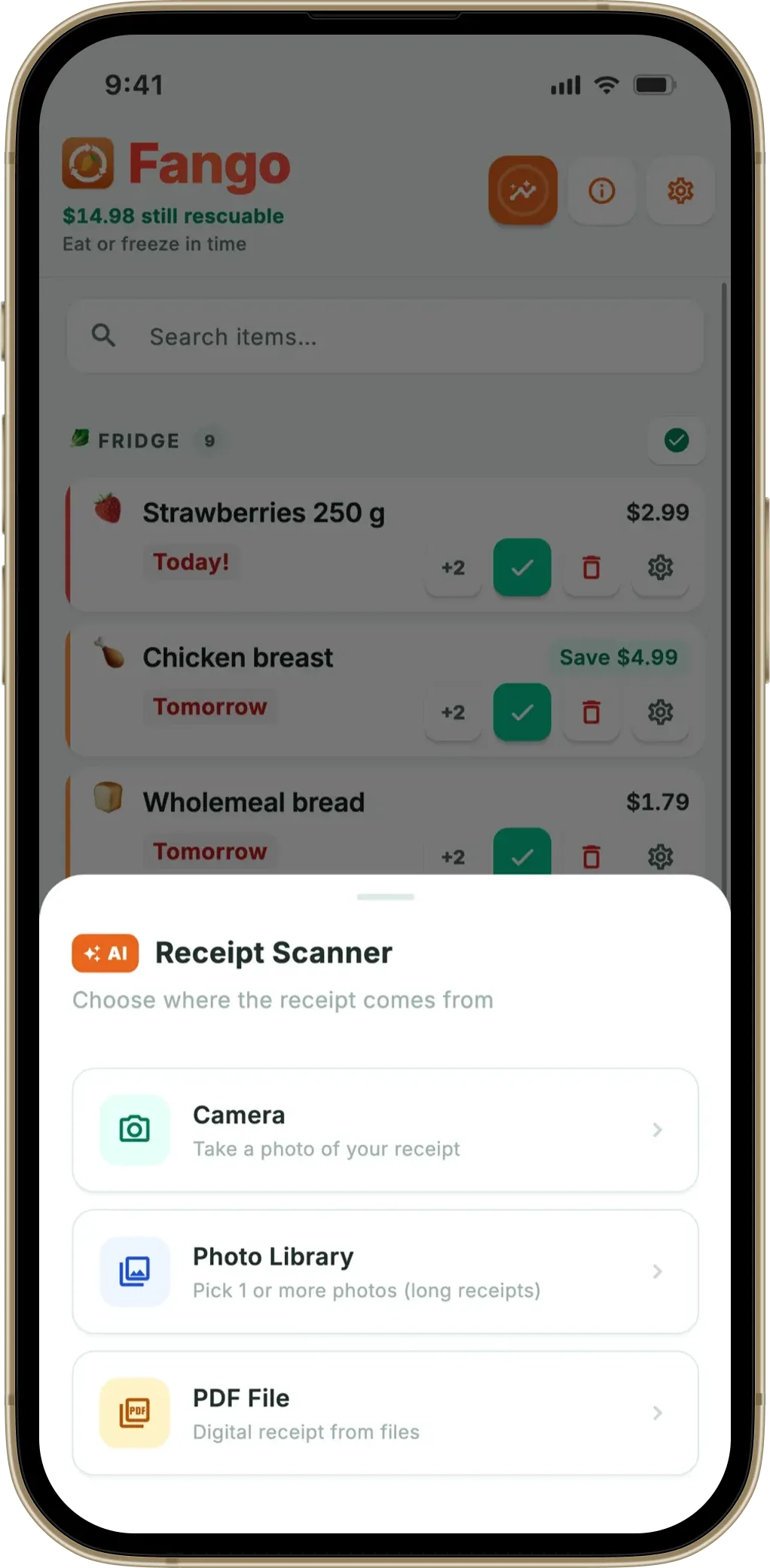
The hard part is remembering which tub is from when. Fango lets you log leftovers when they go in the fridge and set an expiry reminder, so you eat or freeze them inside the safe window instead of opening a mystery container and guessing.
- Smell, texture, look — sour odour, slime, or mould = spoiled
- Looks fine ≠ safe — track the clock, not just your nose
- Eat within ~2 days — cool within 1–2 hours of cooking
- Reheat once, until steaming hot, then bin the rest
The 3 Signs Leftovers Have Gone Bad
Most spoiled leftovers give themselves away through your senses. If you notice any one of these, throw the food out — don’t taste it to decide.
For the household version of this problem — remembering the dates for everything you buy — see our guide to choosing an expiry date tracker.
-
1
Smell — A sour, rancid, or generally “off” smell when you lift the lid is the clearest warning. If it doesn’t smell the way it did when fresh, don’t risk it.
-
2
Texture — A slimy, sticky, or stringy film on meat, rice, pasta, or vegetables means bacteria are multiplying. Bin it.
-
3
Look — Fuzzy white, green, blue, or black mould, or a dull, faded, or off colour, means the dish has spoiled. With mould, throw out the whole container — don’t scrape it off.
Why the Clock Matters as Much as Your Nose
Here’s the part that catches people out: leftovers can be unsafe while still looking and smelling perfectly fine. Some food-poisoning bacteria, and the toxins they leave behind, don’t change a dish’s smell, taste, or appearance — and reheating kills bacteria but doesn’t always destroy those toxins. So the time a dish has spent in the fridge is just as important as the smell test.
If the fridge is where food gets lost, a fridge tracker app puts everything in it on one list with dates.
The biggest risk is the warm hours after cooking. The UK Food Standards Agency advises cooling leftovers as quickly as possible — ideally within 1 to 2 hours — and getting them into the fridge, then eating most of them within about 2 days. Food left at room temperature for hours, or overnight, should be thrown away regardless of how it looks. For ways to plan around this, see how to use up leftovers before they go bad.
Log leftovers when they go in the fridge and Fango reminds you to eat or freeze them within the safe window. No sign-up, your data stays on your device by default.
Download on the App Store Get it on Google PlayFree for a month · No sign-up · iOS and Android
How to Store and Reheat Leftovers Safely
Good habits keep leftovers safe and tasty. The basics come down to cooling fast, chilling promptly, and reheating properly.
-
1
Cool within 1–2 hours. Divide big batches into shallow containers so they cool faster, then refrigerate. Don’t leave food out to cool for hours.
-
2
Chill at 0–5°C, eat within ~2 days. Keep leftovers covered in the fridge and use most within two days; some dishes stretch to 3–4, but shorter is safer.
-
3
Reheat once, until steaming. Heat leftovers all the way through until piping hot, and only reheat them a single time. Don’t reheat the same dish again and again.
-
4
Freeze what you won’t use in time. Freeze cooled leftovers in portions — see can you freeze leftovers. Log them in Fango so nothing gets lost at the back.
Common Leftover Worries, Answered
A few situations cause the most doubt. Here’s the quick verdict on each.
What Happens If You Eat Bad Leftovers
Eating spoiled leftovers can cause food poisoning — typically stomach cramps, diarrhoea, vomiting, and sometimes fever, appearing anywhere from a few hours to a few days later depending on the bug. Most healthy adults recover within a few days, and the NHS advises resting and drinking plenty of fluids to avoid dehydration.
Seek medical advice if symptoms are severe, you can’t keep fluids down, or they last more than a few days, and take extra care with young children, older adults, pregnant women, and anyone with a weakened immune system. The safest rule with leftovers: if you’re not sure how old it is, throw it out. Leftover rice deserves extra care — see how to tell if cooked rice is bad — and for the whole fridge at a glance, see how long food lasts in the fridge.
Related reading: How to Tell if Chicken Is Bad.
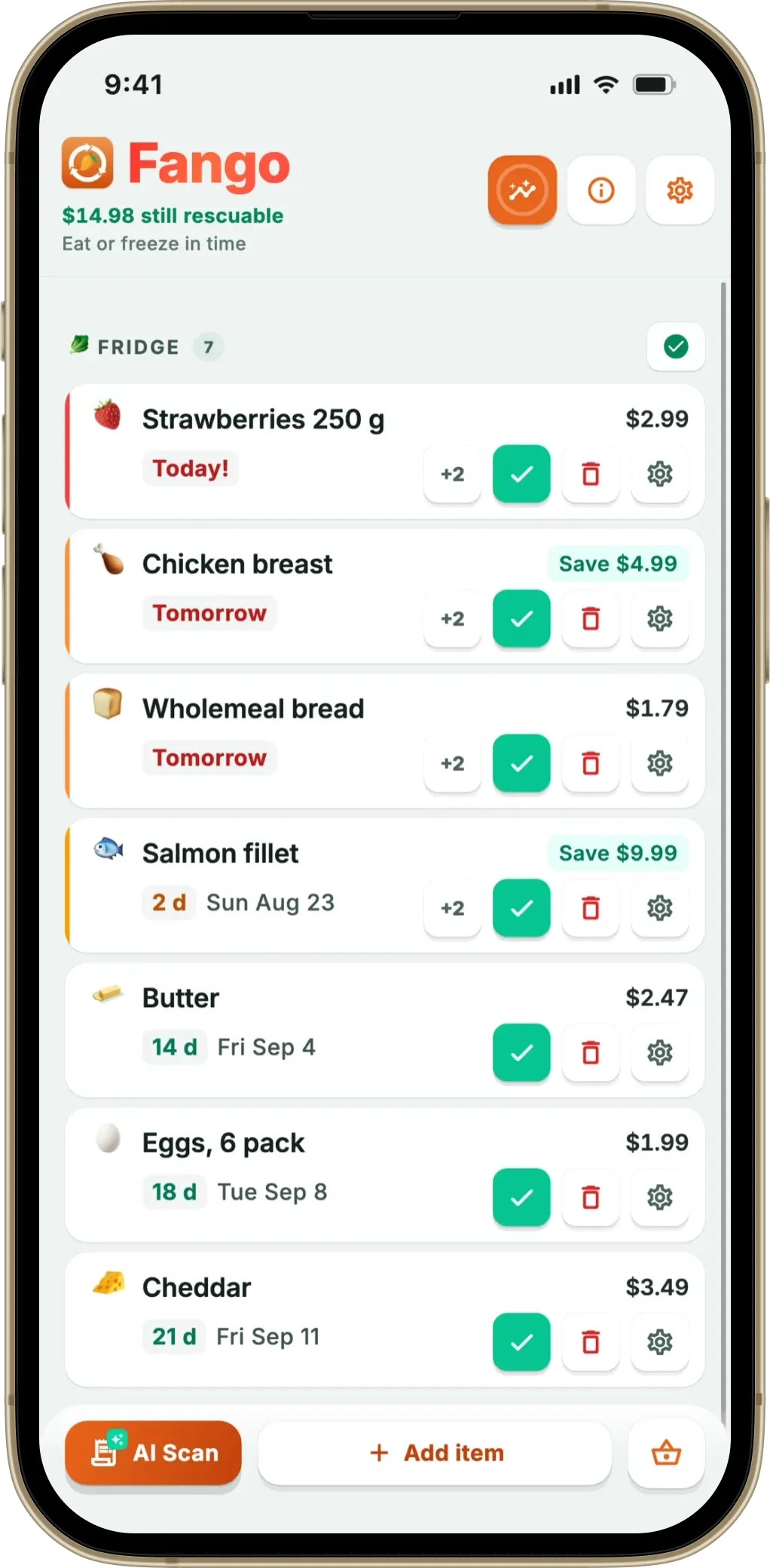
Fango sorts everything by reminder date and colour-codes the urgent items in red. The home screen widget shows what to use next without opening the app.
Download on the App Store Get it on Google PlayFree for a month · No sign-up · iOS and Android
See also: How to tell if pasta sauce is bad.
Frequently Asked Questions
How can you tell if leftovers are bad?
Leftovers have gone bad if they smell sour or off, feel slimy, show mould, or have changed colour or texture. Any of these means throw them away. But leftovers can also be unsafe before any sign appears, so track how long they’ve been in the fridge.
How long do leftovers last in the fridge?
Most cooked leftovers keep for about 2 days in the fridge, and up to 3–4 days for many dishes. Cool them within 1–2 hours of cooking, store them covered at 0–5°C, and when in doubt use the shorter window.
Can leftovers make you ill even if they look fine?
Yes. Some bacteria and the toxins they produce don’t change how food looks, smells, or tastes, and reheating doesn’t always remove toxins. That’s why the time limit matters as much as the smell test — old leftovers can be unsafe while seeming fine.
How many times can you reheat leftovers?
Only once. Reheat leftovers a single time, until they are steaming hot all the way through. Take out the portion you need and leave the rest chilled rather than reheating the whole batch repeatedly.
Can you eat leftovers left out overnight?
No. Cooked food left at room temperature for more than about 2 hours — and certainly overnight — should be thrown away, even if it looks fine. Bacteria multiply quickly in the warmth, and reheating won’t make it safe again.
Should you freeze leftovers to keep them longer?
Yes. If you won’t eat leftovers within a couple of days, freeze them once cooled. They keep for months and can be reheated straight from frozen or after defrosting in the fridge.
The reliable habit: log leftovers in Fango when they go in the fridge and set a reminder. You’ll use or freeze them in time — and never have to sniff-test a mystery tub again.