Yogurt has gone bad if it has mould, a bloated or domed lid, an off, yeasty, or sharply sour smell, or a lumpy, curdled texture beyond its usual creaminess. What is not a problem: the thin watery liquid that pools on top, or yogurt’s natural tang. Both are completely normal. Knowing which signs matter saves a lot of perfectly good pots from the bin.
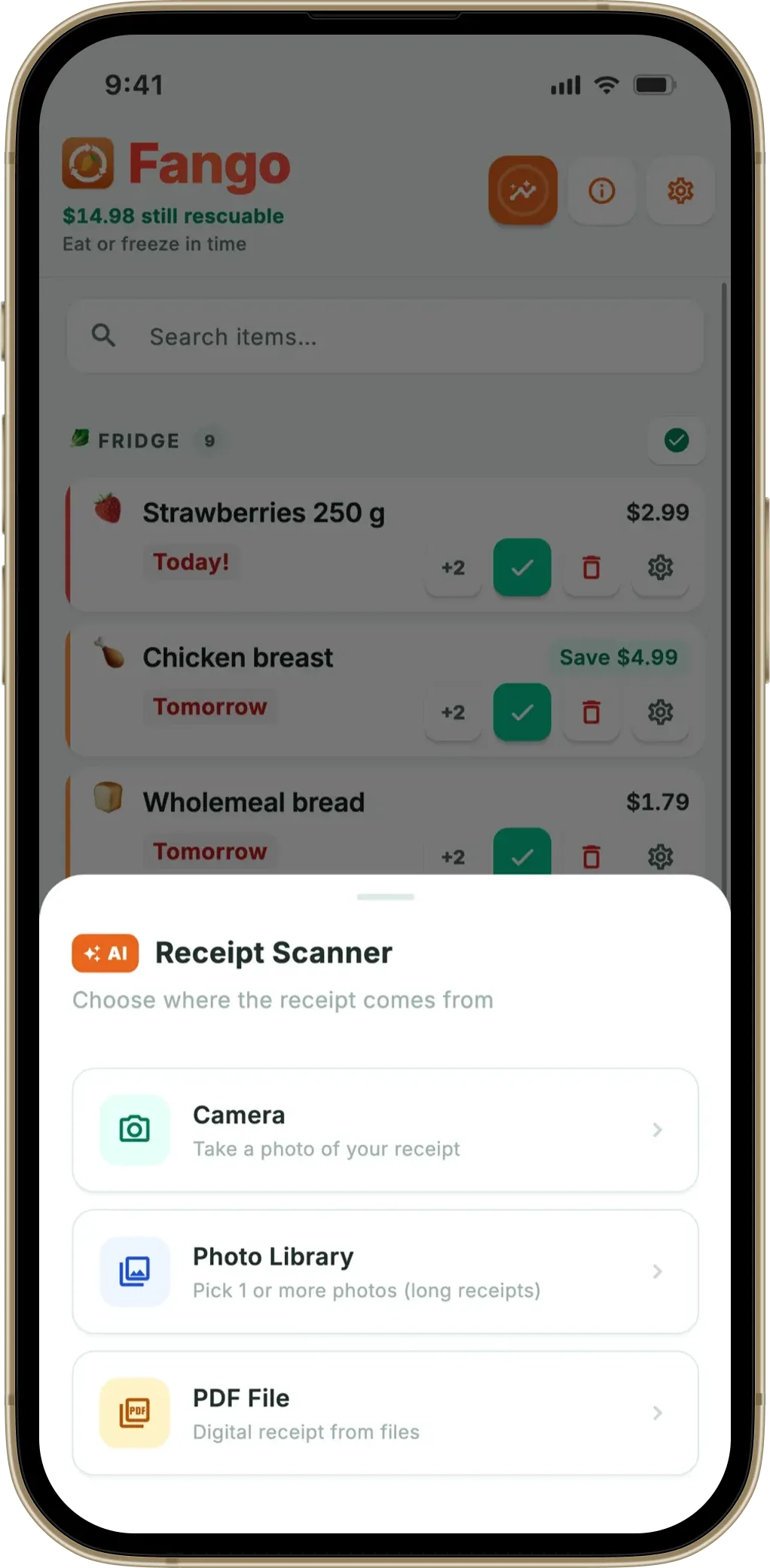
The easiest win is finishing yogurt before the question even comes up. Fango lets you log a pot when you open it and set an expiry reminder, so it gets eaten while it’s fresh instead of pushed to the back of the shelf.
- Bad — mould, bloated lid, fizzing, or an off/yeasty smell
- Normal — watery liquid on top (whey) and a tangy taste
- Mould = bin the whole pot — it spreads through soft food
- Opened yogurt keeps about 3–5 days; use a clean spoon
The Signs Yogurt Has Gone Bad
Fresh yogurt is smooth, creamy, and pleasantly tangy. When it spoils, the warnings are clear. If you notice any of these, don’t eat it — and if there’s mould, discard the whole pot.
If keeping track of dates like these by hand is the part that never sticks, an expiry date tracker app can do it from your grocery receipt.
-
1
Mould — Any fuzzy spots — white, green, pink, grey, or black — mean it has spoiled. Yogurt is a soft food, so mould roots spread unseen; don’t scoop around it. Bin the whole pot.
-
2
Smell — Yogurt is meant to be tangy, but a sharply sour, bitter, yeasty, or otherwise off smell means unwanted bacteria or yeast have taken over. Trust a clearly wrong smell — and don’t taste-test it.
-
3
Texture and container — Lumpy, curdled, or grainy yogurt that’s well beyond its usual creaminess, any fizzing or bubbling, or a bloated, domed lid all point to spoilage. A swollen pot is a definite no.
What’s Actually Normal: Whey and Tang
Two harmless things get mistaken for spoilage all the time. First, the thin, clear or pale-yellow liquid that pools on the surface is whey — it separates out naturally, especially once the pot is opened or jostled. It’s perfectly fine; just stir it back in for a creamier texture. Tipping it away is optional, not necessary.
A fridge tracker app keeps this for every item in the fridge at once and reminds you before the day runs out.
Second, the tang. Yogurt is made by fermenting milk with live cultures, so a mild sourness is the point, not a fault — and it can sharpen a little over time while still being fine. The line to watch is off versus tangy: a clean, sharp tang is normal; a yeasty, bitter, or genuinely foul smell is not. When the pot smells wrong, fizzes, or shows mould, that’s spoilage — not just an extra-tangy batch.
Log yogurt when you open it and Fango reminds you in time. No sign-up, your fridge data stays on your device by default.
Download on the App Store Get it on Google PlayFree for a month · No sign-up · iOS and Android
Use-By or Best-Before? Check the Pot
Like milk, yogurt can carry either a use-by or a best-before date, and they mean different things. The UK Food Standards Agency sets the rule for both, so check which one is on your pot before you decide.
About safety. Don’t eat yogurt past its use-by date, even if it looks and smells fine — harmful bacteria can be present without a warning. Keep it at 0–5°C for the date to hold.
About quality. Yogurt is often fine for a short time after a best-before date if it has been kept cold — but mould, a sharply off smell or a separated, slimy texture means bin it. Here your eyes and nose do the job — bin anything mouldy or off, and don’t taste-test it.
The same logic runs through milk and other dairy — see how to tell if milk is bad for the fuller version, and best-before vs use-by dates for the two labels in detail.
Quick Verdicts on Common Yogurt Worries
The short answer to the situations that come up most.
How to Keep Yogurt Fresh for Longer
Yogurt is hardy, but a few habits stop it turning early.
-
1
Use a clean spoon every time. Double-dipping with a used spoon introduces bacteria from your mouth or other food, which speeds spoilage. Scoop into a bowl if you’re only having some.
-
2
Keep it cold and sealed. Store yogurt at 0–5°C on a shelf, not the door, with the lid or a cover on. See how long yogurt lasts for the detail.
-
3
Freeze what you won’t finish. Yogurt freezes well for smoothies and cooking — see can you freeze yogurt for how the texture changes and how to use it.
-
4
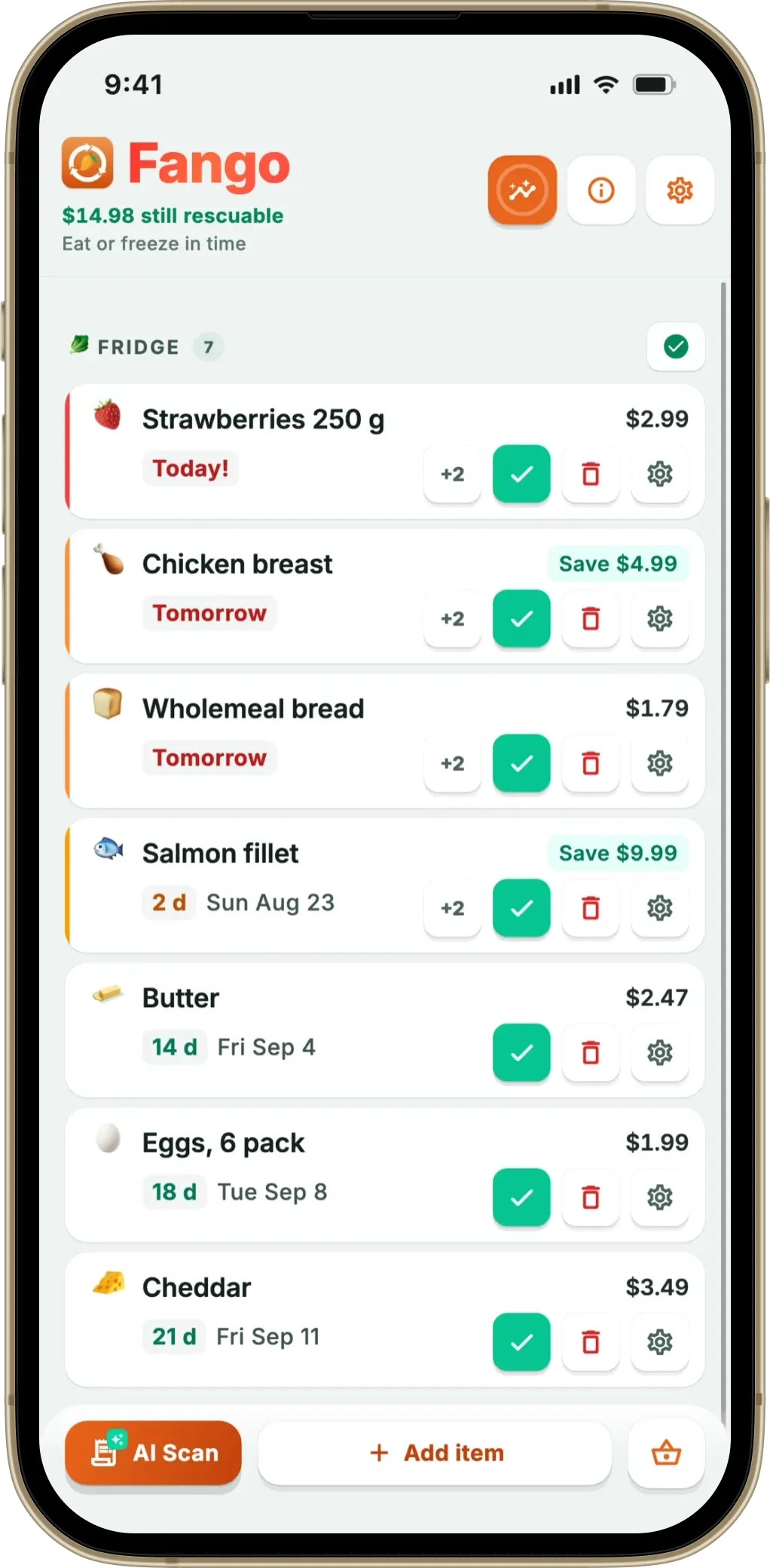
Log it when you open it. Add yogurt to Fango with a reminder so the pot gets eaten in time. For your whole fridge, see how long food lasts in the fridge.
Fango sorts everything by reminder date and colour-codes the urgent items in red. The home screen widget shows what to use next without opening the app.
Download on the App Store Get it on Google PlayFree for a month · No sign-up · iOS and Android
Frequently Asked Questions
How can you tell if yogurt is bad?
Bad yogurt shows mould, a bloated or domed lid, an off, yeasty, or strongly sour smell, or a lumpy, curdled texture beyond its usual creaminess. Any of these means throw it away — and if it’s mouldy, bin the whole pot.
Is the watery liquid on top of yogurt bad?
No. The thin, clear or yellowish liquid on top is whey, which naturally separates out. It’s completely normal and harmless — just stir it back in. It is not a sign that the yogurt has spoiled.
Can you eat yogurt with mould on it?
No. Yogurt is a soft food, so mould roots and bacteria can spread through it invisibly. If you see any mould — fuzzy spots of any colour — throw the whole pot away rather than scooping around it.
Can you eat yogurt after the use-by date?
It depends on the label. If yogurt has a use-by date, don’t eat it past that date even if it looks fine. If it has a best-before date, it’s about quality, so it may be fine for a short time if it smells and looks normal — but throw away anything mouldy or off.
Why is my yogurt sour or fizzy?
Yogurt is naturally tangy, but a sharply sour, bitter, or yeasty taste, or any fizzing or bubbling, means unwanted bacteria or yeast have grown. A fizzy or bloated pot has gone off and should be discarded.
How long does yogurt last once opened?
Opened yogurt keeps about 5–7 days in the fridge at 0–5°C, and should still be used by the date on the pot. Use a clean spoon each time, and freeze it if you won’t finish it in time.
The habit that saves the most yogurt: log it in Fango when you open it and set a reminder. You’ll finish each pot while it’s fresh — and never bin a good one over a bit of harmless whey again.