Nothing in a supermarket is where it is by accident. The route, the shelf heights, the trolley size and even the tempo of the music are design decisions, and every one of them was made by someone whose job is to raise the average basket. As far back as 1982, a study in the Journal of Marketing concluded that “music tempo variations can significantly affect the pace of in-store traffic flow and dollar sales volume.” The store has been thinking about you for forty years. Fango is on the other side of that arrangement.
What follows isn’t a list of scandals. Most of these tactics are ordinary retail design, published openly and taught in every retail course. They work anyway, which is exactly why it’s worth knowing them — and why the countermeasures are so mundane.
- The layout is a route — staples at the back means you walk past everything else to reach them
- Eye level is the prime shelf — the cheaper equivalent is usually above or below it
- Pace is set for you — slower music, slower walking, more aisle time
- The price label can mislead legally — the UK regulator found unit pricing inconsistencies that make comparison hard
- One list beats all of it — it’s the only thing in the store the store didn’t design
The layout is a route, not a floor plan
The single biggest design decision in a supermarket is where the things everyone came for are placed. North Dakota State University Extension describes the effect directly: “When picking up milk or eggs, in many stores you will need to walk through the entire store to reach the dairy products.” Nobody hid the milk. They just put it as far from the door as the building allows, so that the two-item trip becomes a lap.
The feature that matters most in any of these apps is the reminder — see what a good expiry date tracker app does differently.
The entrance does the opposite job. Flowers, bakery smells and a deli counter near the door exist to slow you down and put you in a browsing mood before you’ve picked up a single staple. And once you’re moving, adjacency takes over: the same NDSU column notes that “some of the favorite cookie brands often have a display close to the milk.” That biscuit display isn’t in the biscuit aisle. It’s in your way.
Countermeasure: shop the list, not the store. If you know what you’re getting before you walk in, the route is just distance. A list grouped by aisle turns the lap into a straight line, because you’re no longer doubling back and getting a second exposure to every display.
Eye level is the expensive shelf
Shelf height is prime real estate, and it’s allocated to whoever the product targets. NDSU’s blunt version: “Kid cereals’ often are at kids’ eye level for a reason.” The adult equivalent is the same principle one metre higher — the brand that most wants your attention is the one your gaze lands on without moving.
The practical consequence isn’t that the eye-level product is bad. It’s that the comparison you’d have made if you’d looked never happened, because reaching straight ahead is easier than crouching.
Countermeasure: before you take anything off a shelf, look up and down once. Two seconds per item, and the own-brand version you find is usually sitting at knee height.
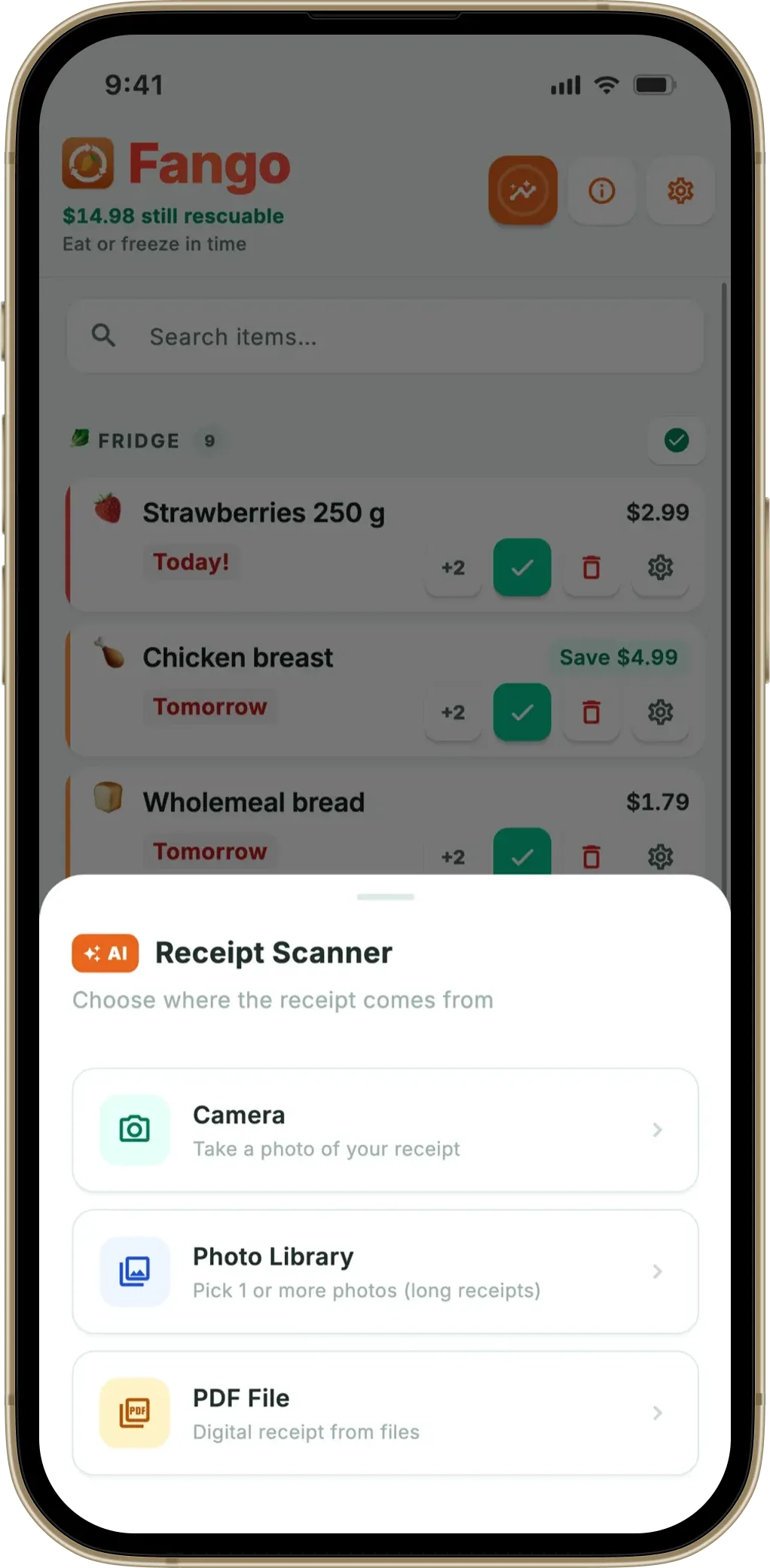
Scan your receipt and AI adds the products to your fridge with expiry reminders. The shopping list suggests what’s about to run out, remembers roughly what things cost, and shows the running estimate against your budget. No account, no sign-up.
Download on the App Store Get it on Google PlayTry free for a month.
The pace you shop at isn’t yours
Milliman’s music study is the most-cited piece of retail psychology for a reason: it’s one of the few tactics that’s been isolated and measured. Slower tempo, slower traffic flow, higher takings. Modern stores don’t need to run the experiment — they just play the calm playlist, and NDSU notes the pattern is still recognisable: “If music is playing in the store where you shop, it often is ‘calming’ music.”
The trolley is the physical version of the same idea. “Today’s large grocery carts entice us to fill them,” as the NDSU column puts it — a half-full trolley reads as an unfinished job, while a half-full basket reads as a completed errand.
Countermeasure: take a basket when the shop is small enough to allow it, and give yourself a time limit. Both work by removing the ambiguity the store is relying on.
Free samples and the end of the aisle
Two more that hide in plain sight. Samples work because tasting something creates a small obligation and a fresh preference at once — NDSU’s summary is that “people are enticed to buy items after tasting them.” And end caps, the displays at the ends of aisles, are read almost universally as offers, whether or not there’s a discount attached. The sign says “featured”, your brain reads “cheaper”.
Countermeasure: treat an end cap as an ordinary shelf until you’ve checked the price against the one inside the aisle. Half the time the in-aisle price is the same or better.
Where the price label works against you
This is the one that isn’t just psychology, and the regulator has said so. The UK’s Competition and Markets Authority reviewed unit pricing in the groceries sector and found problems that directly affect your ability to compare products — similar items priced by different measures, and, in some cases, promotional items shown without a unit price at all. The CMA’s review found compliance concerns with the Price Marking Order across the retailers it looked at.
In practice that means the “bigger pack is cheaper per unit” rule you were taught is only reliable when the unit prices are actually comparable, and sometimes they aren’t. Multibuys make it worse: three-for-two on something perishable is only a saving if you eat all three.
Countermeasure: read the unit price where it’s given, and when it isn’t, do the sum for the two packs you’re actually choosing between. And apply the perishability test before any multibuy — a bulk offer on food you’ll bin is a discount on waste.
The countermeasure that does most of the work
Every tactic above depends on one thing: that you’re making decisions in the store. The store is a stadium built for that, and you are playing away. Everything you decide in the kitchen instead is a decision the layout can’t touch.
That’s why the list keeps coming up. WRAP’s people-focused research associates lower household food waste with a group of habits that includes meal planning, making shopping lists, using leftovers and storing food properly — the same habits, incidentally, that keep the bill down. And the waste side is where the real money is: WRAP puts UK household food waste at around £1,000 a year for the average household of four, which is more than most people would ever save by outmanoeuvring an end cap.
A list app helps with the second half of that specifically when it knows what’s already in your kitchen. Ours suggests items that are within about three days of their date so they get used, flags the things you buy on a regular cadence so you don’t forget them and make a second trip, and carries a price estimate from your last receipt so the total is visible before you leave the house. The mechanics of that are in how a grocery budget can fill itself from receipts, and the app-by-app comparison in which list apps let you add prices.
None of it requires an app, to be clear. A paper list written at the kitchen table beats an unplanned trip with the best app in the world. What the app adds is that the list isn’t blank when you sit down — it already knows what ran out. If you’d rather have the plain method first, start with the seven-step list method or the broader eight ways to cut a grocery bill.
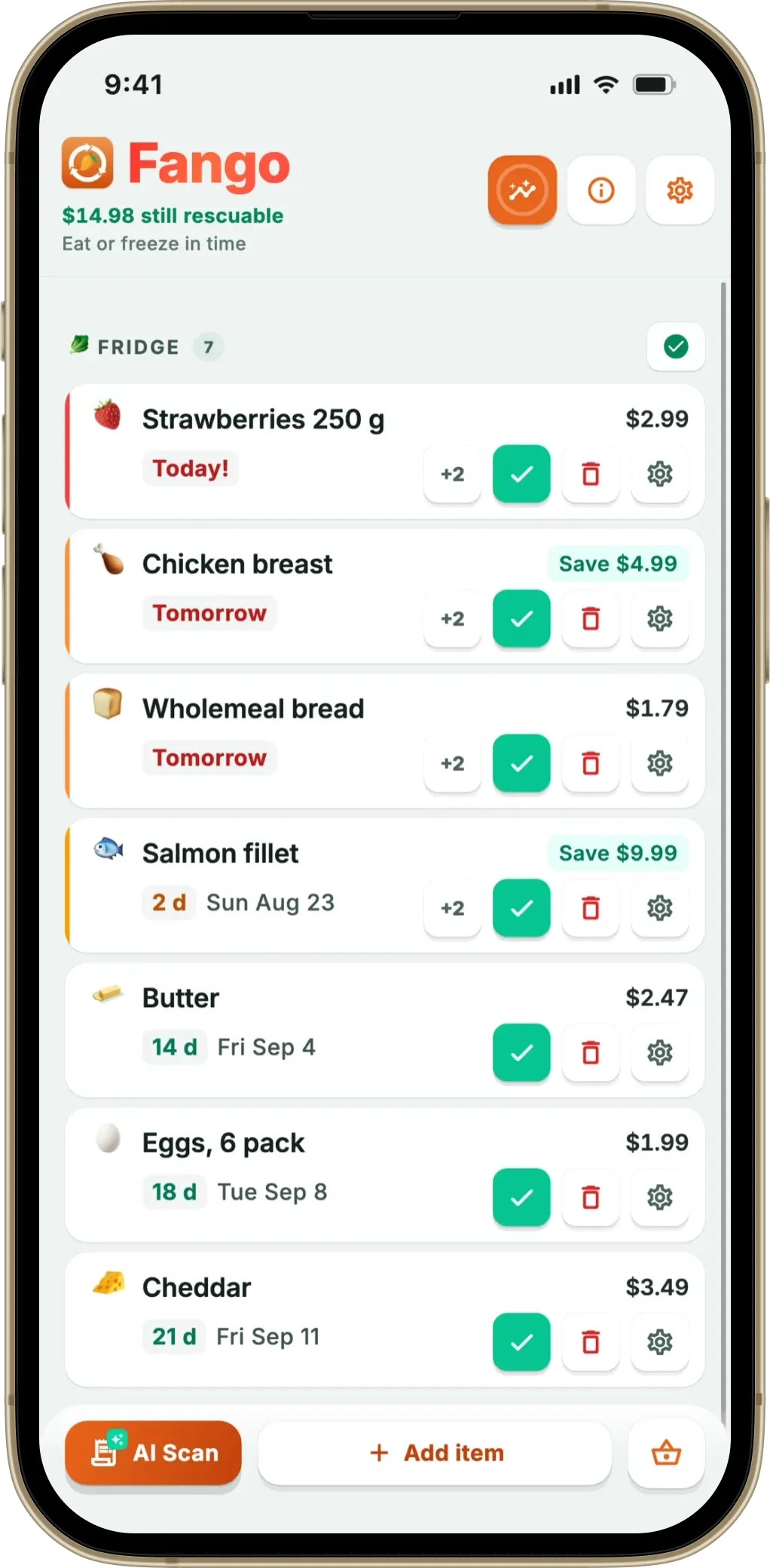
Fango sorts everything by reminder date and colour-codes the urgent items in red. The home screen widget shows what to use next without opening the app.
Download on the App Store Get it on Google PlayTry free for a month.
Frequently asked questions
Why are milk and eggs at the back of the supermarket?
Because almost everyone comes in for them. Putting the staples at the far wall means that picking up milk or eggs takes you through most of the store, past everything else on the way. As North Dakota State University Extension puts it, when picking up milk or eggs, in many stores you will need to walk through the entire store to reach the dairy products. It is not a conspiracy, just routing — but it is routing designed to maximise how much you walk past.
Does supermarket music really change how much you spend?
There is decades-old published evidence that it can. Ronald Milliman’s study in the Journal of Marketing found that music tempo variations can significantly affect the pace of in-store traffic flow and dollar sales volume — slower music, slower walking, more time in the aisles. You cannot do much about the playlist, but you can notice that the pace you are shopping at was not set by you.
Which shelf should I actually look at?
The ones you are not looking at. Eye level is the prime position in any aisle, and it is aimed at whoever the product is for — NDSU Extension points out that kids’ cereals are often at kids’ eye level for a reason. The cheaper own-brand equivalents are frequently on the top or bottom shelf. Scanning up and down before reaching forward costs two seconds.
Does a shopping list actually reduce impulse buying?
A list is the only tool you bring into a store that the store did not design. WRAP’s people-focused research associates lower household food waste with a group of habits that includes meal planning, making shopping lists, using leftovers and storing food properly. The list works on two fronts at once: it limits what goes into the trolley, and it stops the duplicate purchases that end up as waste.
- Milliman, R. E. (1982): Using Background Music to Affect the Behavior of Supermarket Shoppers, Journal of Marketing
- NDSU Extension: How Supermarket Psychology Influences Our Purchases
- Competition and Markets Authority: Unit pricing in the groceries sector
- WRAP: Household food and drink waste — a people focus
- WRAP: Household Food and Drink Waste in the UK 2022