If your spinach wilts in three days and your milk turns before the date, the fridge itself is usually to blame — not the food. Most “this went off way too fast” moments come down to a handful of fixable causes: the fridge runs too warm, it’s packed too full for cold air to move, or things are stored in the wrong spot. Get those right and the same groceries last noticeably longer. Here are the common reasons, the fix for each, and how to make sure you actually use what you’ve got in time.
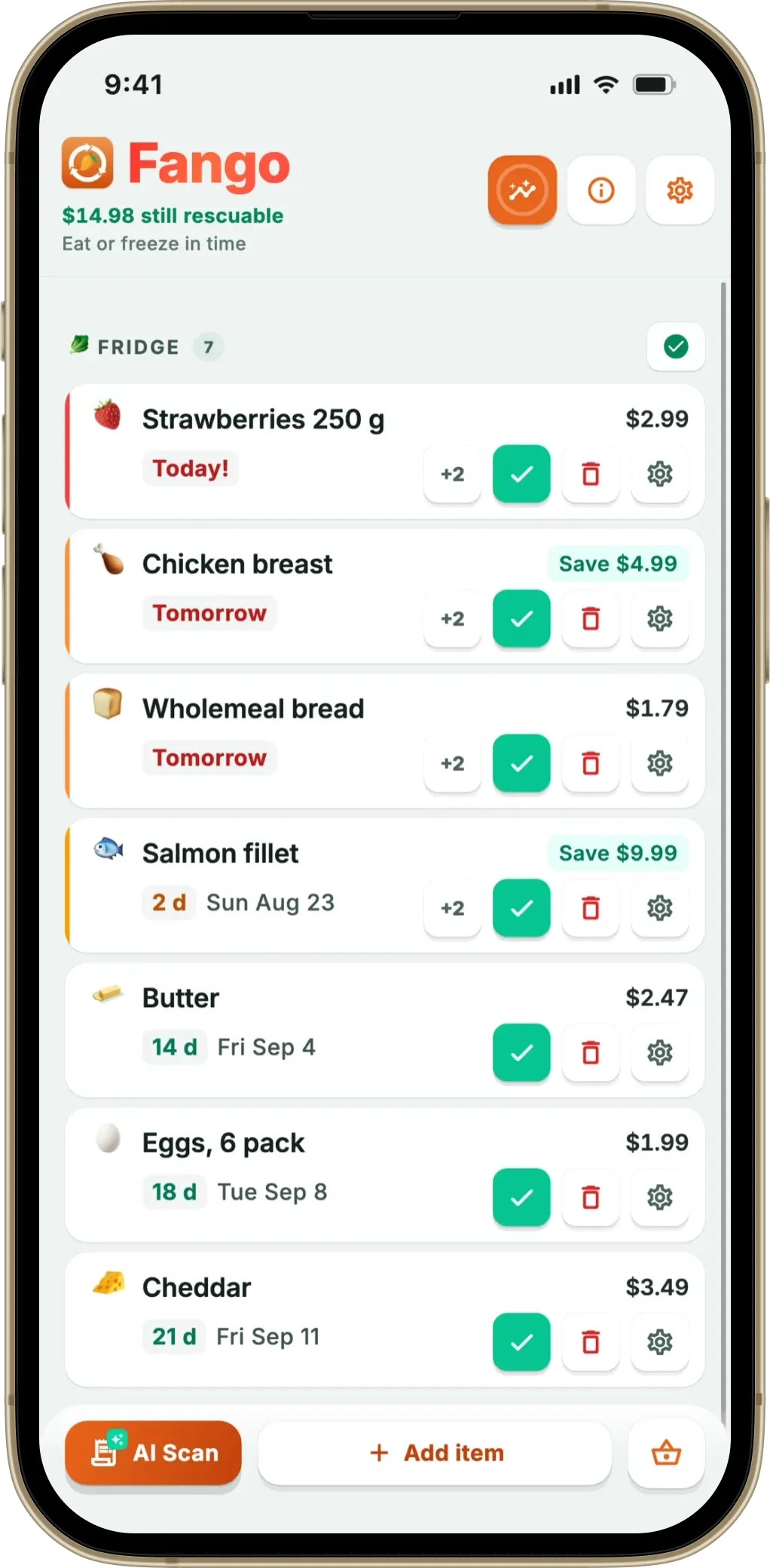
Good fridge habits keep food longer — Fango makes sure you use it within that window. Scan your receipt, get estimated expiry dates for everything, and a reminder before each item is due. No account, all on your phone.
Download on the App Store Get it on Google PlayFree for a month · No sign-up · iOS and Android
- Too warm: keep the fridge at 0–5°C (UK FSA) — many run warmer than you’d think.
- Too full: an overpacked fridge blocks cold air, so it can’t keep food cold evenly.
- Wrong spot: the door is the warmest part; the bottom shelf the coldest.
- Still got forgotten? Even well-stored food is wasted if you forget it — a reminder fixes that.
It’s probably too warm
The most common culprit is temperature. The UK Food Standards Agency recommends keeping your fridge between 0°C and 5°C — above that, bacteria multiply faster and perishables spoil sooner. The catch is that many fridges run warmer than their dial suggests, especially when they’re full, opened often, or sited next to an oven. A cheap fridge thermometer settles it in a day: if it reads above 5°C, turn the fridge down a notch and check again. That single change can add days to milk, salad and leftovers.
For a running list of everything in the fridge and when it needs eating, see the fridge tracker app guide.
It’s probably too full — or too empty
A fridge keeps food cold by circulating chilled air, and a packed fridge blocks that flow, leaving warm pockets where food spoils faster. If you can’t see the back wall, it’s too full. Leave gaps so air can move, especially around fresh produce. (An empty fridge has the opposite problem — less thermal mass to hold the cold — but for most households, overpacking is the issue.) While you’re at it, don’t store warm food directly in the fridge: let it cool for a couple of hours first so it doesn’t raise the internal temperature. More on this in how to organise your fridge.
It’s probably in the wrong place
A fridge isn’t one even temperature — zones vary by several degrees, and storing food in the wrong one shortens its life. Match the food to the zone:
The big one people get wrong is milk in the door. It’s convenient, but the door is the warmest part of the fridge, warming a little every time you open it — so milk lasts longer on a middle shelf. For how long specific items should keep once stored properly, see how long food lasts in the fridge.
Sometimes it’s the date, not the fridge
One honest caveat: food that seems to “go off fast” is sometimes fine, and you’re reading the date too strictly. A best-before date is about quality, not safety, so plenty of food is good past it — trust a look and a sniff over the printed day. Use-by dates are the ones to respect for safety. Knowing the difference stops you binning food that hadn’t actually gone off at all.
The fix the fridge can’t make
Even a perfectly cold, well-organised fridge won’t help with the biggest cause of waste: forgetting the food is in there. Storage extends the window; it doesn’t make you notice the chicken on day two. That’s the gap a tracking app fills — it tells you what’s about to be due so good storage actually pays off. With Fango, you scan your receipt, every item gets an estimated reminder date, and you get a reminder in time. Combine better fridge habits with a nudge in time and very little needs to reach the bin. For the wider toolkit, see the best food waste tracker app roundup.
Good fridge habits keep food longer — Fango makes sure you use it within that window. Scan your receipt, get estimated expiry dates for everything, and a reminder before each item is due. No account, all on your phone.
Download on the App Store Get it on Google PlayFree for a month · No sign-up · iOS and Android
Frequently Asked Questions
Why does food go off so fast in my fridge?
Usually because the fridge is too warm, too full, or food is in the wrong spot. The UK Food Standards Agency recommends keeping your fridge at 0–5°C; above that, bacteria grow faster and food spoils sooner. An overpacked fridge blocks cold air from circulating, and the door is the warmest part, so perishables stored there go off quickly.
What temperature should my fridge be?
Between 0°C and 5°C, according to the UK Food Standards Agency. Many fridges run warmer than people think, especially if packed full or opened often. A cheap fridge thermometer is the easiest way to check — if it reads above 5°C, turn it down a notch and don’t overfill it.
Where is the coldest part of the fridge?
The bottom shelf is usually the coldest, which is why raw meat and fish belong there. The door is the warmest part, as it’s exposed to room air every time you open it, so it’s the worst place for milk and other perishables despite the handy shelves — keep those for condiments.
Does an app stop food going off?
An app can’t slow spoilage, but it makes sure you use food before it spoils. Fango tracks what you have, estimates reminder dates and reminds you before items are due — so the food that would have gone off unnoticed gets used in time. Good fridge habits keep food longer; the app makes sure you act within that window.