The single biggest cause of food waste at home isn’t bad cooking or over-buying — it’s forgetting. Things slide to the back of the fridge, out of sight, and resurface a week too late. The “eat me first” shelf is the oldest, simplest fix for exactly that: one visible spot where everything that needs using up lives, so it can’t disappear. No app required to start, though pairing it with one makes it far harder to ignore. Here’s how to set one up, what to put on it, and how to make the habit stick.
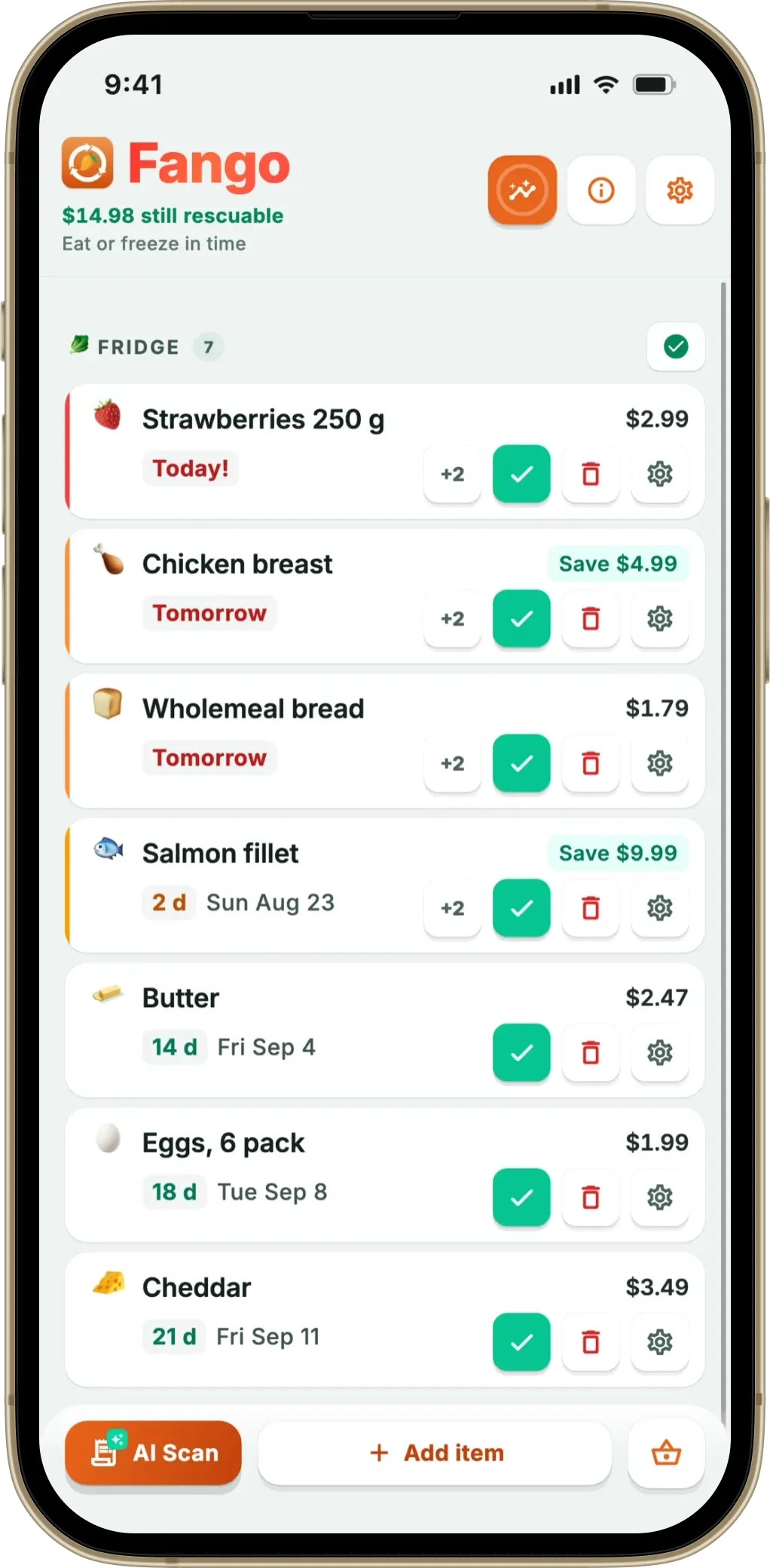
Fango shows you what’s expiring next and reminds you before it does — so even the items that slip past the physical shelf still get used. Scan your receipt and the whole list builds itself, no typing.
Download on the App Store Get it on Google PlayFree for a month · No sign-up · iOS and Android
- An eat-me-first shelf is one designated, visible spot for everything close to its date.
- Put it at eye level — usually the middle shelf — never in a drawer or at the back.
- Check it at two moments: before you decide what to cook, and before you write a shopping list.
- Pair it with reminders so you get a nudge on the days you forget to look — that’s where an app like Fango helps.
Why the eat-me-first shelf works
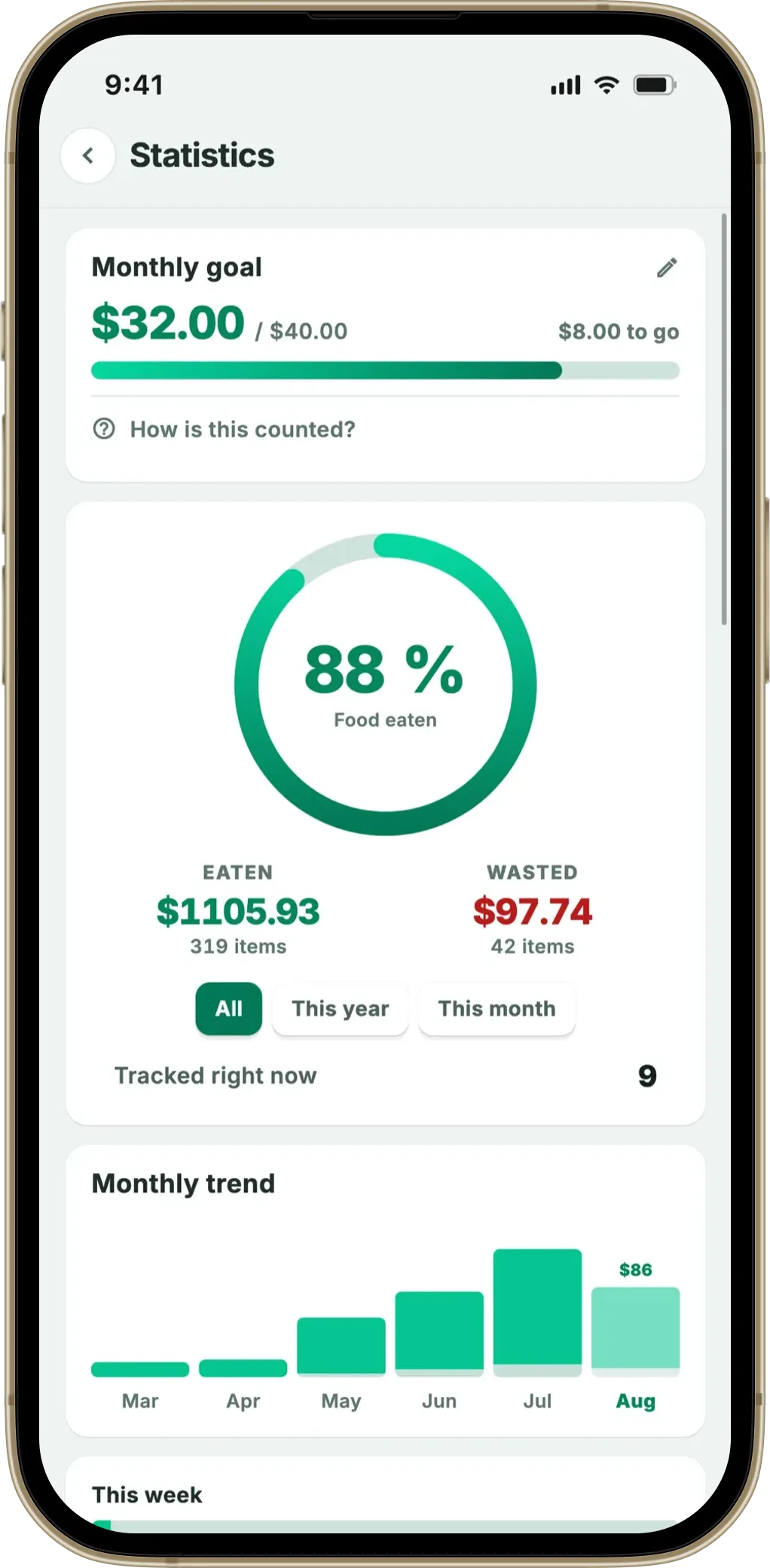
The habit works because it attacks the real problem: visibility. WRAP estimates UK households throw away around 70 kg of edible food per person each year — roughly £1,000 for an average family — and a large share of that is fresh food that was perfectly good until it was forgotten. Globally, UNEP puts food waste at about a third of everything produced. You don’t fix a forgetting problem with willpower; you fix it by making the at-risk food impossible to overlook.
If you are choosing between apps, our guide to picking an expiry date tracker lists the features that decide whether you are still using it a month later.
That’s the whole mechanism. When the wilting spinach, the open yoghurt and the leftover rice are sitting together at eye level, you plan dinner around them instead of reaching past them for something new. The shelf turns “what shall I cook?” into “what do I need to use?” — and that one shift in the question is where the savings come from.
How to set up your eat-me-first shelf
You can have this running in five minutes with nothing but space you already have. The goal is one clearly defined, highly visible zone — and a habit of feeding it. Here’s the setup:
- Pick an eye-level spot. The middle shelf is ideal — it’s the first thing you see when the door opens. Skip the salad drawers and the back; those are where food goes to be forgotten.
- Mark it. A labelled box, a tray, or even a sticky note saying “EAT ME FIRST” makes the zone official. A box also stops items drifting to the back of a deep shelf.
- Feed it constantly. Whenever you spot something nearing its date — or unpack shopping that won’t last — move it to the shelf. Leftovers go straight there.
- Raid it first. Before cooking, look at the shelf before anything else. Before shopping, check it so you don’t buy what you already need to eat.
One rule keeps it honest: the shelf is for things to use soon, not a graveyard for things you’re avoiding. If something’s been sitting there for days, that’s your cue to cook it, freeze it, or accept it’s gone — not to let it become background clutter.
What belongs on the shelf
Anything with a short runway left. In practice that’s a predictable set of items, and knowing which ones tend to turn fastest helps you catch them early. Move these to the shelf as soon as they’re opened or getting close:
If you’re unsure whether something’s still good when it comes off the shelf, lean on your senses and the date type — a best-before date is a quality guide, not a safety deadline, so plenty of it is fine a little past. For the full picture of how long things keep, see how long food lasts in the fridge.
Where the physical shelf falls short
The eat-me-first shelf is brilliant, but it has two honest weaknesses. First, it only works if you remember to feed it and check it — miss a few days and items still slip past their date unseen. Second, it can’t tell you when something is due; it relies on you eyeballing dates and noticing what’s getting urgent. For a busy week, that’s a lot resting on memory.
This is where a tracking app complements the shelf rather than replacing it. An app that reminds you in time gives you the timing the shelf can’t: a nudge a day or two ahead, even when you haven’t opened the fridge. Think of the shelf as the physical layer and the app as the safety net underneath it — together they catch far more than either alone. And if you want to see whether it’s working, our guide on tracking how much food you waste shows the difference over a few weeks.
Make it effortless with receipt scanning
The reason most fridge systems fail is the admin — nobody keeps a list updated by hand for long. Fango removes that step: photograph your grocery receipt and AI reads every item, assigns an estimated expiry date, and adds it all at once. Your “what needs eating” list is built the moment you get home, and the app surfaces what’s most urgent — effectively an eat-me-first shelf that maintains itself. You can see how the scan works in the grocery receipt scanner app guide, and for the wider toolkit, the best food waste tracker app roundup compares the options. The shelf and the app together are about as close as you’ll get to never throwing good food away.
Fango shows you what’s expiring next and reminds you before it does — so even the items that slip past the physical shelf still get used. Scan your receipt and the whole list builds itself, no typing.
Download on the App Store Get it on Google PlayFree for a month · No sign-up · iOS and Android
Frequently Asked Questions
What is an ‘eat me first’ shelf?
An eat-me-first shelf is one designated spot in your fridge — a shelf, a box or a tray — where you put everything that needs using up soon. Instead of food hiding at the back until it goes off, anything close to its date sits in one visible place you check before you cook or shop. It’s a low-tech habit that targets the main cause of household food waste: forgetting what you have.
Where should I put my eat-me-first shelf?
At eye level, where you can’t miss it when you open the fridge — usually the middle shelf. The whole point is visibility, so avoid the bottom drawers or the back. Use a labelled box or tray if your shelves are deep, so the items don’t drift to the back and disappear again.
Does an eat-me-first shelf actually reduce food waste?
Yes, because most home food waste comes from forgetting items, not from buying badly. A study by WRAP found UK households waste around 70 kg of edible food per person a year, much of it fresh food that’s simply lost track of. Putting at-risk items in one visible spot directly counters that — you see them, so you use them.
How do I remember to check the eat-me-first shelf?
Build it into two moments: glance at the shelf before you decide what to cook, and again before you write a shopping list. To make it more reliable, pair the physical shelf with an app like Fango that reminds you in time, so you get a nudge even on the days you forget to look.