Search for a food tracking app and half the results promise to tell you what to cook with what you’ve got. Recipe suggestions sound useful — but plenty of people open one of those apps, get nudged toward a “use up your spinach” recipe, and quietly stop using it because it became one more thing to wade through. There’s a quieter category that does the opposite: apps that track your food and remind you in time, and stop there. Fango is one of them, on purpose, and this guide explains why skipping recipes is often a feature, not a gap.
Fango scans your receipt, lists your food with estimated reminder dates, and reminds you in time. No recipe feed, no clutter — just the two things that actually cut waste.
Download on the App Store Get it on Google PlayFree for a month · No sign-up · iOS and Android
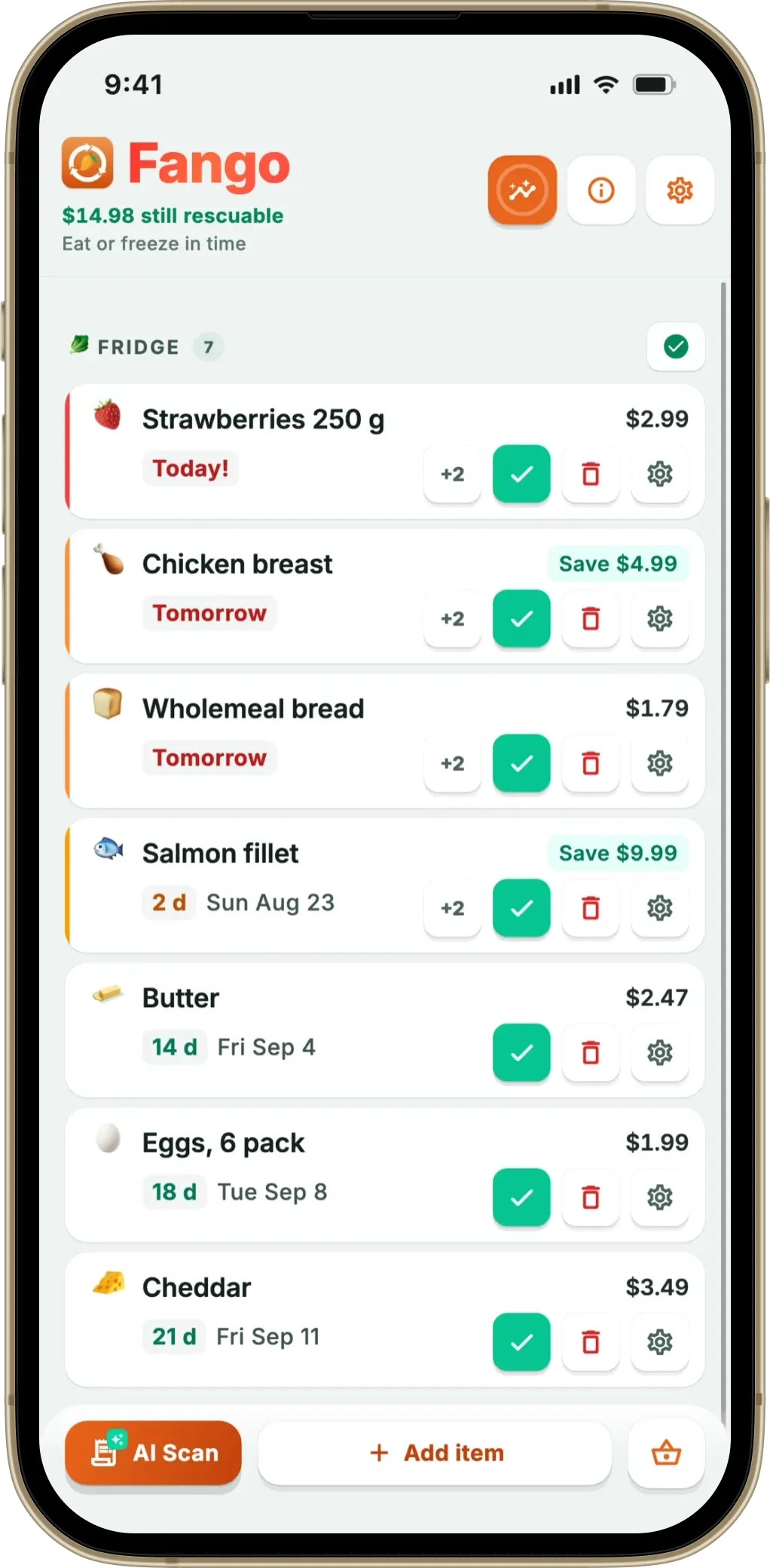
- Some food apps skip recipes deliberately — they track what you have and remind you in time, nothing more.
- Why it works: waste comes from forgetting food, not from not knowing how to cook it.
- The payoff is simplicity — a fast, uncluttered app you actually keep using.
- Fango is tracking-only by design: scan a receipt, see expiry dates, get reminders; recipe choice stays with you.
Recipes solve a problem you mostly don’t have
Here’s the honest case for leaving recipes out: they answer a question that isn’t the one causing your waste. The thing that fills your bin isn’t “I had ingredients and didn’t know what to make” — it’s “I forgot the chicken was even in there.” WRAP estimates UK households waste around 70 kg of edible food per person a year, and most of it is food that went off out of sight, not food that stumped the cook. UNEP puts global food waste at roughly a third of all production.
If you are choosing between apps, our guide to picking an expiry date tracker lists the features that decide whether you are still using it a month later.
If forgetting is the problem, the fix is visibility and timing — knowing what you have and getting reminded before it’s too late. Recipes don’t move that needle. And when you genuinely want one, you already have an entire internet of them; an app suggesting “5 ways with broccoli” is duplicating something you can find in ten seconds, while adding screens, prompts and clutter to the tool you came to for one quick job.
What you gain by going recipe-free
Cutting a feature can be the most useful thing an app does, because every feature has a cost in speed and attention. A tracking-only app spends its entire design budget on the two things that actually reduce waste. Here’s what that focus buys you:
- Speed. Open it, see what’s expiring, done. No feeds, no recipe cards to scroll past, no “discover” tab competing for your tap.
- Less friction to keep using. The simpler an app, the more likely you still open it in week three — and a food app only works if you keep using it.
- Clear purpose. One job, done well: track and remind. You always know what the app is for, which makes the habit stick.
- Freedom to cook your way. No app deciding your dinner. You see what needs using and reach for your own recipes, takeaway menu, or improvisation.
This is the same logic behind any focused tool. A great fridge tracker app that nails tracking and reminders will beat a sprawling all-in-one that does ten things adequately — because the all-in-one is the one you stop opening.
How a tracking-only app actually cuts waste
Without recipes, the whole job comes down to two steps done well: knowing what you have, and being reminded in time. Fango handles the first by reading your grocery receipt — photograph it and AI adds every item with an estimated expiry date, so your list builds itself with no typing (see the grocery receipt scanner app guide). It handles the second with reminders: a nudge in time, so the item at the back of the fridge gets used instead of forgotten.
That’s the entire loop, and for most people it’s enough. Once you can see that the salad and the leftover rice are due tomorrow, deciding what to do with them is the easy part — cook one, freeze the other, done. If you want the bigger evidence on whether this approach works, see do food waste apps actually work, and for ideas when something’s right on the edge, what to do when food is about to expire.
When you might want recipes after all
To be fair, a recipe-free app isn’t for everyone. If your real struggle is cooking confidence — you genuinely freeze at “what do I make with these five things?” — then an app that suggests recipes from your ingredients is solving your actual problem, and that’s a good reason to pick one. The same goes if you want meal planning and a tracker bundled together and don’t mind the extra complexity.
But if you can cook fine and your food is dying because you forget it exists, a focused tracker is the better tool — it targets the cause directly and stays out of your way. Know which problem is yours, and the choice is simple. For the full comparison of focused trackers, see the best food waste tracker app roundup.
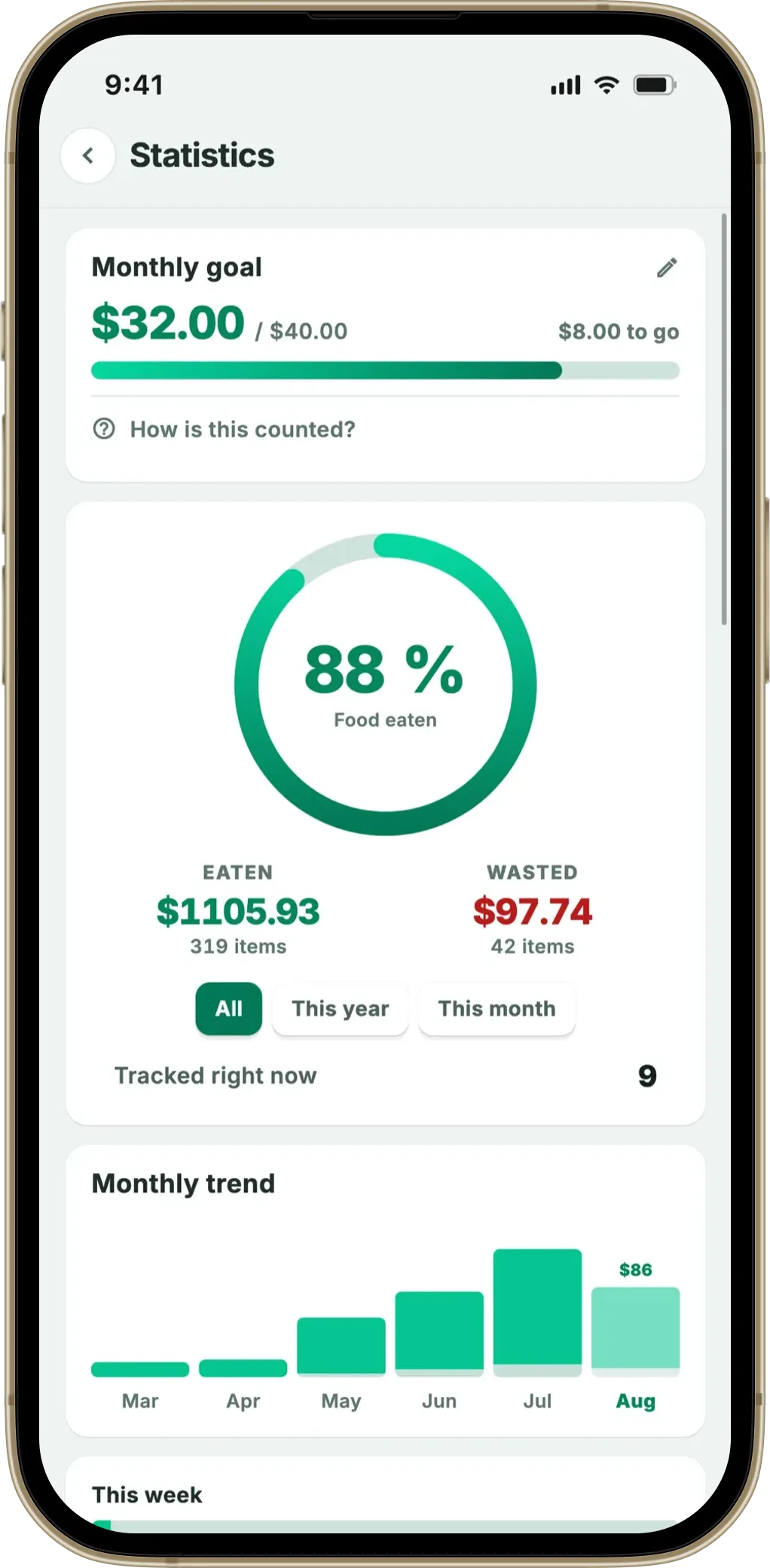
Worth stating plainly, because the title invites the opposite assumption: leaving out recipes does not mean leaving out the shopping half. Fango has a shopping list — it just answers “what am I running low on?” rather than “what could I cook?”. It reads the fridge and your receipt history and suggests items accordingly. No meal plans, no ingredient matching, no recipe feed.
Fango scans your receipt, lists your food with estimated reminder dates, and reminds you in time. No recipe feed, no clutter — just the two things that actually cut waste.
Download on the App Store Get it on Google PlayFree for a month · No sign-up · iOS and Android
Frequently Asked Questions
Are there food tracking apps without recipe suggestions?
Yes. Some food apps deliberately do one thing — track what you have and remind you in time — without bolting on recipe suggestions. Fango is one of them: it scans your receipt, lists your food with estimated reminder dates, and nudges you in time, but it doesn’t tell you what to cook. The aim is to reduce waste, not to be a cookbook.
Why would an app skip recipes on purpose?
Because recipes solve a different problem. Most food waste comes from forgetting what you have, not from not knowing how to cook it. An app focused purely on tracking and reminders stays fast, simple and clutter-free, and you already have a whole internet of recipes when you need one. Doing one job well often beats doing several jobs adequately.
Does Fango suggest recipes?
No, and that’s by design. Fango is a food tracker, not a meal planner: it reads your receipt, keeps a simple list with expiry estimates, and reminds you in time. It deliberately leaves recipe choice to you, so the app stays quick to use and the focus stays on not wasting food.
Is a tracking-only app enough to reduce food waste?
For most households, yes. The hard part of cutting waste is knowing what you have and remembering to use it in time — both things a tracking app does directly. Once you can see what’s about to expire, deciding what to make with it is the easy part. Recipes are a nice-to-have, not the lever that reduces waste.