When food is about to expire, the fastest fix is to check the date type, then freeze, cook, or test it the same day — most of it can still be saved. According to WRAP, UK households throw away around £17 billion of food a year — roughly £1,000 for a family of four — and the biggest single cause is food that simply runs out of time before anyone uses it. Fango exists to catch that moment early, but even without an app there is a clear order of actions to take.
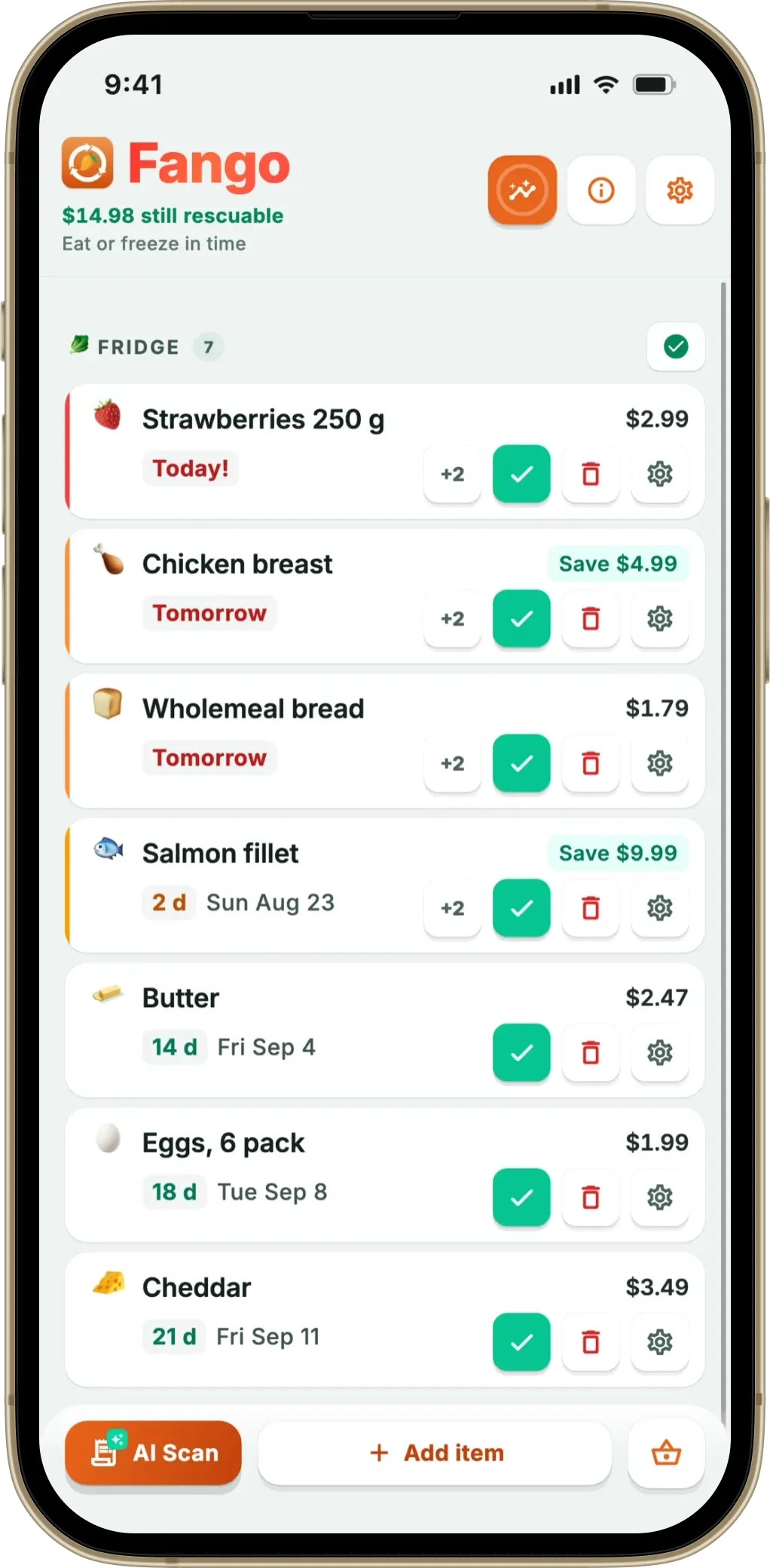
Scan your grocery receipt — AI reads the products and adds them to your fridge automatically, with an estimated date for each. You get a push notification 1–14 days ahead, so you can freeze or cook in time. No sign-up, all data stays on your device by default.
Download on the App Store Get it on Google PlayFree for a month · No sign-up · iOS and Android
This guide walks through eight things to do the moment you spot something near its date — starting with the one decision that changes everything: is it a quality date or a safety date?
- Check the label first — best-before is quality, use-by is a safety deadline
- Freeze it — the single most effective move; works for meat, bread, dairy, most fruit and veg
- Cook a use-it-up meal — soups, stir-fries and bakes turn near-expiry items into dinner
- Set a reminder so it doesn’t happen again — an app that pings you 1–3 days early prevents most waste
First, check whether it’s a quality date or a safety date
Before you do anything else, read which date is on the pack — this single check decides what is safe. A best-before date is about quality, so the food is usually fine for days or weeks afterwards if it has been stored properly — an off smell, mould or a changed texture still means bin it. A use-by date is a safety deadline on perishable foods, and you should not eat those after it. NRDC research found that about 73% of people mistake quality dates for safety dates and bin perfectly good food as a result.
For the household version of this problem — remembering the dates for everything you buy — see our guide to choosing an expiry date tracker.
Often safe well past the date. Judge it with your senses before deciding.
Don’t eat after the date, even if it looks fine. Freeze before the date instead.
If it’s a use-by item and the date is tomorrow, your only safe options are to cook it today or freeze it today. If it’s a best-before item, you have far more room — move straight to the sniff test below. For the full breakdown, see best-before vs use-by dates explained.
8 things to do when food is about to expire
Work down this list in order. The first few options buy you the most time, and the last one makes sure you’re never caught out again.
A fridge tracker app keeps this for every item in the fridge at once and reminds you before the day runs out.
-
1
Do the look–smell check (best-before items only). For quality-dated food, look for mould, slime or discolouration, and smell for sour or off notes. Milk, hard cheese and bread are usually obvious. Never sense-check use-by items — harmful bacteria don’t always change how food looks or smells.
-
2
Freeze it — the most powerful option. Freezing pauses spoilage almost completely, buying you months instead of days. Meat, fish, bread, butter, cheese, cooked meals and most fruit and vegetables all freeze well. The one rule: freeze use-by food before the date, not after. Our guide to freezing food covers what freezes well, what doesn’t, and how long each item keeps.
-
3
Cook a “use-it-up” meal tonight. Soups, stir-fries, curries, frittatas, traybakes and pasta sauces are designed to absorb whatever needs using. Wilting vegetables, the last of a bag of spinach, a lonely chicken breast and tired herbs all disappear into a one-pan dinner. Cook it, eat some, and refrigerate or freeze the rest.
-
4
Batch-cook and portion for later. If you’ve got more than one meal’s worth, cook it all at once and freeze single portions. Cooked food generally keeps 2–4 days in the fridge or 2–3 months in the freezer, so a Sunday batch session turns near-expiry ingredients into ready meals for a busy week.
-
5
Store it better to buy a few more days. The right spot in the fridge can add days to perishable items: keep raw meat and fish on the coldest bottom shelf, and don’t overfill the fridge so cold air can circulate. See how to organise your fridge, how long food really lasts in the fridge, and the eat-me-first shelf habit to get the most out of what you have.
-
6
Move it to the front as an “eat me first” zone. Out of sight is out of mind. Clear a shelf or the front of the fridge for anything nearing its date so it’s the first thing you reach for. This simple visual cue is one of the most reliable habits in reducing food waste at home.
-
7
Repurpose it instead of binning it. Overripe bananas become banana bread or smoothies. Soft tomatoes and tired veg become stock or pasta sauce. Stale bread becomes croutons, breadcrumbs or French toast. Wilting herbs blend into pesto or freeze in oil. “Almost gone” rarely means “useless”.
-
8
Set a reminder so it never happens again. The reason food reaches this point is almost always that it was forgotten, not unwanted. A reminder a few days early is what turns “too late” into “frozen in time”. An app that reminds you in time does this automatically — and it’s also the cheapest way to save money on groceries.
Scan your grocery receipt — AI reads the products and adds them to your fridge automatically, with an estimated date for each. You get a push notification 1–14 days ahead, so you can freeze or cook in time. No sign-up, all data stays on your device by default.
Download on the App Store Get it on Google PlayFree for a month · No sign-up · iOS and Android
Catch it earlier next time
The eight steps above are damage control — useful, but reactive. The real win is shrinking how often food reaches the edge at all. In practice that comes down to two habits: knowing what you have, and getting a nudge a few days before each item is due.
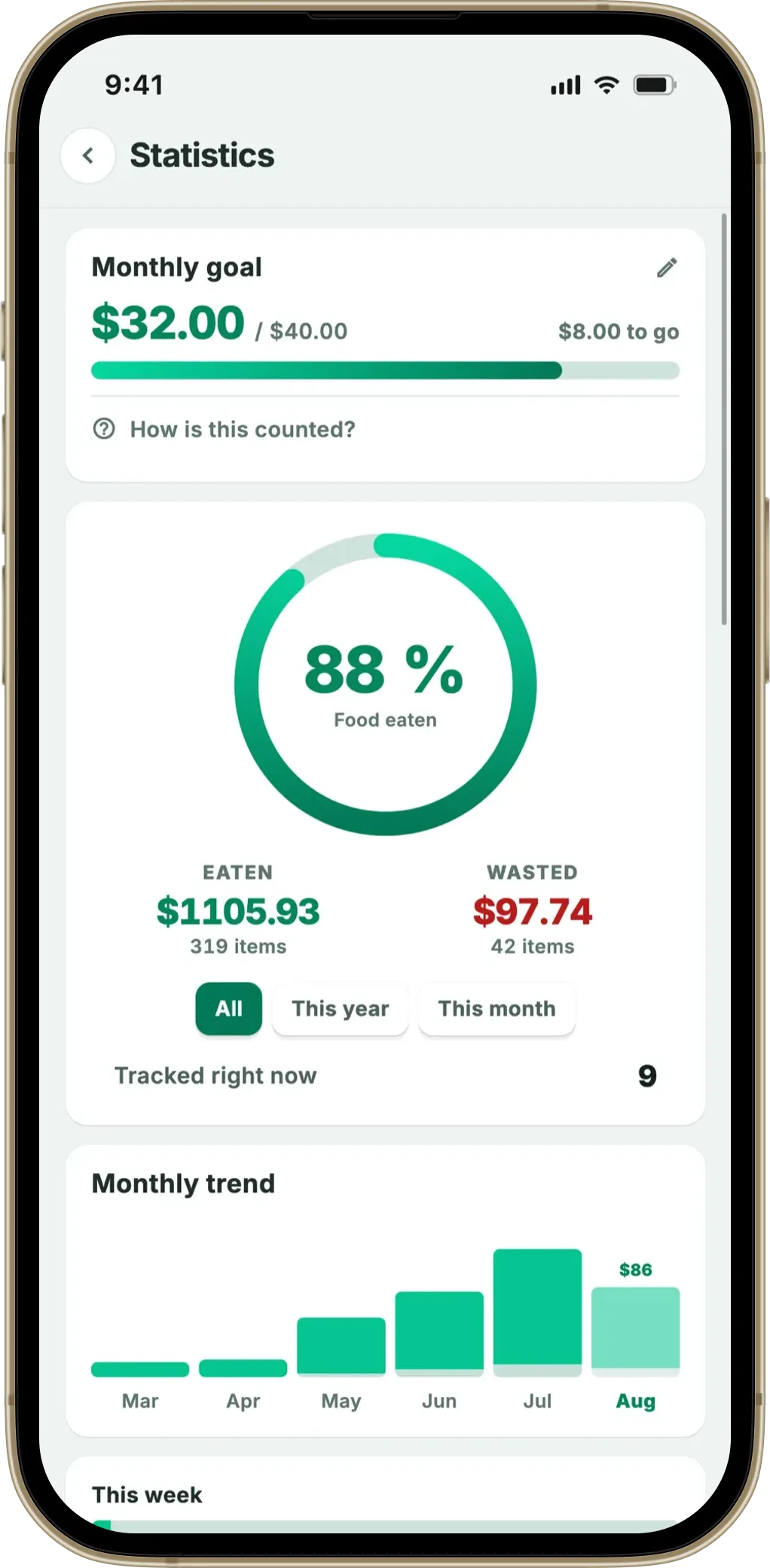
This is exactly the gap a tracking app fills. When Fango flags an item as expiring in two days, the decision becomes simple and early: cook it tonight or freeze it now — long before you’d otherwise rediscover it pushed to the back of the shelf. Because the reminder lands while there’s still time to act, most of what would have been wasted gets used instead. It’s the difference between finding the chicken on Friday after its Thursday use-by date, and being reminded on Wednesday while you can still do something about it. And if you want to see how much you’re actually saving, our guide to tracking how much food you waste shows how the running tally builds.
If it is always the same item that gets too old, the fault is usually in how much you buy rather than in your memory. Shopping your fridge first breaks the chain at the start: check what you already have, then buy only what is genuinely running low.
Frequently asked questions
Can I still eat food that is about to expire?
It depends on the date label. A best-before date is about quality, so many foods keep well for days or weeks after it when stored correctly. Look and smell can reveal spoilage, but they cannot confirm that food is safe. A use-by date is a safety deadline on perishable foods like raw meat, fish and dairy — do not eat those after the date even if they seem fine.
What is the best thing to do with food about to go off?
Freezing is the single most effective option. Freeze meat, fish, bread, cooked meals and most fruit and vegetables before the use-by date and they will keep for months. If you would rather eat it now, batch-cook a use-it-up meal and refrigerate or freeze the leftovers.
Can you freeze food on its use-by date?
Yes — you can freeze most food right up to the end of the use-by date, but not after it. Freezing pauses spoilage; it does not reverse it. Freeze it as early as you can for the best quality, and once thawed, cook it before refreezing.
How do I stop food expiring before I use it?
Track what you have and when it expires, and act a few days early. An app like Fango scans your receipt, adds the items automatically and sends a push notification 1–14 days before each item is due, so you can freeze or cook it in time instead of finding it too late.
- WRAP: Household Food and Drink Waste in the UK 2022 (£17bn / £1,000 for a family of four)
- UK Food Standards Agency: Best before and use-by dates
- UK Food Standards Agency: Chilling and freezing food
- NRDC: The Dating Game — how confusing date labels lead to food waste
- UNEP Food Waste Index Report 2024 (a fifth of the food available to consumers is wasted)