For a while, a magnetic notepad on the fridge door felt like the answer. Write down what’s inside, cross things off as you use them, never lose track again. It lasted about two weeks. The list drifted out of date, I stopped trusting it, and I was back to finding furry leftovers and binning forgotten veg. A paper list isn’t a bad idea — it’s just built on two habits that quietly fail. Here’s why it didn’t work, honestly, and what finally did. (For a neutral side-by-side, see app vs pen and paper for fridge tracking.)
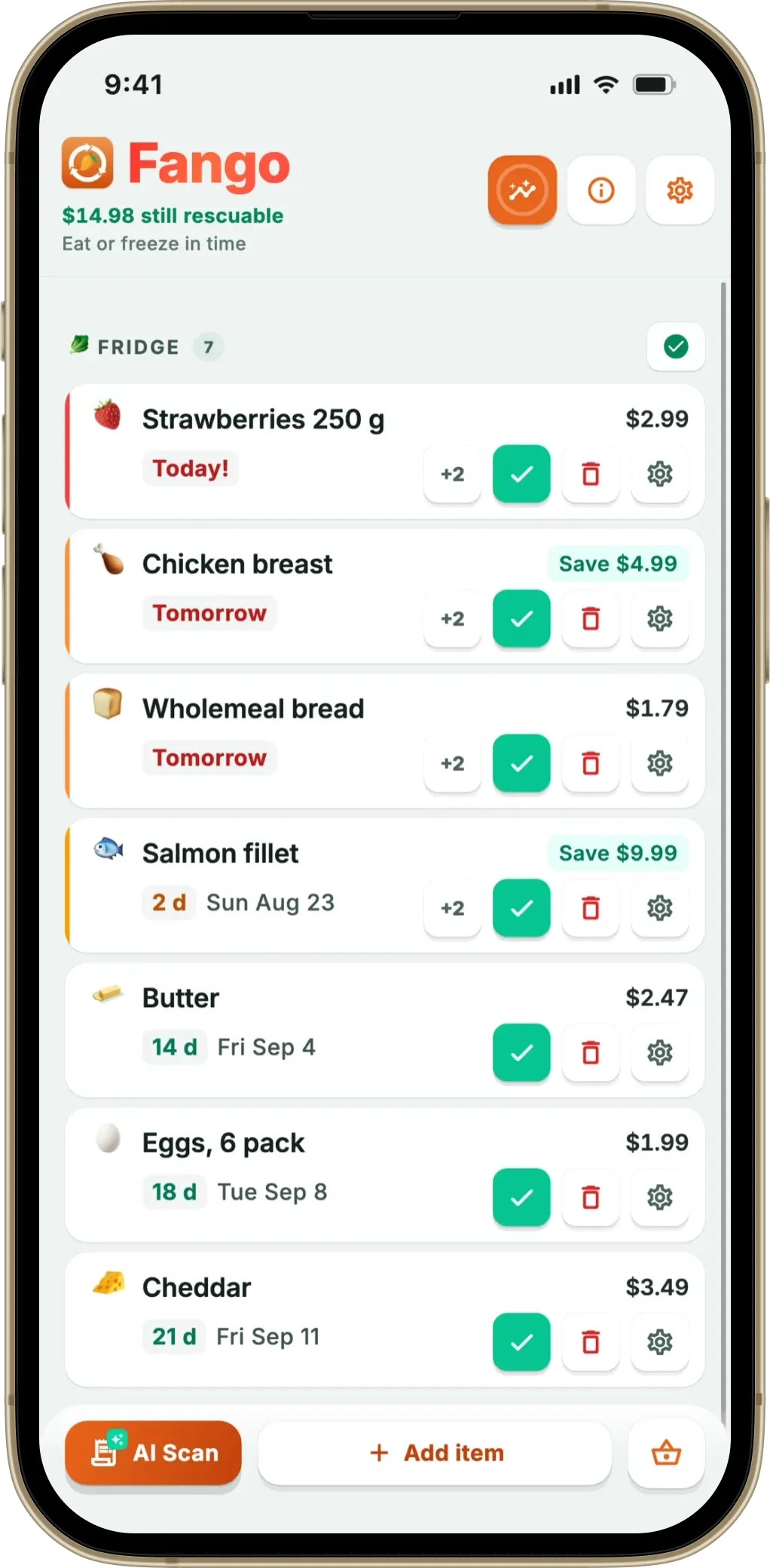
Fango builds your fridge list from a receipt scan, so there’s nothing to write down. It shows what to use next on a home-screen widget and reminds you before food goes off. No paper, no transcribing, no account.
Download on the App Store Get it on Google PlayFree for a month · No sign-up · iOS and Android
- Paper fails at two points: you forget to update it, and you forget to read it.
- A stale list is worse than none — once you don’t trust it, you stop looking.
- Paper can’t remind you when something’s about to expire; it just sits there.
- What worked: an app that fills the list from a receipt scan and reminds me before food goes off.
The two ways a paper list quietly dies
A written fridge list depends on two separate habits, and both are exactly the kind you drop under a busy week. First, you have to update it — every time something goes in or comes out — or it slowly stops matching reality. Second, you have to remember to read it before you cook or shop, which is the same forgetfulness that made you want a list in the first place. Skip either and the whole thing unravels.
A fridge tracker app handles this for every item at once — here is what separates a good one from a spreadsheet.
The killer is what happens next. The moment the list is wrong once or twice — it says there’s cheese, there isn’t — you stop trusting it, and an untrusted list is one you never look at. So it ends up on the door doing nothing, while the food it was meant to save goes off anyway. WRAP estimates UK households waste around 70 kg of edible food per person a year, and a dead list on the fridge door doesn’t move that number at all.
Paper can’t do the one thing that matters most
Even a perfectly maintained paper list has a fatal gap: it can’t tell you when something is due. It’s a static snapshot. You still have to eyeball every date yourself and notice what’s getting urgent, which is precisely the mental work that leads to forgotten food. The list shows what you have; it can’t nudge you about what’s about to be lost.
That’s the realisation that ended it for me. The problem was never “I don’t know what I bought” — the receipt told me that. The problem was “I didn’t notice the chicken was due today.” No amount of neat handwriting fixes that, because paper doesn’t have a sense of time. What I needed was something that did. An app that reminds you in time closes exactly that gap.
What actually replaced it
The fix wasn’t more discipline — it was removing the two chores paper depends on. The updating problem went away when I stopped writing anything down: I photograph the grocery receipt, and AI reads every item, assigns an estimated expiry date, and adds the whole shop at once. The list is current the moment I’m home, with no transcribing (here’s how the receipt scan works). The reading problem went away because the app surfaces what’s urgent itself — a widget shows what’s next, and a reminder lands a day or two before each item is due.
That’s the whole difference. Paper made remembering my job and quietly failed; the app made remembering its job and just works. I’m not more organised than I was with the notepad — I’ve just handed the two tasks I kept dropping to something that doesn’t drop them. If you want the broader case, see do food waste apps actually work and the best food waste tracker app roundup.
When paper is still fine
To be fair, pen and paper isn’t worthless. If you’re genuinely disciplined — you update the list every single time and check it before every shop — it can work, and it costs nothing. A simple eat-me-first shelf paired with a quick note is a perfectly good low-tech system for some people. But if you’re the kind of person who started a list with good intentions and watched it die on the door, the issue isn’t your willpower — it’s the tool. Switching to one that does the upkeep and the reminding is what finally stuck for me.
The shopping list is the third place the difference shows. A paper note does not know what you have at home. Fango’s shopping list reads the fridge and the receipt history: it suggests what is running low, leaves out what you have already bought, and sorts by supermarket aisle — with paper, all three of those live in your head.
Fango builds your fridge list from a receipt scan, so there’s nothing to write down. It shows what to use next on a home-screen widget and reminds you before food goes off. No paper, no transcribing, no account.
Download on the App Store Get it on Google PlayFree for a month · No sign-up · iOS and Android
Frequently Asked Questions
Why doesn’t a pen-and-paper fridge list work?
Because it relies on two things you’ll forget: updating it every time food comes in or out, and reading it before you cook or shop. Miss either and the list goes stale, and a stale list is worse than none because you stop trusting it. Paper also can’t remind you when something is about to expire — it just sits on the fridge door.
Is an app better than a paper list for tracking food?
For most people, yes. An app removes the two failure points of paper: it keeps the list current with less effort (Fango builds it from your receipt), and it actively reminds you in time instead of waiting to be read. Paper is fine if you’re disciplined, but an app does the remembering for you.
What’s the easiest way to keep a fridge list updated?
Don’t write it by hand. Scan your grocery receipt with an app like Fango and the whole shop is added at once with estimated reminder dates — no typing, no transcribing. The hard part of any list is keeping it current, and letting a receipt scan do the entry is what makes it stick.
Does Fango replace a paper fridge list?
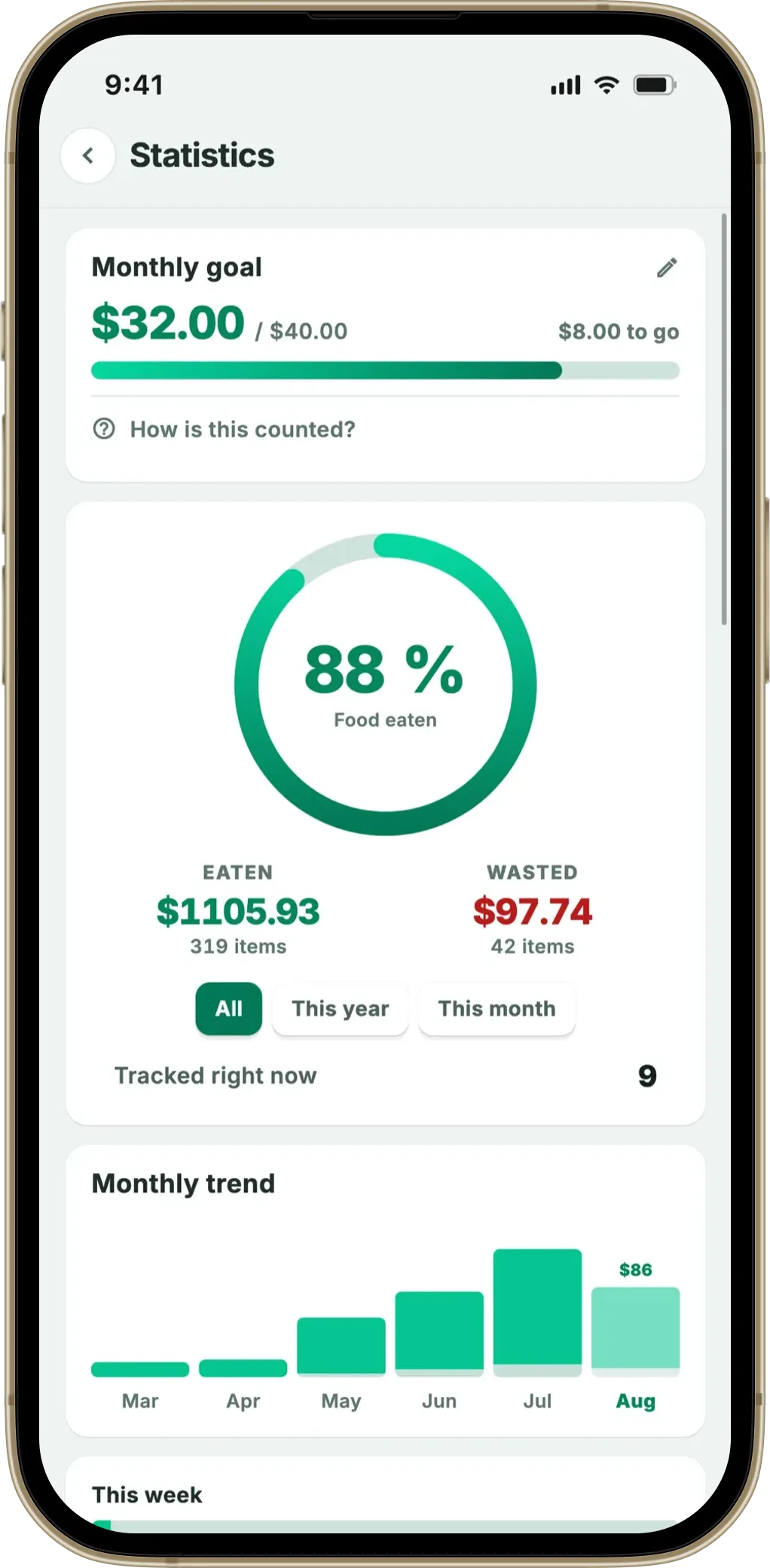
Yes. Fango keeps the list for you, fills it from your receipt, shows what to use next on a home-screen widget, and reminds you before items go off. It fixes the two things a paper list can’t: staying current without effort, and telling you when something is due. By default, all data stays on your phone, with no account.