No — and you shouldn’t just cut the mouldy bit off, either. If bread has mould on it, throw the whole loaf away. Bread is soft and porous, which means mould roots spread through it invisibly and harmful bacteria can grow alongside the mould, even in slices that still look clean. This is the opposite of hard cheese, where cutting around the mould works — and the difference comes down entirely to texture.
Log bread when you buy it and Fango reminds you in time — or prompts you to freeze it. No sign-up, your fridge data stays on your device by default.
Download on the App Store Get it on Google PlayFree for a month · No sign-up · iOS and Android
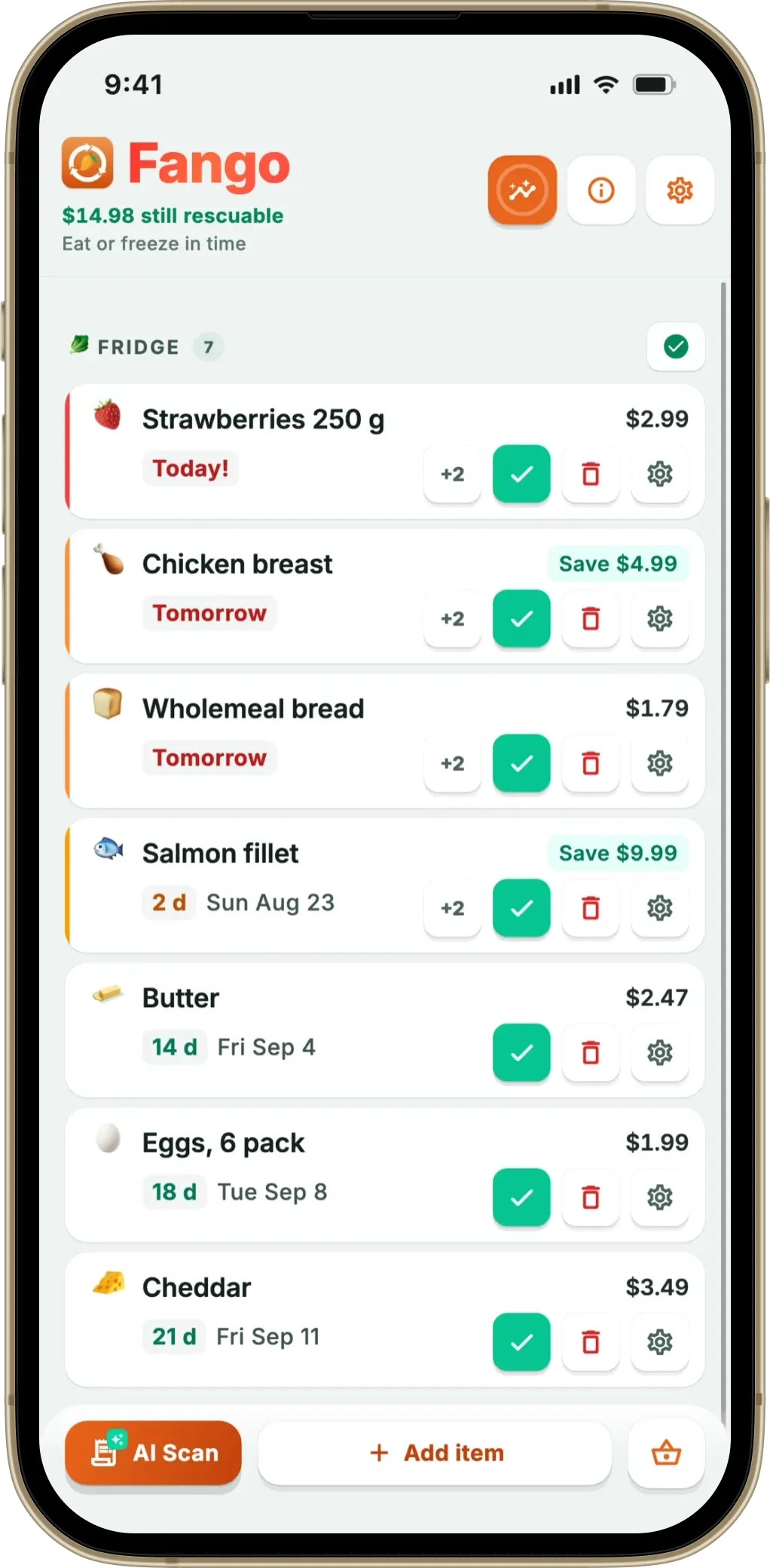
The better answer, of course, is to finish bread before it ever turns. Fango lets you log a loaf and set an expiry reminder — or just freeze it — so you’re not discovering green spots on the last four slices you meant to use.
- Mouldy bread = bin the whole loaf, not just the visible slice
- Don’t cut around it — bread is too porous, roots spread unseen
- Don’t sniff it close up — you can inhale mould spores
- Stale ≠ mouldy — stale bread is safe; toast it or make breadcrumbs
Why You Can’t Just Cut the Mould Off Bread
It’s tempting to bin the mouldy slice and keep the rest — but with bread that isn’t safe. The USDA’s guidance on moulds explains why: the fuzzy spot you see is only part of the mould. Beneath the surface, microscopic “root” threads have grown deep into the soft, porous crumb, and in some moulds, poisonous substances called mycotoxins spread in and around those threads.
If keeping track of dates like these by hand is the part that never sticks, an expiry date tracker app can do it from your grocery receipt.
Bread’s open structure lets all of that travel far beyond the visible patch — which is exactly why bread is on the USDA’s “discard when mouldy” list, alongside other soft, porous foods. Invisible bacteria can grow with the mould too. So a clean-looking slice from the same loaf isn’t a safe bet. When bread shows mould, the whole loaf goes.
Don’t Sniff Mouldy Bread
One more habit to drop: leaning in for a deep sniff to “check.” When you do that with mouldy bread, you can inhale mould spores, which some people react to. There’s no need to confirm by smell — if you can see fuzzy green, white, grey, or black spots, that’s your answer. Bag the loaf, seal it, and bin it. The NHS advises against eating mouldy soft foods at all.
For the whole cupboard instead of one item at a time, see our comparison of the best pantry inventory app options.
Is It Mould, or Just Stale?
Here’s the good news that saves a lot of bread: stale is not the same as mouldy. Stale bread has simply dried out and gone firm. It’s perfectly safe — and easy to bring back to life. Mouldy bread has visible fuzzy growth and is unsafe. Tell them apart and you’ll bin far less.
Dry, firm, maybe a little crumbly, but no fuzzy spots. Revive it by toasting, sprinkling with water and warming in the oven, or turn it into breadcrumbs, croutons, or bread pudding. A musty smell with no visible mould usually just means it’s past its best.
Fuzzy green, white, grey, or black spots anywhere on the loaf. The roots reach further than they look, so there’s no safe slice to keep. Bin the whole loaf — don’t toast it, scrape it, or cut around it.
Toasting does not make mouldy bread safe — the heat doesn’t destroy the mycotoxins. Toasting only helps with bread that’s stale, not mouldy. For more ways to use up bread before it turns, see how to reduce food waste at home.
Quick Verdicts on Common Bread Worries
The short answer to the situations that come up most.
How to Stop Bread Going Mouldy
Bread moulds fast in the wrong spot. A couple of habits make every loaf last.
-
1
Store it cool and dry, not sealed and warm. A bread bin beats a knotted plastic bag, which traps the moisture that mould loves. Keep it out of direct sun and away from the hob. See how long bread lasts for type-by-type timings.
-
2
Freeze what you won’t eat soon. Bread freezes brilliantly for months. Freeze it sliced so you can take out exactly what you need and toast it straight from frozen.
-
3
Use the ends, don’t bin them. Turn drying slices into breadcrumbs, croutons, or bread pudding before they go. More ideas in food storage tips.
-
4
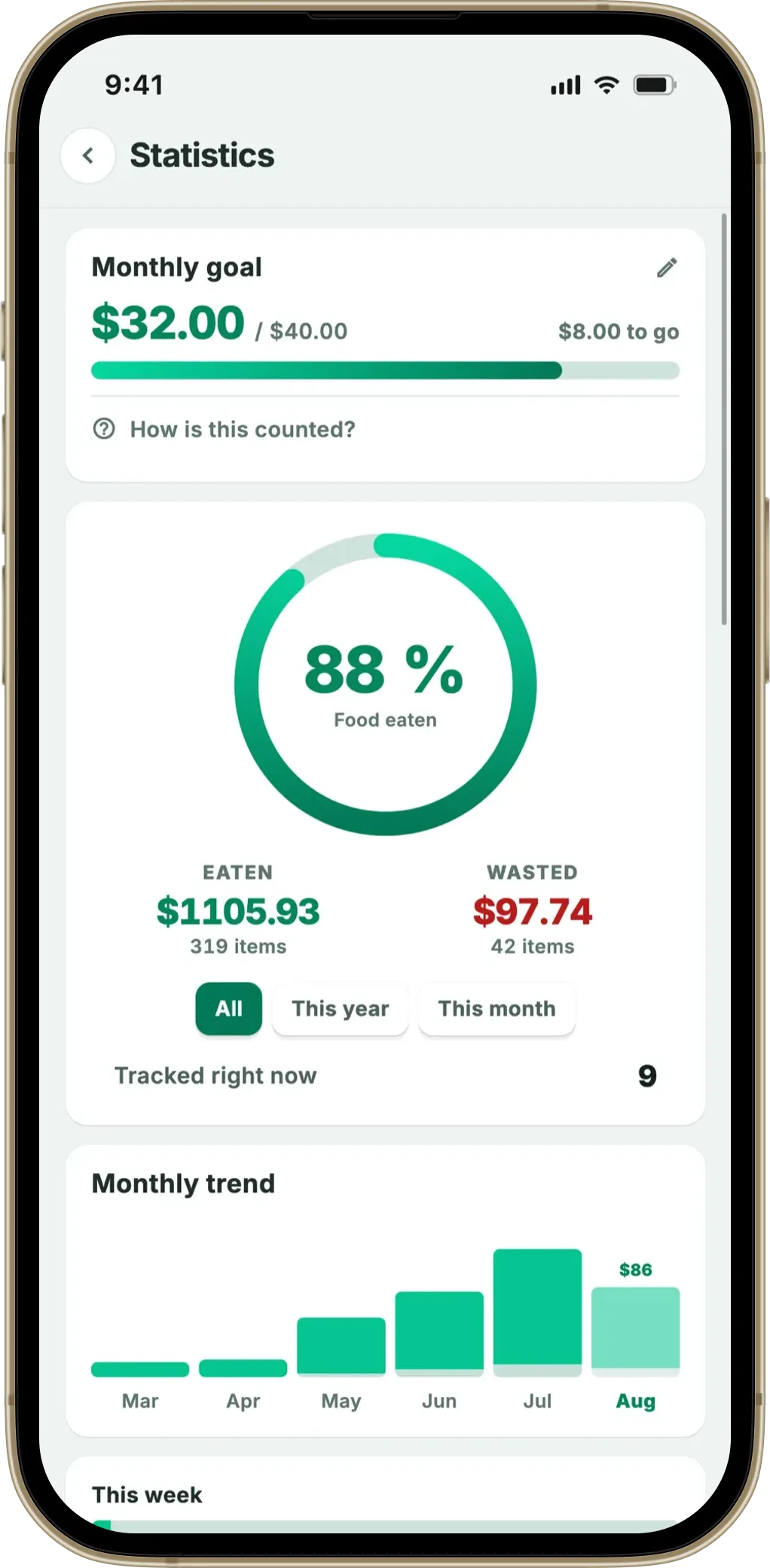
Log it when you buy it. Add bread to Fango with a reminder so the loaf gets eaten or frozen in time. For your whole kitchen, see how long food lasts in the fridge.
Log bread when you buy it and Fango reminds you in time — or prompts you to freeze it. No sign-up, your fridge data stays on your device by default.
Download on the App Store Get it on Google PlayFree for a month · No sign-up · iOS and Android
Related reading: Can You Eat Mouldy Cheese.
See also: How to tell if bread is bad.
Frequently Asked Questions
Can you eat mouldy bread?
No. You should throw the whole loaf away, not just the mouldy slice. Bread is soft and porous, so mould roots spread through it invisibly and harmful bacteria can grow alongside the mould — even in slices that still look clean.
Can you just cut the mould off bread?
No. Unlike hard cheese, bread is too porous to cut mould out of safely. The visible spot is only part of the mould; its roots and any toxins can reach far beyond what you can see, so the whole loaf should be discarded.
What happens if you accidentally eat mouldy bread?
A small amount usually causes no harm, but some bread moulds produce mycotoxins that can cause stomach upset, nausea, or, in sensitive people, allergic or respiratory reactions. If you feel unwell, especially with severe or lasting symptoms, seek medical advice.
Should you smell bread to check for mould?
No. Don’t sniff mouldy bread up close — you can inhale mould spores. A musty or stale smell with no visible mould may just mean the bread is past its best; visible fuzzy spots mean discard the whole loaf.
Is stale bread the same as mouldy bread?
No. Stale bread is dry and firm but safe — revive it by toasting or use it for breadcrumbs, croutons, or bread pudding. Mouldy bread, with fuzzy green, white, or black spots, is unsafe and the whole loaf should be thrown away.
How do you stop bread going mouldy?
Keep bread in a cool, dry bread bin rather than a sealed plastic bag that traps moisture, and freeze what you won’t eat within a few days. Frozen bread keeps for months and toasts straight from the freezer.
The habit that saves the most bread: log it in Fango when you buy it and set a reminder — or freeze half straight away. You’ll use every loaf before the green spots arrive.