Bread is bad if you can see mould — fuzzy white, green, blue, or black spots, anywhere on the loaf — or if the crumb has turned sticky and stringy with a sweet, fruity smell. Bread that is merely dry, hard, or crumbly is stale, not spoiled, and it is perfectly safe. That distinction is the whole question, and it decides between the bin and a tray of croutons.
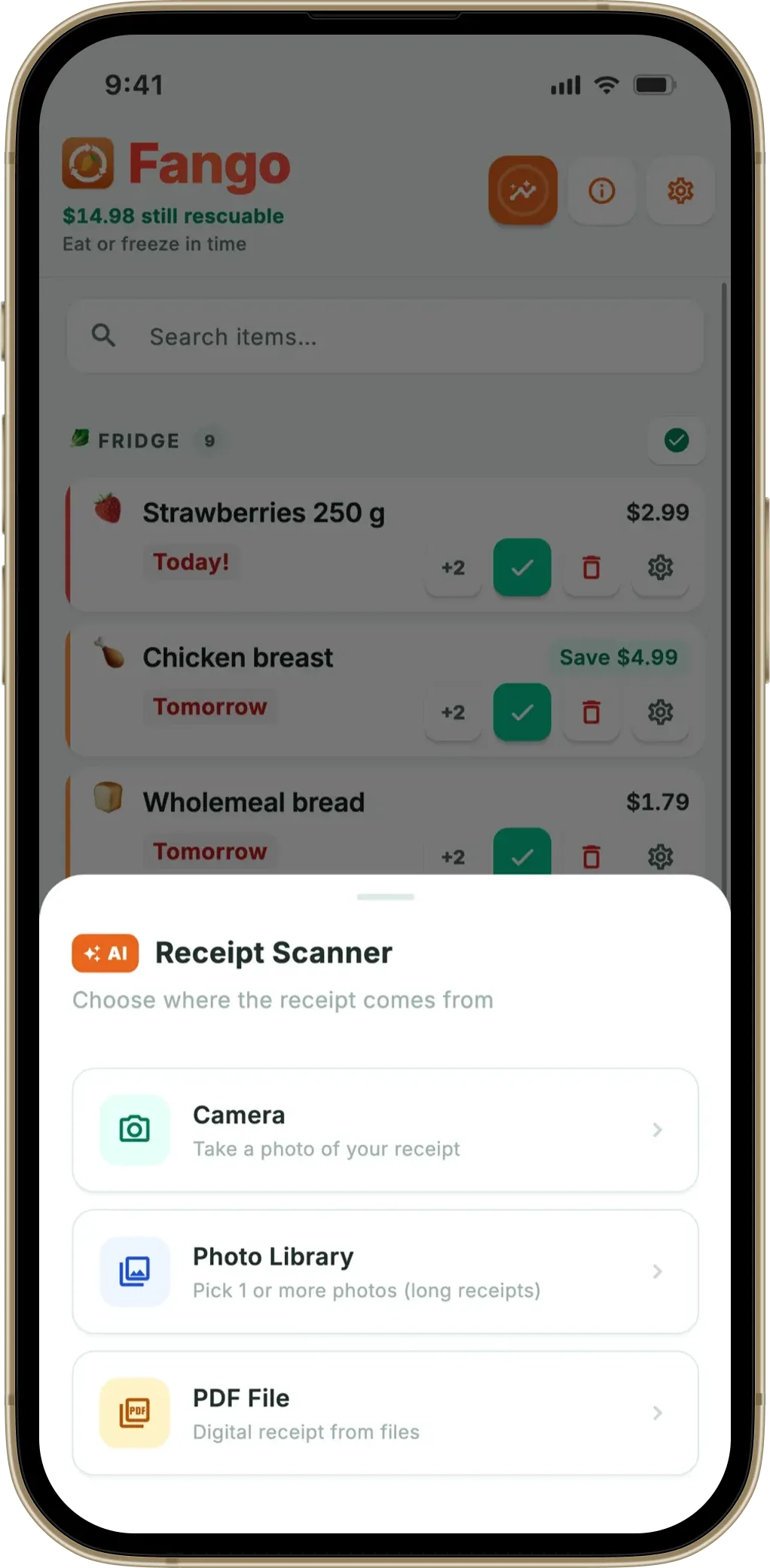
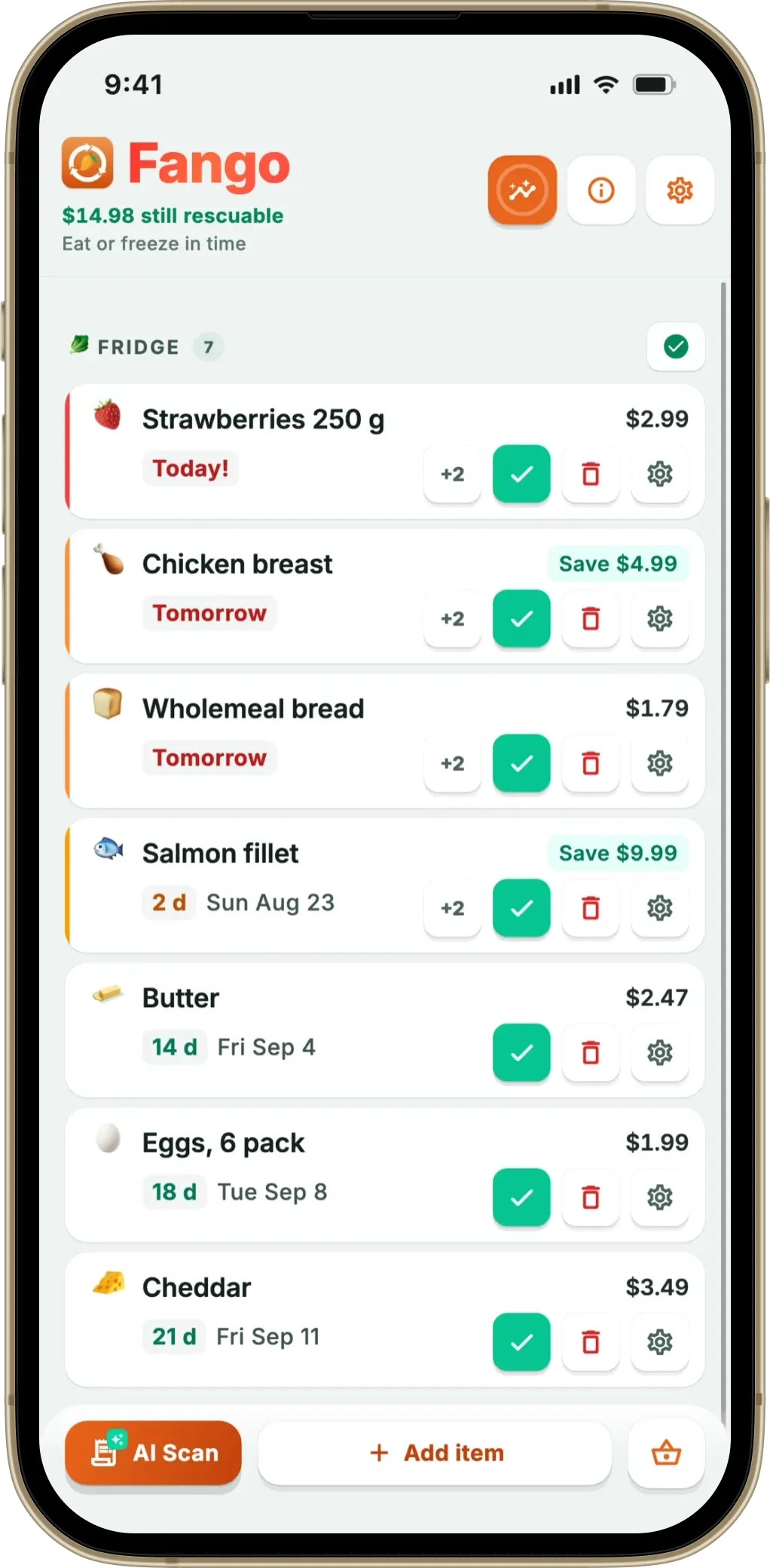
Bread is one of the most wasted foods in UK households — WRAP estimates it accounts for around 20 million slices thrown away every day. A good share of that is bread that was never unsafe, just forgotten for three days. Fango logs the loaf on shopping day and sends an expiry reminder while there is still something to do with it.
- Mould — one visible spot and the whole loaf goes, not just that slice
- Stale — dry and hard is safe; toast it or make breadcrumbs
- Sticky, stringy crumb — rare rope spoilage, discard the loaf
- Best before — a quality date, so judge the loaf and not the label
Mould: One Spot Means the Whole Loaf
Visible mould is the only sign that settles the question on its own. It usually starts as a small fuzzy patch — white or pale green on a soft loaf, sometimes blue or black — and it often appears first on a slice in the middle of the bag, where the moisture collects.
This is exactly the kind of date an expiry date tracker app reminds you about in time.
The temptation is to cut the spot out and keep the rest. It does not work on bread. The USDA notes that what you can see is only the surface growth: in soft, porous foods the threads run deep into the food, invisibly, and bacteria can be growing alongside them. Hard cheese and firm vegetables can be trimmed with a wide margin. A loaf cannot, so the whole bag goes. Two more habits matter here: do not sniff a mouldy loaf up close, because disturbing the mould releases spores, and do not put the mouldy bag back next to the fruit bowl. We covered the full reasoning in can you eat mouldy bread.
Log the bread on shopping day and Fango reminds you in time to eat it, toast it, or freeze it. No sign-up, and your fridge data stays on your device by default.
Download on the App Store Get it on Google PlayFree for a month · No sign-up · iOS and Android
Stale Is Not the Same as Bad
Most bread that gets thrown away is not mouldy at all — it is stale, and stale is a texture problem. As a loaf sits, the starch in the crumb recrystallises and the bread gives up moisture, so it goes dry, firm, and crumbly. Nothing unsafe has happened. Three-day-old bread that smells of bread and has no spots is food, not waste.
If the cupboard is where things like this get forgotten, a pantry inventory app keeps a running list of what is on the shelf and how long it has left.
It is also the easiest thing in the kitchen to rescue. Toasting drives moisture back through the crumb and brings a stale slice most of the way back. Beyond that, stale bread is the correct ingredient rather than a compromise: breadcrumbs, croutons, French toast, bread and butter pudding, panzanella, and thickening for soup all want bread that has dried out a little.
One thing that speeds staling up is the fridge. Bread stales several times faster at fridge temperature than at room temperature, which is why the fridge is the wrong place for a loaf you plan to eat this week — the freezer is the right one. The full storage comparison is in how long bread lasts.
The Rare One: Sticky, Stringy Crumb
There is a third state, uncommon but worth recognising because it looks like nothing else. Rope spoilage turns the inside of the loaf sticky and slightly slimy, the crumb pulls into fine threads when you tear a slice apart, and the bread gives off a sweet, fruity, almost overripe-pineapple smell. It shows up mostly in home-baked or unpreserved bread kept somewhere warm and humid.
It is not mould and it will not look like mould. The verdict is the same: discard the loaf, and wash the bread bin or the container it was stored in before the next loaf goes in.
Bad, Stale, or Fine? A Quick Reference
The situations that cause the most doubt over the bread bin, with the short verdict on each.
That last one is worth being precise about. Bread carries a best before date, not a use-by date, and the UK Food Standards Agency explains that best before is about quality: food is generally still safe to eat afterwards, though it may no longer be at its best. Use by, which appears on things like raw meat and fresh cream, is the safety deadline and works the other way round. The comparison is in best before vs use by dates.
Fango sorts everything by reminder date and marks the urgent items in red. The home screen widget shows what to use next without opening the app.
Download on the App Store Get it on Google PlayFree for a month · No sign-up · iOS and Android
What Happens If You Eat Mouldy Bread
Swallowing a bite of mouldy bread by accident is usually uneventful — most people notice nothing at all. It can cause nausea or an upset stomach, and for anyone with a mould allergy or asthma the spores are the bigger problem, which is why leaning in for a good sniff is a bad idea. If you feel unwell afterwards, the NHS advice for food poisoning applies: rest, drink plenty of fluids, and get medical advice if the symptoms are severe or do not improve.
How to Stop Losing Half a Loaf Every Week
Bread has the shortest attention span in the kitchen: it is bought often, used unevenly, and forgotten in a bag on the counter.
-
1
Freeze on day one, not day five. Slice the loaf, wrap it, and freeze what you will not eat in two days. Frozen bread keeps around 3 months and toasts straight from the freezer — see can you freeze bread.
-
2
Cool and dry beats cold. Keep the loaf in a bread bin or its own bag at room temperature. The fridge prevents mould but makes bread stale several times faster, so it is the last resort rather than the default.
-
3
Give the stale end a job. Decide on day three, not day six: croutons, breadcrumbs for the freezer, or French toast at the weekend. A plan beats a hopeful squeeze of the bag.
- 4
Related reading: How Long Food Lasts in the Fridge.
Frequently Asked Questions
How can you tell if bread is bad?
Bread is bad if you can see mould — fuzzy white, green, blue, or black spots — or if the crumb has turned sticky and stringy with a sweet, fruity smell. Bread that is only dry and hard is stale, not spoiled, and is still safe to eat.
Is stale bread safe to eat?
Yes. Staling is the starch changing structure as the loaf loses moisture, which affects texture rather than safety. Toast it, or turn it into breadcrumbs, croutons, or French toast — as long as there is no mould, it is fine.
Can you cut the mould off bread?
No. Bread is soft and porous, so mould threads spread invisibly through the loaf well beyond the spot you can see. Food safety guidance is to discard the whole loaf, not just the mouldy slice.
Can you eat bread after the best before date?
Usually yes. Bread carries a best before date, which is about quality rather than safety, so a loaf a day or two past it is fine if there is no mould. Check the loaf itself instead of trusting the date in either direction.
Why does bread go mouldy so fast in summer?
Mould grows faster in warmth and moisture, and a plastic bag traps the moisture the loaf gives off. Keep bread in a cool, dry spot in its bag, and freeze what you will not eat within a couple of days.
What happens if you eat mouldy bread?
Most people who swallow a bite of mouldy bread have no symptoms, but it can cause nausea or an upset stomach, and mould spores can trigger a reaction in people with allergies or asthma. Do not eat it deliberately, and do not sniff it up close.
The habit that saves the most bread is deciding early: log the loaf when you get home, and let the reminder arrive while toasting or freezing is still an option. If you want to see how the tools compare first, we went through them in our roundup of the best food expiration reminder apps.