Shopping for one is harder than shopping for four, and it isn’t because you’re disorganised. A supermarket is built around a household: the bread comes in a size a family gets through, the salad bag wilts on the same schedule whether one person or five is eating it, and the multipack is always better value right up until you bin half of it. The maths that works for a family works against you.
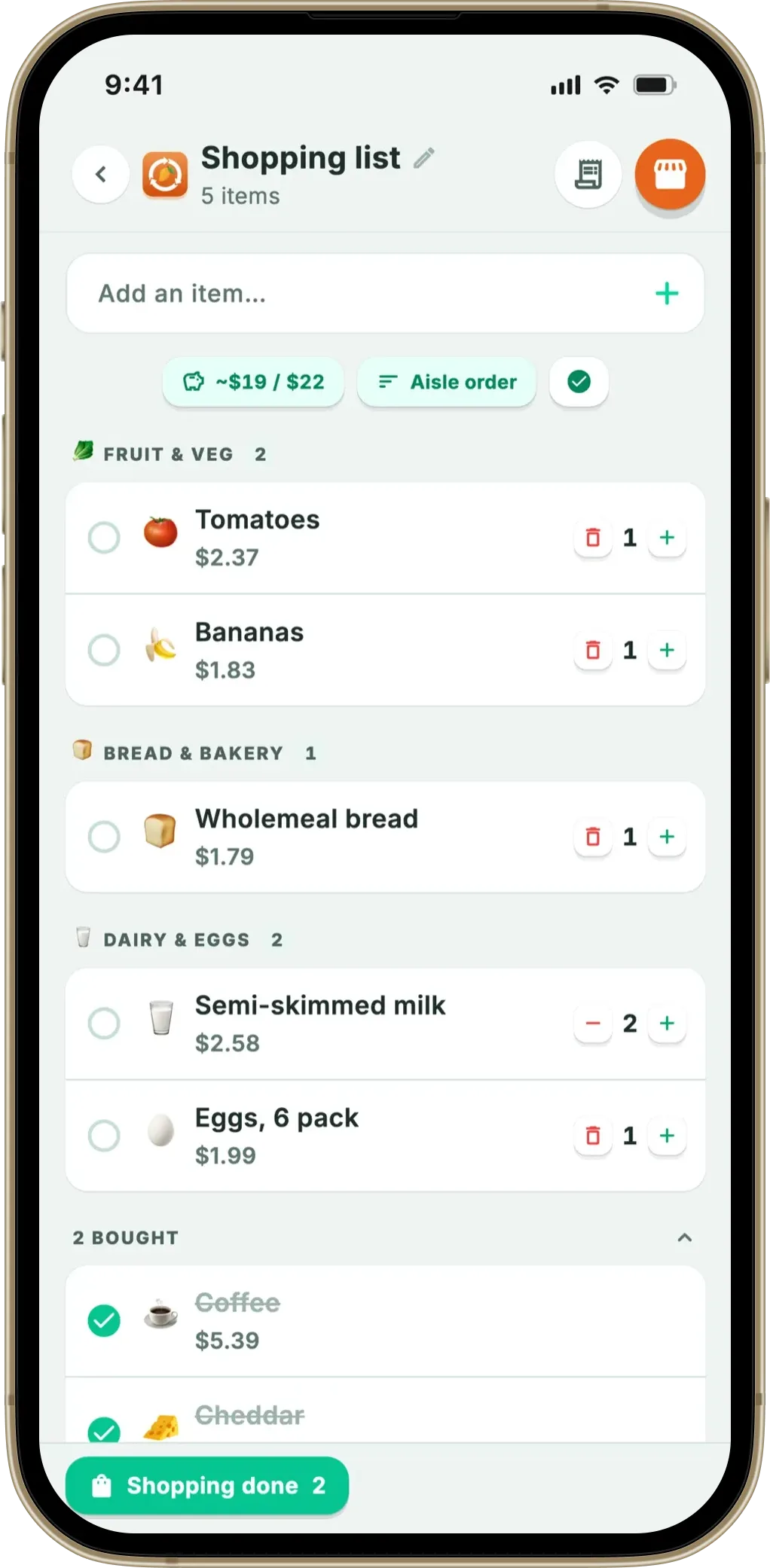
No account, and nothing to share when you live alone. Aisle-sorted list, prices remembered from your own receipts, and a nudge when something in the fridge is about to go off.
Download on the App Store Get it on Google PlayFree for a month · No sign-up · iOS and Android
The research backs this up rather than the folk wisdom. WRAP’s people-focused study of household food waste finds that larger households generate less waste per person than single-occupancy households — and names the mechanism: for people living alone, the waste comes disproportionately from food not being used before it goes off or passes a date label, rather than from leftovers piling up.
That’s a useful finding, because it points at fixable things. Below: how to size a one-person list, the multipack test, the freezer rule that does most of the work, and how to write a list you’ll actually shop from.
- Living alone wastes more per head — WRAP attributes it to food going off, not leftovers
- Buy fresh for three days, not seven, and let frozen and tinned carry the rest of the week
- The multipack test: price per portion you’ll actually eat, not price per unit
- Portion and freeze on shopping day — the single highest-return habit for one-person households
What a one-person list should actually look like
Not a shorter version of a family list — a differently shaped one. The dry and frozen sections stay roughly the same size; the fresh section shrinks hard.
If the same problem shows up on the shopping side — buying what you already have — our best shopping list app comparison covers apps that read your inventory.
| Section | Buying for one | Why |
|---|---|---|
| Fruit and veg | Loose where possible; three days’ worth of anything leafy | Salad and herbs have the same shelf life however many of you there are |
| Bakery | One loaf, half of it frozen the same day | Bread is one of the biggest single sources of household waste |
| Dairy and eggs | Smallest milk that covers the week; block cheese over pre-grated; eggs freely | Eggs keep for weeks; opened dairy does not |
| Meat and fish | One portion for the fridge, the rest split and frozen on arrival | Fresh meat and fish keep 1–2 days; the freezer removes the deadline |
| Frozen | Buy generously — peas, spinach, berries, fish fillets | This is the section that makes shopping for one work |
| Dry goods and tins | Normal quantities; multipacks fine | Nothing here can spoil before you get to it |
| Household and toiletries | Bulk is genuinely cheaper | No shelf life, no downside |
← scroll →
The general-purpose version of this, sized for any household, is in our weekly grocery list guide; the ordering logic is in the aisle-by-aisle guide.
The multipack test
Supermarket pricing is designed to make the larger pack look obviously correct, and for anything shelf-stable it is. The test that matters when you live alone is one question:
What’s the price per portion I will actually eat?
Six yoghurts for £2.40 is 40p each. If you eat four and bin two, you paid 60p each — more than the four-pack at £1.90 would have cost you. The unit price on the shelf label answers a question you’re not asking, because it assumes zero waste. Run the same sum on salad bags, bread rolls, bagged fruit and anything sold as “family size”, and a lot of the value disappears.
Where multipacks stay honestly cheaper: tins, pasta, rice, coffee, cleaning products, toilet roll, frozen anything. Buy those in bulk without guilt.
The freezer rule, and why it’s the whole game
If you take one thing from this page: portion and freeze on the day you shop, before anything is opened. Not “if I don’t use it by Thursday” — that decision never gets made, and Thursday is exactly when you’re least inclined to cook.
Ten minutes when the bags come in converts family pack sizes into one-person meals:
- Bread. Half the loaf, sliced, straight in. It toasts from frozen — see freezing bread.
- Mince and chicken. Split the pack into single portions before it goes anywhere near the fridge.
- Cheese. Grate the end of the block and freeze it; it goes straight into cooking.
- Milk. Freezes fine if you’re going away, though it needs a good shake afterwards — the details are here.
- Cooked rice and pasta. Cook once, eat three times. Cooked food keeps only 2–4 days in the fridge according to the UK Food Standards Agency, which also puts the fridge at 0–5°C, so the freezer is where batch cooking for one belongs.
Our general guide to freezing food covers what does and doesn’t survive it. The one thing to add for a single-person freezer: label everything with the date, because a bag of unidentifiable grey meat is functionally the same as a bin.
Writing a list you’ll actually shop from
Three habits that matter more when there’s nobody else to notice the fridge.
- Check the fridge before you write, not after. When you live alone, nobody else eats the thing you forgot about. Two minutes with the fridge door open removes the duplicate purchases — the method is in shop your fridge first.
- Write the list in shop order. One lap means fewer passes through the promotions, and impulse buying does more damage to a one-person budget because there’s no one else to help eat the mistake.
- Keep the list between shops. Clear the ticks rather than deleting it, so next week starts from your real staples instead of a blank note.
There’s one small upside to shopping alone that’s worth naming: you don’t need a shared list. Every list app in the category is built around households syncing through an account, which is the feature you’re paying for with ads or a subscription and will never use. Apps that keep everything on one phone are a straightforwardly better fit — our roundup of shopping list apps without an account covers the options.
No account, and nothing to share when you live alone. Aisle-sorted list, prices remembered from your own receipts, and a nudge when something in the fridge is about to go off.
Download on the App Store Get it on Google PlayFree for a month · No sign-up · iOS and Android
The part a list can’t solve
Everything above is about the shop. WRAP’s finding is about what happens afterwards: for single-occupancy households, the waste comes from food not being used before it goes off. A perfect list buys the right amount and then leaves you alone, which is exactly the moment the problem starts.
The scale is worth keeping in view — WRAP’s 2022 report puts UK household food waste at £1,000 a year for the average household of four, and UNEP’s Food Waste Index Report 2024 estimates around a fifth of the food available to consumers is thrown away. A single-person household spends less in absolute terms and loses more of what it spends.
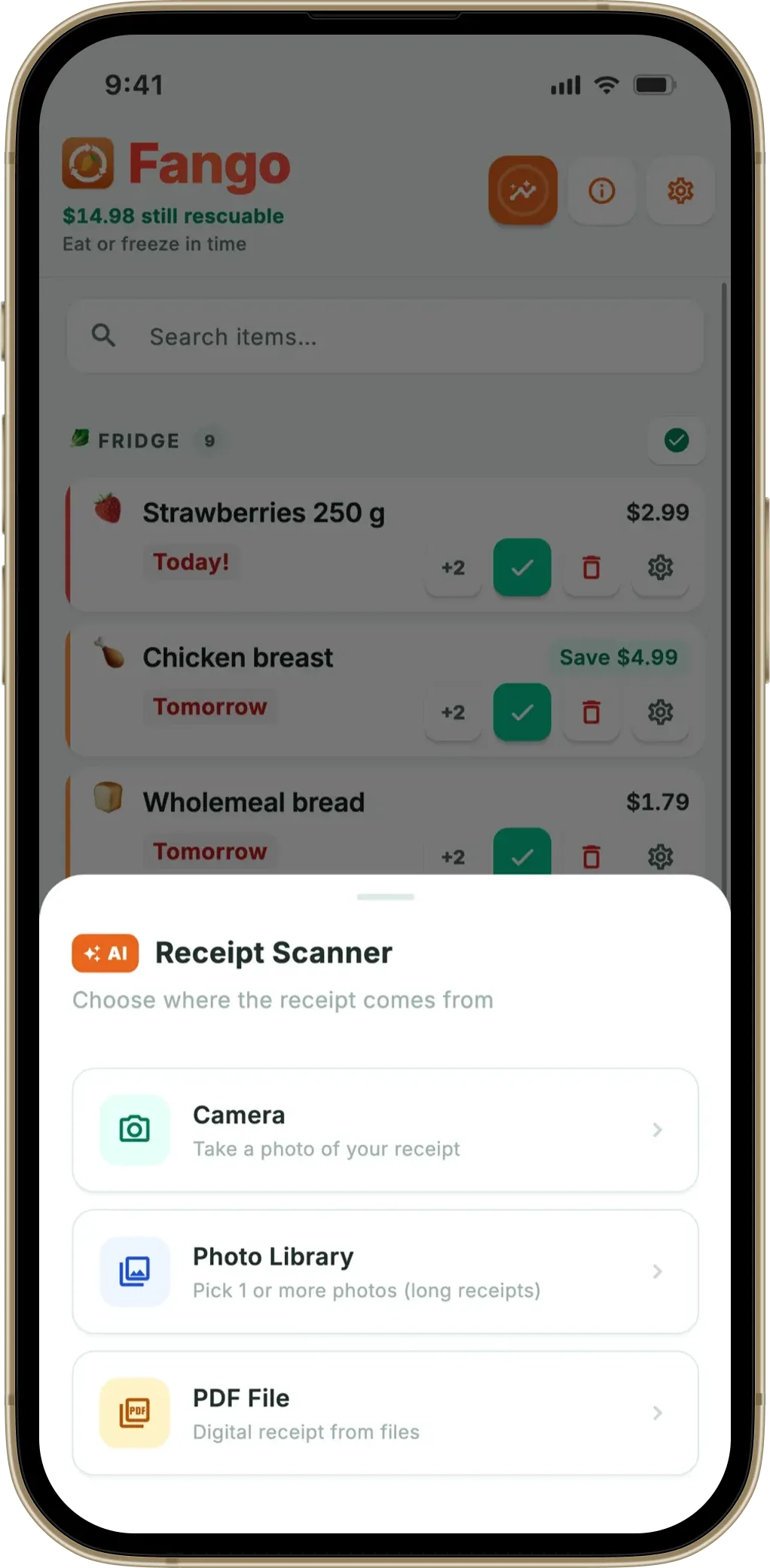
The low-tech answer is an eat-me-first shelf: one shelf in the fridge for things on their last two days, checked before you decide what to cook. The higher-tech answer is an app that keeps that list for you and pushes a reminder before the date — which is what Fango does with a scanned receipt, and what our piece on food waste apps when you live alone compares in more depth. Either works. Doing neither is what the research is measuring.
Frequently asked questions
Do people living alone waste more food?
More per person, yes. WRAP’s people-focused research on household food waste finds that larger households generate less waste per person than single-occupancy households, and it identifies the reason: single-occupancy waste comes disproportionately from food not being used before it goes off or passes a date label, rather than from leftovers. That is a pack-size and shelf-life problem rather than a discipline problem, which is why the fixes are practical ones.
How much food should one person buy for a week?
Less fresh food than the shop wants to sell you, and about the same amount of everything else. A workable starting point for one person is fresh produce for three days rather than seven, one protein for the fridge and the rest into the freezer on the day of purchase, and dry or tinned goods bought normally because they cannot spoil. Then look at what is left on Sunday for two or three weeks and adjust down, because almost everyone starts too high.
Are multipacks worth it when you shop for one?
Only for things that keep. A multipack of tinned tomatoes or pasta is straightforwardly cheaper per unit and nothing is lost. A multipack of yoghurts, salad bags or bread rolls is only cheaper if you eat all of it, and the price per portion you actually consume is the number that matters. If you would bin a third of it, a pack costing 40 percent more per unit is still the cheaper purchase.
What is the single best habit for shopping for one?
Portioning and freezing on the day you shop, before anything is opened. Bread, mince, chicken, grated cheese and cooked rice all freeze well, and splitting them into single portions the moment you get home converts a family-sized pack into eight meals instead of one meal and a bin bag. It takes a few minutes once a week and it removes most of the disadvantage of shopping alone.