The average UK household throws away around £1,000 of edible food a year, according to WRAP — roughly £19 every week, quietly, in small forgotten items. Across the country that’s about £17 billion a year. Most of it isn’t food that spoiled before its time; it’s food that was bought, lost track of, and binned. Fango exists to stop exactly that — but first, it helps to see where the money actually goes.
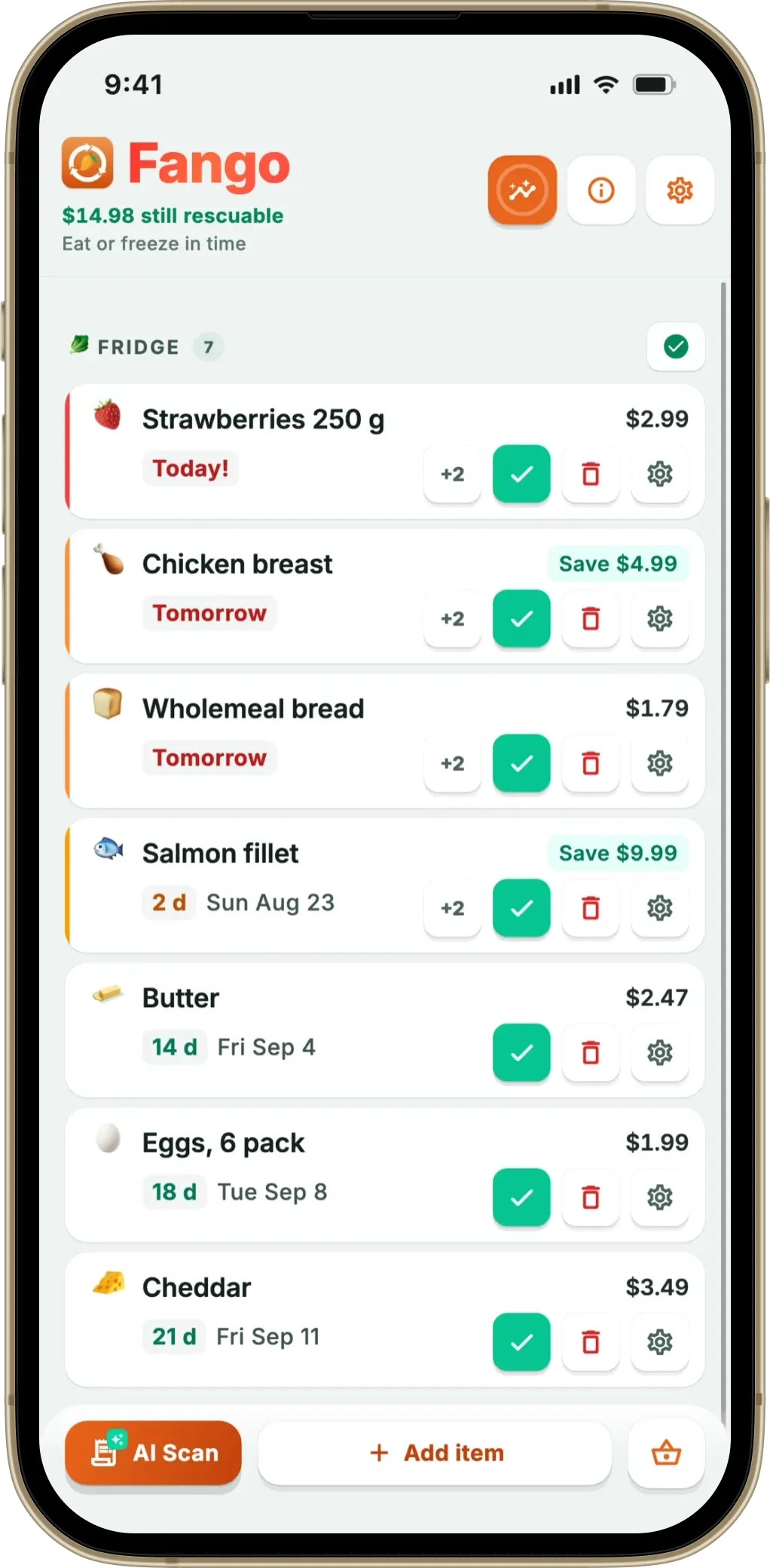
Scan your receipt — AI adds every item to your fridge with an expiry date, then reminds you 1–14 days in time. Fango also tallies what you’ve saved, so you can watch that £1,000 shrink. No sign-up, all data on your device by default.
Download on the App Store Get it on Google PlayFree for a month · No sign-up · iOS and Android
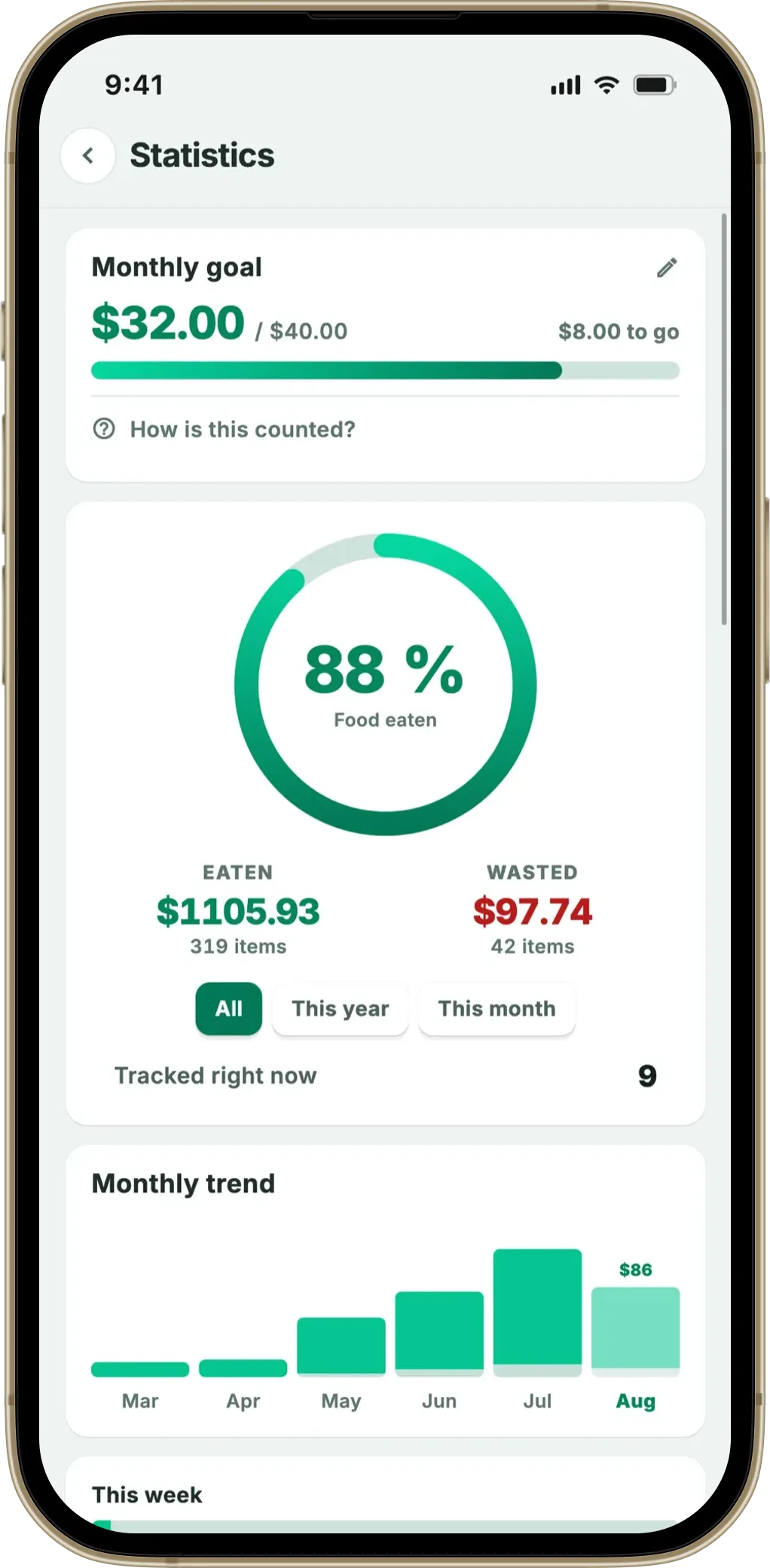
This guide breaks down what food waste costs you per week and per year, why it’s so much higher than people assume, and the few changes that recover most of it.
- ~£1,000 a year per household — about £19 a week of edible food thrown away (WRAP).
- ~£17 billion nationally — the UK’s total annual household food waste bill.
- ~70 kg per person — edible food wasted each year; globally, a fifth of the food available to consumers is wasted (UNEP).
- It’s a visibility problem — most of the cost is small, forgotten items, which is exactly what tracking catches.
What food waste costs per week and per year
For a typical household, food waste costs around £19 a week, or close to £1,000 a year. That figure comes from WRAP’s 2022 analysis, which puts total UK household food waste at roughly £17 billion annually. It’s an average, so larger families lose more and single-person homes less per household — but per person, smaller households often waste more, because packaging is sized for families.
The feature that matters most in any of these apps is the reminder — see what a good expiry date tracker app does differently.
The reason the number feels surprising is that it never arrives as one big loss. Nobody throws away £19 at once. It’s 80p of salad here, £1.50 of chicken there, half a loaf, a yoghurt past its date — dozens of small write-offs a month that never register as a single bill. Add them up across a year and it’s a holiday’s worth of money in the food caddy.
Why food waste is more expensive than people think
Food waste is expensive because you effectively pay for the same food twice and because the loss is hidden in plain sight. You pay once at the checkout for groceries you intend to eat, and then the value evaporates when those groceries are binned uneaten. Because it happens item by item, the cost stays invisible — there’s no receipt for waste.
If the fridge is where food gets lost, a fridge tracker app puts everything in it on one list with dates.
There’s a confidence cost on top of the cash. The NRDC reports that 73% of people confuse date labels with safety, so a large share of waste is food that was thrown out while still perfectly good. Learning the difference between best-before and use-by dates alone reclaims part of the bill — best-before is a quality guide, not a safety deadline.
Where the money goes in your fridge
Most household food waste is concentrated in a few predictable categories — the perishables you buy fresh and lose to time. Knowing which items cost you most tells you where tracking pays off fastest:
Meat and fish are the costliest to waste per item, while salad and bread are wasted most often. The good news: nearly all of these freeze well, so a reminder a day or two before the date turns a write-off into a rescue. Our guide to freezing food covers what holds up, and how long food lasts in the fridge sets realistic expectations.
How to recover most of what food waste costs you
You can claw back the bulk of the £1,000 with one shift in approach: make the food you already own visible, and act before the date instead of after. Waste is a memory problem far more than a willpower one — the items that cost you are the ones you forgot you had. These four moves target that directly:
-
1
Track what you buy. A current list of what’s in your fridge — and when each item is due — is the single biggest lever. You can’t use up what you’ve forgotten exists.
-
2
Get reminded before the date. A nudge a few days ahead is what moves an item from the back of the fridge to tonight’s plate. See how a reminder in time works, and how to track how much food you waste to see your own baseline.
-
3
Freeze the rescue cases. Anything near its date that you won’t eat in time goes in the freezer that day — bread, meat, even milk.
-
4
Shop your fridge first. Before the next big shop, build a meal or two from what’s already there. It’s the cheapest food you’ll ever cook — you’ve already paid for it.
None of this requires eating differently — just losing less of what you already buy. For the full playbook, see how to reduce food waste at home and how to save money on groceries. For the wider numbers behind the cost, our food waste statistics page goes deeper.
Scan your receipt — AI adds every item to your fridge with an expiry date, then reminds you 1–14 days in time. Fango also tallies what you’ve saved, so you can watch that £1,000 shrink. No sign-up, all data on your device by default.
Download on the App Store Get it on Google PlayFree for a month · No sign-up · iOS and Android
The bottom line
Food waste costs the average UK household around £1,000 a year and the country £17 billion — almost all of it small, forgotten, recoverable items. It’s not a tax you have to pay. Because the loss is a visibility problem, the fix is visibility: track what you own, act before the date, and most of that money stays in your pocket. Even halving your household’s waste is a few hundred pounds back a year.
The other half of the cost is created in the shop: you buy a second one of something already at home, because you cannot remember the fridge while standing in front of the shelf. That is where shopping your fridge first helps — and an app that carries your fridge list into the shop, suggests what is genuinely running low and sorts the rows into aisle order, so half the list does not come back to you in the checkout queue.
Frequently Asked Questions
How much money does food waste cost a household?
The average UK household throws away around £1,000 of edible food a year, according to WRAP — roughly £19 a week. Across the UK that’s about £17 billion annually. Most of it is food that was bought, forgotten and binned, not food that spoiled before it could be used.
Why is food waste so expensive?
Because you effectively pay for the food twice: once at the till, and again when the value evaporates as it’s binned uneaten. At home the cost is simply the groceries you paid for and then threw away — and it’s higher than people expect because it’s spread across many small, forgotten items rather than one obvious loss.
How much food does the average person waste?
WRAP estimates around 70 kg of edible food per person each year in the UK. Globally, the UNEP Food Waste Index reports that roughly a fifth of the food available to consumers is wasted — much of it at the household level, from food that was simply forgotten.
How can I reduce what food waste costs me?
The biggest lever is visibility: you waste what you forget. Tracking what’s in your fridge and getting reminded in time catches the small, forgotten items that make up most of the bill. Even rescuing a few items a week recovers a meaningful slice of that £1,000.