You find it a week too late: the half-bag of spinach gone slimy, the chicken you meant to cook on Tuesday, the yoghurt two days past its date. You didn’t decide to waste them — you forgot they were there. That’s not a character flaw; it’s how memory works, and it’s the single biggest reason households waste food. WRAP puts the UK average at around £1,000 of food binned per household each year, most of it simply forgotten. Fango is built to remember it for you.
Scan your receipt, AI adds every item with an reminder date, and Fango reminds you 1–14 days in time. No more “I forgot I had that.” No sign-up, all data stays on your device by default.
Download on the App Store Get it on Google PlayFree for a month · No sign-up · iOS and Android
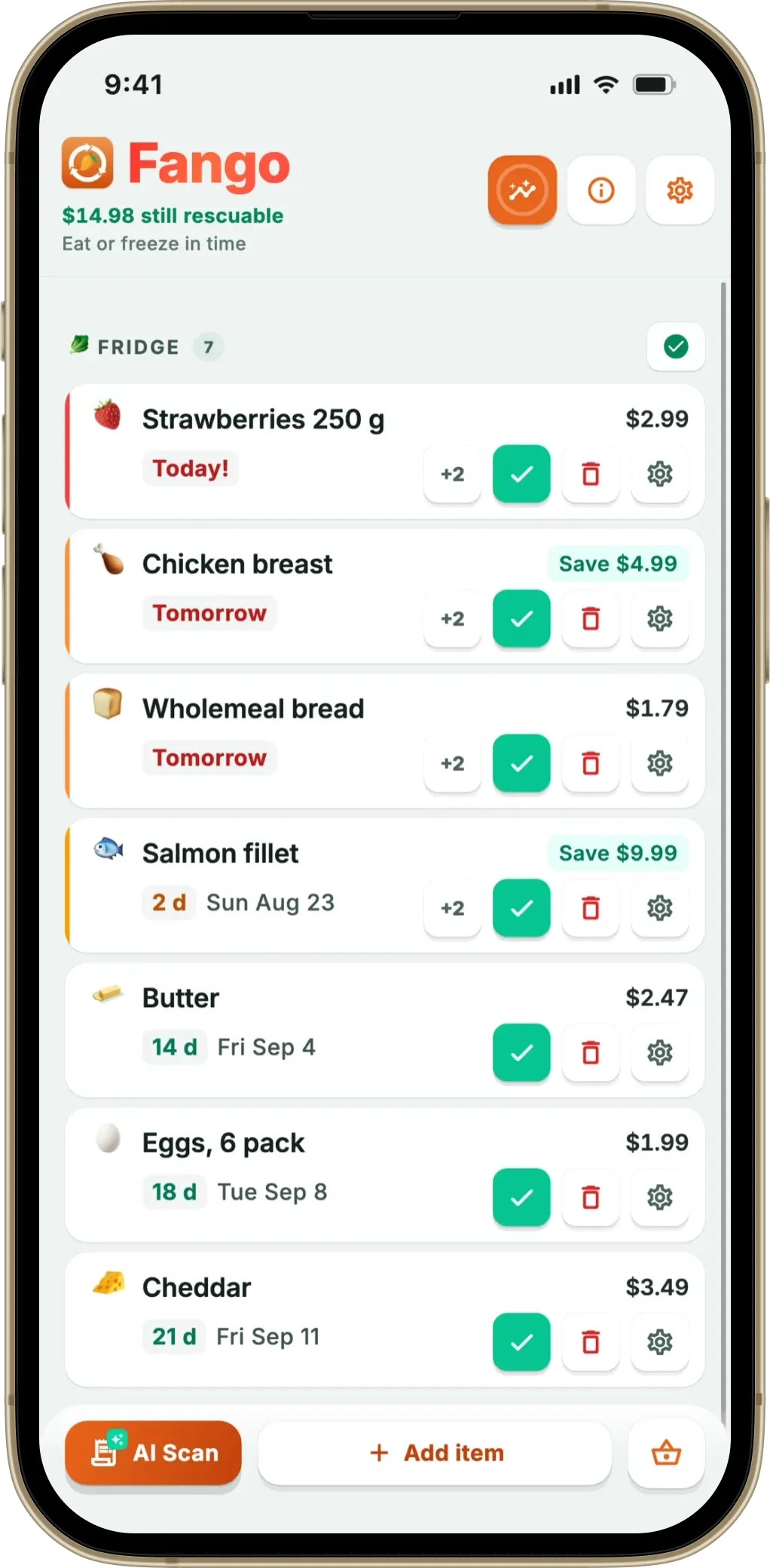
This guide explains why your brain keeps losing track of the fridge, what it actually costs, and four fixes that make the food you already own impossible to forget.
- Out of sight is out of mind — food you can’t see stops cueing your memory, so you never think to use it.
- It’s a system problem, not willpower — a busy week overloads the mental list you’re trying to keep.
- The fix is visibility + reminders — make food visible and have something else hold the dates.
- Let an app remember — Fango tracks every item and notifies you in time.
Why you keep forgetting food in your fridge
You forget food because the fridge is the worst possible place for memory: it’s closed, crowded and out of sight for most of the day. Memory is heavily cue-driven — you remember things you’re prompted to see. The moment an item is pushed to the back, buried in a drawer or hidden behind a taller carton, it stops sending you any signal, and your brain quietly drops it from the list.
A fridge tracker app handles this for every item at once — here is what separates a good one from a spreadsheet.
Three everyday forces make it worse:
- No reliable cue. You can’t see expiry dates without opening packets and squinting, so nothing reminds you a date is approaching until it’s passed.
- Too much to hold. A weekly shop is 20–40 items. Keeping all of them, plus their dates, in your head while life happens is a memory task you’re set up to fail.
- The fridge hides things. Layout matters more than people think — a disorganised fridge actively conceals food. That’s why how you organise your fridge changes how much you waste.
What forgotten food actually costs
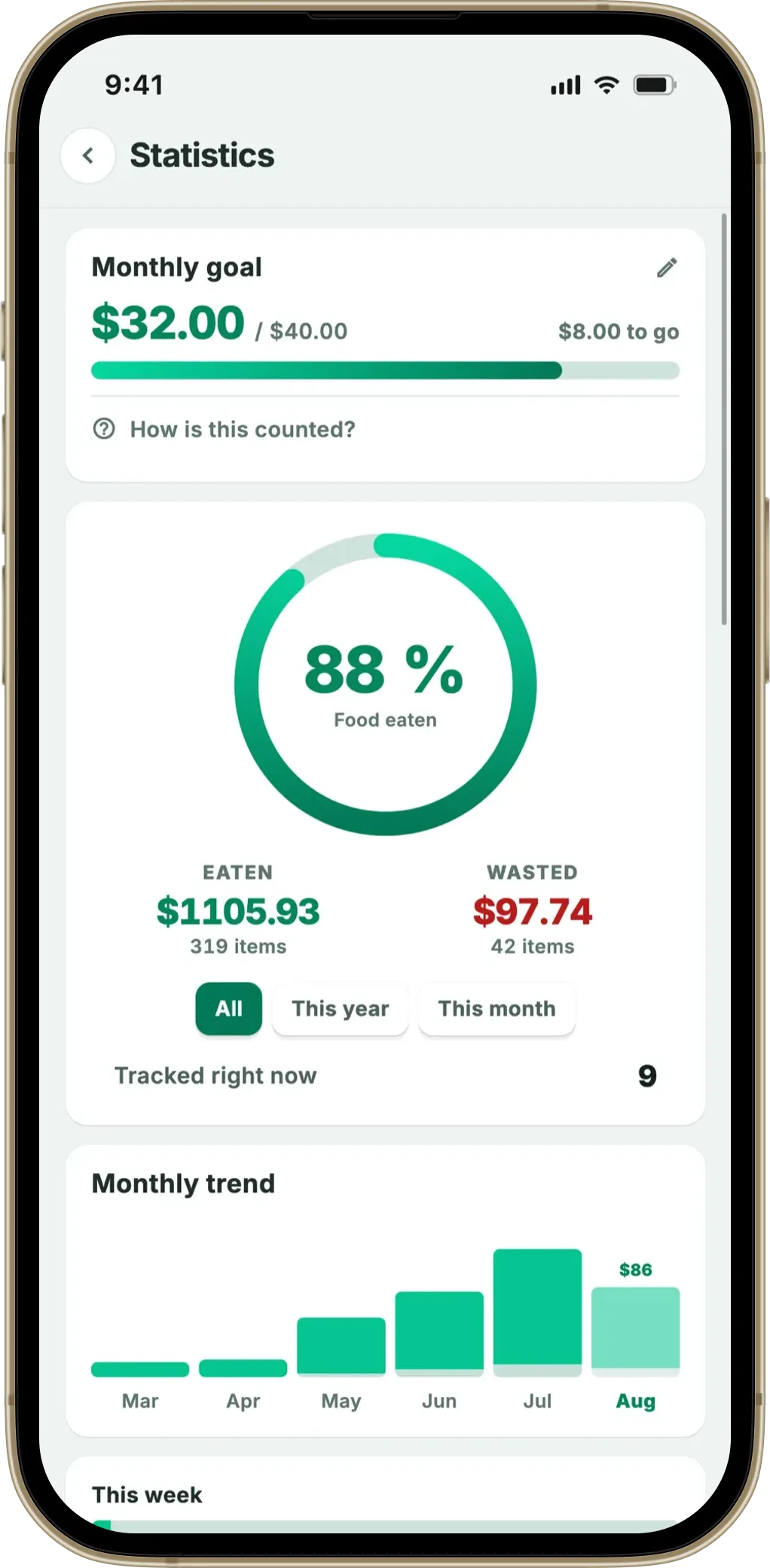
Forgotten food is the bulk of the bill, which is why fixing memory beats almost any other change. The waste isn’t dramatic one-off losses — it’s 80p of salad, £1.50 of meat, half a loaf, repeated across the month until it’s hundreds of pounds a year. We break the full numbers down in how much money food waste costs, but the headline is simple: most of it is recoverable, because most of it was perfectly good when you forgot it.
There’s a second twist. The NRDC finds 73% of people confuse date labels with safety — so even when you do remember an item, you might bin it needlessly. Knowing the difference between best-before and use-by means the food you remembered doesn’t get thrown out for no reason.
Fix 1–2: make food impossible to miss
The first two fixes attack the visibility problem directly — if you can see it, you’ll use it. Neither needs an app:
-
1
Build an “eat me first” zone. Clear a shelf or a box at the front of the fridge and put everything near its date there. One glance every time you open the door tells you what needs using — no remembering required.
-
2
Store so nothing hides. Keep tall items at the back, decant leftovers into clear containers, and don’t stack new shopping on top of old. A fridge where everything is visible is a fridge you can’t forget. See how to organise your fridge.
Fix 3–4: stop relying on your memory at all
The most reliable fix is to stop using your memory for the job it’s bad at. Don’t try to hold 30 items and their dates in your head — hand that to something that won’t forget. That’s exactly what a tracking app does, and it’s where Fango fits.
-
3
Track without typing. Scan your grocery receipt and Fango’s AI adds every item with an estimated reminder date — the whole shop logged in seconds, so there’s a list that doesn’t live in your head. See the receipt scanner in action.
-
4
Be reminded before the date. Fango sends a push notification 1–14 days before each item is due, and a home-screen widget shows what’s next — so the food comes to your attention while there’s still time to cook it. The food finds you, instead of you having to find it.
When the reminder lands you can mark an item ✓ Eaten, log it as Waste, or tap +2 days straight from the lock screen — the one-tap actions keep the list honest without effort. It’s the same principle that makes the app so effective for people who live alone, where there’s no one else to notice.
A simple weekly routine
Put the fixes together and forgetting food stops being your default. The whole routine takes a few minutes a week:
-
1
Scan the receipt after the shop. One photo logs everything before it disappears into the fridge.
-
2
Act on the reminders. When a nudge arrives, cook it, freeze it, or tap +2 days — don’t let it slide.
-
3
Cook from the front first. Build a meal each week from the eat-me-first zone and whatever the app flags as due.
That’s the entire system: see it, track it, get reminded. For more, our guides on reducing food waste at home and freezing food cover what to do with everything the reminders catch.
Break it in the shop as well. Forgetting costs twice: once when the food spoils, and once when the same item is bought again. Shopping your fridge first means checking what is already at home before the list is written.
Scan your receipt, AI adds every item with an reminder date, and Fango reminds you 1–14 days in time. No more “I forgot I had that.” No sign-up, all data stays on your device by default.
Download on the App Store Get it on Google PlayFree for a month · No sign-up · iOS and Android
Related reading: Why Does Food Go Off So Fast in My Fridge.
Frequently Asked Questions
Why do I keep forgetting food in my fridge?
Because of how memory works: out of sight is genuinely out of mind. Food pushed to the back, hidden in a drawer or stacked behind something else stops cueing your memory, so you don’t think to use it. It’s not carelessness — your brain simply can’t track items it can’t see, especially across a busy week with 20–40 things to remember.
Is forgetting food in the fridge the main cause of food waste?
Largely, yes. Most household food waste comes from food that was bought and then forgotten, not from buying too much. WRAP estimates UK households waste around £1,000 of food a year, and the bulk of it is small, overlooked items that quietly expire at the back of the fridge.
How do I stop forgetting food before it goes off?
Make what you own visible and get a reminder before the date. Keep an “eat me first” zone at the front of the fridge, and use an app that tracks your items and notifies you 1–14 days before each expires — so the food finds you instead of you having to remember it.
Can an app remember what’s in my fridge for me?
Yes. Fango scans your receipt, adds every item with an estimated reminder date, and sends a reminder before each is due — so you don’t have to hold the list in your head. It runs on your phone with no account, and you can tap a reminder to mark an item eaten, wasted or extended.