Living alone is quietly expensive at the fridge. According to WRAP, UK households throw away around £1,000 of food a year — and per-person that figure runs higher when you live alone, because supermarket packaging and recipes are built for families, not for one. The loaf goes stale, the salad bag wilts, the family pack of mince sits a day too long, and there’s no one else to flag it. Fango is built to be that second pair of eyes.
Scan your receipt and Fango tracks every item for you, then reminds you 1–14 days before it goes off — perfect when you live alone and there’s no one else to notice. No sign-up, all data stays on your device by default.
Download on the App Store Get it on Google PlayFree for a month · No sign-up · iOS and Android
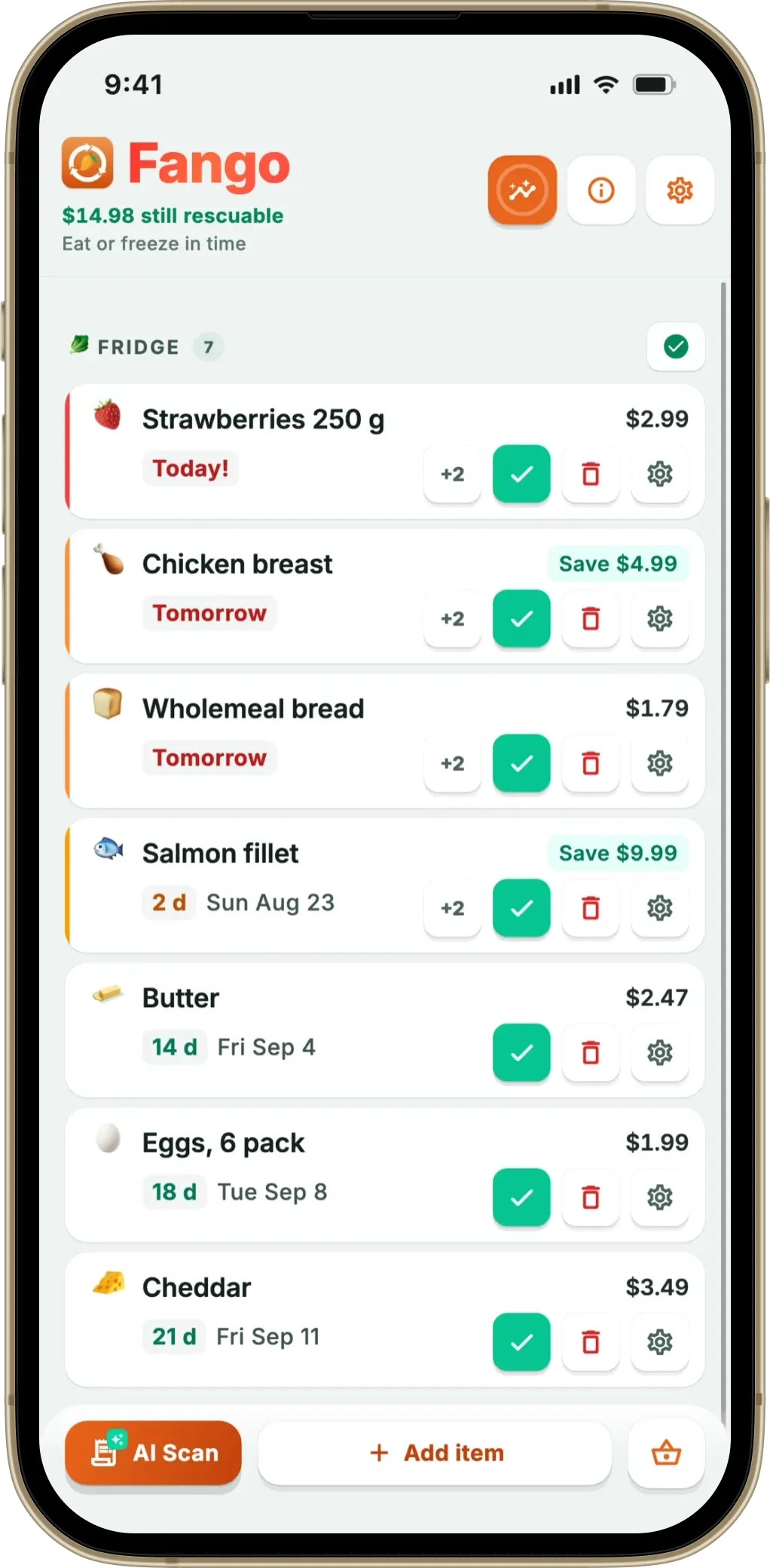
This guide looks at why single-person households waste more food per head, what to look for in an app when you’re the only one tracking, and how Fango fits a one-person fridge in particular.
- Per-person waste is higher when you live alone — packaging and portions are sized for families.
- The fix is visibility, not willpower — you waste what you forget, so the app’s job is to remind you in time.
- Scan, don’t type — Fango reads your receipt and adds every item automatically, so even small shops get tracked.
- Free to try — one month free, no account needed.
Why single people waste more food per person
Single people waste more per head because the food system is sized for households, not individuals. A loaf, a litre of milk, a bag of spinach, a tray of chicken thighs — all are portioned for several people, but bought by one. By the time one person finishes them, the tail end has usually gone off. The waste isn’t carelessness; it’s a mismatch between pack sizes and a one-person appetite.
There’s a second, quieter reason: no backup memory. In a shared home, someone else might spot the yoghurt nearing its date or shout that the peppers are going soft. Live alone and every item is your responsibility to remember — and the ones that get wasted are almost always the ones that slipped out of sight at the back of the fridge. Understanding the difference between best-before and use-by dates helps too, since a lot of solo waste is binning food that was still perfectly fine.
What a single person needs from a food waste app
The right app for one person does one thing above all: it remembers for you. When there’s no second person to notice the forgotten item, the app has to be the prompt. Beyond that, three things matter most when you’re tracking solo:
- No manual typing. If logging food is a chore, a single person won’t keep it up. Receipt scanning means the whole shop is tracked in seconds, not item by item.
- Reminders before, not after. A notification a few days ahead of the date is what turns a forgotten pepper into tonight’s dinner. After it’s spoiled, an app is just a diary of regret.
- Light, not a project. One person doesn’t need shared inventories, family accounts or meal-planning suites. A simple list and a timely nudge is the whole job.
This is also why a privacy-light, account-free setup suits solo users — there’s only one person and one phone, so there’s nothing for sharing or a cloud account to do. A food waste app with no registration gets you straight to tracking.
How Fango fits a one-person fridge
Fango is designed around exactly the single-person problem: you bought it, you’ll forget it, so the app makes sure you don’t. You scan your grocery receipt, the AI reads every product and adds it to your list with an estimated expiry date, and you get a push notification 1–14 days before each item is due. No typing, no account, and nothing leaves the phone unless you switch household sharing on yourself.
The detail that matters most for solo users is the one-tap notification. When the reminder lands, you can mark an item ✓ Eaten, log it as Waste, or tap +2 days to push the date — straight from the lock screen, without opening the app. That keeps the list honest with almost no effort, which is the only way a single person sticks with tracking. The notification action buttons are the load-bearing feature here.
Because there’s no household to coordinate, Fango fits a one-person fridge especially well: it’s free to try for one month, then from $2.99/month or $22.99/year if you keep it. Either way the data stays on your phone by default — see how the receipt scanner reads a real shop.
Smarter solo shopping habits
An app catches what you forget, but a few habits cut the problem at the source. For one-person households, the biggest wins come from buying and storing for one, not for a family. These four work alongside the app:
-
1
Freeze on the day, not in desperation. Split a family pack of mince or chicken into single portions and freeze it the day you buy it, while it’s freshest — our guide to freezing food covers what holds up well.
-
2
Shop your fridge first. Before you buy more, check what’s already near its date. Letting the app’s list set your next meal is the simplest waste-cut there is.
-
3
Buy loose where you can. Single peppers, a few mushrooms, one banana — loose produce lets you match the portion to one person instead of binning the rest of the bag.
-
4
Keep the fridge organised. Solo waste lives at the back, out of sight. A quick “eat me first” zone at the front keeps it visible — see how to organise your fridge.
Put together, the habit and the app reinforce each other: you buy a little smarter, and the reminders catch whatever still slips through. For the bigger picture, our guides on reducing food waste at home and saving money on groceries go further.
Scan your receipt and Fango tracks every item for you, then reminds you 1–14 days before it goes off — perfect when you live alone and there’s no one else to notice. No sign-up, all data stays on your device by default.
Download on the App Store Get it on Google PlayFree for a month · No sign-up · iOS and Android
Is it worth it for one person?
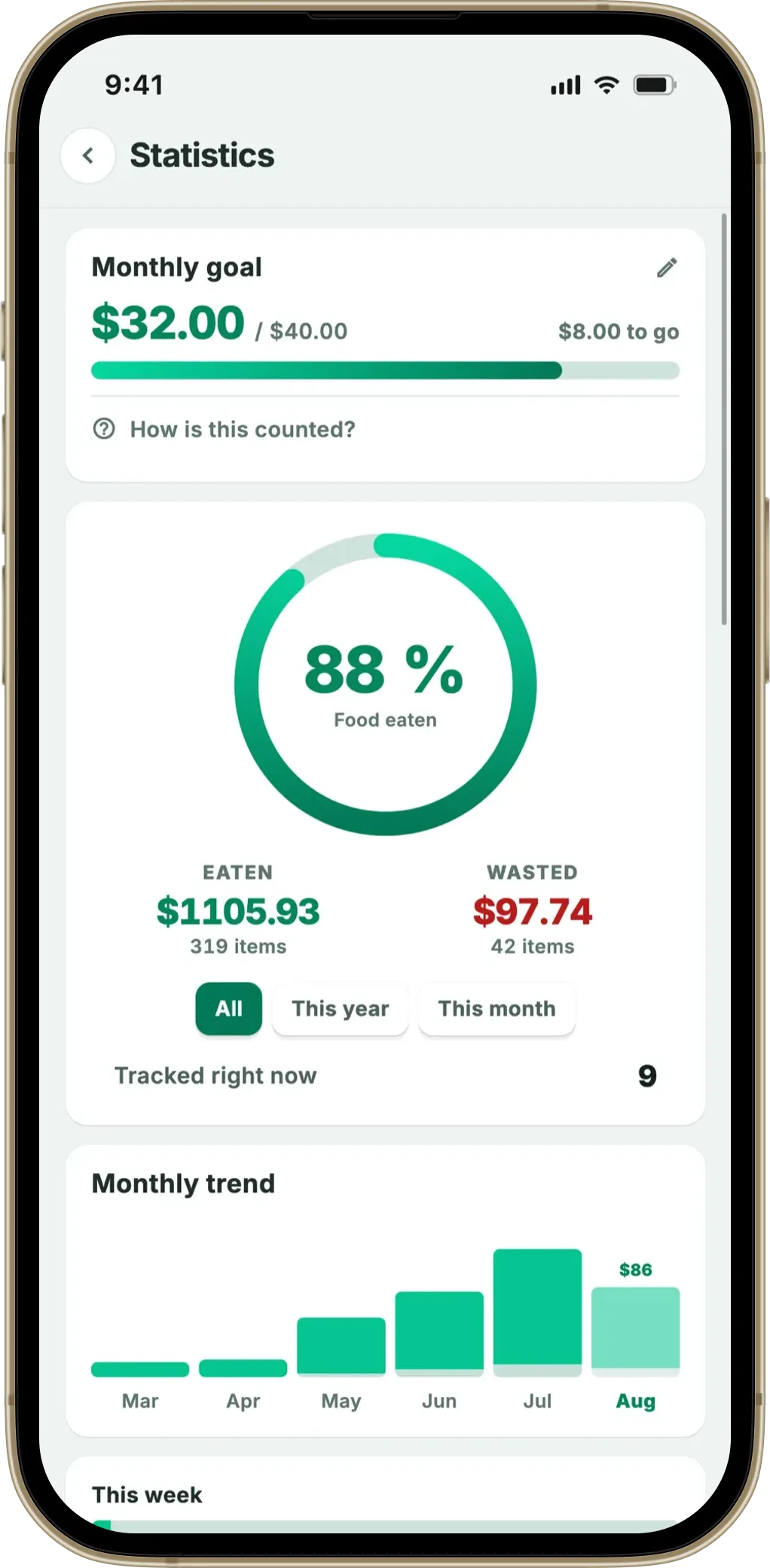
For a single person, the maths is straightforward: rescue a few forgotten items a month and the app has more than paid for itself. The waste you can’t see is the waste that costs you, and when you live alone there’s no one else doing the seeing. An app that scans your receipt and reminds you in time turns “I forgot I had that” into “dinner’s sorted.”
If you want to compare options before you commit, the best food waste tracker app roundup and the best free food waste app guide cover the field — but for one person, on one phone, scan-and-remind is the whole answer.
Frequently Asked Questions
Why do single people waste more food per person?
Packaging and recipes are built for families, so a one-person household buys more than it can finish before items go off. Loaves, salad bags, family packs of meat and large yoghurts all spoil before a single person gets through them. There’s also no backup memory — no one else to spot the item nearing its date — so per-person waste runs higher when you live alone.
What’s the best food waste app for someone living alone?
The best app for a single person tracks every item with no manual typing and reminds you before each goes off. Fango scans your receipt, adds the products automatically and sends a notification 1–14 days before expiry — ideal when there’s no one else to notice the forgotten item at the back of the fridge.
Is Fango free for one person?
Fango is free to try for one month, with no account needed. After the trial it’s from $2.99/month or $22.99/year if you keep it — which a single person can easily save back by rescuing a few forgotten items.
How much money can a single person save by tracking food?
UK households throw away around £1,000 of food a year for an average household of four, and per-person waste is higher for people living alone. The shopping side of that is covered in our guide to a grocery list for one person — pack sizes, the multipack test and the freezer rule. Catching even a handful of forgotten items each month adds up to a meaningful saving over a year — and it costs nothing to start.