BEEP is a capable expiry-date tracker: you scan a product’s barcode, it sends reminders by day, week or month, and you can group items and share lists. It runs on iOS and Android. But two of its design choices send people looking for an alternative — it’s barcode-first, so adding a full shop means scanning each item one at a time, and it stores your data on its servers, so a cloud copy of your inventory exists. If either of those doesn’t suit you, here’s what to switch to, with Fango as the receipt-scanning, on-device option.
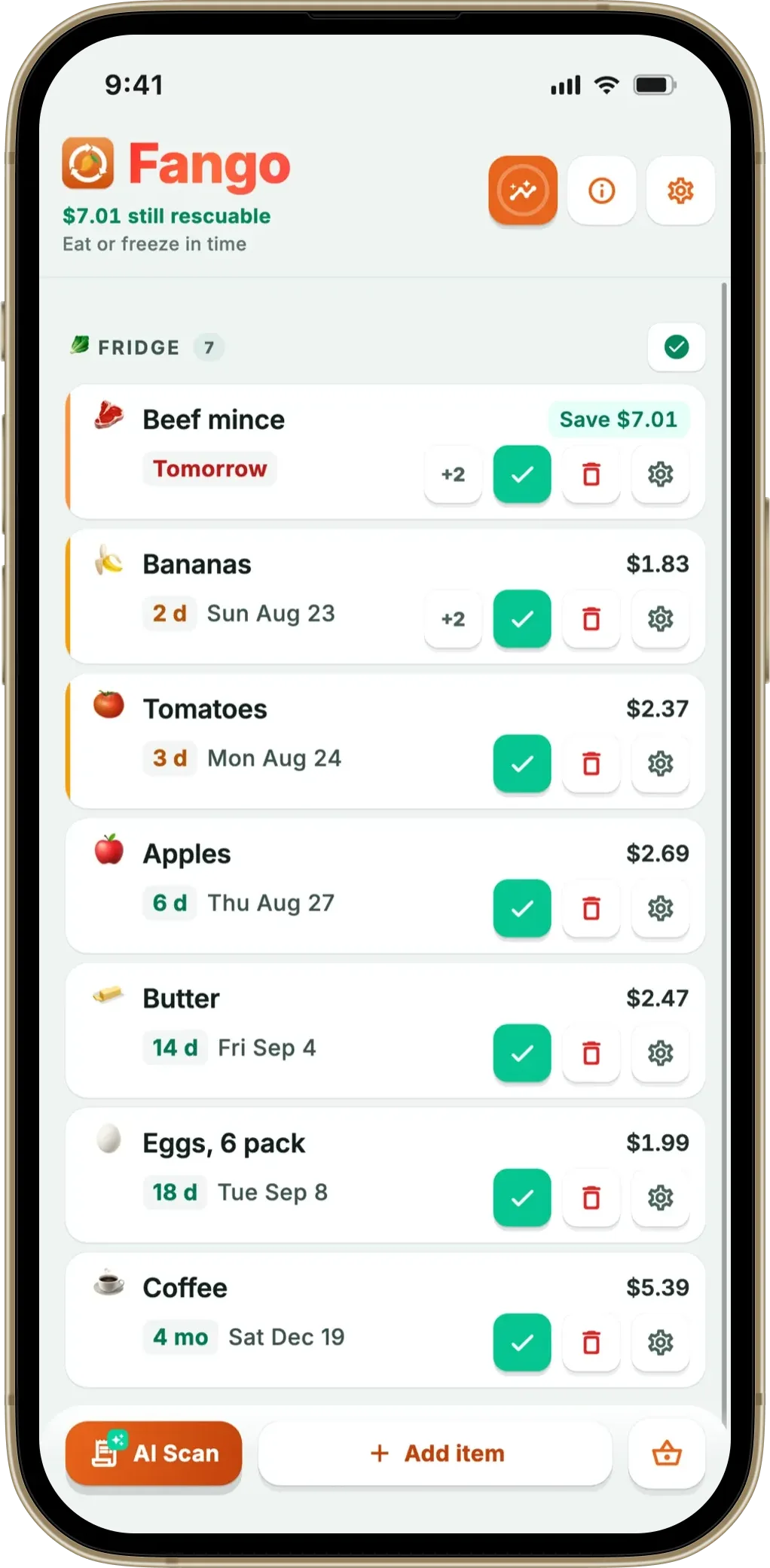
Fango reads your whole grocery receipt in one photo — loose produce included — adds every item with an estimated expiry date, and reminds you in time. No barcodes, no account, and nothing stored in the cloud unless you share a fridge with your household.
Download on the App Store Get it on Google PlayFree for a month · No sign-up · iOS and Android
- BEEP is a barcode-based, cloud-stored expiry tracker on iOS and Android with reminders and sharing.
- Want one photo to add a whole shop? Fango scans the receipt instead, loose produce included.
- Want your data off the cloud? Fango keeps everything on your phone by default, with no account.
- Best match depends on you: barcodes + sharing + cloud → BEEP; receipts + privacy → Fango.
What BEEP does well
It’s worth being fair: BEEP is a solid app, and an alternative only makes sense if a specific thing about it bothers you. Its barcode scanning is quick and accurate for packaged goods, its reminders are flexible (choose how many days, weeks or months ahead), and it lets you group products by type, category or location. Team sharing (invite others to your team) works for a shared kitchen, and because data sits on its servers, you can reinstall without losing anything.
The feature that matters most in any of these apps is the reminder — see what a good expiry date tracker app does differently.
So the question isn’t whether BEEP is bad. It’s whether barcode-by-barcode entry and a cloud-stored inventory are right for you. If you’d rather scan a receipt, or keep your data on your own device, read on.
Why receipt scanning beats barcodes for a full shop
The biggest day-to-day difference is effort. With BEEP, unpacking a weekly shop means picking up and scanning every item before it goes in the fridge — and anything loose, like the apples, the bakery roll or the deli ham, has no barcode to scan, so it never makes it in. A receipt-scan app flips that: one photo of the receipt adds 20 or 30 items at once, loose produce included, in a few seconds. The trade-off is laid out in full in receipt scan vs barcode scan.
That coverage matters because fresh, loose food is what gets wasted most. UNEP estimates roughly a fifth of the food available to consumers is wasted, much of it fresh items that quietly go off — exactly what a barcode can’t catch but a receipt does. Fango’s AI reads real receipts across more than 60 countries; see the grocery receipt scanner app guide for how it works.
The main BEEP alternatives compared
Three apps cover most of what BEEP users look for elsewhere. They differ in how you add food and where your data lives — the two reasons people switch. Here’s the head-to-head:
| Feature | Fango | BEEP | FoodShiner |
|---|---|---|---|
| Adding items | Whole receipt, AI | Barcode, one by one | Barcode, one by one |
| Captures loose produce | ✓ From receipt | ✗ No barcode | ✗ No barcode |
| Data location | On-device by default | Cloud servers | Optional iCloud |
| Account required | ✓ None | Yes | ✓ None |
| Platforms | iOS + Android | iOS + Android | iOS only |
| Expiry reminders | ✓ | ✓ | ✓ |
← scroll →
The pattern: BEEP and FoodShiner are both barcode trackers, with BEEP storing data in the cloud and FoodShiner offering optional iCloud. Fango is the one that scans receipts and keeps everything on your device by default. If you specifically want barcode scanning, FoodShiner is the closest like-for-like to BEEP on iOS — see our FoodShiner alternatives guide. For receipts and privacy, Fango is the bigger change.
Which BEEP alternative should you choose?
Pick by what made you look. None of these is best in the abstract — the right one fits how you shop and how you feel about the cloud:
If BEEP’s barcode workflow and sharing suit you, there’s no reason to move. If you’ve hit its limits — too much per-item scanning, or you’d rather not have a cloud copy of your food — Fango fixes exactly those. For the wider field, see the best food waste tracker app roundup.
Fango also carries a shopping list, which is unusual for an expiry tracker: it reads the fridge and your receipt history to suggest what is running low, and sorts itself into supermarket aisles. Sharing works inside a household of up to four, switched on with an invite code — there is still no account, and no personal sync between your own devices.
Fango reads your whole grocery receipt in one photo — loose produce included — adds every item with an estimated expiry date, and reminds you in time. No barcodes, no account, and nothing stored in the cloud unless you share a fridge with your household.
Download on the App Store Get it on Google PlayFree for a month · No sign-up · iOS and Android
Frequently Asked Questions
What is the difference between BEEP and Fango?
BEEP adds items by scanning each product’s barcode, requires an account and stores your data on its servers, with team sharing. Fango adds a whole shop at once by scanning your grocery receipt with AI, and keeps everything on your device with no account and no cloud by default. BEEP is barcode-first and cloud-based; Fango is receipt-first and on-device.
Is there a BEEP alternative that scans receipts?
Yes — Fango is built around receipt scanning. You photograph the receipt and AI reads every item at once, including loose produce that has no barcode. That’s faster for a full shop than BEEP’s barcode-by-barcode approach, and it captures fresh items a barcode can’t.
Which BEEP alternative keeps data off the cloud?
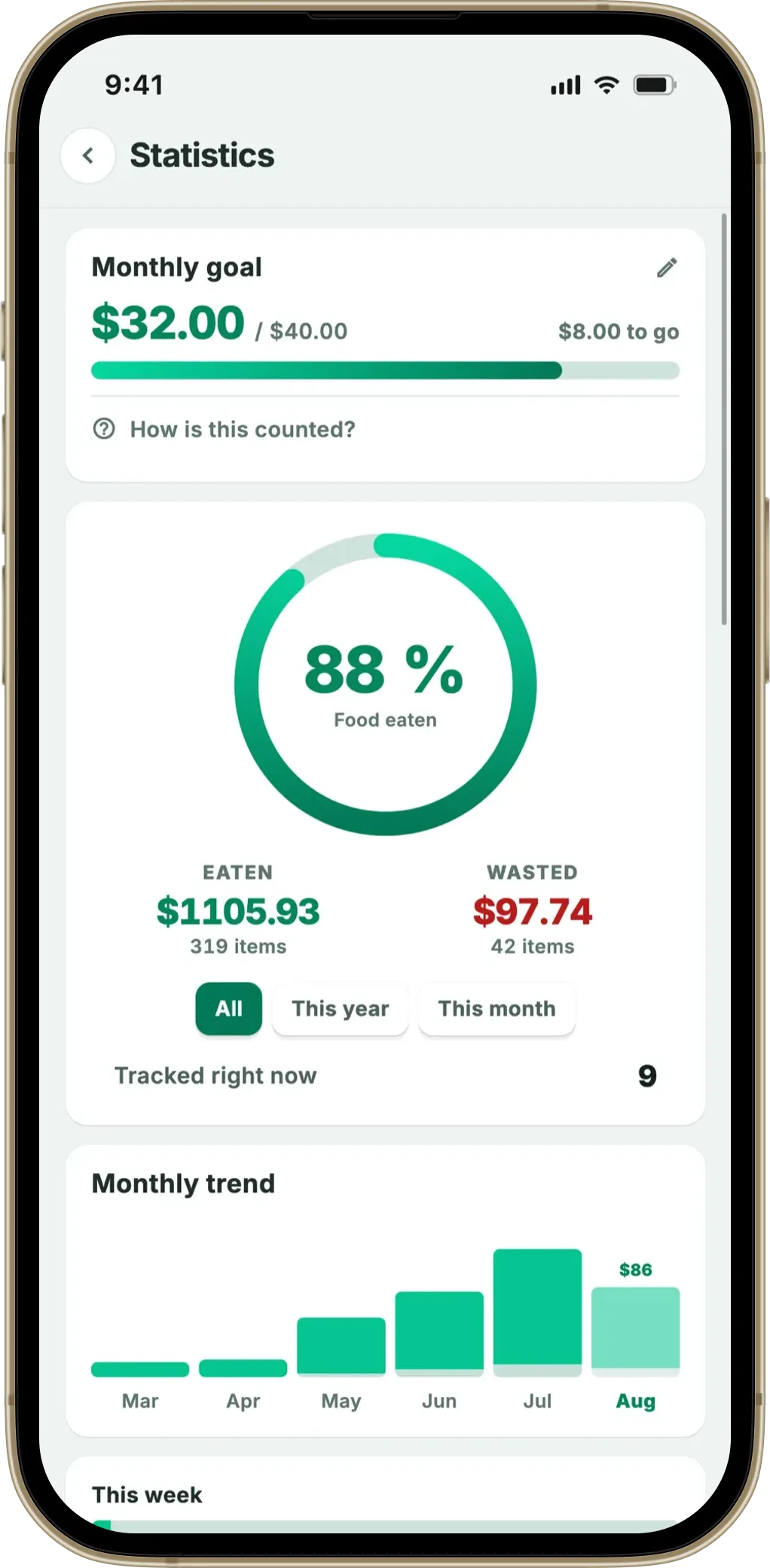
Fango. BEEP stores your data on its servers so you can reinstall without losing it, which means a cloud copy of your inventory exists. Fango keeps your data on your phone with no account, unless you share it with your household; a scan sends the receipt once, and it is read and discarded.
Is BEEP free?
BEEP is free to download and requires an account; its Premium subscription costs $7.99 a month or $59.99 a year in the US App Store. Fango is free to try for one month, then a monthly or yearly subscription, with the price for your country shown in the app. Both send reminders in time.