Shopping once a week is a genuinely good idea that fails for a boring reason. The time saving is real and the budget saving is real — one trip means far fewer passes through the promotions, and unplanned buying is where a food budget leaks. What people don’t plan for is that a week’s worth of fresh food has to survive a week, and much of it isn’t built to.
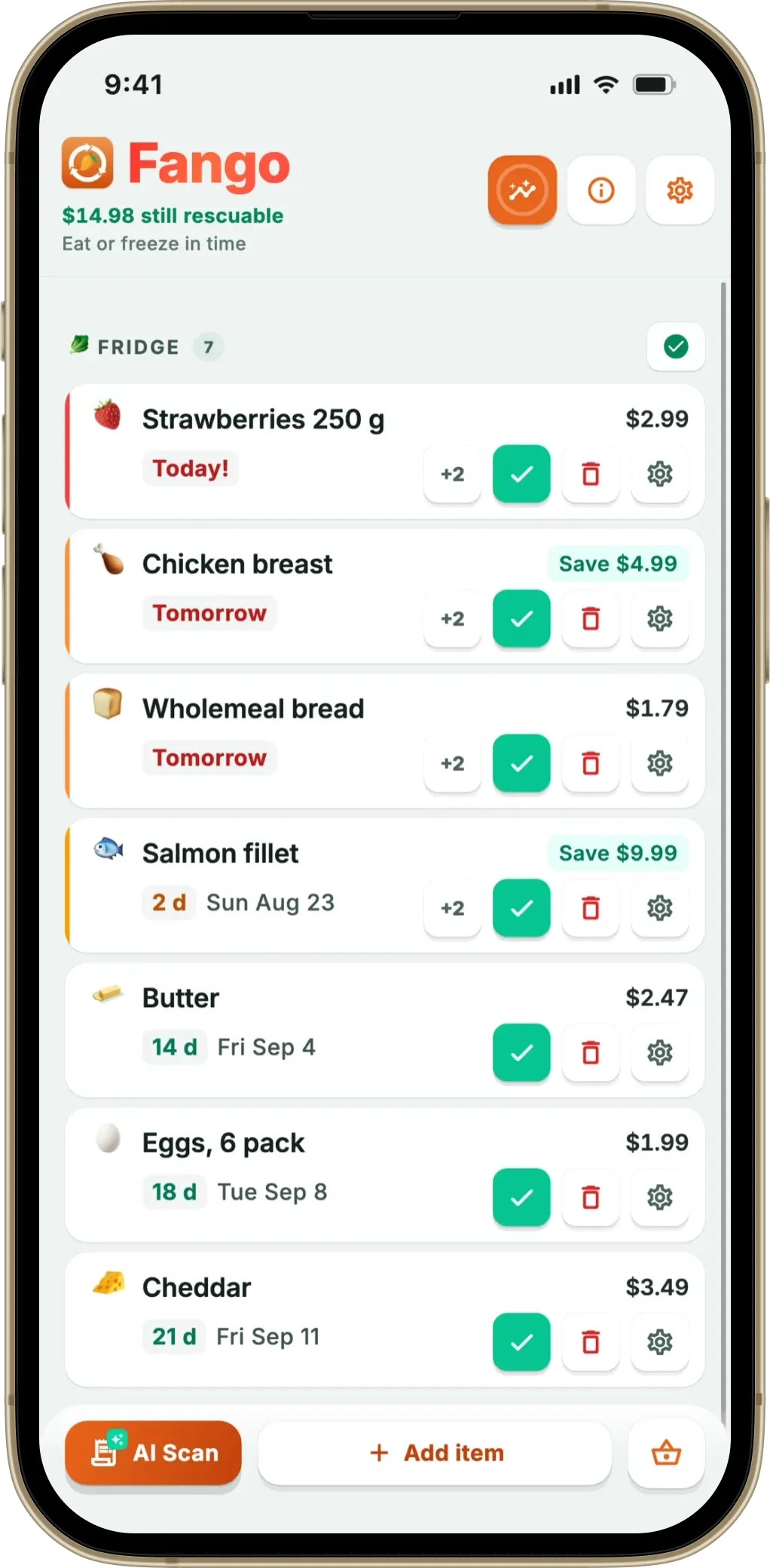
Scan the receipt after the weekly shop and Fango estimates how long each item keeps, then reminds you in time — and flags anything already in the fridge when you add it to next week’s list.
Download on the App Store Get it on Google PlayFree for a month · No sign-up · iOS and Android
So by Thursday the salad has turned, the mince needed using on Tuesday, and you’re either in the shop again or ordering something. The weekly shop becomes five days of food, two days of takeaway and a bin bag — which is more expensive than the daily trips you were trying to avoid.
Below: the front-loading method that fixes it, what actually keeps for seven days, how to kill the mid-week top-up trip, and the two-minute Sunday habit that makes the whole thing repeatable.
- Front-load the fresh. Plan salad, fish and mince for days one to three, not day six
- Days five to seven run on the freezer and the cupboard — decided in advance, not at six o’clock on Friday
- Freeze on arrival, not when it looks doubtful. Ninety seconds, on shopping day
- Every top-up trip is a data point. Whatever you went back for belongs on next week’s list
Why the weekly shop is worth doing
Two clear advantages, and one that’s often overstated.
The feature that matters most in any of these apps is the reminder — see what a good expiry date tracker app does differently.
- Fewer exposures to the shop. Four trips a week means four walks past the end-caps and the promotions. One means one. Impulse buying is a function of how often you’re in the building, not of willpower.
- Planning becomes possible. You can’t plan meals around a shop you haven’t decided on yet. One fixed shopping day gives the week a shape.
- Cheaper per unit — sometimes. Larger packs are better value only if you eat all of it, which is the whole difficulty. The unit price on the shelf assumes zero waste.
Against that sits the one real cost: everything has to last. WRAP’s 2022 household food waste report ranks fresh produce as the most wasted food category by weight of edible parts, followed by meals, bakery, and dairy and eggs — and puts the total at £1,000 a year for the average UK household of four. UNEP’s Food Waste Index Report 2024 estimates around a fifth of the food available to consumers is thrown away. A weekly shop done badly makes those numbers worse, not better.
The front-loading method
The whole technique is one sentence: schedule your meals in order of how fast the ingredients die.
Same seven meals, same shopping list, entirely different outcome. The only change is the order — which costs nothing and is the single highest-return decision in this article.
What actually lasts a week
Rough working figures for a fridge kept at 0–5°C, which is what the UK Food Standards Agency recommends. A fridge that’s warmer than that is quietly shortening everything below.
| Days 1–3 (eat first) | Days 3–5 (mid-week) | Days 5–7 (the backstop) |
|---|---|---|
| Fresh fish, mince, chicken, prawns, soft fruit, salad leaves, fresh herbs, cooked leftovers | Broccoli, peppers, cucumber, yoghurt, opened milk, sliced ham, mushrooms | Root veg, onions, apples, hard cheese, eggs, frozen anything, tins, pasta, rice |
← scroll →
The right-hand column is the one people under-buy. If days five to seven aren’t covered by things that can’t spoil, the week ends in a takeaway — and that single order usually costs more than the entire fresh section of the shop. Detailed per-food figures are in how long food lasts in the fridge, and the storage side is in our food storage guide.
Freeze on arrival, not on Thursday
The mistake almost everyone makes is treating the freezer as a rescue service. By the time you’re wondering whether the mince is still all right, it’s a judgement call you’d rather not make. Freezing on shopping day removes the question entirely.
Ten minutes when the bags come in:
- Half the loaf, sliced. It toasts straight from frozen — the details are here.
- The second pack of mince or chicken, split into meal-sized portions before it goes in the fridge.
- Anything you bought “in case”, which is the category most likely to be forgotten.
- Milk, if you’re going away mid-week — it works, with a caveat about shaking it.
Our general guide to freezing food covers what survives it and what doesn’t. Label everything with the date, or the freezer becomes a different kind of bin.
Killing the mid-week top-up trip
A top-up trip isn’t a moral failure — it’s information. Almost all of them are one of four things, and all four have a fix.
- Milk. Buy the bigger one, or freeze a spare. This is the single most common reason people break a weekly shop.
- Bread. Freeze half on shopping day. You will never run out again.
- One missing ingredient. The recipe was checked at the pan rather than at the list. Read the meals through before you leave the house.
- Something went off early. This is the fridge temperature or the storage, not the shop. Worth checking with a fridge thermometer once.
Write down what you went back for, every time, for a month. The list of four turns into a permanent addition to your weekly staples and the trips stop.
The Sunday two minutes
The habit that makes the whole thing repeatable, and it happens before you write the list rather than after.
Open the fridge and look. Anything on its last two days decides a meal for you. Anything you were about to buy again comes off the list before it goes on. Two minutes, and it’s the step that turns a weekly shop from a gamble into a plan — the method is in shop your fridge first, and the no-app version is an eat-me-first shelf.
Then write the list in shop order so you do one lap, and keep last week’s list rather than starting from blank — the full routine is in our weekly grocery list guide.
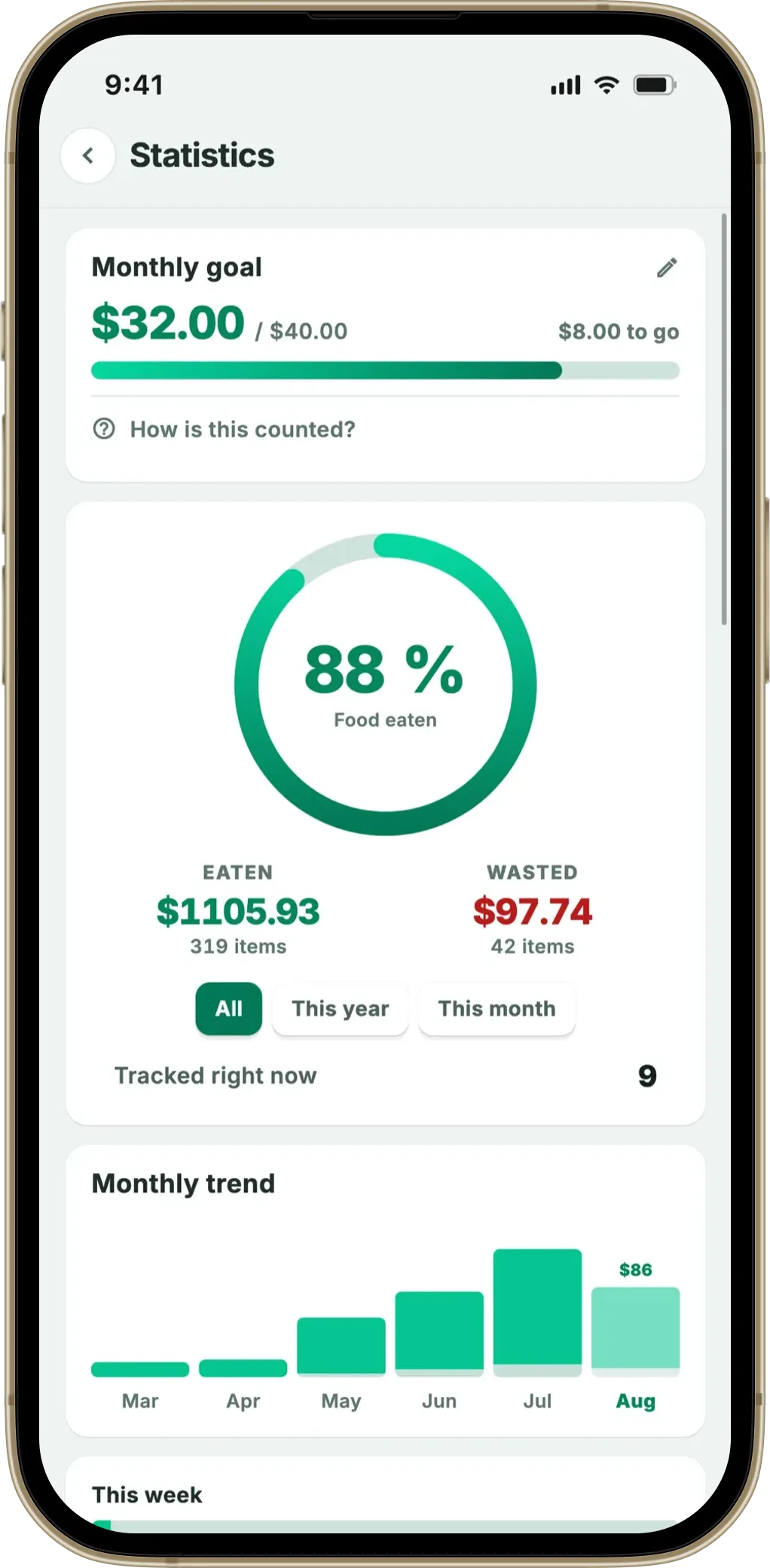
Scan the receipt after the weekly shop and Fango estimates how long each item keeps, then reminds you in time — and flags anything already in the fridge when you add it to next week’s list.
Download on the App Store Get it on Google PlayFree for a month · No sign-up · iOS and Android
Where an app helps, and where it doesn’t
Front-loading only works if you know what’s about to go off, and after a big shop that’s twenty-odd items with twenty-odd different dates. Most people can hold three or four in their head. That’s the specific gap a tracking app fills: scan the receipt and the whole shop lands in a list with a shelf-life estimate per item, ordered by what needs eating first, with a reminder before each date. Our piece on how to remember what’s in your fridge covers why memory alone fails at this scale.
What no app does is cook the food. If the honest problem is that you don’t want to eat the fish on Monday, a reminder won’t change that, and a smaller fresh section on the list is the better answer. Buy less fresh food, cover the back half of the week with the freezer, and the weekly shop stops being a race against the fridge. One trip a week also means one exposure a week to the store’s own layout, which is worth understanding on its own: supermarket psychology tricks to save money.
Frequently asked questions
Is shopping once a week actually better?
It is better for your time and usually for your budget, and it is worse for your fresh food unless you plan for that. One trip means far fewer passes through the promotions, which is where unplanned spending happens. The cost is that a week’s fresh produce has to survive a week, and fresh produce is the most wasted category in UK households by weight of edible parts according to WRAP. Front-loading the fresh meals and leaving the end of the week to frozen and tinned food is what makes the trade work.
How do I make fresh food last a full week?
Mostly by not asking it to. Salad, soft fruit, fresh fish and mince are three to four day foods, so plan them for the first half of the week and freeze anything you have bought beyond that on the day you shop rather than when it looks doubtful. What genuinely lasts a week or more is root vegetables, apples, hard cheese, eggs and anything frozen or tinned. Keeping the fridge between 0 and 5°C, as the UK Food Standards Agency recommends, buys you the shelf life the packaging assumes.
How do I stop making top-up trips mid-week?
Work out what you keep going back for and put it on the list permanently. Almost every mid-week trip is milk, bread or one missing ingredient, and all three have answers: buy the larger milk, freeze half the loaf on shopping day, and check the recipe list before you leave rather than at the pan. A single top-up trip is not a failure — it is a data point telling you which line your weekly list is missing.
What should I cook at the end of the week?
Meals built from the freezer and the cupboard, decided in advance rather than at six o’clock on Friday. Pasta with tinned tomatoes, rice with frozen vegetables, an omelette, a curry from frozen chicken and a jar of sauce — none of these depend on anything that could have gone off. Planning two of these into the week is what turns one shop into seven days of food instead of five days of food and two takeaways.